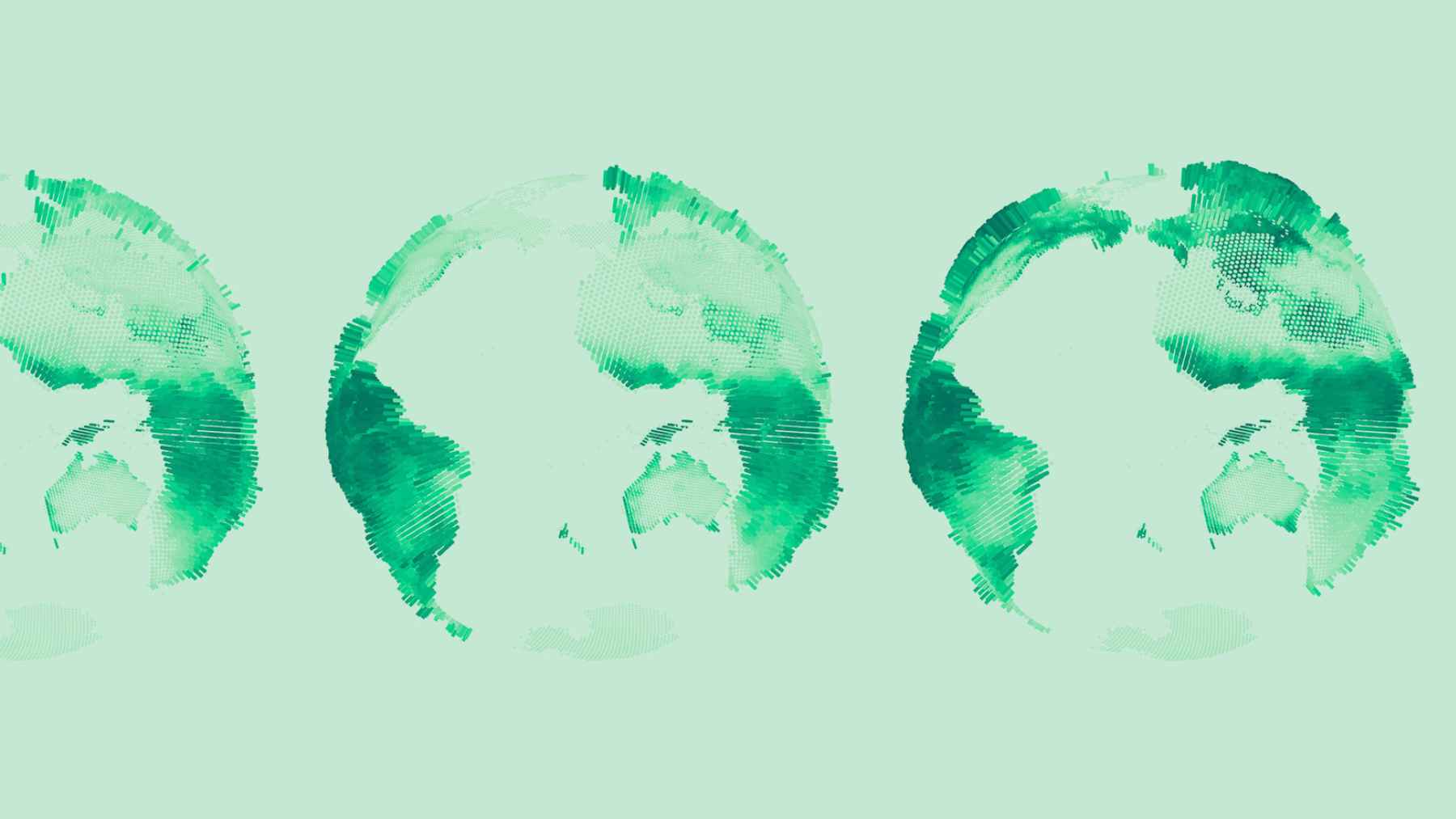
What if you could weigh every leaf on Earth and watch the balance point wander across the oceans? Using decades of satellite data, researchers say that point swings seasonally from the North Atlantic near Iceland in mid-July to waters off Liberia around March, and its long-term path has been drifting toward the northeast.
The work was led by Leipzig University and the German Centre for Integrative Biodiversity Research (iDiv), with collaborators at the University of Valencia. Miguel Mahecha described the approach as “holding a globe and attaching small weights to it,” each weight standing in for green leaves, while Gustau Camps-Valls called the result “a single, moving heartbeat.”
What the planet’s “green wave” is
The “green wave” is the planet-scale pattern of plants leafing out, growing, and then slowing down again as seasons change. It is basically spring and summer sweeping across land – the same cycle you notice when parks go from bare branches to full shade.
Some scientists describe this moving burst of growth as Earth’s green belt, because it is a broad band of activity that shifts with the seasons. They also use the word “phenology,” meaning the calendar of nature, and that calendar matters more than it sounds.
When the timing changes, the impacts can show up in everyday life, from planting schedules to pollen-filled mornings. The new study treats this global pattern like a pulse you can measure, not just a pretty map.
Turning Earth’s vegetation into a balance point
Instead of tracking every forest, field, and shrubland separately, the researchers looked for a single balance point for global greenness. Picture a seesaw that would tip unless the “weight” of leaves on each side is balanced, and you get the basic idea.
To estimate that weight from space, scientists often use “leaf area index,” a measure of how much leaf surface covers a patch of ground. Satellites can estimate it again and again, which is why it has become a workhorse number for tracking vegetation at global scale.
Once you can compute that balance point over time, you can track its path like a flight line on a map. It turns millions of satellite pixels into one moving signal, and it is much easier to compare across decades.
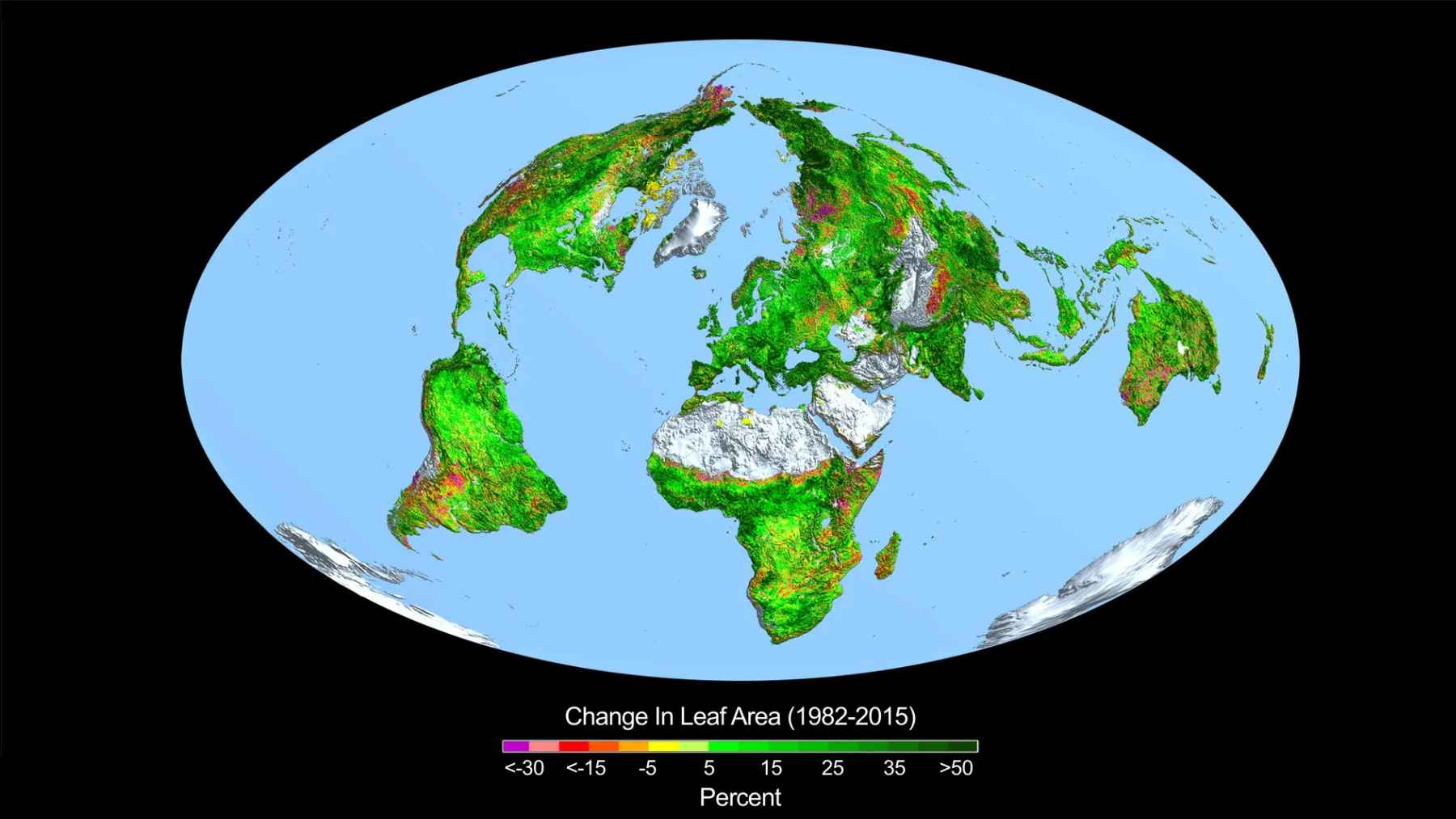
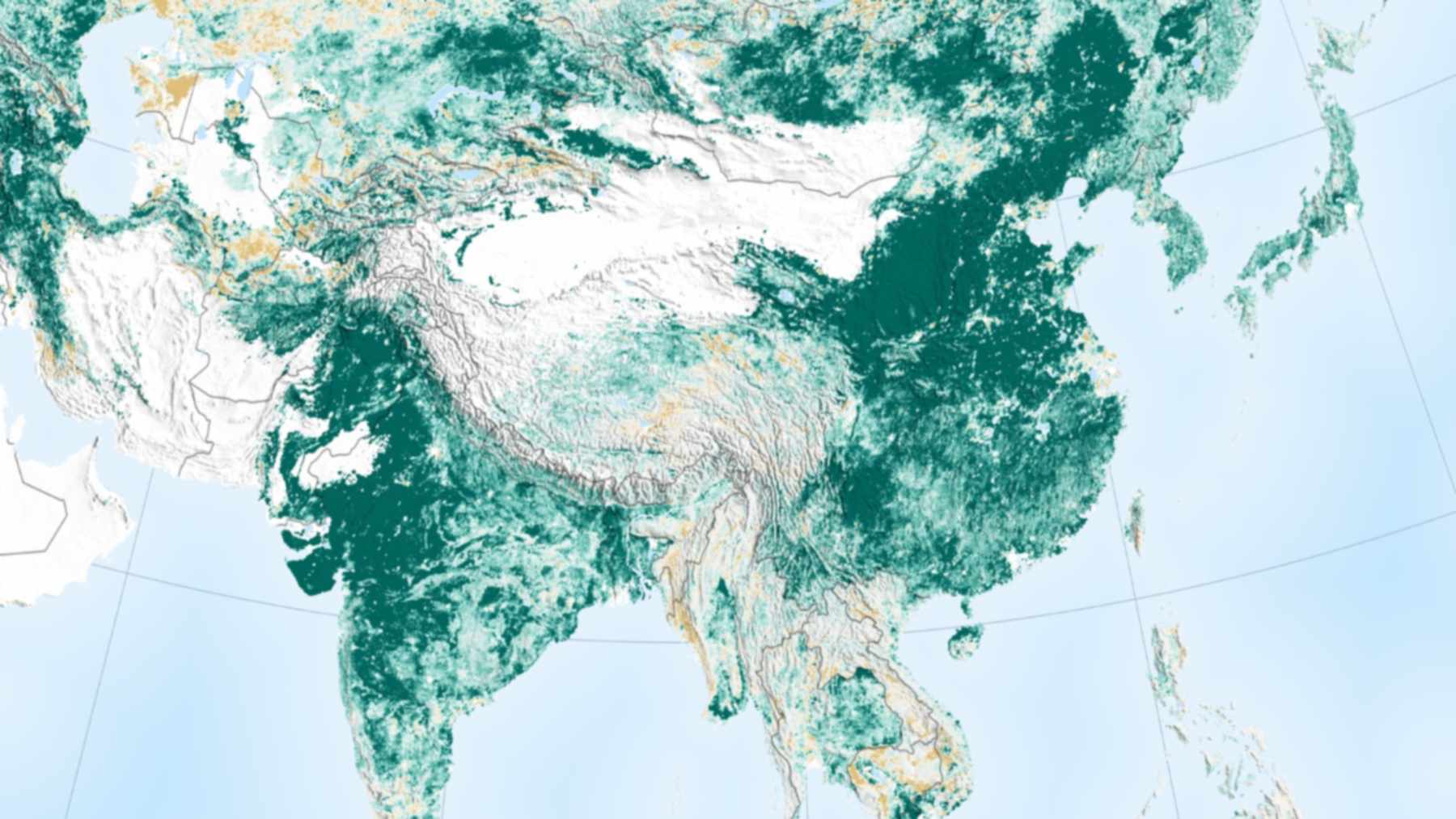
A global map tracks changes in leaf area over three decades, highlighting widespread greening alongside pockets of vegetation loss.
A seasonal migration you can map
In a typical year, the green center swings north and south in step with changing sunlight. Long summer days in the north pull the balance point upward, while the opposite season tugs it back.
The researchers combined long satellite records with Earth system model data to measure not only where the green center goes, but also how fast it travels. A change in speed can be revealing even when a map still “looks” normal.
Think of it like watching a heart monitor. The line is expected to rise and fall, but the real story is in how the rhythm changes over time.
The northeast drift and the surprise in the data
Based on earlier reports of global greening, the researchers expected the green center to shift northward in Northern Hemisphere summer and to shift southward during Southern Hemisphere summer.
Instead, they found it moves northward in both summer periods, with the Southern-summer northward shift often larger, and they also detected an accelerating eastward drift.
In practical terms, that means the green wave is not swinging as far south as it used to, because both ends of its journey are being pulled north. The study says this shrinking swing, called a reduced amplitude, is likely to intensify through this century.
So what could be pushing it? One likely factor is that plants are staying active longer in the north thanks to longer growing seasons and milder winters, but the researchers stress this remains a hypothesis.
Why CO2 can make Earth look greener
The northeast drift sits on top of a broader trend called “global greening,” meaning more leaf growth in many regions over recent decades.
A NASA-backed analysis in 2016 reported that roughly a quarter to half of Earth’s vegetated land showed significant greening over about 35 years, and it described the added leaf growth as roughly equal to adding a green area about twice the size of the continental United States.
The same NASA summary also reported that rising atmospheric CO2 plays an outsized role, because plants use it in photosynthesis. The catch is that CO2 fertilization is not a free lunch forever, since nutrients, water, and heat stress can limit how much extra growth is possible.
The scientific paper behind that 2016 result appeared in Nature Climate Change and focused on satellite records from 1982 to 2009, using models to tease apart drivers. It found CO2 was the dominant push, but climate, nitrogen pollution, and land-use change also mattered in different places.
What this shift could mean for people and ecosystems
A shifting green center is not just an academic curiosity, because it hints at changes in where and when plants are most active. That can feed into water demand, crop timing, wildfire fuel buildup, and even how animals track food and shelter across seasons.
It is also worth remembering that “greener” does not automatically mean “healthier.” A region can look greener because of irrigation, fertilizer, fast-growing plantations, or a longer growing season, while still losing biodiversity or becoming more vulnerable to drought.
A 2023 Nature Climate Change study estimated that CO2 fertilization increased global photosynthesis by about 13% between 1981 and 2020, but it also highlighted how uncertain the size of that effect can be. In other words, the green wave may be strengthening in some ways even as the risks and trade-offs rise in others.
The main study has been published in Proceedings of the National Academy of Sciences.