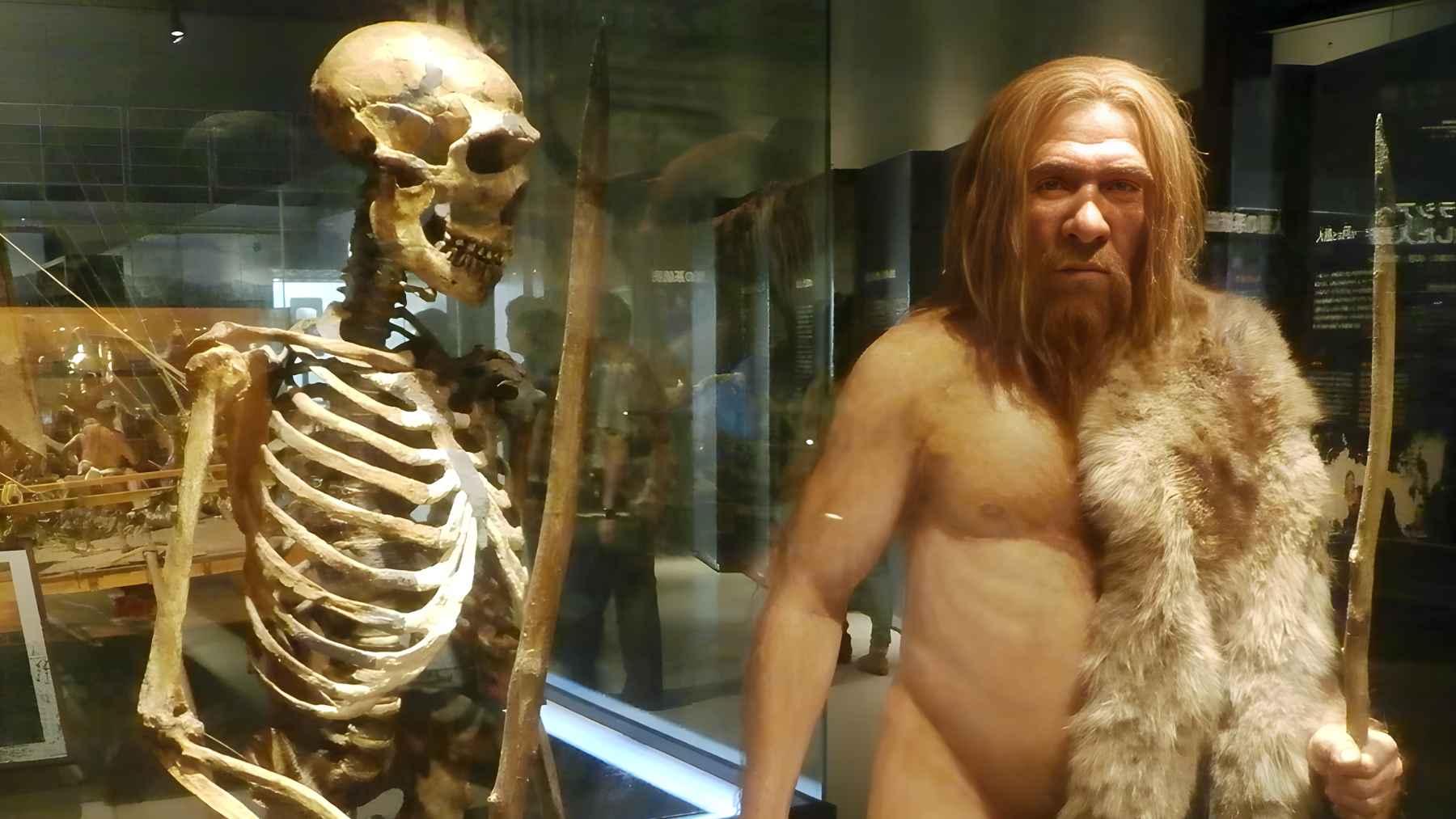
If you have ever looked at an ancestry report and spotted a small slice labeled “Neanderthal,” you are seeing the leftovers of real encounters between different kinds of humans.
A new genetic study published on February 26, 2026, in the journal Science suggests those ancient meetings were not evenly matched between the sexes. The imbalance shows up today in a surprising place in our genome, the X chromosome.
Researchers report that interbreeding between Neanderthals and Homo sapiens happened mostly between male Neanderthals and female modern humans, not the other way around. That single detail helps explain a long-running puzzle called “Neanderthal deserts,” stretches of our genome where Neanderthal DNA is strangely scarce.
The X chromosome puzzle that would not go away
Geneticists have known for years that most people with European or Asian ancestry carry a small amount of Neanderthal DNA, but the X chromosome was an exception. Compared with the rest of the genome, modern humans have little to no Neanderthal DNA on the X, a pattern that stood out like a blank page in an otherwise annotated history book.
The classic explanation was harsh but simple. Neanderthal gene variants on the X chromosome were assumed to be biologically incompatible in modern humans, so natural selection would have removed them over time.
The new study argues that the “desert” may have formed for a different reason. The team found that Neanderthals themselves carried an unusual amount of modern human DNA on their X chromosomes, including a reported 62% relative excess compared with their other chromosomes.
How DNA can hint at who partnered with whom
The key is that X chromosomes are inherited differently in males and females, which makes them a kind of built-in ancestry tracker. In humans, females have two X chromosomes and males have one X and one Y, so the X moves through populations in a sex-specific way.
To test their idea, the researchers compared DNA from three Neanderthals, named Altai, Chagyrskaya, and Vindija, with genetic data from selected sub-Saharan African populations with little to no detectable Neanderthal ancestry. That comparison let them ask a clean question about which direction ancient gene flow was moving.
Modeling suggested that mate preference is a more straightforward explanation for the sex bias than migration patterns alone, though the authors also note that demographic factors could have contributed at the same time. In other words, the pattern may reflect a mix of social behavior and population math, not a single tidy storyline.
What the study does not say about “attraction”
It is tempting to translate genetic patterns into a prehistoric romance plot. The researchers are careful not to do that, and they stress that DNA cannot tell us whether these encounters were peaceful, coerced, or shaped by power differences.
As study co-author Alexander Platt told Reuters, the same pattern could arise “with or without the consent of the other,” and senior author Sarah Tishkoff said, “We have no way of knowing if this was a conflict scenario.”
What the data do support is repetition. Reuters reports that gene flow between the groups could have begun as early as about 250,000 years ago, with later interbreeding peaking around 47,000 years ago as Homo sapiens spread across Eurasia.
That matters because it shifts the conversation away from a single dramatic meeting and toward a messy overlap of migrations, seasons, and ecosystems. People were moving through unfamiliar landscapes, tracking animals, coping with cold snaps, and sometimes meeting other humans already adapted to those places.
The environmental legacy still living in our bodies
Why does any of this belong in environmental news in 2026? Because the Neanderthal DNA that stayed with us appears to have helped early humans deal with new surroundings, especially new microbes, even if some benefits came with tradeoffs.
An Institut Pasteur summary of research on innate immunity genes reported that archaic variants could boost defenses against infection while also being linked to a higher tendency toward allergies, which feels especially relatable when spring pollen hits.
Other research has found that Neanderthal ancestry is enriched near genes involved in keratin filaments, proteins that help build skin and hair. Scientists have suggested these segments likely relate to skin or hair biology, the sort of thing that can matter when humans adapt to different climates and sunlight.
The effects also show up when scientists zoom out to huge modern datasets. A Cornell summary of an eLife study using nearly 300,000 people in the U.K. Biobank reported more than 235,000 likely Neanderthal-origin variants, with thousands linked to dozens of traits across immune, metabolic, and developmental systems.
A new way to read human history in a warming world
At the end of the day, this research is a reminder that evolution is not just about surviving the climate – it is also about who joins whose community. The Penn-led team frames the genome as a record of social interactions, not only a scoreboard of which genes were “fit” enough to last.
For readers, the practical takeaway is humility. The percentage of Neanderthal DNA in a person does not translate into a simple set of strengths or weaknesses, and many trait links are still being studied or fail to replicate across datasets.
But the headline finding is hard to ignore. A subtle skew in who had children with whom, tens of thousands of years ago, may have reshaped the genetic map of modern humans, and it may have helped our species navigate unfamiliar environments along the way.
The study was published in Science.