Mars may look like a quiet desert planet, but new lab work suggests its dust can be surprisingly hostile to Earth life, even to creatures famous for surviving the impossible.
In a study using two “Martian regolith” simulants (lab-made versions of Mars’s mineral dust), researchers found that active tardigrades quickly lost activity, and one species stopped showing signs of life after just two days in the harsher mix.
That finding cuts two ways. It hints that Mars’s surface chemistry might help block “forward contamination,” meaning Earth organisms accidentally hitching a ride and spreading, which is a core concern of planetary protection.
But it also underlines a more everyday problem for future crews, because NASA has long warned that Mars salts like perchlorates and chlorates can be hazardous to human health and can even corrode equipment.
Tiny survivors, tested while awake
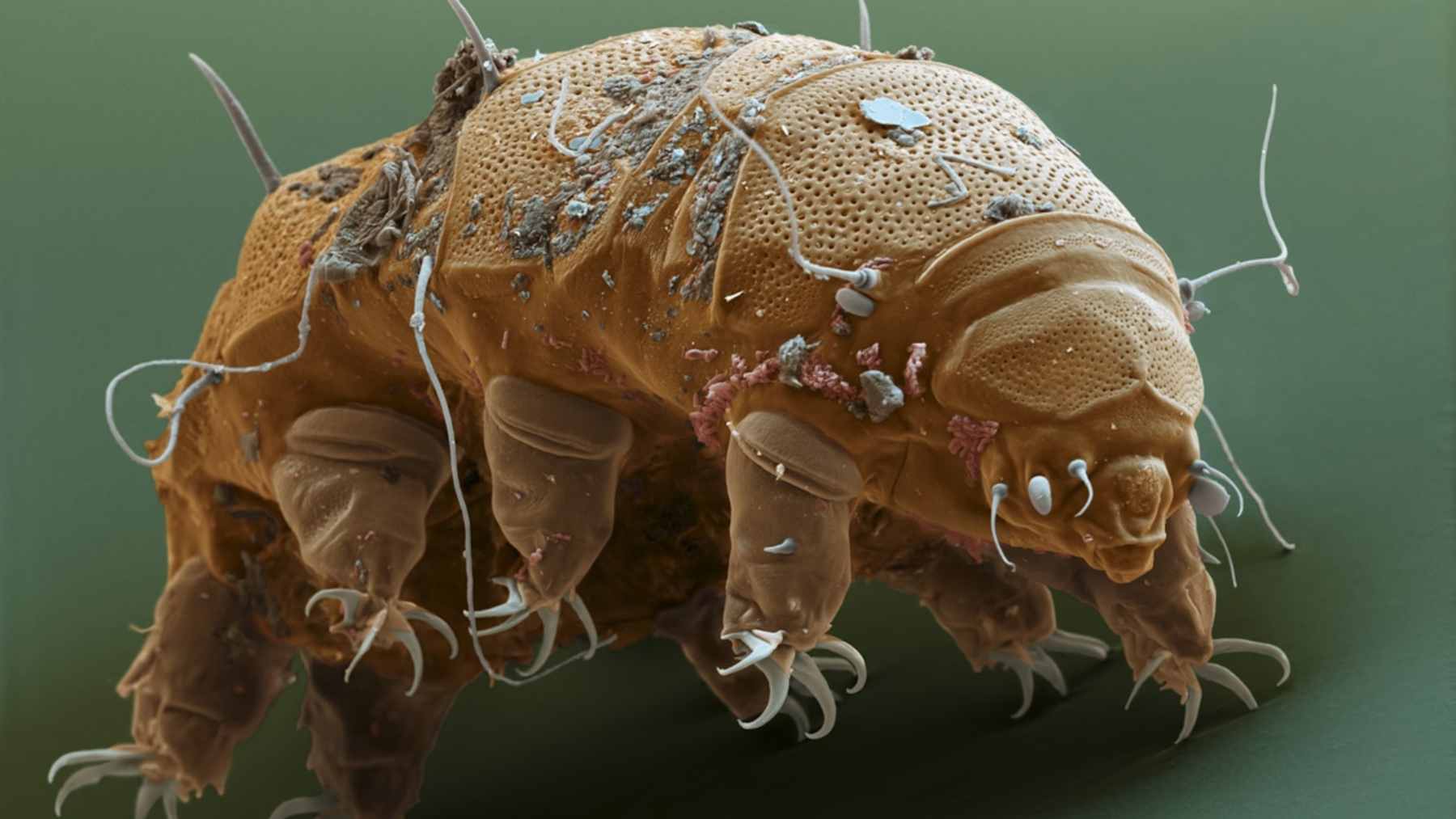
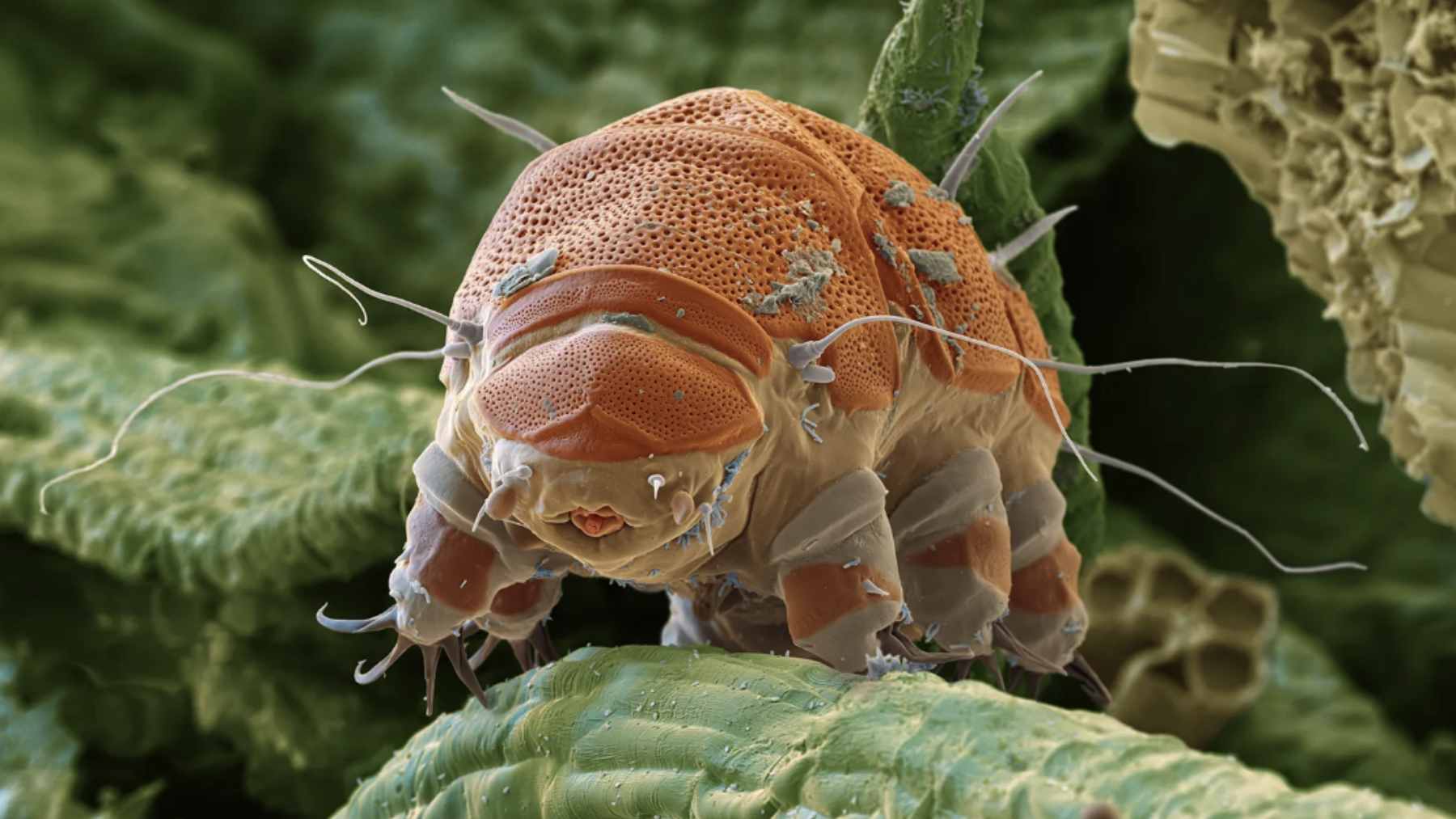
Tardigrades, often called “water bears,” are microscopic animals that are usually less than 0.04 inches long (1 millimeter). They are famous for “cryptobiosis,” a dormant survival mode that lets them endure extremes like severe drying and intense radiation.
But this study focused on tardigrades in their active state, not their dormant one. That matters because active animals are the ones that move, feed, and interact with other organisms, which is exactly what you worry about when you ask whether Earth life could accidentally take hold somewhere else.
In other words, these tests were less about proving a sci-fi point and more about a practical question. If Mars dust can knock back a tough little animal on contact, what does that say about safety, sustainability, and contamination control for real missions?
Two Mars soil stand-ins with very different chemistry
The team exposed two tardigrade taxa (Ramazzottius cf. varieornatus and Hypsibius exemplaris) to two regolith simulants called MGS-1 and OUCM-1, plus a terrestrial sand control. Both simulants were designed to represent material from the Rocknest deposit at Gale Crater, which NASA’s Curiosity rover sampled early in its mission.
This “dust” was truly fine. In MGS-1, the median particle size was about 0.006 inches (150 micrometers), with most particles under about 0.012 inches (300 micrometers), which is the kind of grit that can cling to surfaces the way flour sticks to a slightly damp countertop.
That particle detail is not just trivia. Fine dust is harder to keep out of seals, fabrics, filters, and airlocks, and it increases the chances of direct contact with skin and lungs if it gets tracked indoors, especially in a busy habitat where people are constantly moving gear in and out.
A fast drop in activity in just days
The results were blunt. Across the experiment, the number of active tardigrades in both Martian simulants fell sharply over four days, while the control stayed stable, which points to something about the simulants themselves that the animals could not tolerate.
MGS-1 was the hardest hit. The study reports that no live Hypsibius exemplaris were found after two days of exposure to MGS-1, while OUCM-1 was still inhibitory but generally less damaging, with at least one Ramazzottius population showing minimal impact in OUCM-1.
The team also backed this up statistically. Their model found that time, simulant type, and species were all strong predictors of whether tardigrades remained active (with p values reported as less than 0.0001), which is another way of saying the pattern was consistent and unlikely to be a fluke.
The washing clue that points to a soluble toxin
Then came the twist. When researchers washed MGS-1 before exposure, tardigrades remained vigorous, and the model did not distinguish washed MGS-1 from the control condition, suggesting the most harmful factor could be removed by rinsing.
The paper reports that washed MGS-1 had a pH of 6.5 and total dissolved solids around 538 mg per liter, which is roughly 538 parts per million. The authors argue this points away from simple acidity and toward a specific chemical or chemicals that are water-soluble, not just “too salty” in a generic sense.
That is a big clue, but it is not the final answer. The study does not identify the exact toxic ingredient, and it also notes that physical effects like mineral particles coating the animals could contribute, so chemistry and dust mechanics may both be part of the story.
Planetary protection may get help, but not a free pass
Planetary protection is meant to protect other worlds from Earth contamination and to protect Earth from possible contamination brought back, which NASA frames as forward and backward contamination. The whole point is to keep science and environments as clean as possible, even when exploration ramps up.
If certain Martian dust chemistries rapidly disable animals, that could reduce the odds of Earth microfauna establishing themselves on the surface by accident. It is not proof that Mars is “self-sterilizing,” but it does suggest the surface environment can act like a chemical gatekeeper in at least some scenarios.
Still, the limits are just as important as the headline. The same paper points to prior work showing that some microbes can survive or grow in regolith extracts under certain conditions, especially with dilution or supportive setups, so a hostile signal for animals does not automatically mean a hostile signal for all biology.
What this means for astronauts and future farming
For human missions, dust is not only a contamination issue – it is a health and engineering issue. NASA notes that perchlorate and chlorate are potent oxidizers that can be hazardous to human health even at low concentrations and can contribute to equipment corrosion, which makes “just avoid touching the dirt” an unrealistic plan if you are living there for months.
There is also a sustainability angle hiding in the background. A long-term outpost cannot ship every calorie from Earth forever, so researchers are interested in whether regolith can be turned into something closer to soil, yet NASA also points out that Mars regolith is sterile, lacks soil organic matter, and can contain toxic perchlorate salts that make plant cultivation challenging.
The new tardigrade results fit into that tension. Washing reduces harm in the lab, which sounds simple until you remember that water is a limited resource on Mars and would need tight recycling, careful handling of the contaminated wash water, and smart engineering to keep the “fix” from becoming a new problem.
The study was published in International Journal of Astrobiology.