How can a company hold a valid timber permit and still end up at the center of an illegal logging investigation? That question is driving a case unfolding near Băile Felix, a spa resort in western Romania.
Police and inspectors say the alleged overcut involved a modest volume of wood. But the bigger issue is trust, because once unmarked trees start disappearing, every new stump becomes a clue.
What authorities found near Băile Felix
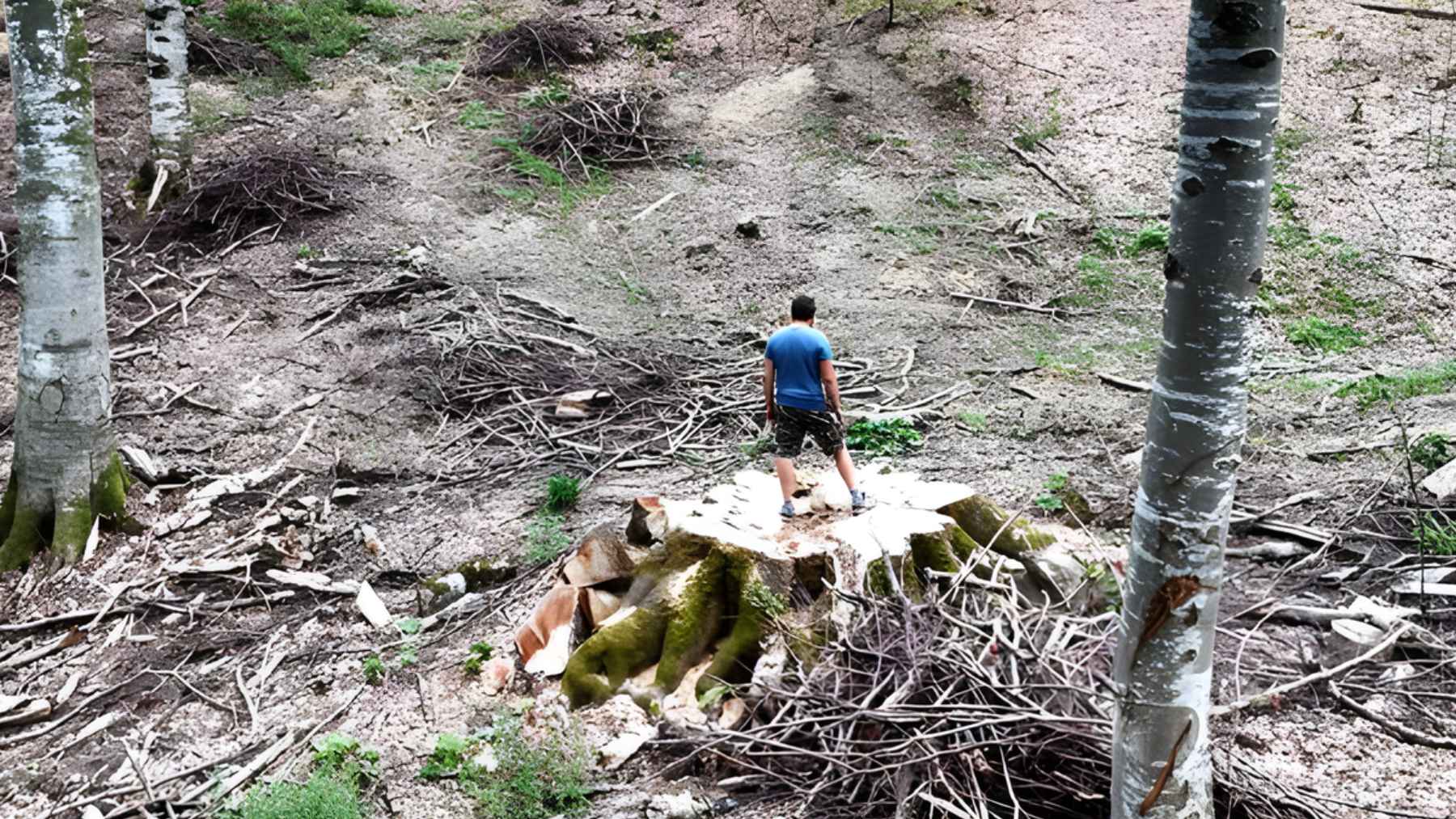
Romania’s Bihor County Police Inspectorate says it opened a criminal case on January 28, 2026, after the Forestry Guard in Oradea reported 14 stumps linked to unauthorized felling. The police estimate put the damage at 10,021.71 Romanian lei, which reporting has converted to about $2,300. Police said the suspected acts occurred between December 29, 2025, and January 23, 2026.
Investigators also reported a total wood volume of about 8.052 cubic meters, which is roughly 284 cubic feet. In a brief statement, police said they found “unauthorized felling and theft of trees from the national forest fund,” and that the case is being handled under a prosecutor’s supervision.
Forestry officials told AGERPRES the timber lot was auctioned to a company named Felidan Foresta.
The discovery came amid a wider sanitation project in the same forest, meant to remove dangerous trees near tourist paths and roads. That context helps explain why the Forestry Guard was on site.
How a marked tree becomes the line between legal and illegal
In managed forests, trees selected for harvesting are typically marked in advance so inspectors can match each cut to an approved plan. When officials say “unmarked,” they are pointing to a basic checkpoint that appears to have failed.
Bihor forestry director Teodor Suciu told AGERPRES that the trees linked to the case were not intended for harvesting and were not marked, even though the legal work in the area was supposed to focus on forest hygiene and safety. Reports say the species included oak, hornbeam, and cherry.
One detail from local reporting makes the situation feel less abstract. The trunks were described as ranging from about 6 to 31 inches in diameter, so this was not just brush clearing.
The investigation widened quickly
By early February, Romanian media reported that police detained four people after searches linked to the case, including two employees of the logging company and two staff tied to the local forestry district.
Police statements quoted in that coverage also referenced allegations of entering inaccurate information into Romania’s integrated forest information system.
Another report described the investigation as involving 16 trees, a slightly higher wood volume, and a higher damage estimate. Early counts can change as officials measure more stumps on the ground and compare them with records.
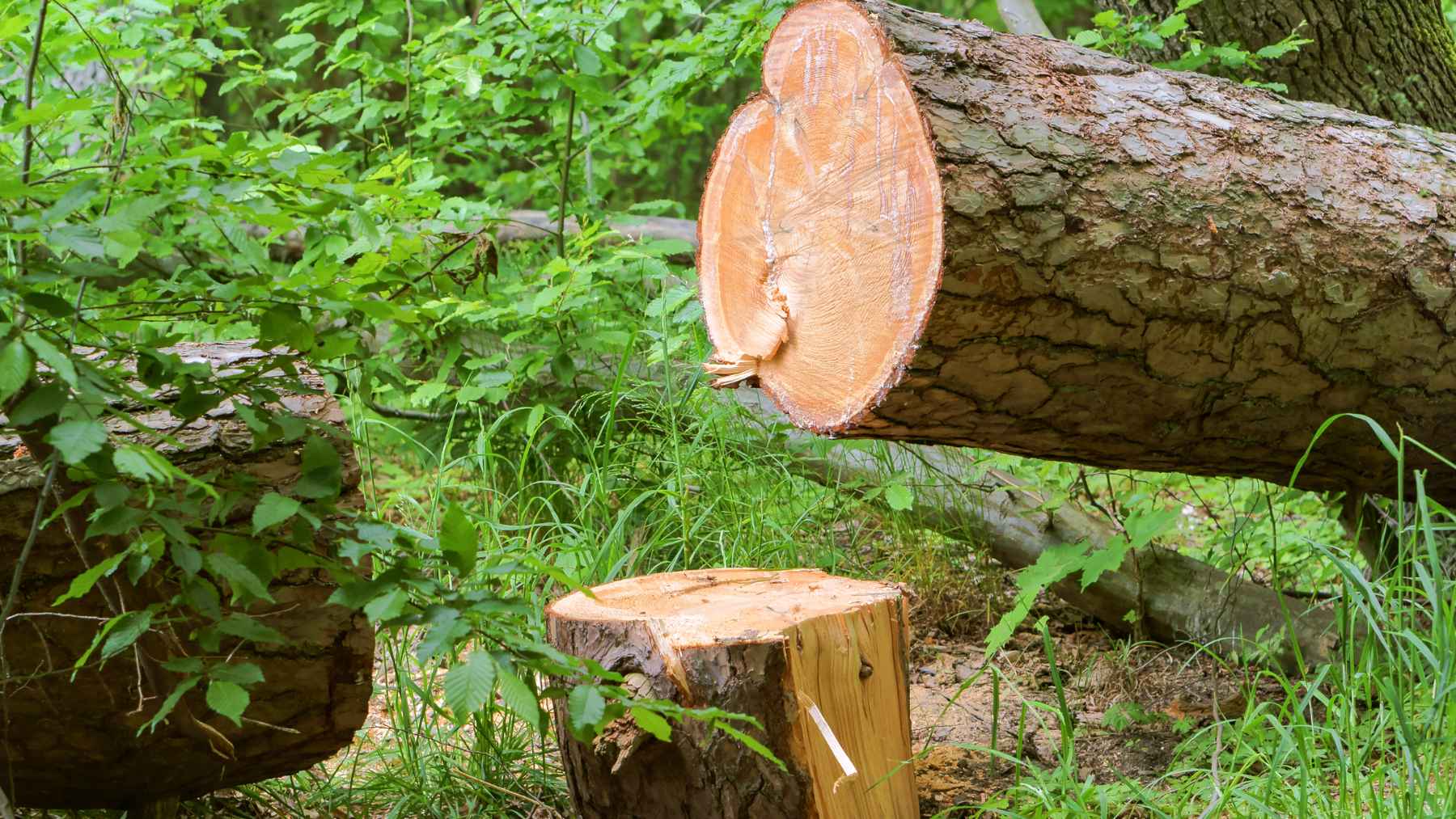
A recently felled tree lies in a forest, illustrating the impact of unauthorized logging and growing concerns over forest protection.
Why the “small” numbers still matter
In the Băile Felix forest, reporting described inspections spanning about 25 hectares, which is roughly 62 acres. In a separate account of the sanitation plan, officials said the forestry district had inventoried 718 problem trees with an estimated 235 cubic meters of wood, around 8,300 cubic feet, to be sold as firewood.
Even in that larger context, unauthorized cuts carry a different kind of cost. Romanian reporting on the police calculation says a large share of the damage estimate was tied to “unrealized forest functions,” meaning the loss of ecosystem services forests provide for free.
That can show up in everyday ways people notice. More runoff after heavy rain, less shade during hot spells, and fewer habitats for the insects and birds that keep a forest resilient. It adds up.
Romania’s forests are a European climate and biodiversity asset
Romania contains some of Europe’s most valuable remaining primary and old-growth forests, and conservation groups say logging pressure remains intense even in protected areas.
EuroNatur points to a report finding over 4.7 million cubic meters of timber, about 166 million cubic feet, extracted from primary and old-growth forests between 2021 and 2024 across nearly 140,000 hectares, about 346,000 acres.
Looking further back, the Environmental Investigation Agency cites a Romanian National Forest Inventory study concluding that about 8.8 million cubic meters of timber, about 311 million cubic feet, was cut illegally each year from 2008 to 2014. It is an older estimate, but it shows why trust and enforcement have been such flashpoints for so long.
Sanitation work can be legitimate when trees are truly dangerous or dying, especially along roads and footpaths. But when “extra” healthy trees get taken, the public stops believing the difference.
The EU wants wood traced back to its source
The European Union’s Deforestation Regulation, often called the EUDR, is meant to force more transparency into supply chains for timber and other forest risk commodities. Companies selling covered products in the EU must show they are deforestation-free and legally produced, with traceability down to where they were made or grown.
The start date has moved. Official summaries say compliance is now expected from December 30, 2026, for larger companies and June 30, 2027, for smaller firms, after delays and amendments.
Even so, the law is already nudging some markets. A Reuters analysis this week noted that the prospect of EUDR-style rules has pushed some major companies to invest in traceability systems, while many still lag behind.
What to keep in mind next
The main takeaway is not that all logging is bad, or that every permit is suspicious. It is that enforcement has to be specific, because forests do not recover from “almost compliant” practices.
If you are buying wood or paper products, look for clear sourcing information and credible certification such as FSC (Forest Stewardship Council) when you can. If you live near forests, reports from locals often trigger the inspections that uncover problems.
The official statement was published on AGERPRES.