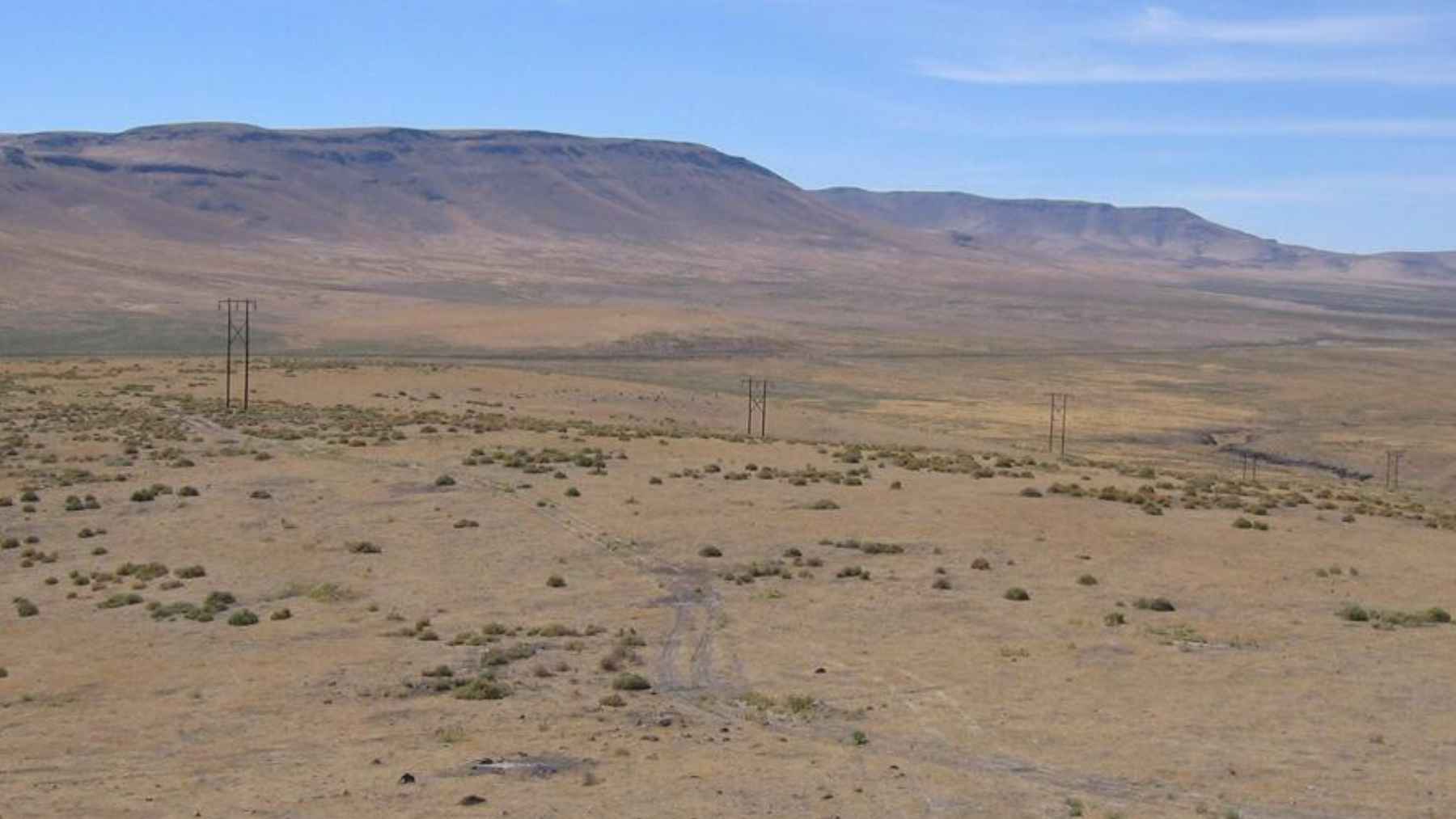
Geologists say an ancient volcanic crater on the Nevada-Oregon border holds some of the most lithium-rich clays ever measured, with concentrations far above most comparable deposits.
The findings, published in a 2023 paper in Science Advances, focus on the McDermitt Caldera and a hotspot inside it called Thacker Pass, where samples show unusually high lithium levels in a clay mineral named illite.
It sounds like a dream scenario for electric vehicles and grid batteries. But the same research also comes with an easy-to-miss warning: the biggest tonnage number is a rough estimate, not a formal reserve, and any real mine still has to answer hard questions about water, land, and pollution risks.
What scientists actually found at McDermitt Caldera
McDermitt Caldera formed about 16.4 million years ago during an enormous eruption tied to the Yellowstone hotspot track, leaving a collapsed basin roughly 28 miles by 22 miles across. Later, a lake filled the basin and built up thick layers of volcanic ash and mineral-rich sediments that eventually turned into claystones.
The standout result is lithium locked into illite at Thacker Pass in the southern caldera. The study reports illite measured in place with about 1.3% to 2.4% lithium by weight, while many claystone lithium resources globally are reported below about 0.4% by weight.
Read More: {{post_title link:post}}
This is where the “largest deposit” headlines come from, but the details matter. The study cites calculations suggesting the caldera’s sediments could contain roughly 22 to 44 million US tons of lithium (about 20 to 40 million metric tons), with a maximum estimate of about 132 million US tons (about 120 million metric tons), and it emphasizes this is not a reporting code compliant resource estimate.
How a vanished lake and hot fluids concentrated “white gold”
So how does ash and mud turn into something battery makers crave? The authors argue it happened in two stages, with lake water first leaching lithium from volcanic material and forming smectite clays, followed later by hotter hydrothermal fluids that altered smectite into illite.
Those later fluids seem to be the secret sauce. The team links the highest-grade interval to caldera resurgence and describes enrichment in elements common in hydrothermal systems, including potassium, rubidium, and cesium, alongside lithium.
There is also a geographic twist. The paper notes that the lithium-rich illite zone has only been identified in the southern half of the caldera so far, and drilling in parts of the northern caldera in Oregon did not hit the same high assays.
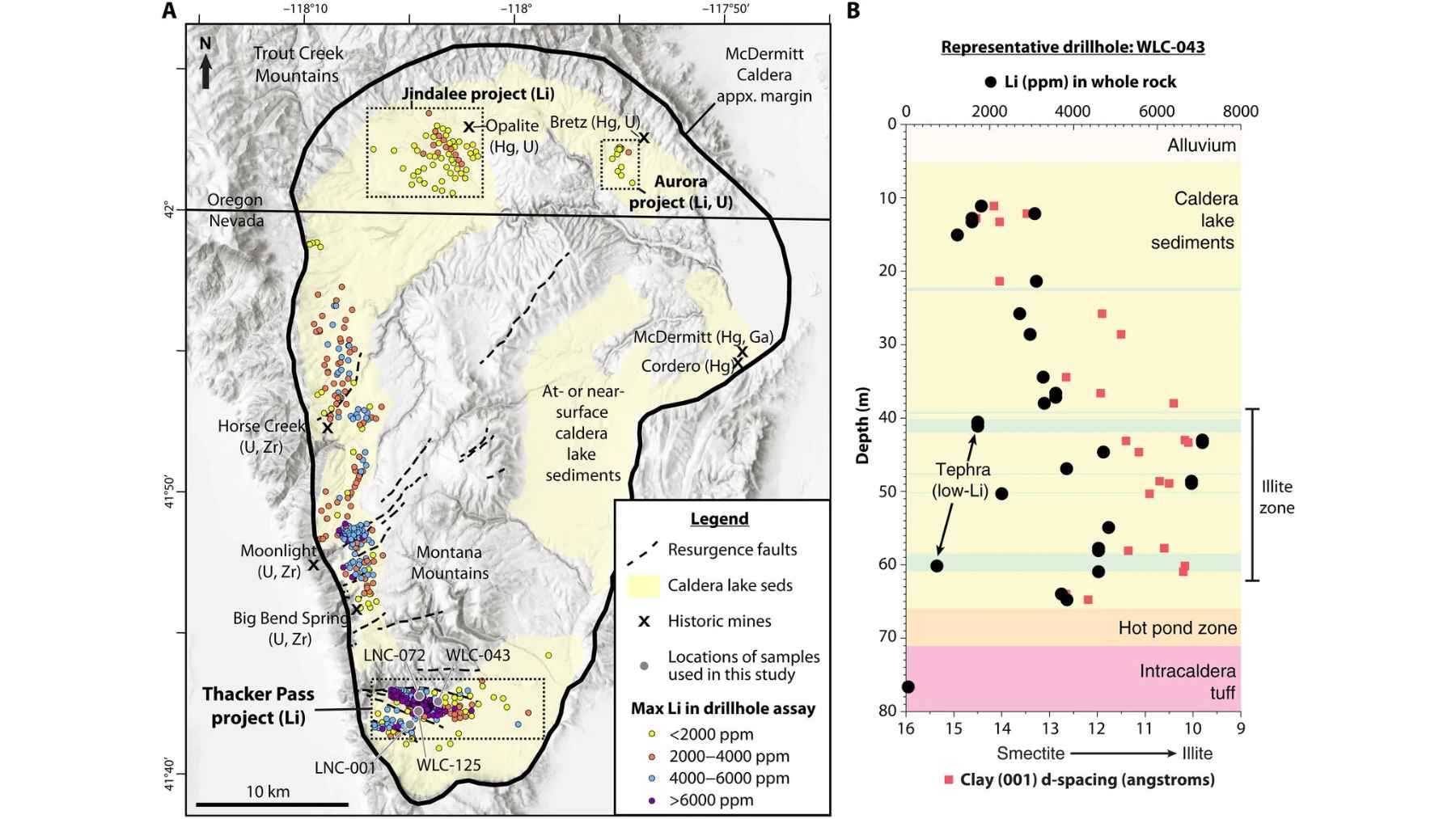
A geological map and drillhole data from the McDermitt Caldera highlight high lithium concentrations in clay layers, especially within the illite-rich zone at Thacker Pass.
Why lithium demand keeps climbing through 2040
Lithium underpins EV batteries, which can help reduce tailpipe exhaust in stop-and-go traffic where it matters most to people. It is also central to grid-scale batteries that help smooth out solar and wind power, especially when everyone cranks the air conditioning and demand spikes.
Forecasts differ, but the direction is consistently up. The McDermitt paper points to forecasts of around 1.1 million US tons of lithium demand by 2040 (about 1 million metric tons), which it describes as an eightfold increase compared with 2022 production, while the International Energy Agency projects lithium demand growth of about fivefold by 2040 in its stated policies outlook.
That mismatch is why governments talk about supply cha ins as much as emissions. The IEA also reports that mined lithium supply has been highly concentrated, with the top three producers supplying more than 75% in 2024, even if that share is expected to gradually fall over time.
The environmental tradeoffs hiding behind the hype
Even when lithium is framed as “clean,” extraction has a footprint. Nevada regulators describe the Thacker Pass project as open-pit mining paired with crushing and acid leaching, including an on-site sulfuric acid plant used in the process.
Read More: {{post_title link:post}}
The developer, Lithium Americas, says Phase 1 is designed for 40,000 metric tons per year of lithium carbonate (about 44,000 US tons) and is targeting mechanical completion in late 2027.
Water is another pressure point, especially in the arid West. A peer-reviewed review of lithium and water notes that Thacker Pass is estimated to use more than 1.6 billion gallons of water per year, which can put groundwater and nearby ecosystems under stress if it is not tightly managed.
Then there is the chemistry that comes with disturbing rock at scale. Research on potential hydrologic impacts of lithium development in Nevada highlights pollution pathways for surface water and groundwater, including risks tied to acidic compounds and heavy metals and metalloids that may leach from exposed materials and waste streams.
What responsible lithium could look like next
The impacts are not predetermined – they depend on design choices and oversight. Environmental reviews now focus on issues like water recycling, groundwater monitoring, air controls, and long-term waste handling, which is where “green mining” claims are either earned or lost.
It also helps to remember that new mines are not the only lever. The IEA finds that a successful scale-up of recycling can lower the need for new mining activity by about 25% to 40% by 2050 in a scenario aligned with national climate pledges, and earlier IEA analysis suggests recycled minerals could supply a small but growing share of lithium by 2040.
Read More: {{post_title link:post}}
Finally, watch how the biggest numbers are being framed in public debate. Some media coverage has pegged the caldera’s maximum lithium estimate at roughly $484 billion (about €413 billion, using the European Central Bank reference rate for April 10, 2026), but that valuation is an extrapolation and not a figure reported in the scientific study.
The study was published in Science Advances.