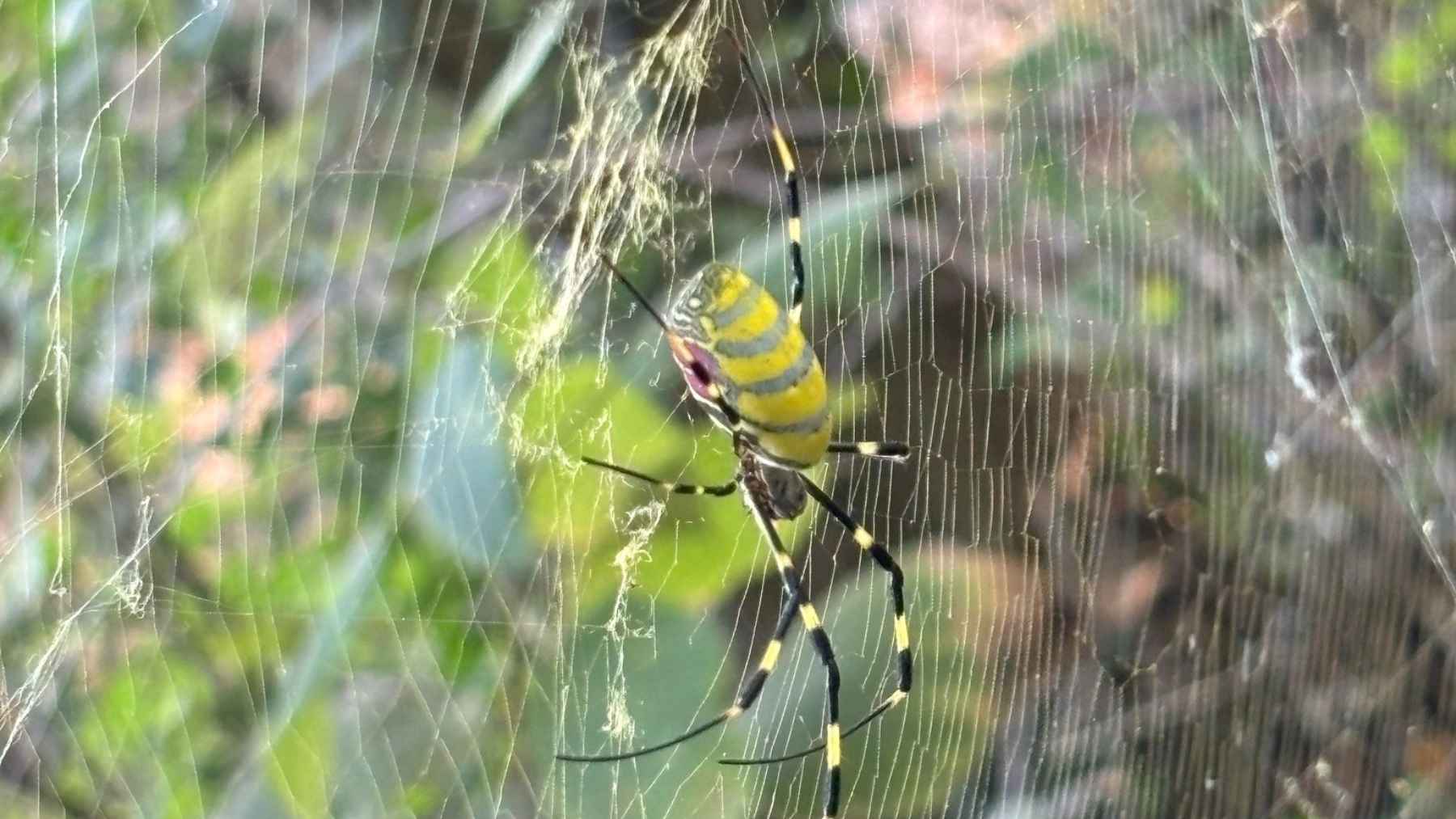
If you are heading to Great Smoky Mountains National Park, park officials and University of Tennessee researchers have a simple request. If you spot a Joro spider, take a photo and upload it to the free iNaturalist app so scientists can track where the species is showing up and how quickly it is expanding.
This is not a panic alert. Joro spiders are considered low risk for people and pets, but ecologists are watching them closely because research suggests they can outcompete native orb weavers in places where they become abundant. And in a park as heavily visited as the Smokies, a few seconds with your phone can turn into real conservation data.
Why the park is asking for help now
The request is tied to a new arrival inside the park boundary. Great Smoky Mountains National Park recorded its first Joro spider sighting in October 2024, and reports since then have pushed managers to learn what is happening beyond a single spot.
In an August 28 social media post, the park asked visitors to upload photos of any suspected Joro spiders using iNaturalist. The message was blunt and practical, saying that visitor observations “will provide valuable data” to help manage the invasive species.
That kind of crowdsourced map matters in a landscape this big. The Smokies span Tennessee and North Carolina and are often cited among the most visited national parks in the country, which means there are lots of extra eyes on trails, pullouts, and campsites where spiders actually live.
Where sightings are clustering in the Smokies
So far, most sightings in the park have been reported in and around Cades Cove. That is the scenic valley with the famous one-way, 11-mile loop road, plus trailheads, a campground, and a visitor center.
The pattern also appears seasonal. A Smokies-focused iNaturalist guide notes that the species has mostly been encountered in October and November, and that documentation has largely stayed in the Cades Cove region up to now.
Why there, of all places. Clemson invasive species expert David Coyle summed it up neatly when he said, “They do like to put their webs on places people go,” including shelters and similar structures. If you have ever brushed past a web near a railing or trail sign, you already get the idea.
How to recognize a Joro without confusing it with native spiders
Joro spiders can look similar to native orb weavers, which is one reason the park wants photo-based reports rather than guesses. Smithsonian Magazine notes that garden spiders and golden silk orb weavers can resemble Joros, and misidentifications can muddy the data scientists are trying to cleanly interpret.
Size is one clue, especially for females. Reports commonly describe adult females as roughly 3 to 4 inches across when you include the legs, while males tend to be much smaller, around a quarter of a female’s size.
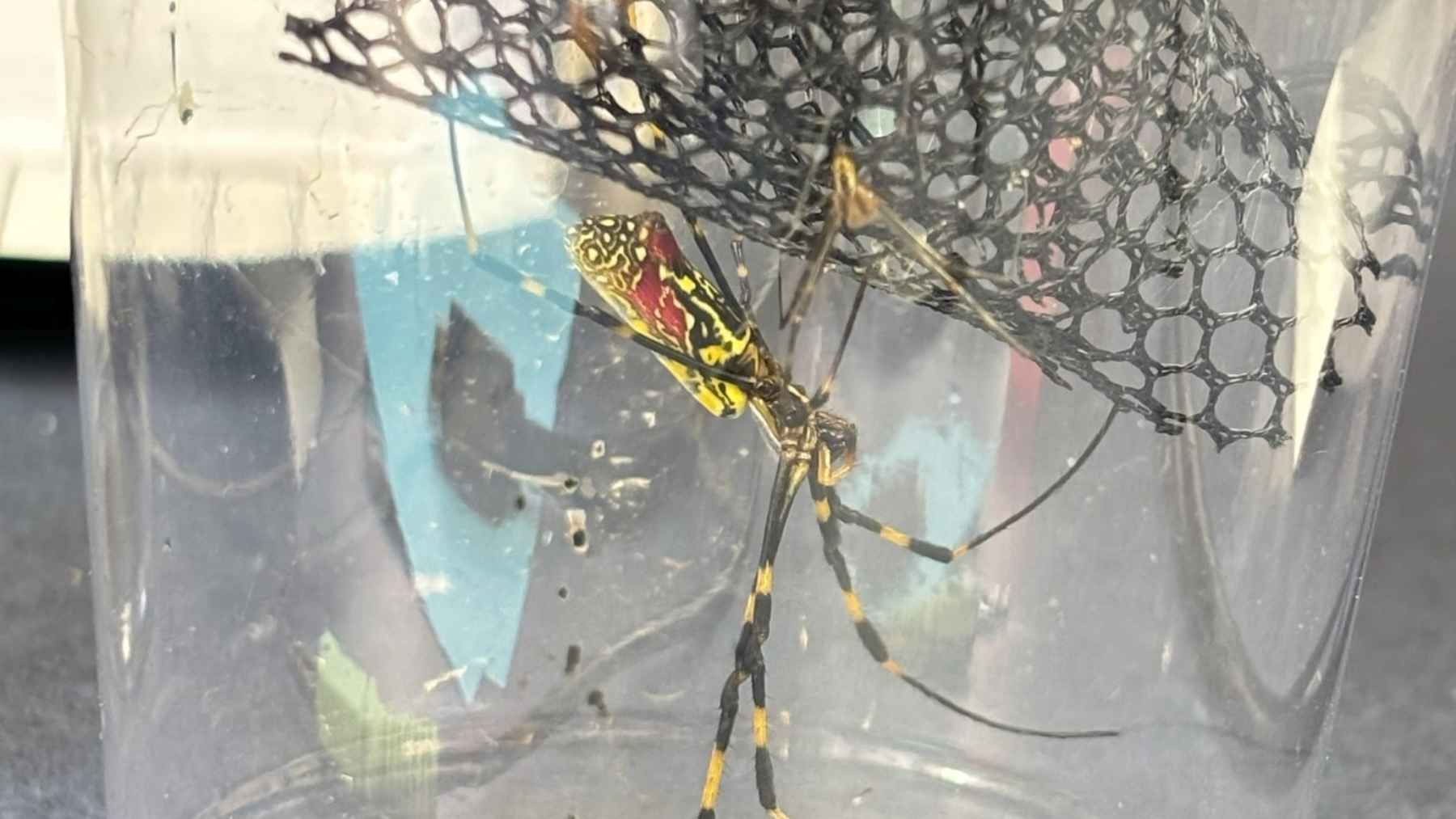
Color and web traits can help too, but it is best to document them with a clear photo. University of Georgia Extension describes the adult female as bright yellow with bluish-green banding and red markings on the underside, along with long dark legs that can show yellow-orange bands. Their orb webs can be very large and can look golden in sunlight, sometimes approaching about 10 feet across.
How they spread, even without “flying”
The part that surprises many people is how quickly spiders can move into new territory. Juvenile Joro spiders disperse by “ballooning,” which means they release silk strands that catch the breeze and carry them to new locations.
That is natural movement, but it is not the only pathway. Multiple sources note that the species likely arrived in the United States through human transport tied to trade, and it can also hitchhike locally on vehicles, outdoor equipment, and shipments.
Once established, they have a life cycle that can support rapid population growth. University of Georgia Extension reports that Joro spiders have one generation per year, and that egg sacs can contain hundreds of eggs. That is a lot of potential spiderlings from a single successful female.
Do they threaten people and pets?
Despite the dramatic look, most experts describe the risk to humans as low. Smithsonian Magazine reports that Joro spiders tend to steer clear of humans, and notes that their venom is considered weak and their fangs are generally not powerful enough to puncture human skin.
University of Tennessee entomologist Karen Vail put it in plain language, saying, “They’re just not aggressive towards us,” and joking that the Joro “might win the ‘shyest spider of the year’ award.” It is hard to top that for a calm reality check.
Even so, common sense still applies, especially with kids who want to touch everything they see. Photograph from a respectful distance, avoid handling, and keep your focus on reporting, not interacting.
Why ecologists still take the Joro seriously
The real question is ecological, not medical. Invasive species can reshape food webs and crowd out natives in ways that only become obvious after years of monitoring, which is exactly why researchers want early, high-quality location data.
One of the clearest data points comes from a 2025 study in the journal Insects that tracked Joro spiders and native orb weavers across 25 forest sites in the Atlanta region from 2022 through 2024. The researchers reported that Joro spiders doubled in abundance each year during the study period, while native orb weavers declined by about 40% each year, a trend the authors say could signal disruption to local trophic networks.
Still, scientists also emphasize uncertainty. A Smokies Life report notes that researchers have said the “jury’s still out” on the long-term impact, and park staff are watching new studies as they decide whether any management actions are warranted. That mix of vigilance and restraint is basically the point of monitoring.
How your iNaturalist report becomes usable science
iNaturalist is more than a social feed for nature lovers. It is a platform that lets people upload observations with photos and location data, and when many users report the same organism over time, researchers can identify patterns that would be expensive to collect any other way.
For visitors, the process is simple. Snap it. Share it. A sharp photo of the spider and, if possible, the web helps the community and researchers confirm the identification and build a clearer map of where the species is actually established
The official statement was published on Great Smoky Mountains National Park’s Facebook page.