Scientists in Uruguay have confirmed the local presence of Sporothrix brasiliensis, a fungus that can move from infected cats to people and cause stubborn skin infections. The warning began after a household outbreak in 2025, but later reports in cats from Maldonado and Rocha suggested the fungus was already circulating locally.
That matters because this is not the usual cat scratch story. Elisa Cabeza, of the Universidad de la República’s Institute of Hygiene, said the infection has raised epidemiological surveillance because it can cause outbreaks and may be more serious for vulnerable groups, while also stressing, “The infection is curable.”
A familiar disease changes route
Sporotrichosis is often called “rose gardener’s disease” because many infections start when fungus from soil, plants, or decaying material enters a cut. The U.S. Centers for Disease Control and Prevention says Sporothrix can infect people, cats, and other mammals through scrapes, plant injuries, or bites and scratches from infected cats.
Uruguay already knew this disease, but in a different way. A 2022 review found 157 diagnosed cases over 38 years, and 128 were linked to armadillo scratches during hunting, not household pets.
Why cats amplify the fungus
Cats can carry large amounts of the fungus in open sores, especially on the face, nose, mouth, and paws. When a claw, tooth, or wound fluid breaks human skin, the fungus gets a direct path into tissue.
That does not make cats the villain. It makes untreated sores the problem. Outdoor and stray cats may fight, roam, groom themselves, and move through several blocks before anyone realizes a skin lesion is more than an ordinary wound.
A heat switch helps it survive
The fungus has a useful biological trick called dimorphism. In plain English, that means it can grow one way in the environment and another way inside a warm body.
Outside the body, it may grow in threadlike forms. In warm tissue, it can switch into a yeast-like form that is better suited to living in skin, which helps explain why small scratches can turn into slow-healing lesions.
Signs people should watch
In people, the infection often begins as a small red, pink, or purple bump that may appear one to 12 weeks after exposure. Over time, more bumps can form, grow, leak pus, become open sores, or spread up from the original scratch site.
What should make someone pause? A scratch that refuses to heal, especially after contact with a sick cat, deserves medical attention. Less commonly, sporotrichosis can involve the eyes or lungs, and rarely it can spread to bones, joints, or the central nervous system.
Sick cats may show clues
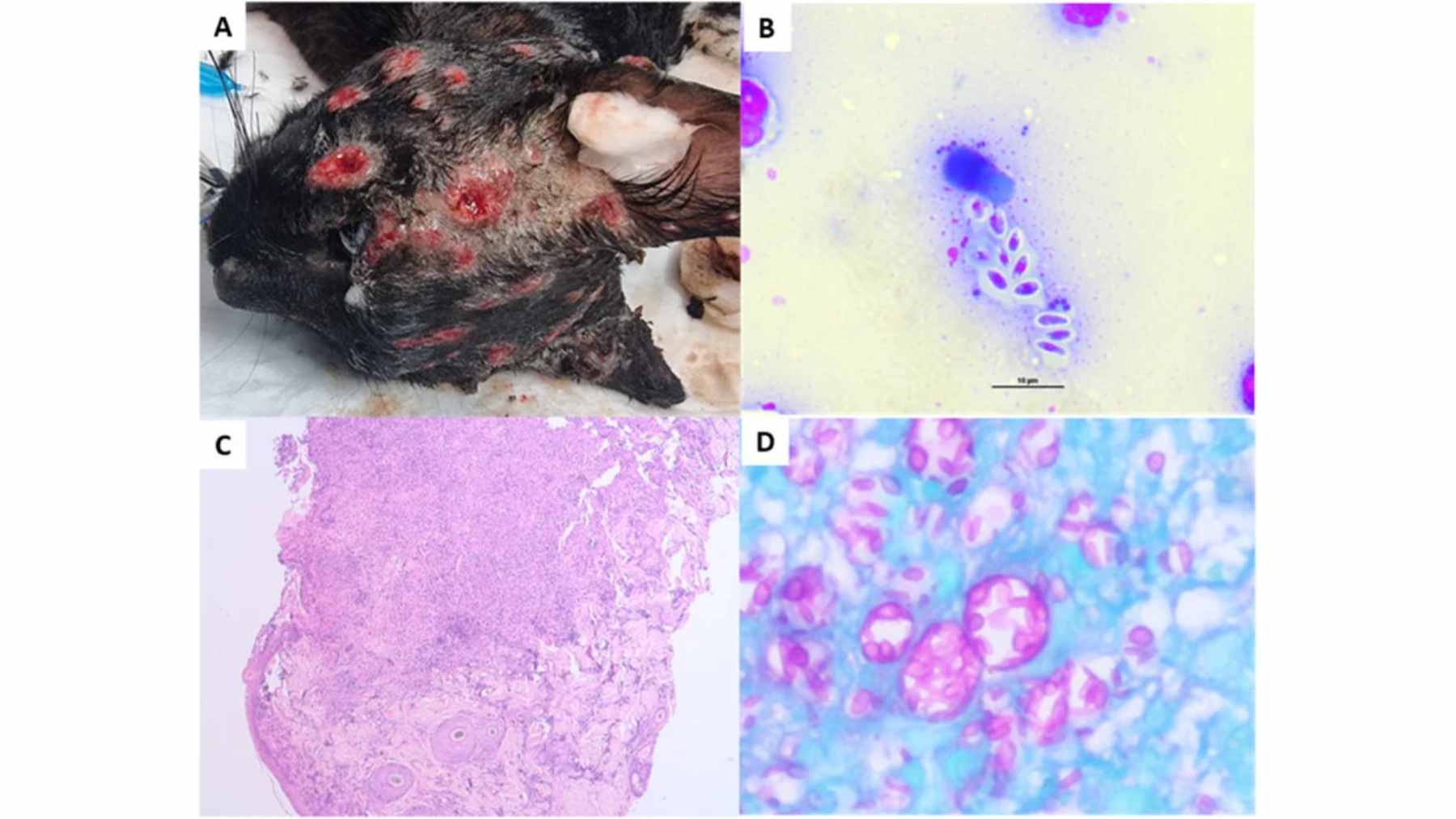
Cats with sporotrichosis often develop sores on their faces, particularly around the nose. Those sores can come from fights with infected cats, and grooming can spread the fungus to claws and mouths.
In reported feline outbreaks, skin signs can include ulcers, crusted wounds, draining lesions, and sores on the head, face, neck, or lower legs. Red or watery eyes and nasal symptoms can also complicate the picture, so guessing at home can miss the real cause.
Diagnosis matters early
Doctors and veterinarians usually confirm sporotrichosis by looking at material from a wound under a microscope, growing the fungus in a lab, or using molecular tests when available. That step matters because the sores can be mistaken for bacterial infections.
A bottle of antibiotics will not fix a fungal infection. For the most part, treatment uses prescription antifungal medicine, often for weeks or months, and cats can be especially difficult to manage if they are stray or cannot be kept safely indoors.
Who faces greater risk
Most cases involve the skin, but serious illness can happen. The World Health Organization says rare cases may lead to arthritis, respiratory infection, or meningitis, and people with weakened immune systems may develop more extensive disease.
Uruguayan specialists also pointed to children under two and older adults as groups of special concern. That is why a small wound matters more than it may look at first glance, especially in a home with toddlers, grandparents, or anyone with a fragile immune system.
A regional warning sign
The discovery fits a wider South American pattern. The World Health Organization says Sporothrix brasiliensis has driven a large, progressive outbreak in Brazil and nearby countries, with more than 11,000 human cases reported in affected areas over the past decade.
Brazil shows how quickly the problem can grow. A study in CDC’s Emerging Infectious Diseases reviewed 216 cases in Curitiba from 2011 to May 2022 and found that more than half were diagnosed during 2019 through 2021.
What changes now
The practical answer is not fear. It is faster recognition, safer handling of sick cats, veterinary care, and better coordination between human health services and animal health teams.
At the end of the day, a fungus that once looked like a problem of soil, thorns, and hunting in Uruguay now has a new route through cats.
The official statement was published by Uruguay’s Institute of Hygiene.