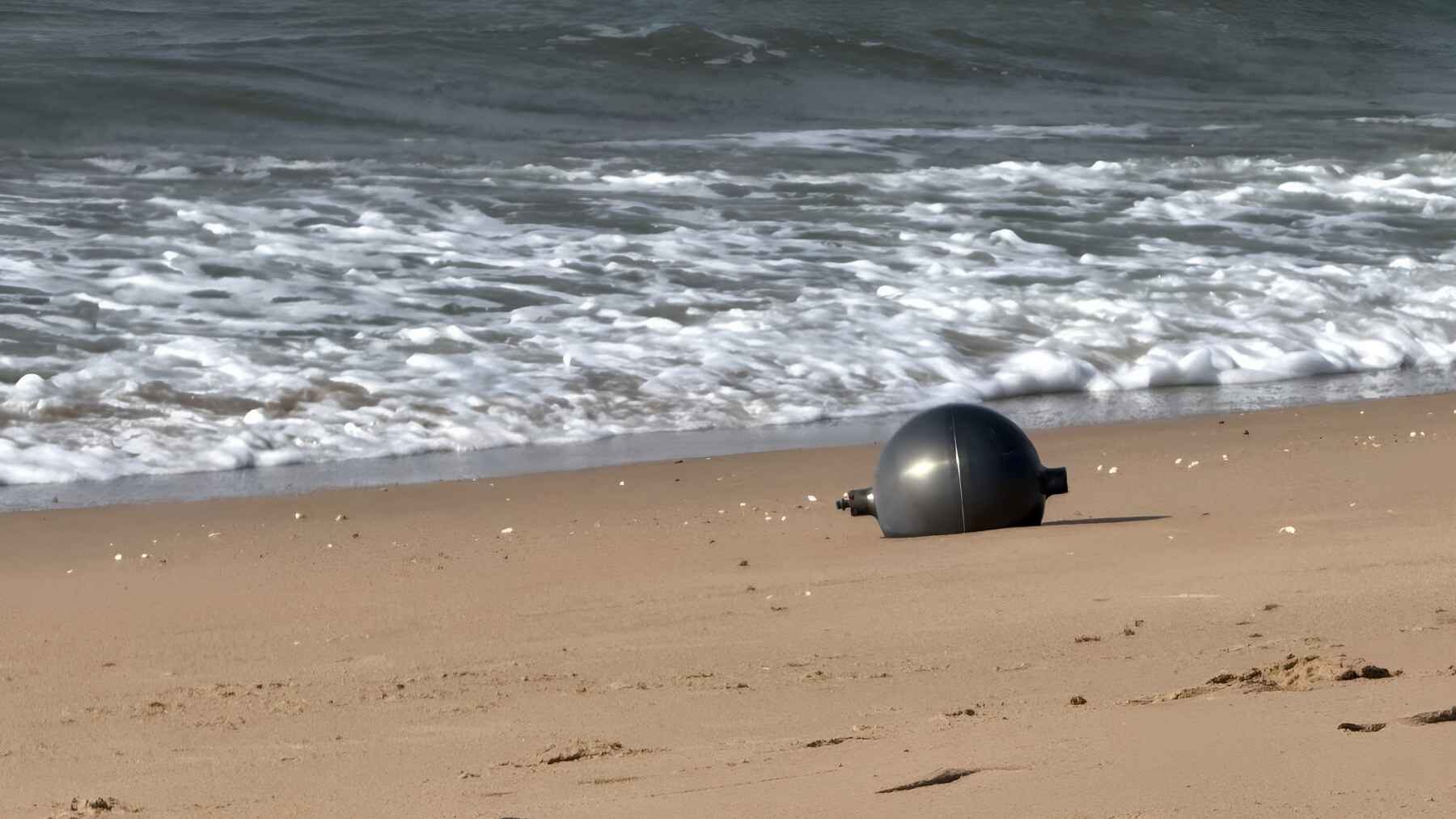
Six large metallic spheres that washed onto Forrest Beach in northern Queensland have been identified as likely space debris from a foreign rocket. The discovery turned a quiet weekend by the water into a multi-agency safety operation, complete with protective suits and a temporary beach exclusion zone.
The objects appear to be high-pressure tanks from a launch vehicle that recently fell back through Earth’s atmosphere. Authorities say the recovered pieces are safe, but their exact rocket and country of origin have not yet been formally confirmed.
Six spheres on the sand
The first object was reported near the small community of Forrest Beach on Friday, July 3, 2026. By the following Monday, six pieces had been found near Ingham, north of Townsville, after local residents spotted the unusual shapes and contacted authorities.
“The recovered objects appear to be pressure vessels from a space launch vehicle,” the Australian Space Agency said. Their location and characteristics were consistent with parts of a foreign rocket body that had recently reentered from orbit, but investigators did not publicly name the launch vehicle.
The Queensland Fire Department sent specialist teams to secure the area, while the space agency advised the National Emergency Management Agency. Crews worked around an exclusion zone of about 160 ft. as the objects were inspected and removed.
Why “space balls” survive
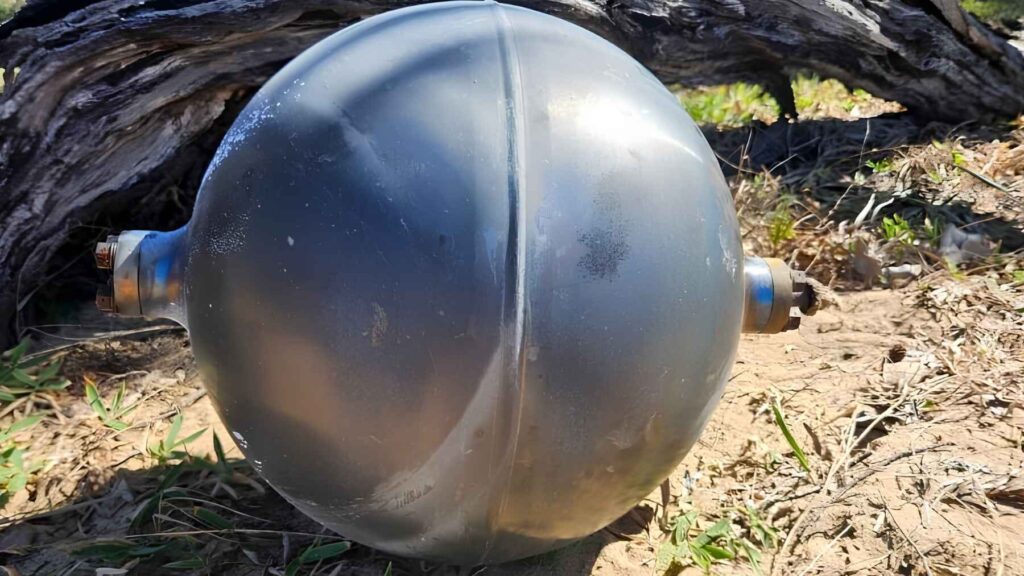
A pressure vessel is basically a heavily reinforced tank built to store gas or liquid under intense pressure. Rockets use these tanks in liquid-fuel systems, so they are made from robust materials and designed to cope with the stress of launch.
That toughness can also help them survive the fiery trip home. Alice Gorman, a space archaeologist at Flinders University, called the find a classic example of “space balls,” an informal nickname for spherical rocket tanks that reach the ground or ocean largely intact.
How can a piece of rocket hardware float all the way to a beach? Once empty, some pressure vessels can remain buoyant, allowing currents to carry them until they wash ashore like oversized fishing floats.
Space junk comes home often
Most spacecraft and rocket parts either return through a controlled route or burn up as they plunge into the atmosphere. Still, the European Space Agency’s latest figures list about 45,910 objects regularly tracked around Earth, while only about 16,000 are functioning satellites. The rest include dead satellites, spent rocket stages, and fragments from launches, breakups, or collisions.
Many objects remain in orbit for years, while others slowly lose altitude and eventually reenter. NASA says an average of one cataloged piece of debris has fallen back to Earth each day over the past 50 years. Most surviving pieces land in oceans or sparsely populated regions, and no serious injury or major property damage from reentering debris has been confirmed.
So why do beach finds feel so rare? For the most part, this traffic is invisible to people on the ground, until an ordinary walk, fishing trip, or morning by the water suddenly reveals a piece of the space age.
Australia has seen this before
Australia’s large landmass, surrounding ocean, and remote regions help explain why debris has repeatedly been found there. Official examples include parts of the Skylab space station that fell over Western Australia in 1979, a discarded SpaceX Dragon spacecraft section discovered in New South Wales in 2022, and a launch-vehicle pressure vessel that washed up in Western Australia in 2023.
The Forrest Beach discovery follows those two recent finds, making it the third highlighted Australian case since 2022. It also shows why members of the public are often the first link in the response chain, even when the hardware began its journey hundreds of miles above Earth.
Residents said boats, coolers, bottles, and weather buoys have washed onto Forrest Beach over the years. A rocket tank is a much stranger arrival–give it space.
Finding the rocket’s owner
Investigators used the objects’ location and characteristics to identify a likely source. They are now working with international authorities to formally confirm the launch vehicle and the state responsible for it.
Australia’s national reentry plan explains how federal authorities support states and territories when space debris lands within the country. Once an object is confirmed, the government may also have to notify the launching authority and return the hardware if requested.
The United Nations Liability Convention adds another layer of accountability. Under the treaty, a launching state can be required to compensate for damage caused by its space objects on Earth’s surface, although no such damage was reported at Forrest Beach.
What beachgoers should do
The official advice is simple. “Never touch, move, or recover suspected space debris,” authorities warned, because space hardware may be made from hazardous materials or contain damaged components that require trained specialists.
People should move away, keep others clear, and contact local emergency services. Taking a strange object home as a souvenir could create a safety risk and prevent experts from assessing it where it was found.
At the end of the day, the Forrest Beach spheres are less a science-fiction mystery than a public-safety reminder.
The official guidance on discovering space debris has been published by the Australian Space Agency.