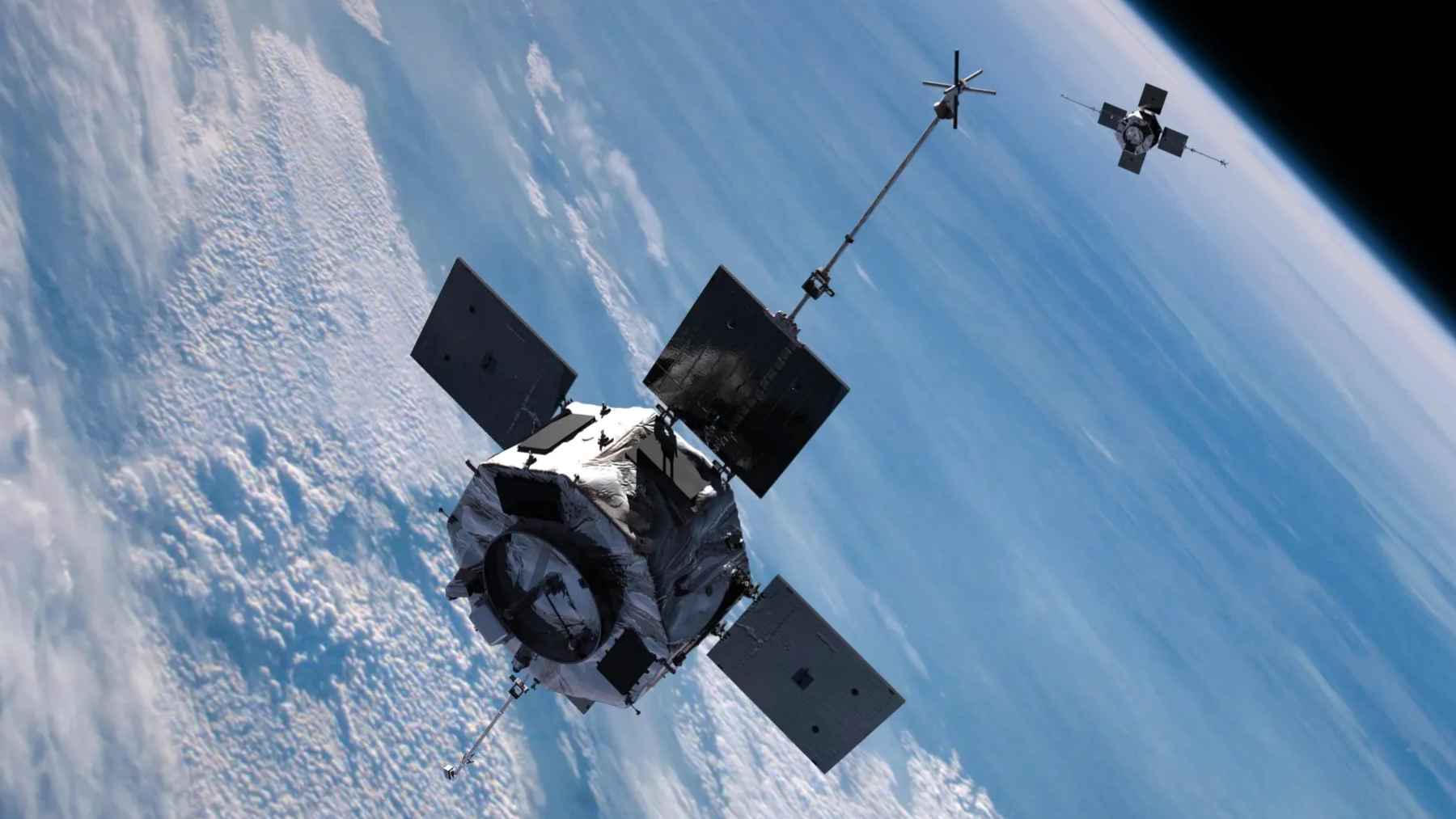
A retired NASA spacecraft called Van Allen Probe A reentered Earth’s atmosphere at about 6:37 a.m. Eastern Time on March 11, 2026, over the eastern Pacific Ocean, tracked by the U.S. Space Force. The roughly 1,323-pound satellite mostly burned up on the way down, and any surviving fragments were expected to fall into an ocean region west of the Galapagos Islands. No panic needed.
Even so, the event mattered for more than the simple question of “will it hit anything?” Van Allen Probe A was built to fly through a harsh zone of radiation around Earth, and its early return is a reminder that the Sun can quietly change the space environment in ways that affect satellites we depend on every day. So what exactly was it studying up there?
A low-risk reentry with a wide uncertainty window
NASA and outside trackers stressed that the chance of debris harming someone on the ground was extremely small, estimated at about one in 4,200, or about 0.02%. That number is still not zero, but it is low enough that there was no reason for the public to take special action.
One reason is simple geography. Most of Earth is covered by ocean, and a falling spacecraft has far more empty water and uninhabited land to “choose from” than crowded city blocks.
There was also a timing problem that makes headlines feel scarier than the reality. Uncontrolled reentries can shift by many hours because Earth’s upper air is constantly changing, so predictions typically come with about a one-day range rather than a single pinpoint moment.
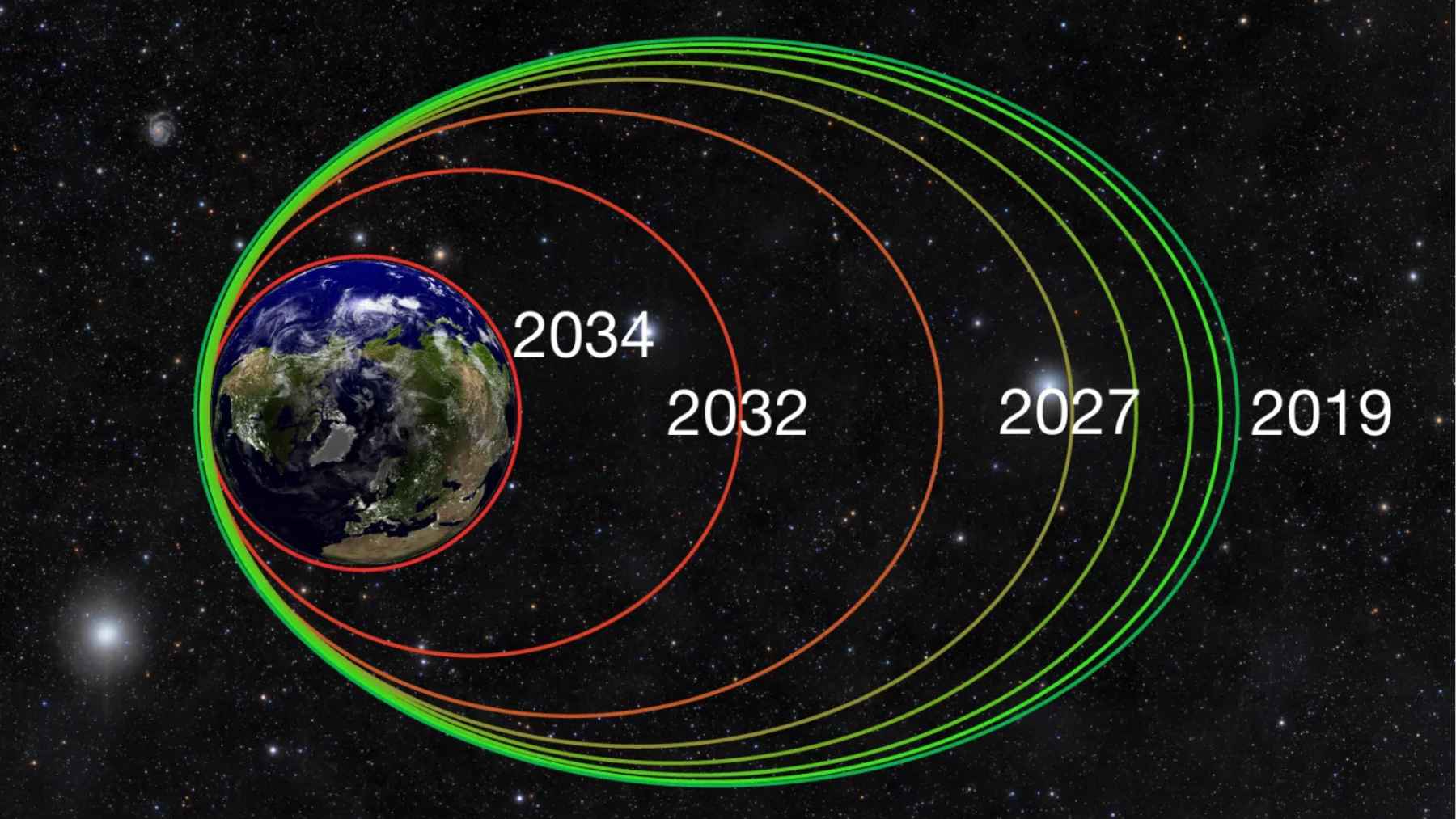
A NASA visualization shows how Van Allen Probe A’s orbit shrank over time, leading to its earlier-than-expected reentry.
What the Van Allen belts are and why they exist
The Van Allen belts are often described as invisible rings around Earth. In plain language, they are zones where fast-moving charged particles get trapped by Earth’s magnetic field, and the belts are named for scientist James Van Allen.
Those particles do not stay steady. Solar storms can pump new particles into the belts or shake the system in ways that move particles around, which can raise the radiation level for a while.
That matters because radiation can damage electronics over time and sometimes cause sudden glitches. Spacecraft builders plan routes and shielding to limit exposure, which is why many missions try to spend as little time as possible in this region.
What Van Allen Probe A helped scientists learn
Van Allen Probe A launched on August 30, 2012, alongside its twin spacecraft Van Allen Probe B, with a planned mission of two years. Instead, both probes kept working for almost seven years before the mission ended in 2019, after they ran out of fuel needed to keep their solar panels pointed toward sunlight.
The mission was managed and operated by Johns Hopkins University Applied Physics Laboratory, and it was designed to survive repeated passes through the radiation belts. “The Van Allen Probes rewrote the textbook on radiation belt physics,” said Sasha Ukhorskiy, the mission’s project scientist.
The work also produced a mountain of follow-up science. Mission scientist David Sibeck at NASA’s Goddard Space Flight Center has said the observations have fueled more than 600 peer-reviewed papers and over 55 PhD theses, a sign that the data is still very much alive even after the spacecraft is gone.
A third belt and other surprises inside Earth’s radiation zone
One headline finding was evidence for a temporary third radiation belt that can appear during intense solar activity, something NASA announced publicly in 2013. It was a big shift for a field that had long treated the belts as a mostly two-ring system.
Researchers also learned that small-scale electric structures can add up fast. A 2013 paper in Physical Review Letters described thousands of brief electric “steps” detected in about a minute that together helped accelerate particles to extreme energies.
Put those results together and you get a clearer picture of why space weather is hard to forecast. The belts can change quickly, and different kinds of waves and storms can either pump them up or drain them down.
Solar maximum made the upper atmosphere puffier
When people hear “solar maximum,” they often think of pretty auroras and photos. It is also a period in the Sun’s roughly 11-year activity cycle when storms, flares, and bursts of particles happen more often, and NASA and NOAA confirmed Solar Cycle 25 reached that phase in October 2024.
During active periods, energy from the Sun can heat Earth’s upper atmosphere, making it expand outward a bit. In practical terms, satellites that skim the edge of that puffed-up air feel more drag, like a bike rider suddenly hitting thicker wind.
NASA said early forecasts made after the mission ended pointed to a reentry around 2034, but the stronger than expected solar cycle increased drag and shortened the timeline by about eight years. Van Allen Probe B is still in orbit but is not expected to reenter before 2030, so its final descent will likely be watched for the same reason.
Why this space weather story reaches the ground
The point of studying the radiation belts is not just curiosity. Space weather affects satellites that support communications and navigation, and it can complicate astronaut safety planning, which can ripple into everyday life through things like GPS directions on a phone or timing signals used by parts of the power grid.
That is why older datasets stay valuable long after a spacecraft goes quiet. “By observing these dynamic regions, the Van Allen Probes contributed to improving forecasts of space weather events and their potential consequences,” NASA said. In the end, the spacecraft’s fiery return was more of a closing chapter than a crisis.
The main official update has been published by NASA.