What does an animal look like when its body is almost all water and sunlight never reaches it? During a 15-day expedition in April 2026, an international team aboard the research vessel Falkor (too) identified 31 species new to science within about two weeks in the tropical South Atlantic off Brazil.
The number is striking, but the method may be the bigger story. Laser scanners, three-dimensional cameras, live-cell microscopes, and a genetics laboratory at sea let researchers study delicate organisms before their shapes and colors faded, speeding up work that can otherwise take years or even decades.
Earth’s biggest habitat
The team explored the ocean’s midwater, the enormous space below the bright surface and above the seafloor. An official explainer describes it as about 90% of Earth’s living space, with an estimated volume of nearly 240 million cubic miles, yet scientists have examined only a tiny fraction.
Why is it so poorly known? The habitat is vast, much of it is dim or dark, and many residents are transparent or jelly-like. Nets and preservation chemicals can damage or discolor them, leaving researchers with a specimen that looks very different from the living animal.
A roll call of new life
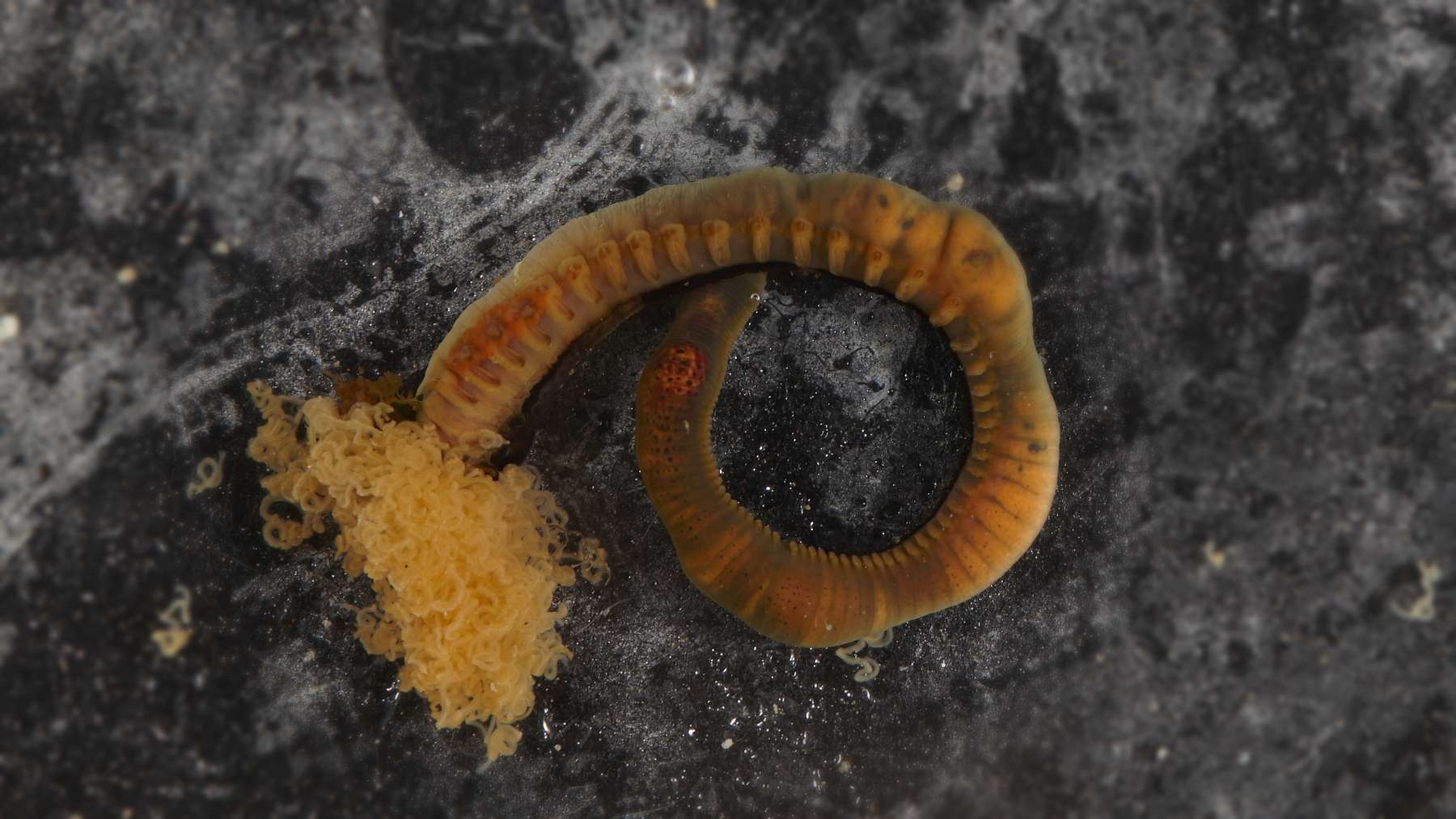
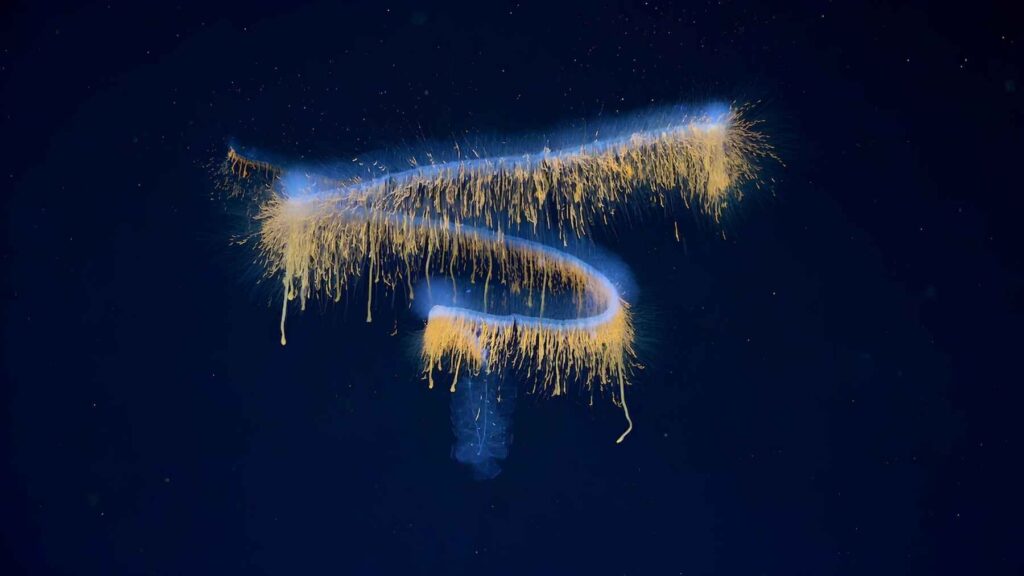
The 31 finds included nine jellyfish, seven siphonophores, seven comb jellies, four larvaceans, one amphipod, one gossamer worm, and two giant rhizarians. Several are soft-bodied animals that rarely reach the surface in recognizable condition.
Some sound as if they belong in science fiction. Siphonophores, for example, are colonies of specialized individuals that work together like one drifting animal, while larvaceans are tadpole-shaped creatures that build elaborate mucus houses around themselves. The rhizarians are stranger still, since each is a single cell large enough to see without a microscope.
The expedition also recorded behavior that a preserved sample could never show. A juvenile glass squid was collected from about 2,560 ft. down, and cameras filmed a female open-ocean octopus eating a bright red jellyfish at roughly 2,625 ft.
Lasers instead of nets
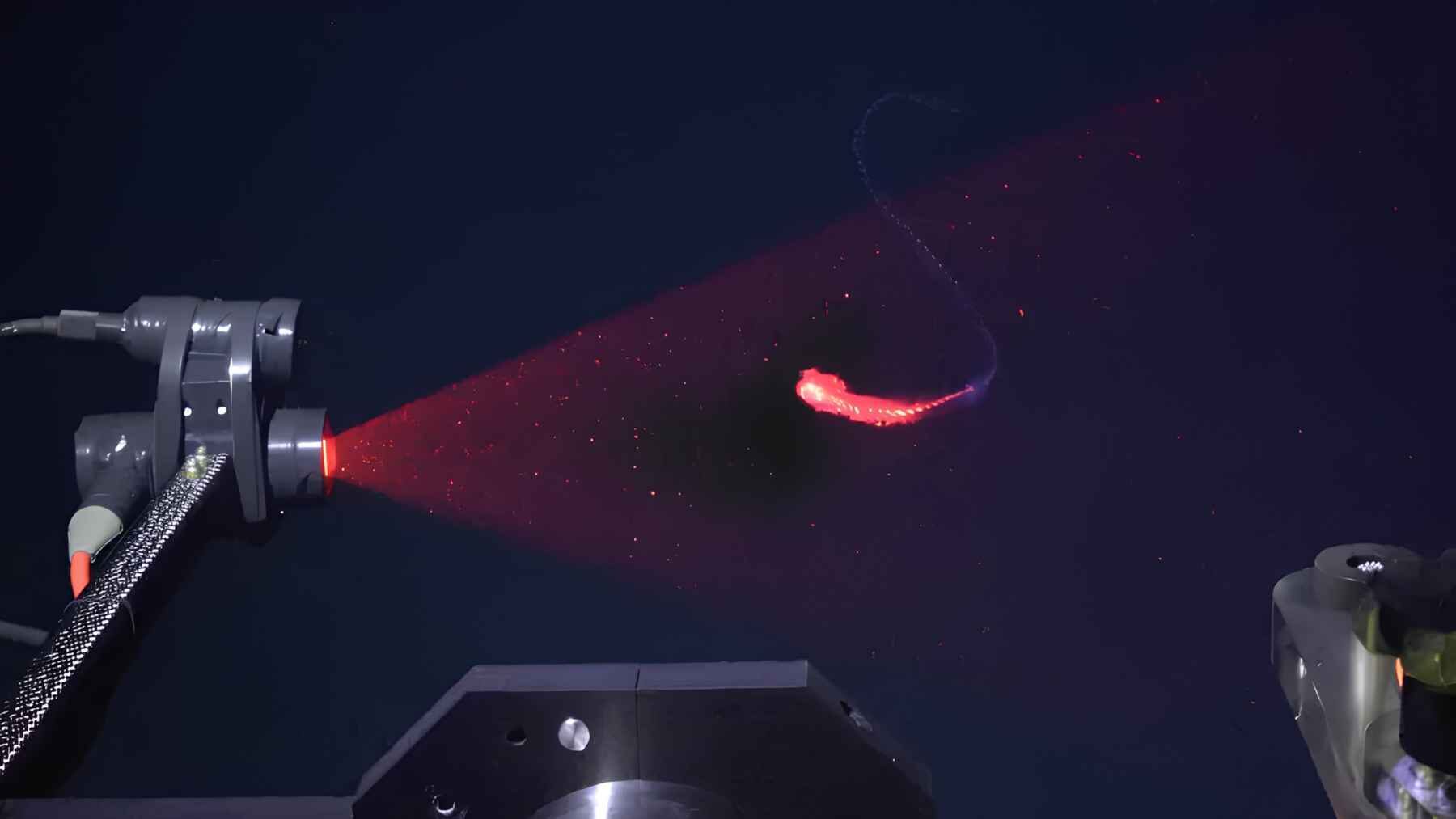
The remotely operated vehicle SuBastian carried imaging tools into the water while pilots controlled it from the ship. Engineers at the Monterey Bay Aquarium Research Institute developed two of the main systems, EyeRIS and DeepPIV, to measure and scan animals without grabbing them.
EyeRIS uses more than 30,000 tiny camera lenses focused at different distances to build a three-dimensional view. DeepPIV sweeps a thin sheet of laser light through a transparent body, producing image slices much like a medical scan and revealing internal structures without cutting the animal open.
Other tools filled in the details. A shadowgraph system from the Japan Agency for Marine-Earth Science and Technology captured features the laser scans could miss, while a virtual reality chamber from the University of Western Australia tested how small animals reacted to controlled scenes. A multiview camera photographed live specimens from three angles, and the team documented 80 animals after setting a target of 15.
A genetics lab at sea
High-resolution pictures showed what each creature looked like, but DNA helped determine whether it was truly different from known species. John Burns of Bigelow Laboratory for Ocean Sciences and Cheryl Ames of Tohoku University led the onboard sequencing work, allowing the team to compare specimens while the expedition was still underway. “The ocean never let up with surprises in every pocket of water that we explored,” he said.
The official announcement reports that the team confirmed the 31 species within days. Because it does not list final scientific names for all 31, it presents a rapid identification milestone rather than a complete taxonomic catalog.
A specialized microscope called Squid added another first. Developed by Manu Prakash at Stanford University, it captured living internal cell structures in three dimensions at sea, including movement inside a giant single-celled protist and the relationship between its soft interior and glass-like skeleton.
Why the discovery matters
Midwater life does far more than provide strange images. Billions of animals rise toward the surface at night to feed and sink again before daylight, a daily migration that helps move carbon into deeper water. In practical terms, their bodies act like tiny elevators in the ocean’s carbon system.
That movement affects food webs, nutrient cycles, and the amount of carbon stored below the surface. Related carbon-cycle research in the same region is examining how animals carry carbon downward in their guts, an important piece of the ocean’s “biological pump,” which transfers carbon from surface waters to the deep.
“The largest habitat on Earth, the midwater, is filled with incredible animals we are only just starting to understand,” said chief scientist Karen Osborn of the Smithsonian National Museum of Natural History. The 31 discoveries matter, but the lasting advance may be a faster and less destructive way to build digital specimens that experts around the world can study and compare.
The official expedition press release was published by Schmidt Ocean Institute.