A century after the colossal squid was formally described, scientists have finally filmed one alive in its natural habitat. The Schmidt Ocean Institute says its team captured the first confirmed in situ video of a juvenile colossal squid (Mesonychoteuthis hamiltoni) on March 9, 2025, using its remotely operated vehicle SuBastian near the South Sandwich Islands, almost 1,970 feet (600 meters) deep.
The animal was only about 12 inches (30 centimeters) long, roughly the size of a ruler you might keep in a desk drawer.
So why is a one-foot baby making ocean science headlines? Because for decades, researchers mostly met this species as leftovers, prey remains in the stomachs of whales and seabirds, or as a predator that can scar harvested Antarctic toothfish.
“It’s exciting” and “humbling,” said Dr. Kat Bolstad, one of the independent experts who verified the footage, because the squid has “no idea that humans exist.”
Where it was filmed and why that depth matters
The 35-day mission was a flagship Ocean Census expedition, built around deep-sea robotics and a global network of experts who can help confirm species quickly.
At nearly 2,000 feet down, daylight is gone, so the view depends on the remotely operated vehicle (ROV) lights and cameras, not the human eye. It’s like trying to understand a rainforest at midnight with a flashlight, except the “trees” are mountains of seafloor.
Te Papa, the Museum of New Zealand, notes that colossal squid are associated with very deep Southern Ocean waters, around 3,300 feet (1,000 meters) below the surface. It also points out that human vision can only detect light down to roughly 1,640 to 1,970 feet (500 to 600 meters), which helps explain why this animal stayed off-camera for so long.
How experts knew it was a colossal squid
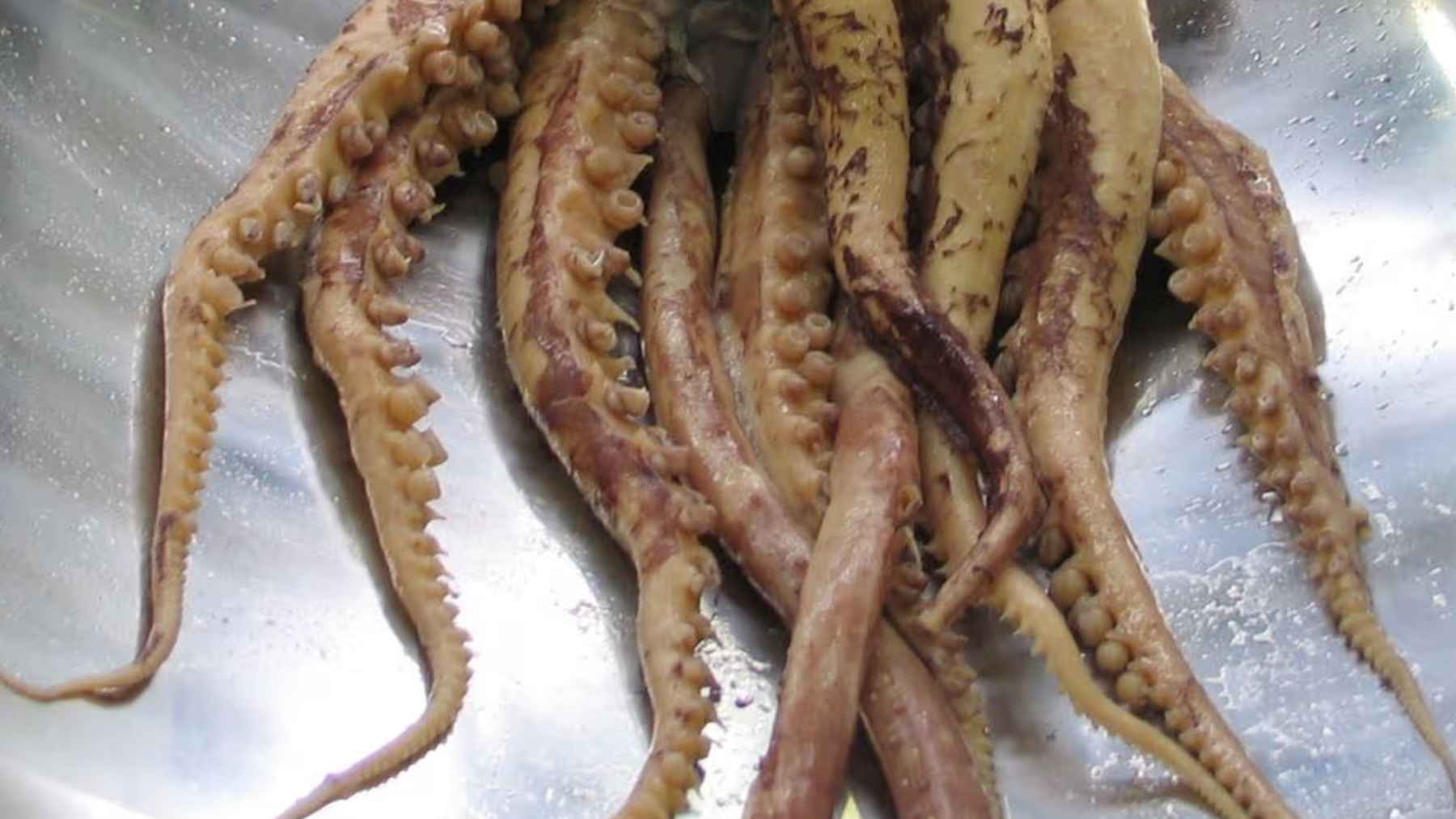
Juvenile colossal squid can look like other “glass squids” because they are still partly transparent. In the Schmidt Ocean Institute account, experts confirmed the species using high-resolution imagery and a key clue, hooks on the middle of the squid’s eight arms, which helps separate it from close look-alikes.
Te Papa’s anatomy notes add another signature feature, rotating hooks on the club-shaped ends of the two longer tentacles. Those hooks can swivel 360 degrees, and the museum reports that a tentacle club may carry roughly 22 to 25 hooks, alongside sharply serrated suckers that can leave circular damage marks on toothfish.
What a baby can tell us about a giant
The institute stresses how little is known about the colossal squid’s life cycle, in part because healthy adults have not been observed at depth. The new footage matters because juveniles eventually lose their see-through appearance, and earlier videos captured by fishermen involved dying adults rather than animals behaving naturally in the deep sea.
Te Papa’s collections team is blunt about the gap in basic biology. It describes the habitat as poorly sampled, notes that adults are exceedingly rare in collections, and even lists reproduction as unknown for Mesonychoteuthis hamiltoni. That’s a lot of uncertainty for an animal estimated to reach about 23 feet (7 meters) long and up to 1,100 pounds (500 kilograms).
A food web we usually read through stomach contents
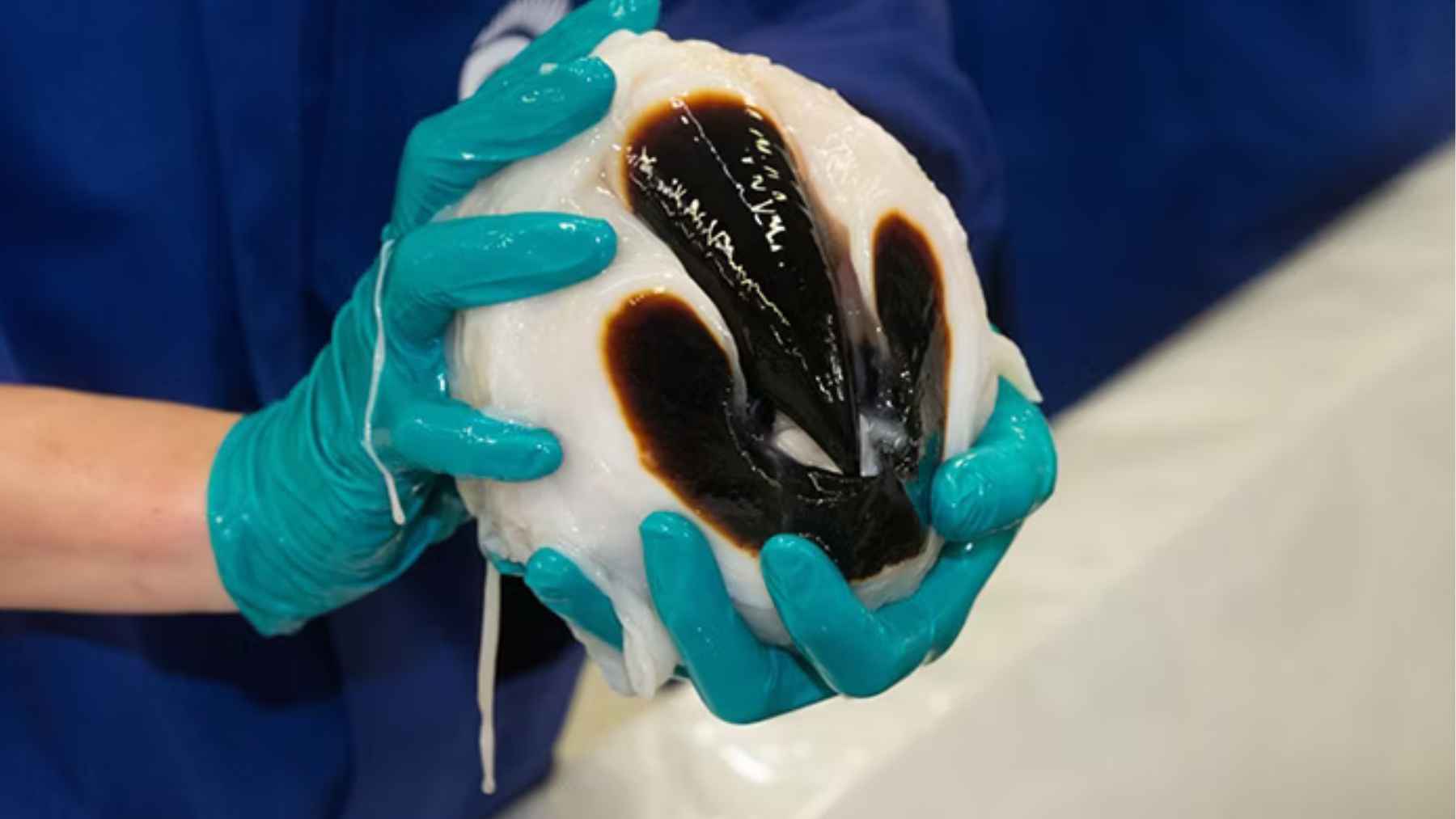
If you want to understand the colossal squid, you often have to start with what other animals leave behind. Te Papa explains that sperm whales consume many colossal squid, and the hard beaks can remain in stomach contents even when soft tissue disappears, turning diet studies into a kind of forensic trail.
Those clues suggest the squid is not just a rare curiosity. Te Papa reports that beaks attributed to Mesonychoteuthis have made up about 14% of the beaks counted in Antarctic sperm whale stomach samples and, because of the squid’s size, this can represent an estimated 77% of the biomass consumed.
A clear, living video helps connect those numbers to a real animal moving through its own ecosystem.
Built for darkness and for grabbing prey
The colossal squid’s most famous feature may be its eyes. Te Papa reports they measure about 10.6 inches (27 centimeters) across in a living animal, about the size of a soccer ball, and that the eyes include light organs called photophores that function like built-in headlights in the deep.
Then there is the feeding gear. Te Papa describes the beak as essentially the squid’s mouth and says food is further shredded by a radula that works like a tongue with teeth. Pair that with rotating hooks and serrated suckers, and you get a predator designed to grab and hold on in near-total darkness.
Why the clip matters for conservation
Discoveries like this are not only about wonder – they are also about baseline knowledge. When researchers can confirm which species live where, and at what depths, it strengthens the science behind fisheries management and protected areas, especially in remote Southern Ocean regions where so much is still uncertain.
It also shows how discovery speeds up when robotics meets collaboration, with experts verifying footage in near real time even when they are not on board.
The press release was published on the Schmidt Ocean Institute.