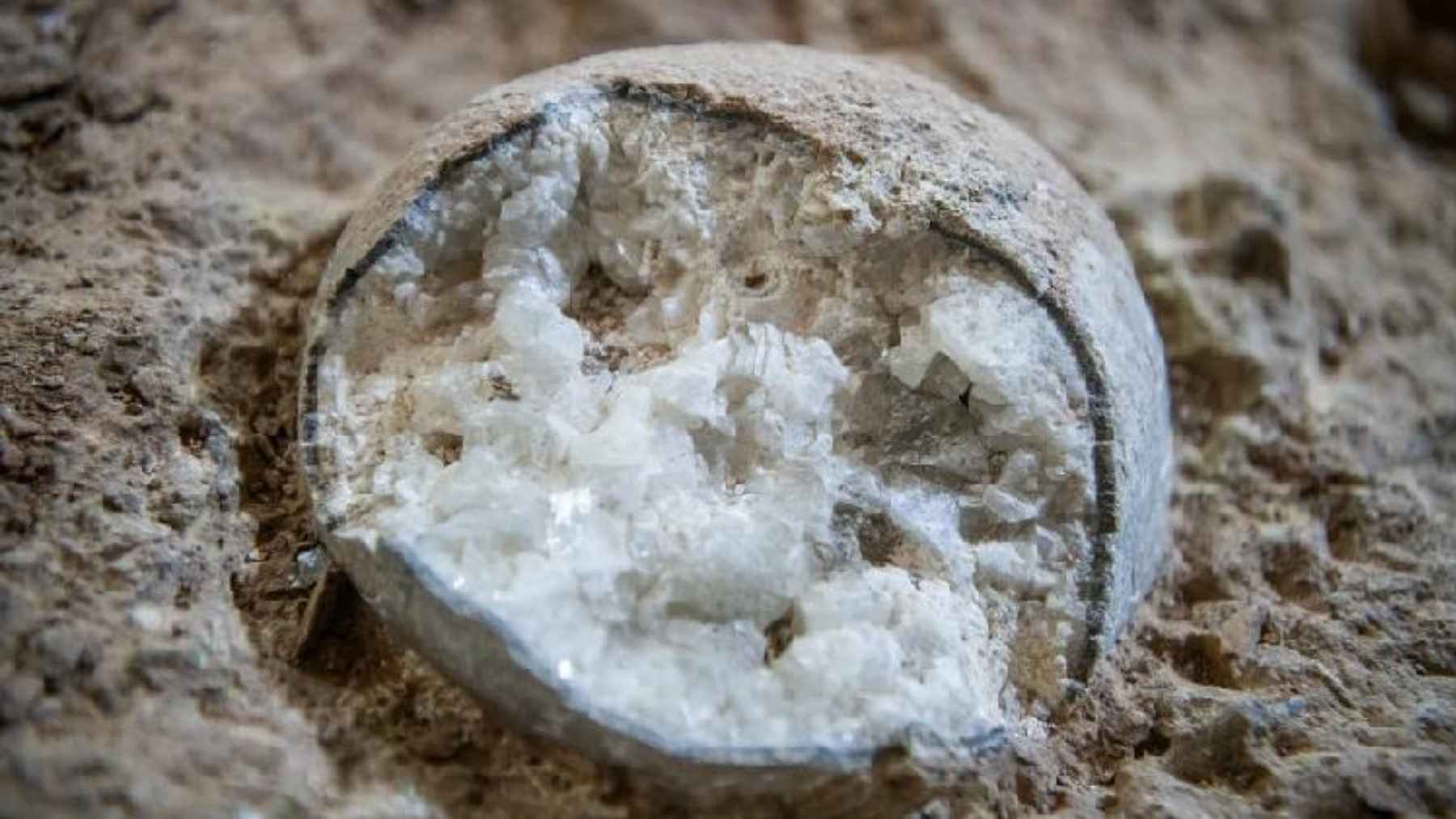
How do you date something as fragile as an eggshell after it has spent tens of millions of years locked in stone? A new laser-based test has done exactly that, pinning dinosaur eggs from central China to about 85 million years ago and giving scientists a much clearer timestamp for a whole nesting site.
That matters because fossils are only as useful as the timeline behind them. Dr. Bi Zhao of the Hubei Institute of Geosciences said the technique works “like an atomic clock for fossils,” turning tiny fragments of shell into a time marker for studying dinosaur life and the changing climate of the Late Cretaceous.
Why dating eggs is tricky
Dinosaur eggs are common fossils, but they are hard to place on a calendar. Most dating methods focus on volcanic ash, crystals, or other minerals in nearby rock, not the egg itself.
The problem is that those surrounding materials can be older or younger than the moment the egg was laid. It is a bit like trying to date an old photo when the timestamp has been rubbed off.
For paleontologists, that uncertainty is not just an academic headache. If you cannot trust the date, it becomes harder to compare nesting sites across regions or to link changes in dinosaur behavior to shifts in ancient climate.
A laser-powered clock
The new approach leans on a basic idea in geoscience called uranium-lead dating, often shortened to U-Pb. Uranium naturally breaks down into lead at a steady pace, so the amount of lead that has built up can act like a stopwatch that started long ago.
In this case, researchers targeted carbonate minerals inside the eggshell, including calcite, a common mineral found in limestone. A micro-laser vaporized pinpoints of the sample into a fine spray, and a mass spectrometer, a machine that can detect different atoms, counted uranium and lead in that spray.
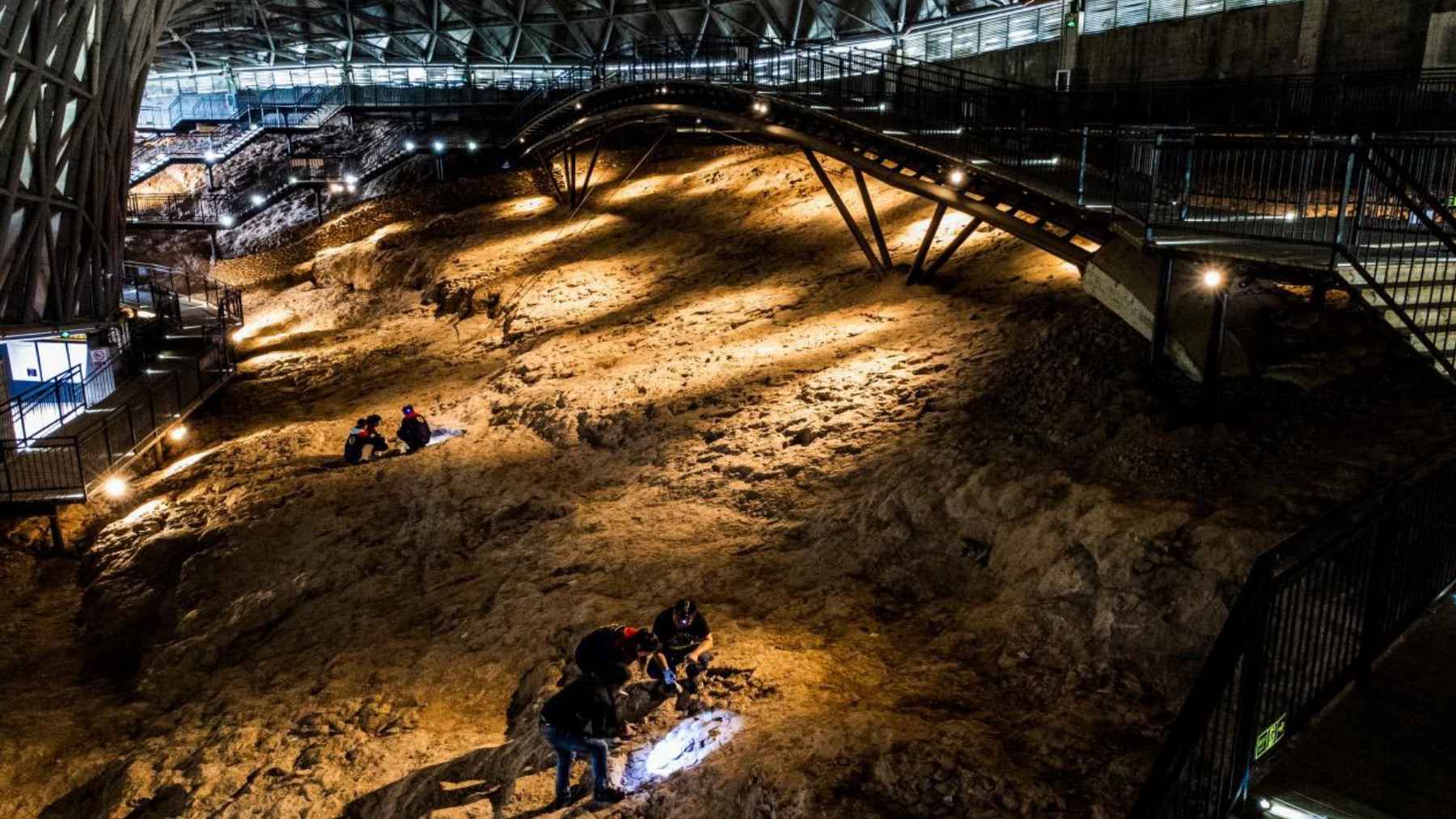
Using that clock, the team dated eggs from one clutch to roughly 85 million years ago, with an uncertainty of about 1.7 million years either way. That puts the fossils in the Late Cretaceous, the final stretch of the dinosaur era from about 100 million to 66 million years ago. The researchers described the eggs as the first reliably dated fossils from Qinglongshan.
The Qinglongshan egg reserve
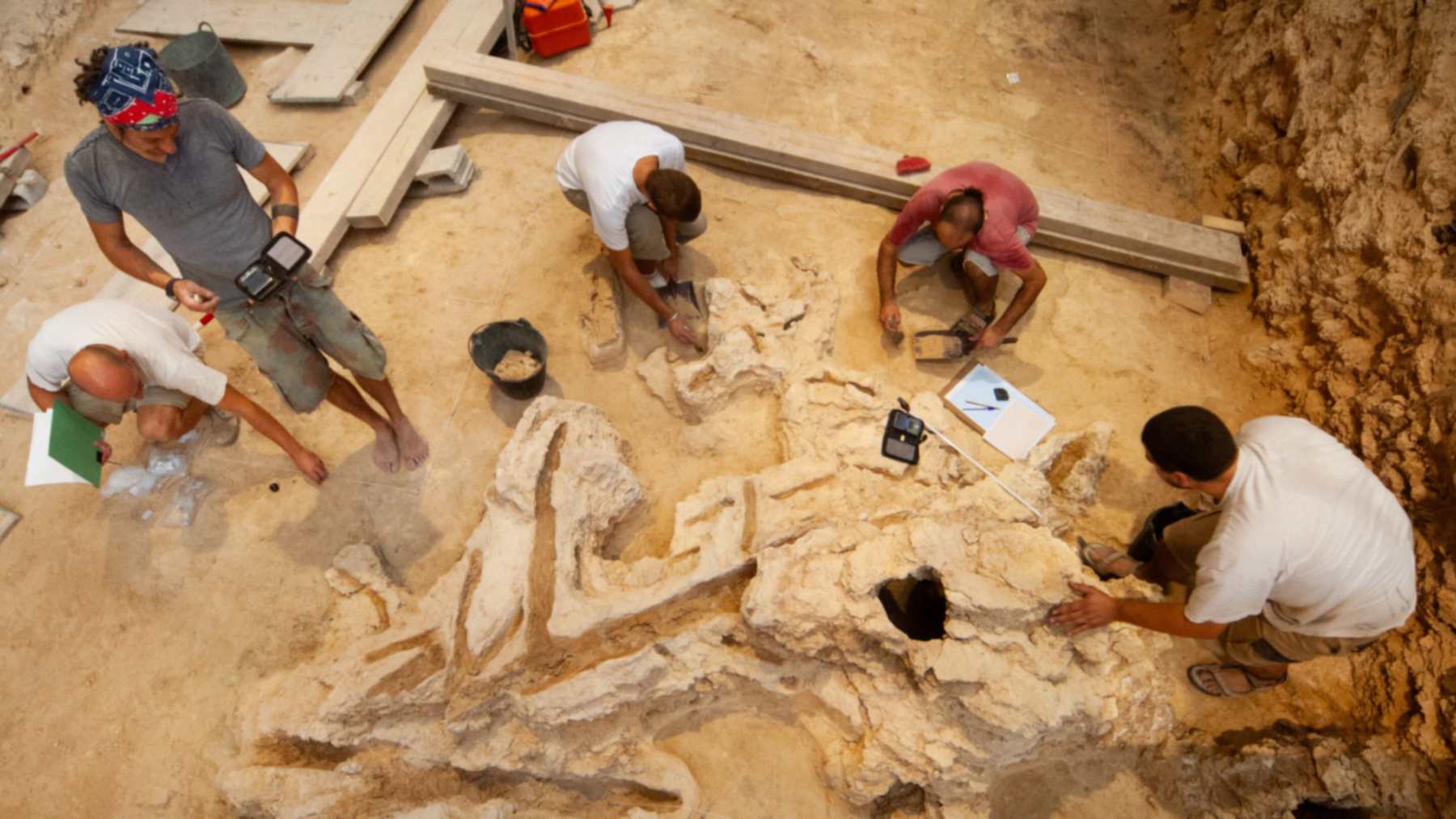
The eggs came from Qinglongshan in the Yunyang Basin, a fossil reserve known for the large number of finds. It is described as China’s first national dinosaur egg fossil reserve. More than 3,000 fossil eggs have been documented across three sites, and many remain close to the positions where they were originally buried.
Many eggs sit in rock layers made from a mix of broken fragments and finer mud-like material, a clue that floods and fast burial may have played a role. The dated sample came from a cluster of 28 eggs preserved in one of those mixed layers.
Researchers think many of the eggs belong to a single egg type called Placoolithus tumiaolingensis, part of the Dendroolithidae group. A 2018 paper in Acta Palaeontologica Polonica described how these eggshells are unusually porous, meaning they contain many tiny channels that likely helped embryos exchange gases while developing.
Clues about a cooling world
The Late Cretaceous was not one long, steady greenhouse summer. It included intense volcanic activity, periods when parts of the oceans ran low on oxygen, and mass extinctions that still show up in the fossil record.
The new date lands after a cooling trend had already begun, starting several million years earlier during a slice of time called the Turonian, roughly 93.9 million to 89.8 million years ago. It is a reminder that Earth’s thermostat has swung before, even if the drivers were not the same as today.
So what might a cooling world mean for dinosaurs at Qinglongshan? The researchers suggest it could have shaped which species thrived, how many eggs were laid, and whether specialized porous eggshells were an advantage or, in the long run, a dead end.
Why a better timeline matters
A solid date can turn a fossil site from an isolated curiosity into a data point that connects across maps. With a tighter age estimate, scientists can more confidently compare Qinglongshan to other egg-bearing basins in China and look for patterns that hint at migration or shifting habitats.
It also helps climate researchers, because land-based records are often patchier than ocean sediments. If dinosaur eggs can be dated directly, they may become another way to line up ancient droughts, rainy periods, and ecosystem changes, especially in places where volcanic ash layers are rare.
The idea is gaining traction beyond China as well. In 2025, a Communications Earth & Environment study tested uranium-lead dating on calcite in dinosaur eggshells from North America and reported ages that closely matched independent dates from nearby ash beds, suggesting the method can work as a reliable cross-check.
What happens next
This first result is based on a small number of eggshell samples, so it is not the final word. Still, the ages from different fragments agreed with each other and matched the general age suggested by the surrounding rocks.
The minerals being measured formed as the egg fossilized, so the date is best read as the timing of burial and early mineral growth. That process likely happened after the egg was laid, but the exact time gap is still hard to pin down.
The team says a bigger sampling effort is the next step, including eggs from different rock layers and neighboring basins. For anyone who has ever stared at a fossil and wondered when it really lived, this kind of direct dating could make the answer feel far less like guesswork.
The main study has been published in Frontiers in Earth Science.