Spring does not just arrive earlier in your backyard. According to new research based on decades of satellite observations, the planet’s overall “green center” is slowly sliding toward the northeast, meaning the most intense seasonal surge of plant growth is not happening in quite the same places it used to.
That might sound abstract, but it is surprisingly practical. When vegetation growth patterns move, agriculture, water demand, pests, wildfires, and even animal migration can move with them, sometimes in ways that do not show up until yields dip or outbreaks spike.
A moving “green compass” from space
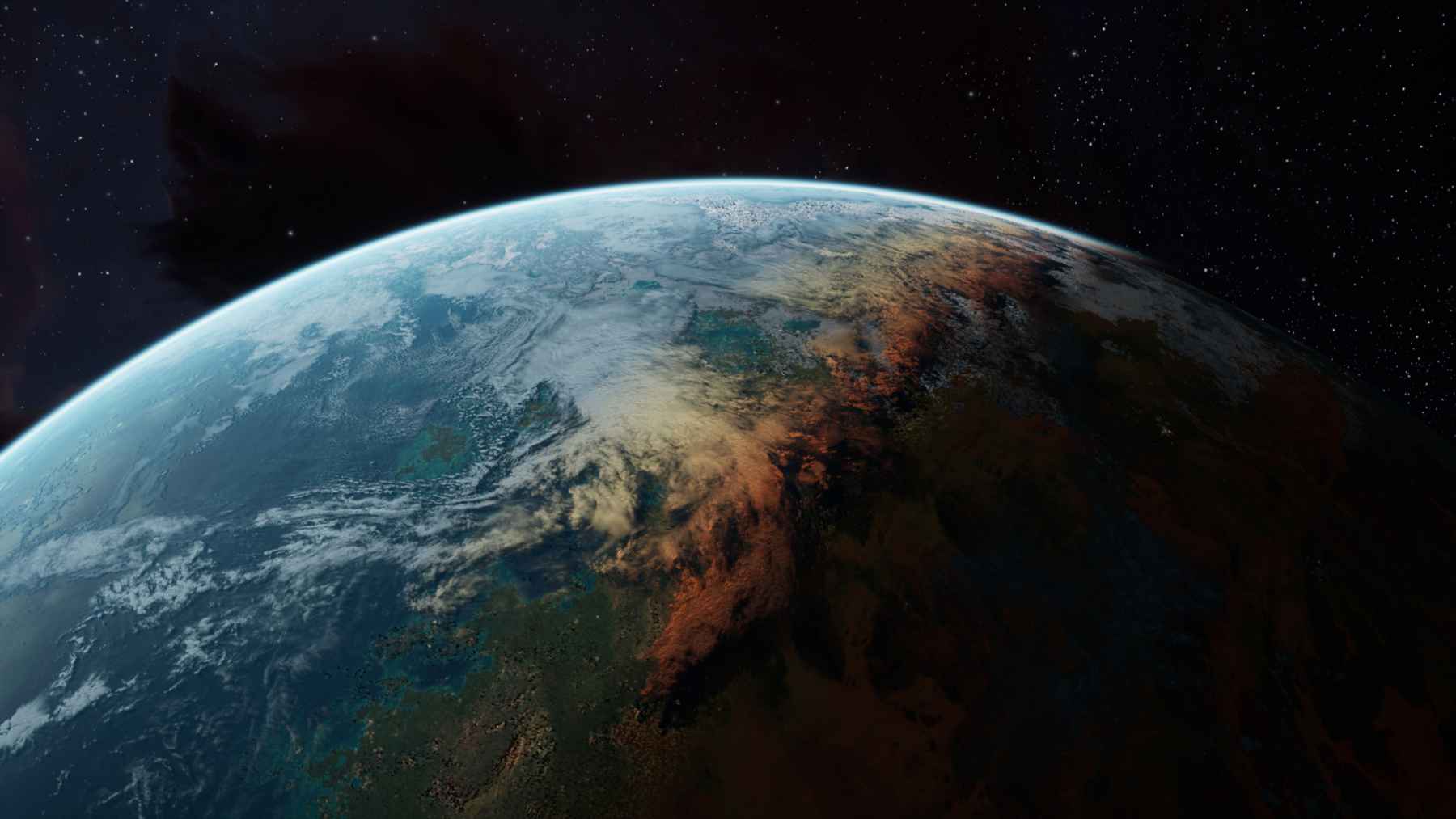
Every year, Earth’s land vegetation pulses in a familiar rhythm as the Northern Hemisphere greens up in spring and summer, then the Southern Hemisphere follows months later. Scientists often call this seasonal sweep the “green wave,” and the new study tracks it by calculating a single moving point that represents where global greenness is concentrated at any given time.
Lead author Miguel Mahecha offers a simple image. “Imagine holding a perfectly round globe in your hands and attaching small weights to it, each representing the green leaves at every point on Earth’s surface,” he says, adding that the balancing point becomes the vegetation “center of mass.”
When the team mapped that point across the year, it typically reached its northernmost position around mid-July near Iceland in the North Atlantic, and its southernmost position around March off the coast of Liberia. Both extremes end up in the Northern Hemisphere largely because that is where most of Earth’s land (and land vegetation) sits.
The drift is real, and it is speeding up
The headline result is not just that the green center moves. It is that the path has been creeping north for decades, and the rate has increased in recent years in the long satellite records the researchers analyzed.
Using a widely used leaf area index dataset, the study reports northward trends of about 1.2 miles (2.0 km) per year at the Northern Hemisphere summer peak and about 1.5 miles (2.4 km) per year at the Southern Hemisphere summer peak. Then, between 2010 and 2020, those trends accelerated to roughly 2.1 miles (3.3 km) per year and about 8.7 miles (14.0 km) per year, respectively.
That last number is the one that makes experts sit up. The Southern Hemisphere summer peak shifting northward so strongly was not what the team expected, and Mahecha called it “a huge surprise.”
Why would the “green wave” lean north even in southern summer?
One likely reason is timing. Warmer winters and longer growing seasons in the Northern Hemisphere can keep vegetation “slightly greener for longer,” which can tug the global center northward across the whole year instead of allowing a clean swing back south. Still, the researchers stress that this is a working hypothesis, not a closed case.
The study also detects a clear eastward component to the drift, meaning the motion is not just poleward. Regions with major greening hotspots, including parts of India, China, and Russia, are suspected to play an outsized role in pulling the green center east.
In plain terms, the “green wave” is still happening, but its balance point is being nudged around by where the biggest vegetation changes are occurring. That includes forests and grasslands, but it can also include croplands and reforestation efforts.
CO2 can boost growth, but it does not erase limits
This shift connects to a broader and sometimes misunderstood phenomenon called “global greening,” a measured increase in vegetation density in many parts of the world. Rising atmospheric CO2 can act like a fertilizer for many plants, and higher temperatures can lengthen growing seasons, especially in northern latitudes.
Germany offers a simple example of what “longer seasons” can look like on the ground. Some analyses have found the growing season there is now about two weeks (14 days) longer than it was in the 1961 to 1990 reference period, which is a big change in the life of a crop.
But greening does not automatically mean “better.” Water and nutrients still set hard boundaries, and in many regions drought risk is rising at the same time temperatures climb, which can cancel out any CO2-related boost. You can have more green on a satellite map and still have stressed ecosystems on the ground.
What farmers might notice first
A longer season in higher latitudes could, in theory, open doors for certain crops, including summer grains, corn, oilseeds, and forage in places like Canada, northern Europe, and parts of Russia. For farmers, that can mean shifting planting dates, experimenting with new varieties, or trying double-cropping where it was not realistic before.
On the other hand, agriculture is not just temperature. If water becomes the bottleneck, especially on poorer soils, the “extra season” can turn into extra risk, with higher irrigation demand and more yield variability year to year.
Even if you are nowhere near a farm, these dynamics can show up indirectly. Supply chains respond to volatility, and that can influence the grocery bill in ways that feel sudden, even when the underlying ecological shift has been slow.
Pests and weeds get a longer season too
Here is the part that keeps growers up at night. Longer warm periods can help certain insect pests squeeze in more generations per year, and it can allow them to expand into areas where cold used to hold them back.
The study’s broader context fits what agronomists often warn about. Insects such as cereal leaf beetles, pollen beetles, aphids, and the European corn borer can become harder to manage when winters are milder and the growing window stretches. The same goes for weeds, which can respond quickly to longer seasons and force farmers to rethink mechanical and chemical control strategies.
More pressure from pests and weeds can also mean tougher tradeoffs. More interventions can raise costs and add environmental strain, but doing nothing can put harvests at risk. It is not a simple win either way.
A new way to watch Earth’s living surface reorganize
Beyond farming, the “green center” idea acts like a high-level dashboard for the biosphere. The researchers argue that measuring how fast the green wave moves, and where it is pulled, links multiple pieces of global change, including climate and biosphere interactions, land-use shifts, drought, fire dynamics, and animal migration.
So what should readers keep in mind? The direction of travel matters as much as the fact of greening. A planet that is “greener” overall can still be a planet where growth is becoming less evenly distributed, and where the seasonal pulse is drifting away from the places that rely on it.
The study was published on Proceedings of the National Academy of Sciences.