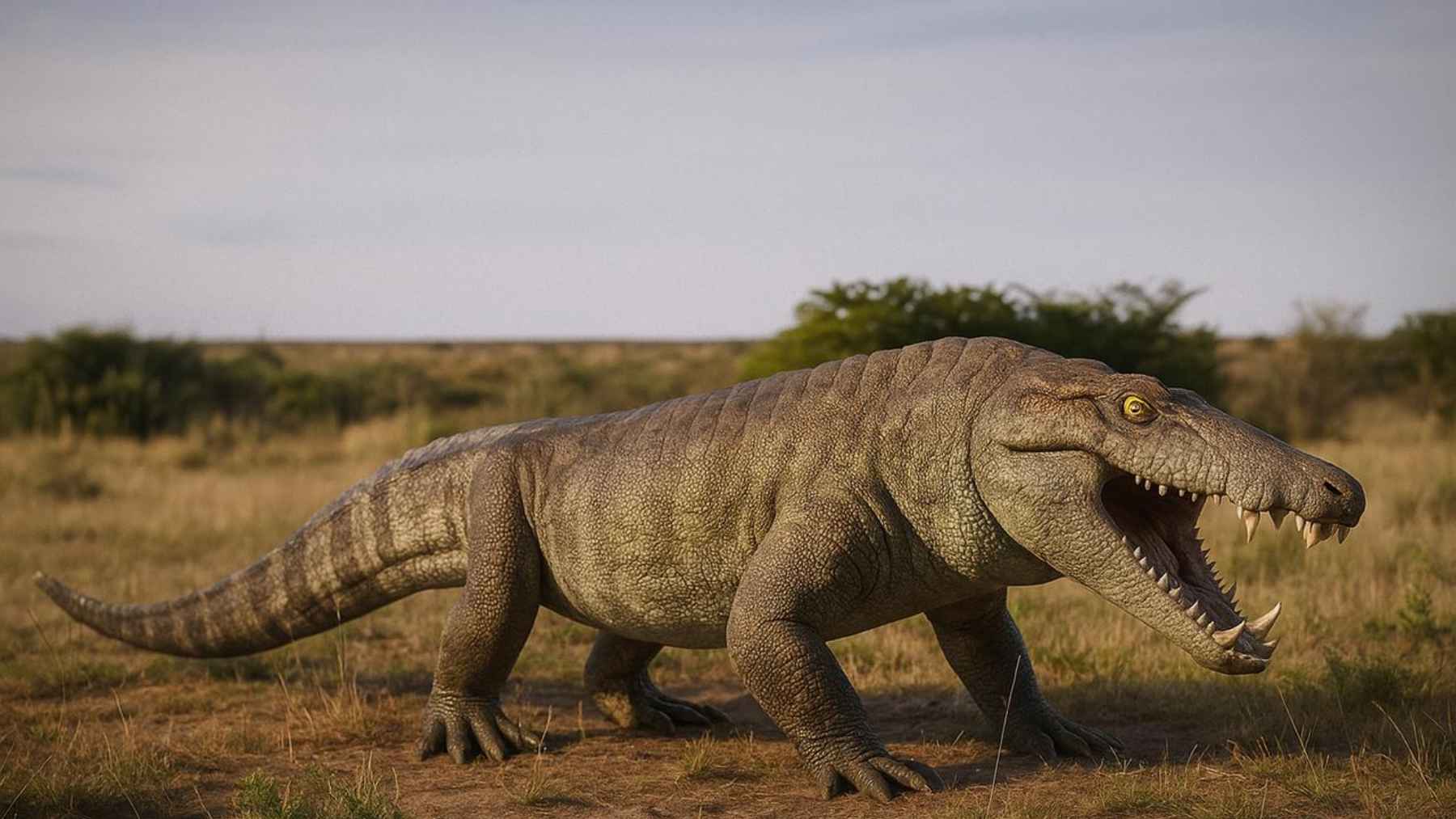
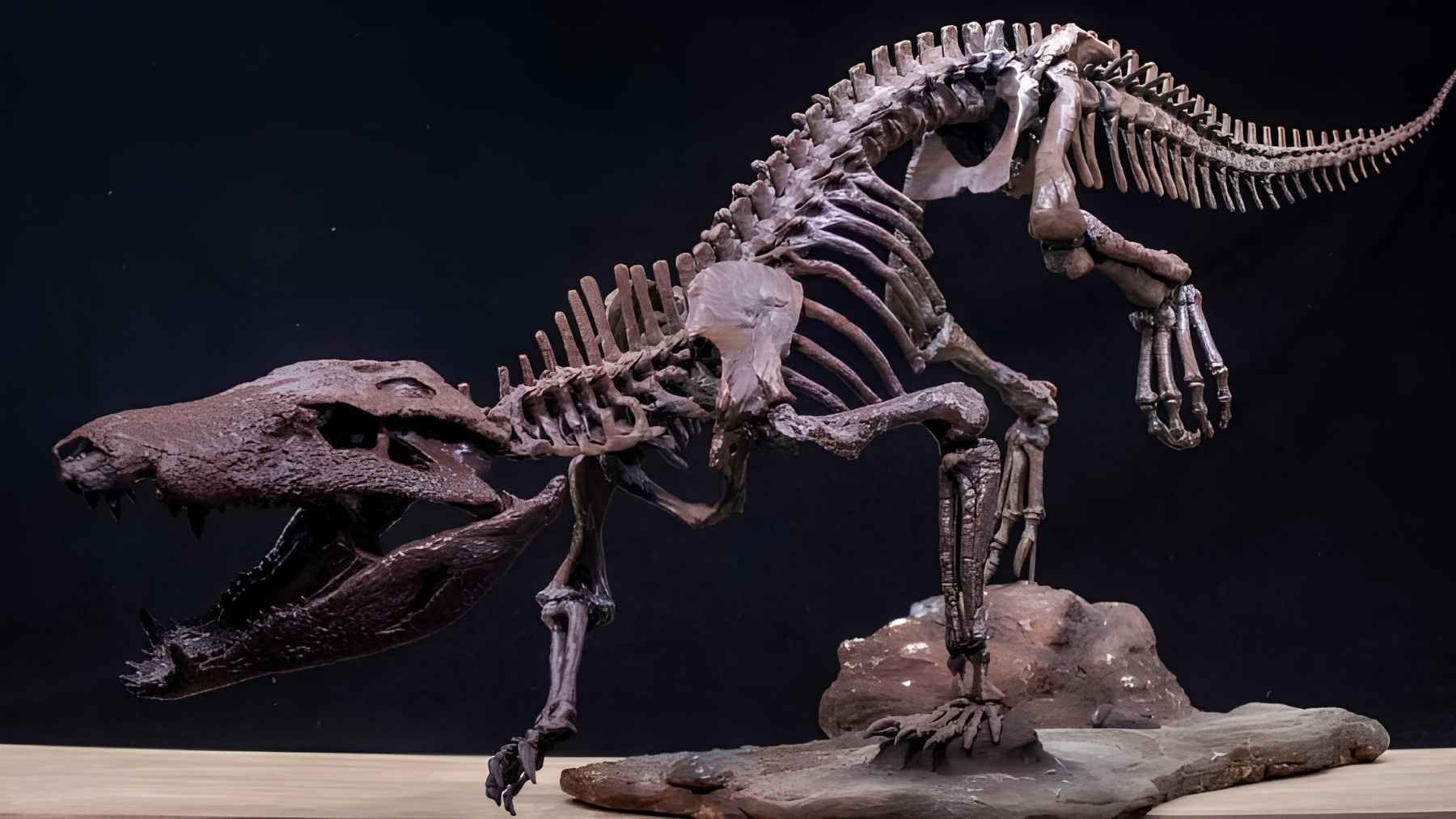
A nearly intact fossil from southern Patagonia has revealed a fierce crocodile relative that lived about 70 million years ago, just before the age of dinosaurs came crashing to an end. The animal, named Kostensuchus atrox, was about 11.5 feet long and weighed roughly 550 pounds, making it one of the largest predators known from its ancient ecosystem.
The discovery matters because this was not a modern crocodile quietly waiting in a river. It was a broad-snouted, heavily built carnivore with large teeth, powerful jaws, and a body plan that suggests it could subdue sizable prey, likely including medium-sized dinosaurs. Not a comforting thought, right?
A fierce hunter in Patagonia
The fossil was found in the Chorrillo Formation, about 19 miles southwest of El Calafate in Argentina’s Santa Cruz Province. Researchers described a beautifully preserved skull and jaws, along with parts of the skeleton that were still encased in a large rock concretion.
Scientists placed the animal in Peirosauridae, an extinct family of crocodyliforms related to modern crocodiles and alligators, but not the same as the river-dwelling reptiles we know today. The name Kostensuchus atrox refers to the Patagonian wind known as “Kosten,” the Egyptian crocodile-headed god Souchos, and the word “atrox,” meaning fierce or harsh.
Read More: {{post_title link:post}}
This was a meat eater built for force. Its broad snout, large teeth, and strong jaw muscles point to a hypercarnivorous lifestyle, meaning meat made up most of its diet.
Not your backyard crocodile
Modern crocodiles often rely on stealth, water, and sudden ambush. Kostensuchus, for the most part, seems to tell a different story.
The fossil shows a wide, high snout and large serrated teeth suited for puncturing and slicing flesh. The researchers also described a broad jaw muscle chamber and a deep lower jaw, features that suggest a strong bite and the ability to handle struggling prey.
That does not mean scientists watched it hunt, of course. However, based on the anatomy and the animals living nearby, the team concluded that it was likely capable of feeding on medium-sized tetrapods, including ornithischian dinosaurs.
A predator near the top
In the Chorrillo Formation, Kostensuchus was surpassed in size among predators only by Maip, a much larger megaraptorid theropod estimated at about 30 feet long. That puts this crocodile relative high in the local food chain, sharing a dangerous world with dinosaurs, turtles, frogs, mammals, and other vertebrates.
The researchers described Kostensuchus as a large predator among its kin and one of the top predators in this freshwater floodplain ecosystem. Think of it as one more reminder that the dinosaur world was never only about dinosaurs.
The fossil also fills a gap in Patagonia’s record. According to the study, it is the first crocodyliform specimen described from the Maastrichtian Chorrillo Formation, and one of the most complete broad-snouted peirosaurids yet recorded.
A wetter, warmer Patagonia
Today, much of southern Patagonia is known for cold winds, open steppe, and rugged landscapes. However, 70 million years ago, this part of Argentina looked very different.
The Chorrillo Formation preserves evidence of a warm, seasonally humid freshwater environment, with floodplains, rivers, and shallow bodies of water. It was a place where plants, invertebrates, fish, frogs, turtles, dinosaurs, birds, and early mammals all shared the same shifting landscape.
Read More: {{post_title link:post}}
That setting helps explain why a predator like Kostensuchus could thrive there. Food webs were busy, water was part of the landscape, and prey animals would have moved through a patchwork of wet and dry ground.
Why this fossil stands out
Many fossil predators are known from a tooth here, a jaw there, or a few scattered bones. This one gives scientists a clearer look at the animal from the skull to parts of the body.
That matters because a complete skeleton can change the story. With more bones, researchers can better judge how an animal moved, how it fed, and how it fits among related species.
The study also suggests that broad-snouted peirosaurids became larger and more specialized predators near the end of the Cretaceous. In other words, crocodyliforms were experimenting with different body shapes and lifestyles long before modern crocodiles settled into their familiar semi-aquatic role.
A clue before extinction
The timing is hard to ignore. Kostensuchus lived in the Maastrichtian, the final stage of the Cretaceous, shortly before the asteroid impact linked to the mass extinction that wiped out non-avian dinosaurs.
Read More: {{post_title link:post}}
Large specialized predators can be vulnerable when ecosystems are shaken. If prey disappears, habitats change, or food chains collapse, an animal built around a narrow feeding strategy may have fewer backup options.
That is one reason fossils like this are useful beyond their shock value. They help scientists understand how ancient ecosystems were organized before disaster struck, and why some lineages vanished while others eventually survived.
What comes next
The discovery gives researchers a rare window into the diversity of ancient crocodile relatives. These animals were not all swamp lurkers. Some were land-capable hunters, some were smaller omnivores, and others took on roles that feel surprisingly close to big cats or large carnivorous dinosaurs.
Future work could bring even more detail. Chemical studies of teeth may help identify water and food sources, while scans of bones can reveal growth patterns, injuries, or disease.
For students, fossil fans, and researchers, Kostensuchus is a reminder that familiar animals often have strange and dramatic family histories. The crocodile lineage was once far more varied than the creatures we see at zoos, rivers, and nature documentaries today.
The study was published in PLOS One.