A British propulsion company says it has reached a small but meaningful milestone on the long road to nuclear fusion rockets. On March 25, 2026, Pulsar Fusion announced it had generated and confined plasma inside the exhaust test system for its Sunbird concept, a demo streamed from Bletchley, England to Amazon’s MARS Conference in Ojai, California.
If this technology ever works in space, the payoff could be big, at least on paper. Pulsar’s own public numbers point to a fusion-powered “space tug” that could push spacecraft faster once they are already in orbit, potentially cutting travel times to destinations like Mars.
But “first plasma” is not the same thing as a flight-ready engine, and it raises a second question that rarely gets center stage, namely how to grow the space economy without growing its environmental footprint.
What Pulsar Fusion says it achieved
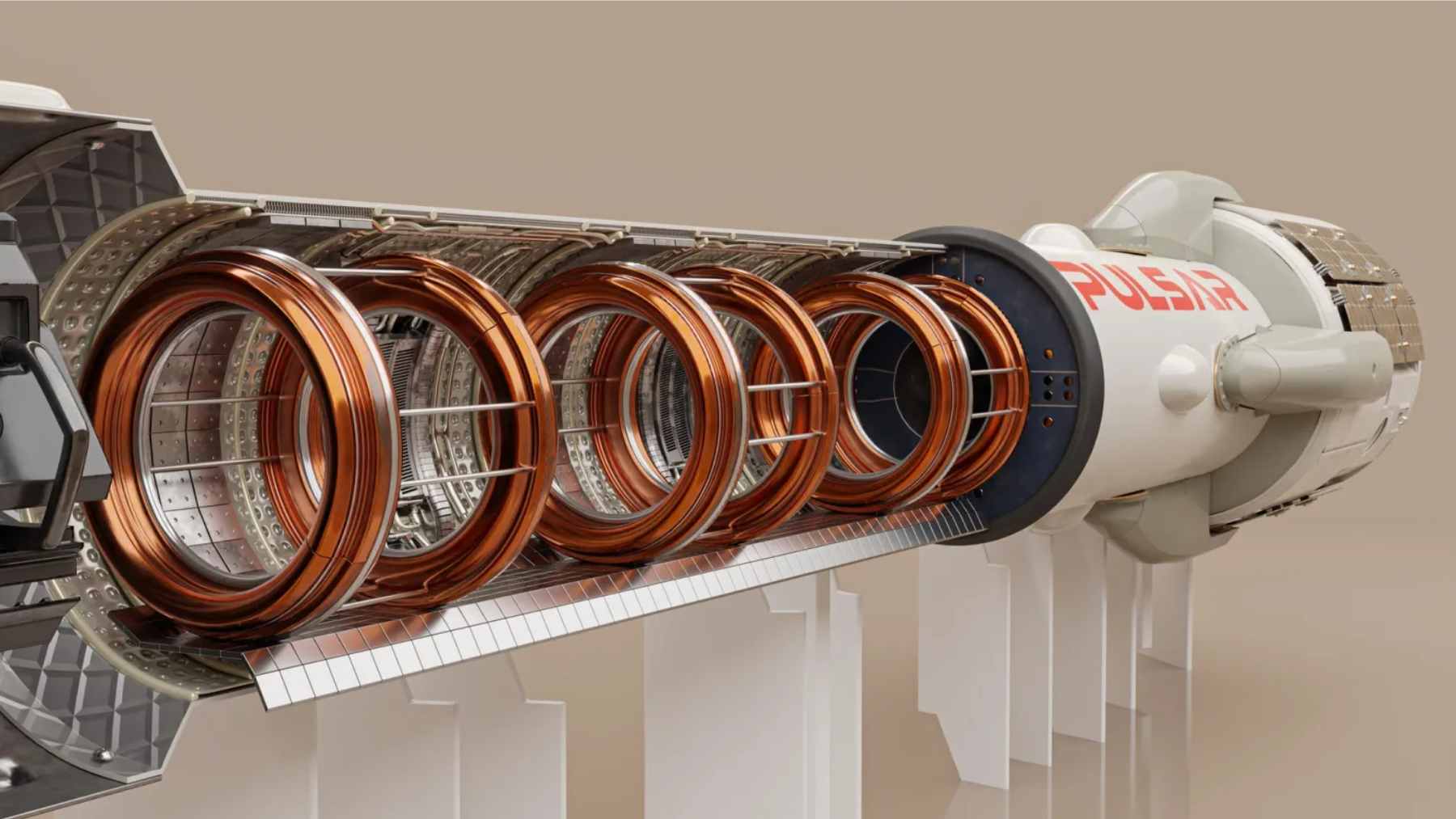
In Pulsar’s announcement, the company described the test as “first plasma” inside the Sunbird exhaust test system. Engineers used electric and magnetic fields to guide and accelerate charged particles through an exhaust channel, with krypton gas acting as the initial propellant.
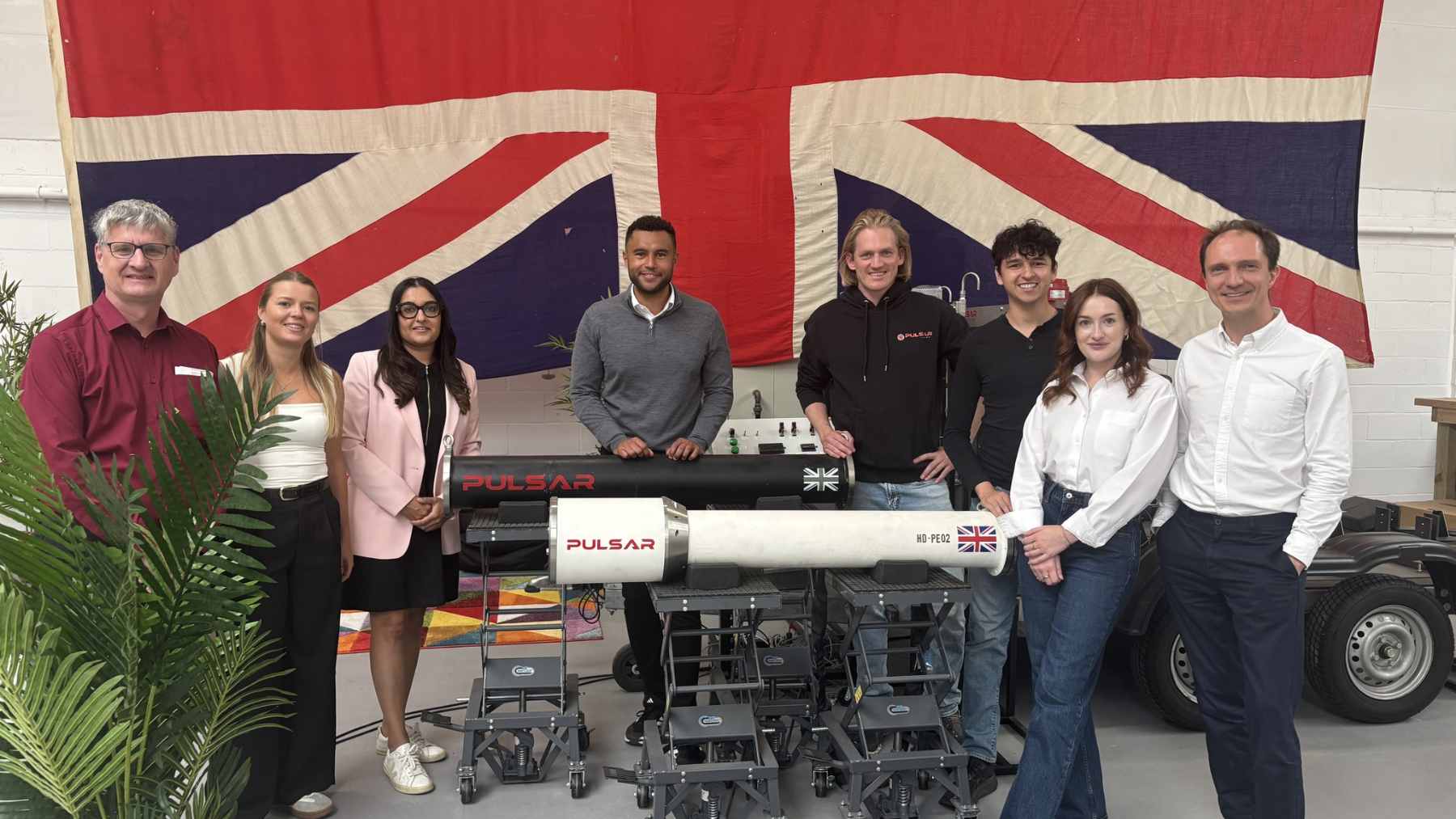
The test was run by Pulsar scientists in Bletchley while the results were shown live in California. CEO Richard Dinan called the milestone “an exceptional moment and a genuine privilege.”
So what does “first plasma” really mean for nonengineers? Think of it as getting the “electrified gas” behavior you need to test hardware and control systems, before anyone can credibly talk about sustained fusion and useful thrust.
How Sunbird is supposed to move a spacecraft
On Pulsar’s Sunbird page, the company describes a Dual Direct Fusion Drive design that would provide both thrust and onboard electrical power. It lists a target specific impulse of 10,000 to 15,000 seconds and about 2 megawatts of power, and NASA notes chemical rockets generally sit below about 450 seconds of specific impulse.
The big idea is that a Sunbird vehicle could be stationed in orbit, letting other spacecraft launch only as far as low Earth orbit and then dock for the long haul. Pulsar notes that reaching low Earth orbit typically demands around 9.4 kilometers per second of delta v, which is about 5.8 miles per second or roughly 21,000 miles per hour.
Pulsar has previously said the concept would use a deuterium and helium 3 fuel mix, with a longer-term goal of exploring “aneutronic” fusion fuel cycles. The company has also floated potential exhaust speeds above 500,000 miles per hour, but those figures remain theoretical until independent performance measurements exist.
Why this matters beyond bragging rights
Faster in-space propulsion is not only about reaching Mars sooner. It can also mean moving heavy science hardware more efficiently, powering instruments farther from the sun, and potentially supporting more Earth-observing infrastructure over time.
The stakes are getting larger because the space economy itself is growing. The World Economic Forum and McKinsey estimate the global space economy could reach $1.8 trillion by 2035, up from about $630 billion in 2023, driven partly by services like communications and Earth observation services.
That matters for everyday life, too. Satellite-based data feeds weather models, tracks wildfires and smoke, and helps planners see how drought and floods are reshaping landscapes, even if most of us only notice it when the forecast shows that sticky summer heat we all know.
The sustainability catch that cannot be ignored
More space activity can bring benefits, but launches and reentries are not environmentally invisible. A NASA technical report notes that rocket launches and reentering satellites emit gases and aerosols into layers of the atmosphere from the surface upward, with potential impacts on climate and ozone, among other effects.
Research has also flagged black carbon, or soot, as a particular concern when it reaches the stratosphere.
One modeling study found that a scenario with 10 gigagrams of rocket black carbon per year, about 10,000 metric tons or 11,000 U.S. tons, could raise stratospheric temperatures by as much as 1.5 kelvin, about 2.7 degrees Fahrenheit.
And the ozone question is getting sharper. A 2025 study in the journal Nature Climate and Atmospheric Science concluded that ongoing and frequent rocket launches could delay ozone recovery, which is a reminder that “cleaner” space tech needs to include atmospheric science, not just faster engines.
What to watch next
Pulsar says it is now moving from a proof of architecture to performance data. The planned upgrades include rotating magnetic field heating, radio frequency heating systems, and more detailed thrust measurements, which should help clarify whether the Sunbird concept can turn plasma control into measurable propulsion.
Durability is another make-or-break issue. Pulsar is working with the UK Atomic Energy Authority to study how neutron radiation can degrade reactor walls and magnets over time, an important point since real missions would need systems that survive long enough to be useful.
Pulsar has also publicly pointed to an in-orbit demonstration of core components in 2027 and has said it hopes for a production-ready Sunbird in the early 2030s. In practical terms, that means the next few years will be about whether lab results translate into space hardware that performs as advertised.
The takeaway
It is easy to hear “fusion rocket” and think the breakthrough has already happened. A more accurate read is that Pulsar has shown a piece of hardware behaving the way its engineers need it to behave, and now the hard measurements start.
For now, it is a genuine milestone and a reminder that speed alone is not the whole story.
The official statement was published on GlobeNewswire.