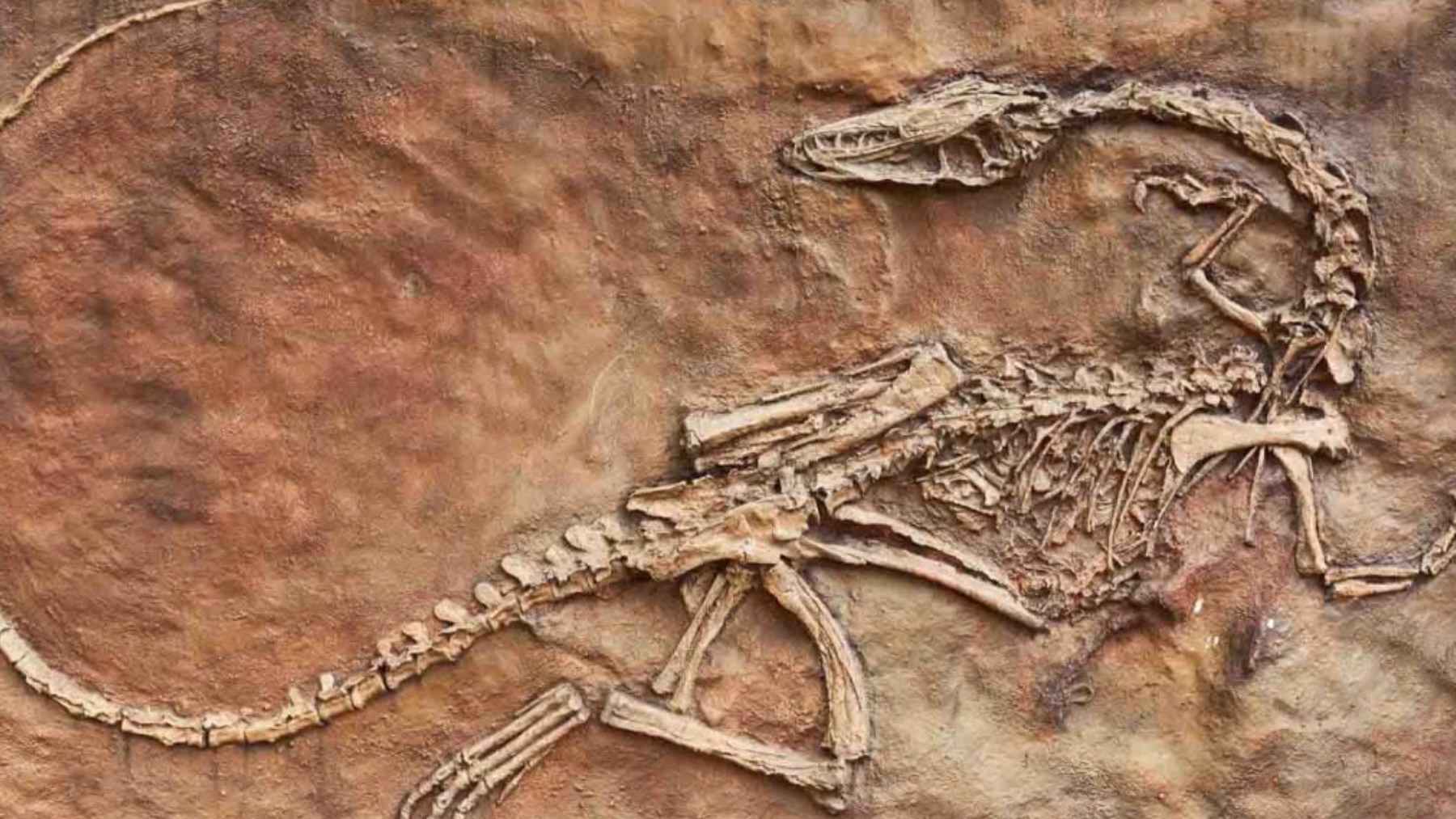
How much can one tiny tooth really change the story of mammals? A team in central East Greenland says it can, after identifying a small lower jaw fragment from one of the earliest mammal relatives ever found.
The fossil, named Nujalikodon cassiopeiae, is now the oldest definitive member of an extinct group called docodontans, according to a new study. Researchers say it dates to about 200 million years ago and trims a “ghost lineage,” a stretch of time where fossils are expected but still missing.
A jaw fragment with a big message
The discovery centers on a partial dentary, meaning part of a lower jawbone, with one intact molar and the roots of another tooth. The tooth itself is tiny, roughly 0.06 inches long, but it carries a clear signal about where it fits in the early mammal family tree.
Lead author Dr. Sofia Patrocínio of the University of Évora in Portugal and her team report that the specimen came from the Rhætelv Formation in the Kap Stewart Group, a rock package exposed in Greenland’s Jameson Land Basin. The jaw was found at a site called Lepidopteriselv, in a thin sandstone layer that appears to have filled an old burrow.
The fossil is now housed at the Natural History Museum of Denmark at the University of Copenhagen, where it can be compared with other rare Jurassic land animals. That matters because fossils from the earliest Jurassic are scarce, and even a single tooth can nudge big ideas in a new direction.
What makes a docodontan special
Docodontans were early mammaliaforms, meaning they were close relatives of mammals but not part of the modern mammal crown group. They lived alongside dinosaurs, and they are known mostly from teeth and jaw fragments that survived long after softer tissues disappeared.
Their calling card is dental complexity. Instead of a simple row of bumps, docodontan molars have multiple cusps and ridges that lock together when the animal chews, a bit like a set of gears.
That trait shows up again and again in later finds, including a semiaquatic docodontan described in a 2006 Science paper and a burrowing form featured in a 2015 Science paper. In the Greenland study, coauthor Dr. Elsa Panciroli of National Museums Scotland also stressed that docodontans had “a lot of cusps and ridges,” which likely helped them handle a wider range of foods.
Teeth as a fossil fingerprint
Identifying the Greenland jaw relied heavily on micro-computed tomography, often called micro-CT, which is like a medical CT scan but tuned for tiny fossils. The scans let researchers see the tooth’s shape without grinding away more rock and risking damage.
The key was the pattern of cusps and crests on the molar’s chewing surface. Panciroli put it simply, saying, “Every species of mammal has a different arrangement of cusps and ridges on the teeth.”
The measurements show just how small the evidence is. The molar’s length is under 0.07 inches and its width is a little over 0.03 inches, yet those fine details were enough for the team to confirm it was a new species.
A missing chapter gets shorter
For years, the earliest undisputed docodontans were known from Middle Jurassic rocks, leaving a long gap between those fossils and older, more debated candidates. In practical terms, it meant the group’s origin was argued over, and the record did not neatly connect the dots.
The Greenland specimen changes that timeline. The study says this find extends the definitive record of docodontans back to the boundary between the Triassic and Jurassic and narrows the ghost lineage from about 40 million years to about 33 million years.
That seven-million-year shift may sound abstract, but it matters for how evolutionary stories are tested. When a gap closes, researchers can check whether ideas about diet, anatomy, and migration still hold up, or whether they need to be rewritten.
Why Greenland keeps delivering early mammal clues
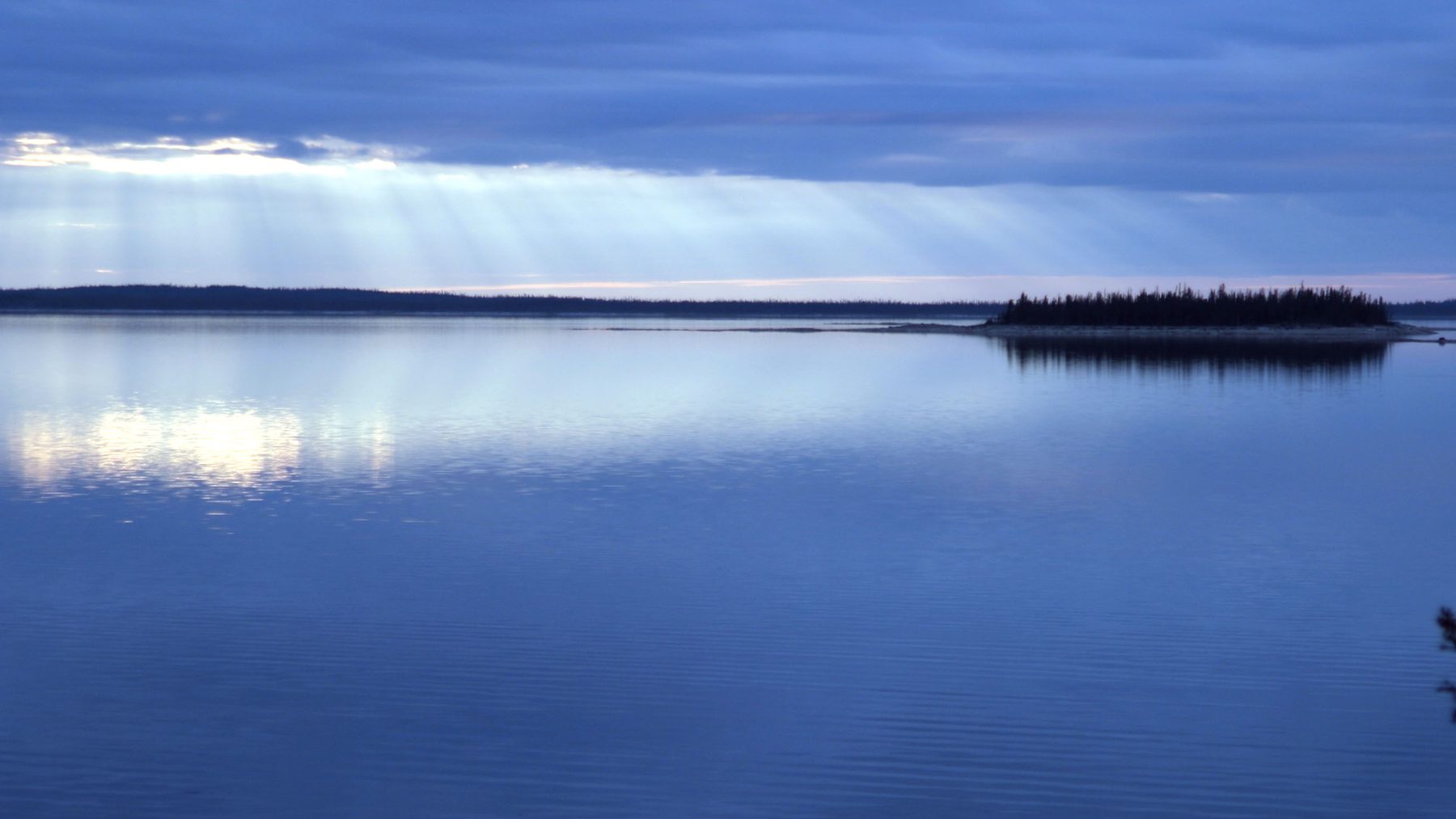
Greenland is not an easy place to do fieldwork, and that is part of why its fossils can feel like surprises. But the Kap Stewart Group preserves thick layers of mudstone and sandstone that formed around a large lake system, and a related 2022 Lethaia paper describes evidence that the lake briefly connected to the sea around the time these sediments formed.
In the area where the jaw was found, the Rhætelv Formation reaches about 980 feet thick, sitting on top of an older package of sediments that is roughly 1,150 feet thick. Some sandstone beds in the section are about 5 to 10 feet thick, and the team notes the fossil turned up in one of the thinnest layers.
Other Greenland discoveries help explain why paleontologists keep returning. A jaw fossil described in a 2020 PNAS study pushed the story of mammaliaforms deeper into the Triassic, and an earlier 1997 Nature paper helped cement Greenland’s role in debates about early mammal relatives.
What this could mean for early mammal evolution
The authors place Nujalikodon cassiopeiae near the base of the docodontan family tree, or as the closest known relative just outside it. Either way, it sits close to the starting line, which is exactly where scientists want fossils when they are trying to understand how a defining trait evolved.
One question is how complex teeth developed from simpler patterns in earlier mammaliaforms. The Greenland molar has features that resemble both older proposed relatives and later, better-known docodontans, making it a useful bridge fossil even though it is only a fragment.
There is also a practical takeaway for modern research. The team has made digital scan data available online through MorphoSource, which means other scientists can recheck the anatomy and test new ideas without handling the fragile original.
The main study has been published in Papers in Palaeontology.