Sea levels are climbing at a pace scientists say is unmatched in at least the last 4,000 years. Researchers at Rutgers University warn that China’s biggest coastal hubs are on the front lines because higher seas are arriving at the same time the ground is slowly sinking.
So what happens when rising water and sinking land stack together? A new analysis suggests the risk can jump quickly in river deltas, and it also points to a practical takeaway: parts of the problem are human-made, which means some of it can be slowed.
A record-breaking rise in plain numbers
The study estimates that since 1900, global average sea level has risen by about one and a half millimeters a year, roughly one-sixteenth of an inch. The researchers say that pace is faster than any century-long stretch they can see in geological evidence from the last four millennia. The same work estimates that at least about 94% of rapid modern urban subsidence in the region is linked to human activity, not natural settling.
Read More: {{post_title link:post}}
It is a sharp break from what came before. For roughly 4,000 years, sea level stayed relatively stable until the 1800s, then began climbing in a way that now looks hard to ignore even in the long sweep of Earth history.
How scientists read ancient sea levels
To rebuild a longer timeline than modern instruments can provide, the team used thousands of natural markers, including ancient coral reefs and mangroves. These environments can preserve signs of where the shoreline used to sit, helping scientists track changes through the Holocene, the current chapter of Earth history that began after the last major ice age.
They paired those natural clues with more recent measurements like tide gauges, which function as long-running rulers fixed to the coast. The analysis also relied on a statistical tool called PaleoSTeHM, which helps combine many noisy records into one clearer reconstruction while accounting for uncertainty, and coauthor Robert Kopp helped connect the long geological record to modern measurements.
Why the ocean keeps creeping higher
One driver is heat. As the planet warms, the ocean absorbs much of that energy, and warmer water takes up more space, which nudges sea level upward even without adding new water.
The other major driver is melting land ice, including glaciers and the vast ice sheets in Greenland and Antarctica. A 2020 analysis on the causes of sea-level rise since 1900 found ice loss has been a major contributor, alongside the swelling of warmer oceans.
Sinking land can beat the ocean
Sea-level rise is only half the story in many coastal cities. In parts of Shanghai, the ground dropped by more than 3 feet during the 1900s, largely linked to heavy groundwater pumping, meaning the city effectively moved closer to the water even before you count the higher ocean.
Read More: {{post_title link:post}}
This sinking is called subsidence, and it can happen naturally in soft sediments, but it can also be sped up by people pulling water from underground or adding the weight of dense construction. Yucheng Lin, now a scientist at Australia’s national research agency CSIRO, said, “Shanghai now is not sinking that fast anymore,” after the city began tightening rules on groundwater use.
Why deltas matter far beyond China
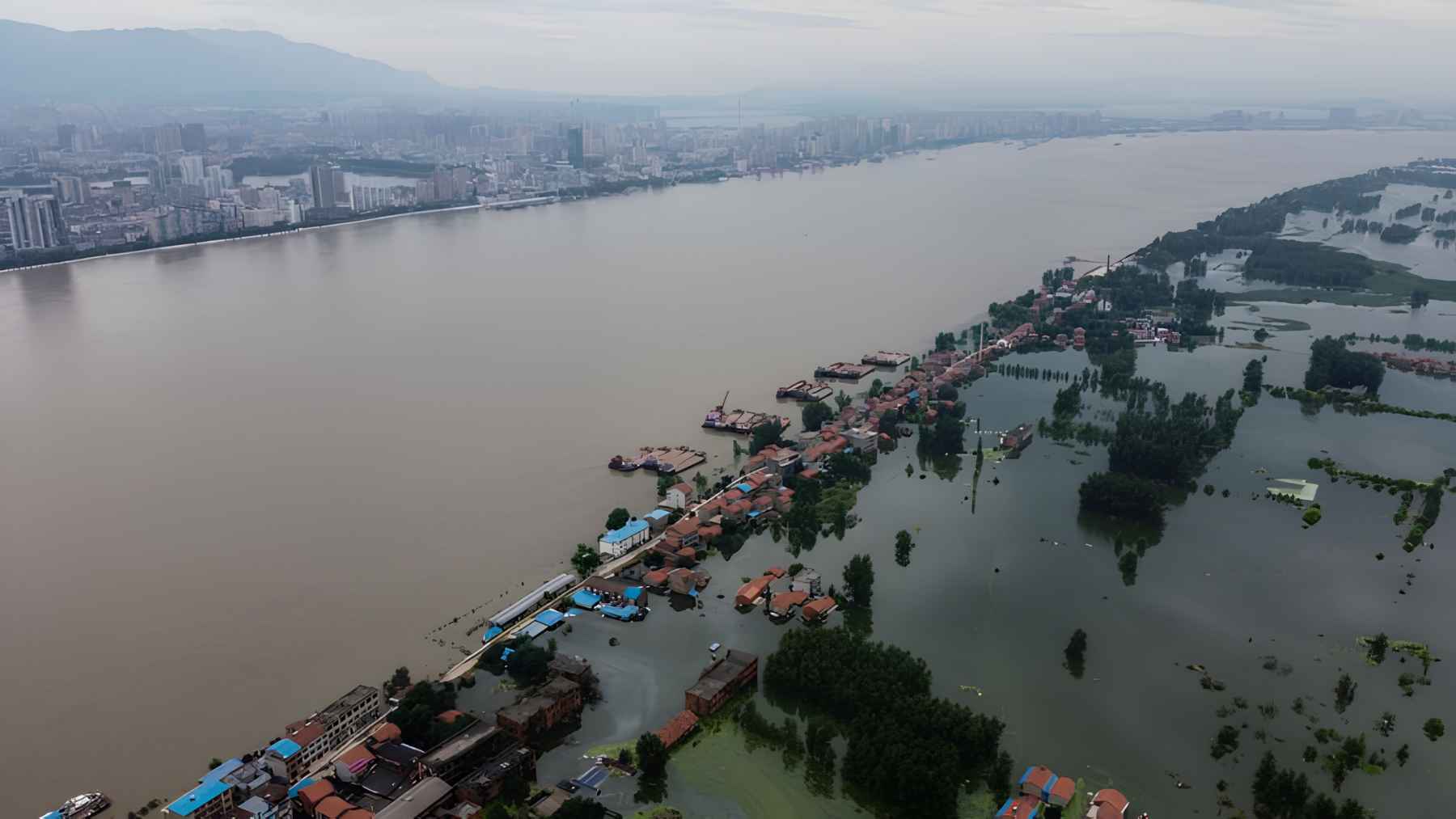
Many of China’s coastal megacities sit on river deltas made of thick, waterlogged sediment that compresses over time. The study highlights the Yangtze River Delta and the Pearl River Delta, places that combine low elevation, fast growth, and heavy industrial activity.
Here is the part that can feel surprisingly personal even if you live far away. When a key manufacturing region faces higher flood risk, the impacts can ripple into shipping schedules and global supply chains, the kind of disruption that can show up as delays or higher prices for everyday goods.
The researchers stress the pattern is not limited to one country. They note that other big coastal cities, including New York, Jakarta, and Manila, sit on low-lying plains where a similar mix of rising water and sinking land can turn a rare flood into a regular headache.
What can be done, and what is already changing
Some of the solutions sound unglamorous, but they can matter. When cities curb groundwater pumping, or carefully put water back underground, they may be able to slow subsidence and reduce how fast flood risk grows. It can buy time.
The research also includes vulnerability maps intended to help planners spot local hotspots, instead of treating an entire coastline as if it behaves the same way. The work was supported by the National Science Foundation and NASA, and a 2024 probabilistic reconstruction of sea-level change since 1900, a statistical rebuild that estimates the trend while showing uncertainty, offers added context for how steady long-term rise shows up across many coastlines.
Read More: {{post_title link:post}}
A 2024 satellite-based assessment of urban subsidence in China reached a similar warning about widespread sinking land in major cities. Put together, these studies suggest that managing groundwater, building weight, and coastal planning is not a side issue – it is part of how cities buy time as the ocean keeps rising.
The original study was published in Nature.