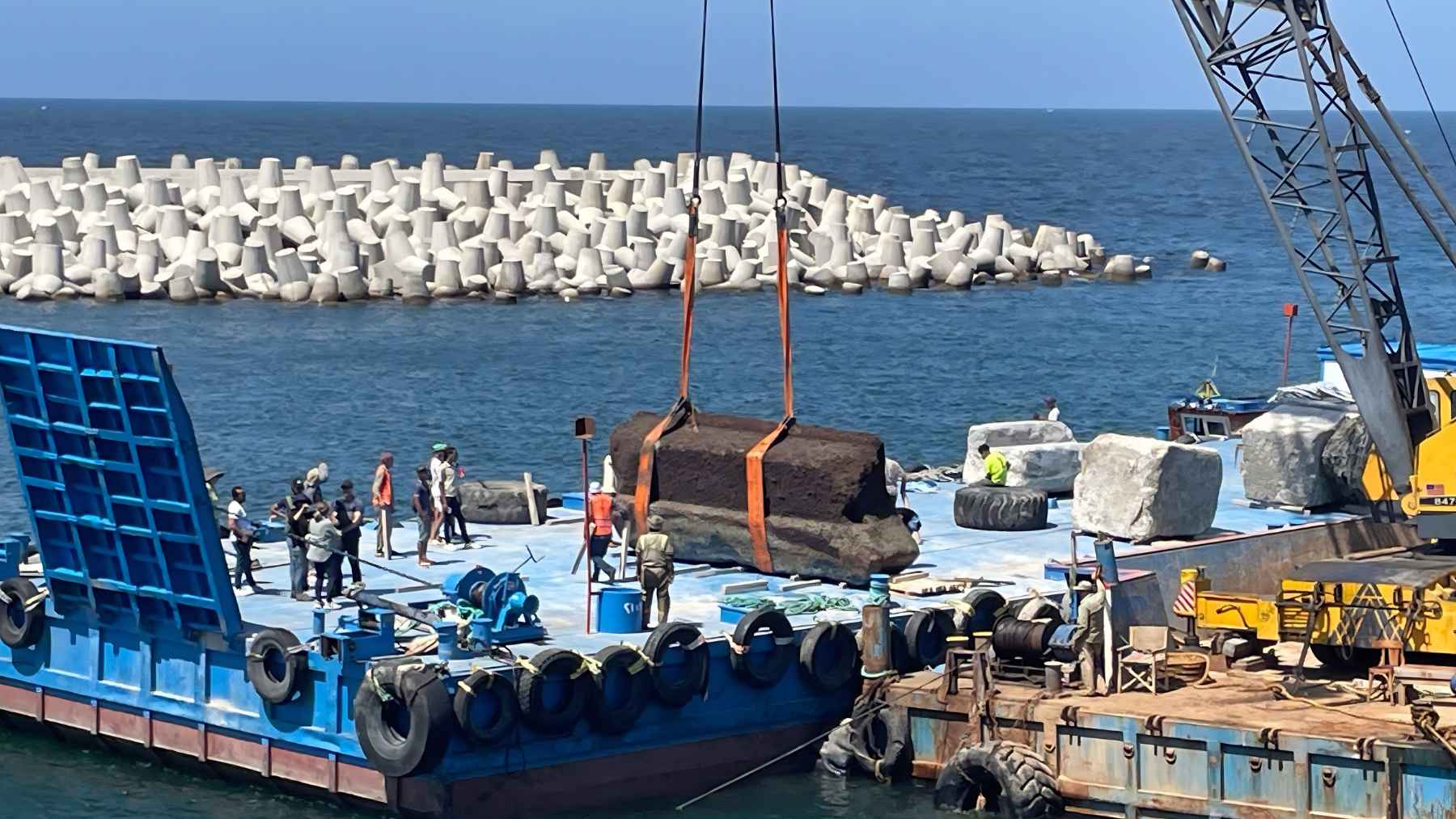
A team working in Alexandria’s Eastern Harbor has lifted 22 enormous stone blocks linked to the ancient Lighthouse of Alexandria, also known as the Pharos.
The pieces are being studied and digitally scanned as part of the PHAROS program, led by France’s National Center for Scientific Research (CNRS) with Egypt’s Centre d’Études Alexandrines under the authority of Egypt’s Ministry of Tourism and Antiquities, with support from La Fondation Dassault Systèmes.
It sounds like pure archaeology, but it also feels oddly current. What happens when a famous monument is sitting on the seafloor while the sea around it warms and rises?
A lost wonder surfaces in 22 pieces
The newly recovered stones include elements of a monumental entrance, such as lintels, jambs, and a threshold, plus large base slabs. Some individual pieces weigh roughly 154,000 to 176,000 pounds (around 77 to 88 U.S. tons), which helps explain why lifting them is such a big deal.
Researchers also say the haul includes parts of a previously unrecognized structure described as a pylon with an Egyptian-style door made using Greek construction techniques. It is a small detail with a big payoff because it hints at how blended and international Hellenistic Alexandria really was.
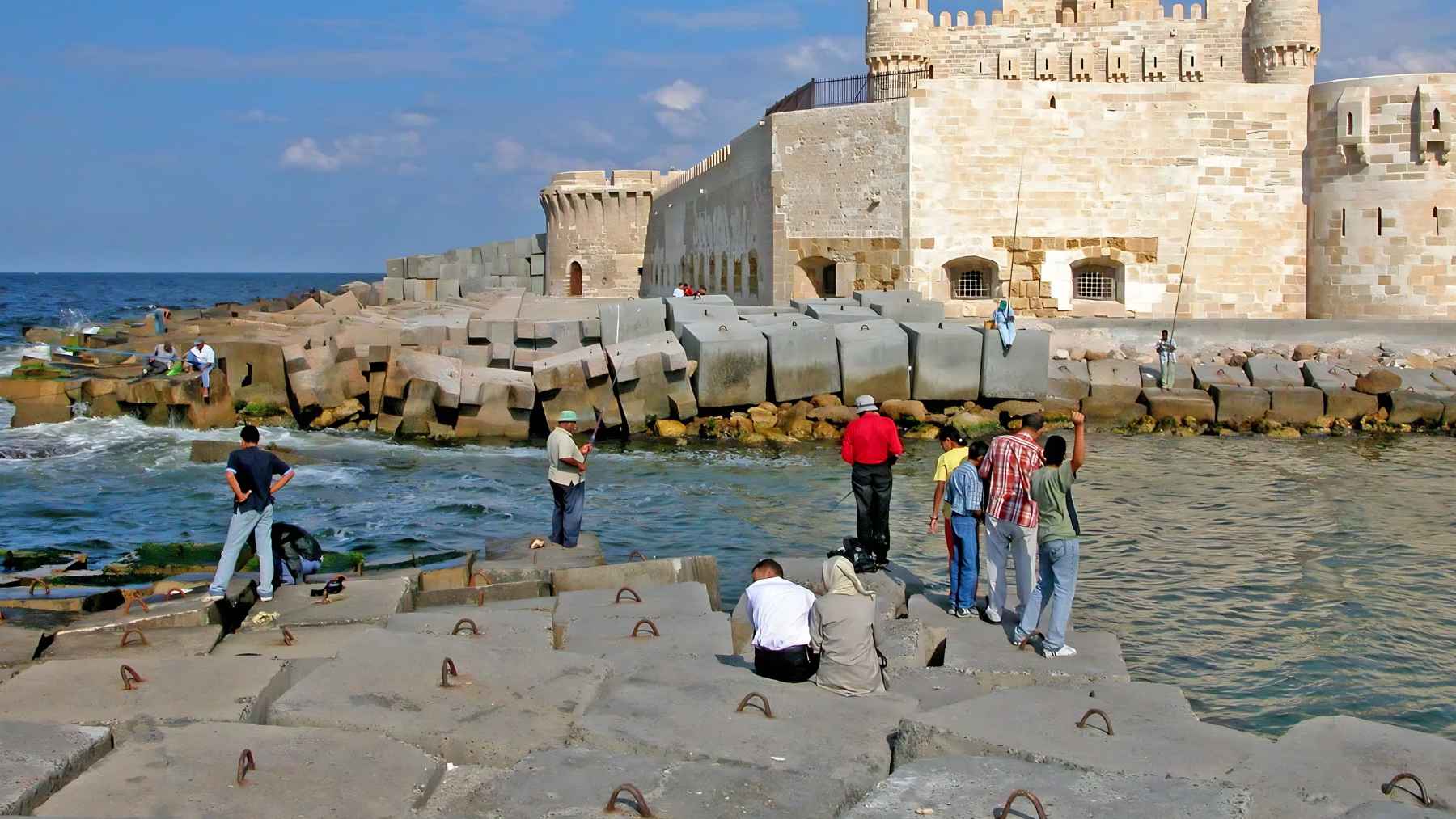
Built around 280 BCE during the Ptolemaic era and described as more than 350 feet tall, the lighthouse guided ships into Alexandria until earthquakes and later stone quarrying helped erase it. By the late 1400s, the citadel of Qāʾit Bāy was being built from its ruins on the same site.
A digital twin built from photogrammetry
After the blocks are documented and processed with photogrammetry, the resulting 3D models are shared with volunteer engineers supported by La Fondation Dassault Systèmes. The foundation compares the work to a “giant archaeological puzzle,” where each block has to be analyzed and virtually put back in place.
This is not starting from zero. The CNRS and its partners say more than 100 blocks were already digitized underwater over the past decade, and CEAlex reports that by early 2020 it had created 154 digital duplicates of blocks or fragments for virtual reconstructions.
In practical terms, a digital twin can do more than make a striking image for a museum wall. It can let teams test competing ideas about how the lighthouse was built and why it collapsed, without repeatedly moving fragile, heavy material in a busy harbor.
An ancient city under modern waves
For centuries, parts of ancient Alexandria have been submerged, with some ruins lying about 20 to 26 feet underwater. CEAlex estimates the lighthouse site covers about 4 acres, with the broader submerged zone around the fort reaching closer to 7 acres. It is packed with architectural blocks, fragments, and stone statuary.
Working conditions have never been easy. French underwater archaeology teams describe murky waters that reduce visibility, and they note that a wave protection project in 1993 dropped hundreds of concrete blocks near Qaitbay Citadel, complicating access and threatening nearby remains.
Even so, divers and archaeologists have identified almost 3,500 architectural items in the area, including colossal statues, obelisks, and sphinxes. That catalog matters for history, but it also shows something else -the seafloor here is an archive sitting inside a living coastal system.
The Mediterranean is rich and stressed
The Mediterranean Sea is famous for its biodiversity, and UNEP says it is home to more than 17,000 marine species, with 20 to 30% of them found nowhere else. In other words, even a small stretch of coast can hold an outsized share of life.
But this is also one of the most pressured seas on Earth. UNEP estimates the Mediterranean is polluted by about 805 U.S. tons of plastic waste every day, and plastics make up most floating litter. In some locations, UNEP reports sea surface microplastic concentrations above about 160 million floating particles per square mile.
Climate adds another layer. UNEP reports that the Mediterranean region is warming 20% faster than the global average, which is the kind of trend you can feel when summers get stickier and heat waves last longer, even if you live far from the shore.
Rising seas and sinking ground raise the stakes
Globally, sea level is already rising, and the IPCC reports an increase of about 8 inches between 1901 and 2018. The same assessment shows the rate has accelerated in recent decades, a key reason coastal flooding risks are climbing.
Alexandria has its own local twist. CEAlex notes that the lighthouse site sank along with its ruins due to subsidence that has affected Alexandria’s coasts since antiquity, and when sinking land meets rising water, relative sea level can effectively jump
UNEP warns that Mediterranean coastal zones face heightened disaster risks, including flooding and erosion, plus salinization of river deltas and aquifers that support livelihoods. So yes, this is about an ancient lighthouse, but it is also about the modern coastline that surrounds it.
What happens next for the PHAROS program
Underwater heritage experts often emphasize restraint, and UNESCO’s 2001 convention says in situ preservation should be considered the first option before intrusive actions. When recovery is needed for scientific or protective purposes, careful recovery and thorough documentation are central to best practice.
That is why the digital work matters as much as the dramatic lifting footage. CEAlex notes that dozens of pieces raised in 1995 and 1996 are already visible in Alexandria at outdoor displays, while today’s scanning efforts can share far more detail with researchers who may never dive the site.
If the PHAROS team succeeds, the public may one day “visit” the lighthouse through a virtual model, while the real blocks remain part of a complicated seascape of waves, concrete defenses, ships, and sediment.
The original statement was published on CNRS’s website.