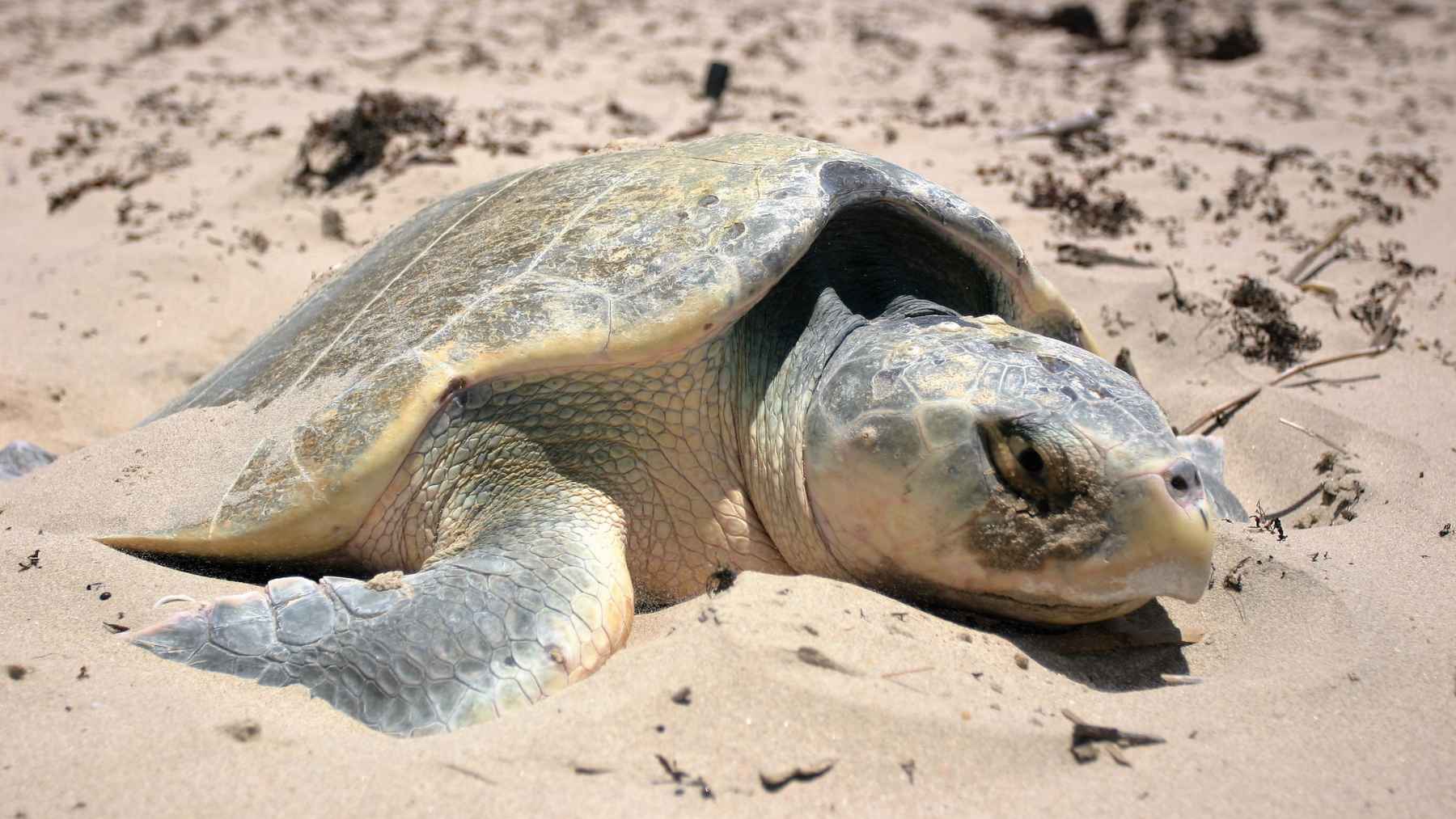
Beachgoers on Pirate’s Beach on Galveston Island, Texas, got a shock on March 7, 2026, when a sea turtle washed ashore looking like it had grown a coat of green fur. The animal was an adult female Kemp’s ridley, the smallest sea turtle species in the world and listed as endangered under the Endangered Species Act.
Rescuers with the Gulf Center for Sea Turtle Research rushed her to emergency veterinary partners at the Houston Zoo, and she is now under intensive care, with Marshall saying she remains in critical condition but is still holding on.
Volunteers named her Grace O’Malley, and Dr. Christopher Marshall said she is estimated to be at least 15 years old, although she could be older. That odd “fur” is not just a curiosity – it is a visible clue that her ocean world can turn hostile fast.
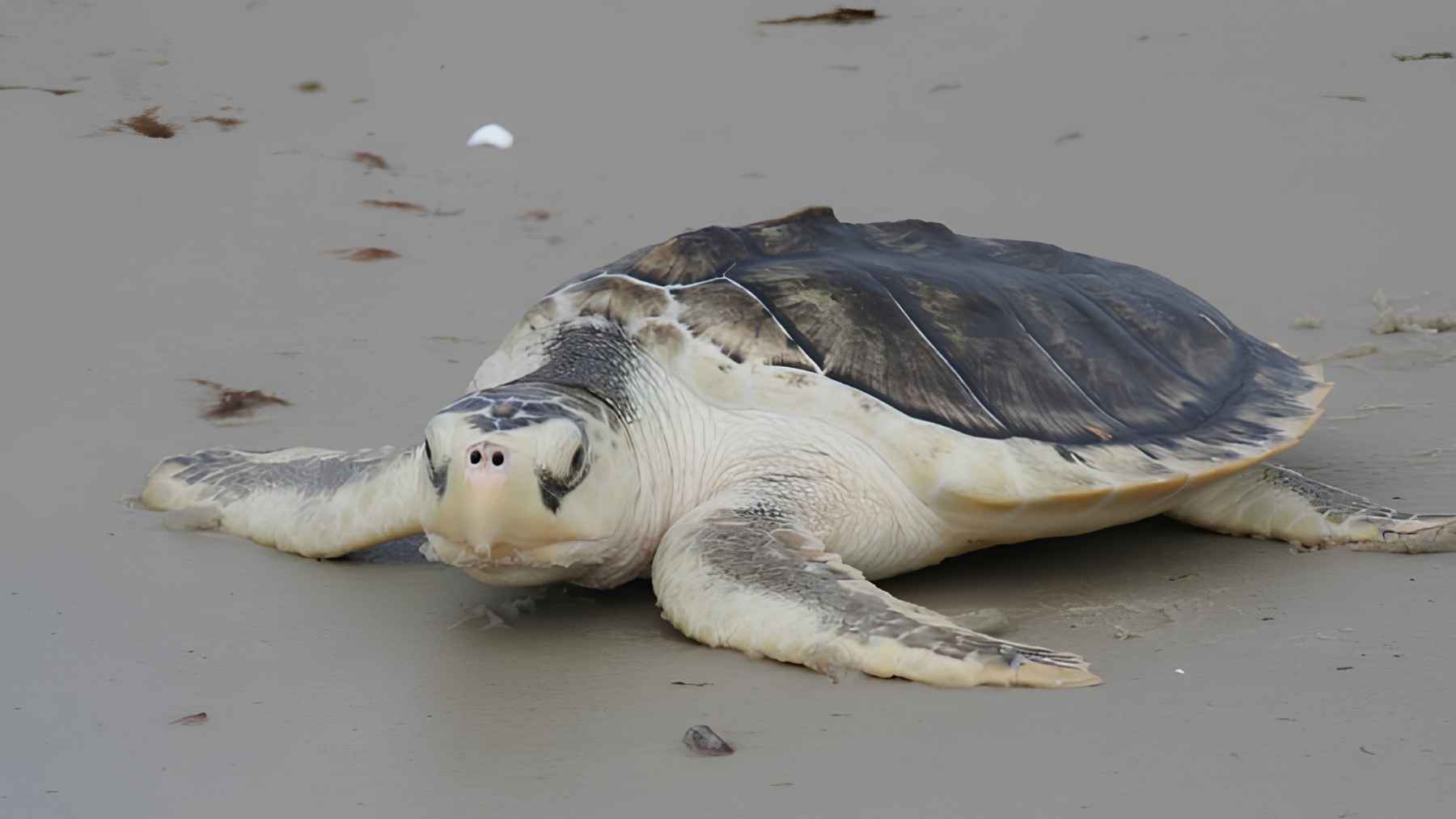
What the “green fur” really was
So what was that “green fur,” really? It was a heavy load of epibionts, living hitchhikers like barnacles and algae, plus sediment that can build up when a turtle is too weak to keep swimming strongly.
Marshall put it bluntly, saying “healthy sea turtles are swimming sea turtles.” When swimming slows because of illness or injury, organisms in the water can colonize the shell and skin fast, and that extra weight can push the turtle into a vicious cycle.
For a Kemp’s ridley, that burden is especially risky. Adults are typically about 2 feet long and around 70 to 100 pounds, so a thick layer of growth is not a minor cosmetic issue. It is drag, lost energy, and one more obstacle between the turtle and its next breath at the surface.
A beach stranding can hide a bigger medical crisis
In this case, the turtle’s condition did not stop at the surface. Marshall told Chron that veterinarians identified severe pneumonia and related eye ulcers during her medical evaluation, and the team is treating her with round-the-clock monitoring.
Pneumonia in sea turtles can sound oddly familiar, and Marshall compared it to how people get it, with fluid in the lungs and bacteria. He also said the turtle had saltwater in her lungs when she stranded, likely from being in the surf just before hitting the beach, which can make breathing even harder.
The frustrating part is that recovery rarely comes with a neat timeline. Marshall said he could not predict whether she will keep improving or when she might be released, adding that her condition can change day by day and that it could be months before a release is even on the table.
Why Kemp’s ridleys are still on a knife edge
This species has made real gains, but the long view is sobering. NOAA notes that Kemp’s ridleys crashed in the mid 20th century to a low point in the 1980s, when nesting fell to a record low of 702 nests in 1985, representing fewer than 250 nesting females.
Conservation work helped, and NOAA reports nest counts grew about 15% per year through 2009. Then the rapid rise stopped in 2010, and nest numbers have fluctuated since, with most nesting still centered in Tamaulipas, Mexico and smaller nesting in Texas.
At the end of the day, the threats are the same ones people along the Gulf live around, often without seeing them. NOAA lists bycatch in fishing gear as the biggest threat, alongside vessel strikes, marine debris, loss of nesting habitat, and changing environmental conditions. NOAA also points to turtle excluder devices in shrimp trawls to reduce deadly bycatch.
Nesting records do not mean the danger is over
Texas has become a small but meaningful nesting area for Kemp’s ridleys, and recent numbers show why scientists pay close attention to this coastline. A Texas A&M University at Galveston summary reported that, by June 6, 2025, the number of Kemp’s ridley nests found on the Texas coast that year hit 357, passing the previous annual record of 353 set in 2017.
That same document said 449 nests were confirmed on the Texas coast during the 2025 season, with the majority recorded on North Padre Island and South Padre Island. It is the kind of headline that feels hopeful, especially if you have ever watched hatchlings scramble toward the surf.
But strandings like Grace O’Malley’s case are the reminder you cannot put the species on autopilot. A record nesting year can happen alongside more boat traffic, more fishing effort, more storms, and more junk washing onto the shoreline, the same stuff you notice when you are stuck in beach parking lot traffic with sand in your shoes.
What to do if you find a stranded sea turtle
If you see a sea turtle on the beach that looks sick, injured, or tangled, the safest move is to call professionals and keep your distance. In Texas, reports go through the statewide hotline at 1-866-TURTLE-5, and NOAA’s Sea Turtle Stranding and Salvage Network listing for the state was last updated April 6, 2026.
It is tempting to push a turtle back toward the water, but that can make things worse if the animal is exhausted or has water in its lungs. The Galveston rescue started because someone made the call, and GCSTR and its partners were able to get the turtle into veterinary care quickly.
The rescue team says they are hopeful she can recover and return to the Gulf, but they are also clear that their work depends on community support. GCSTR, created in 2019 at Texas A&M University at Galveston, runs research, rescue, and rehabilitation programs with regional partners, and public attention can translate into supplies, funding, and more eyes on the shoreline.
The official statement was published on NOAA Fisheries’ website.