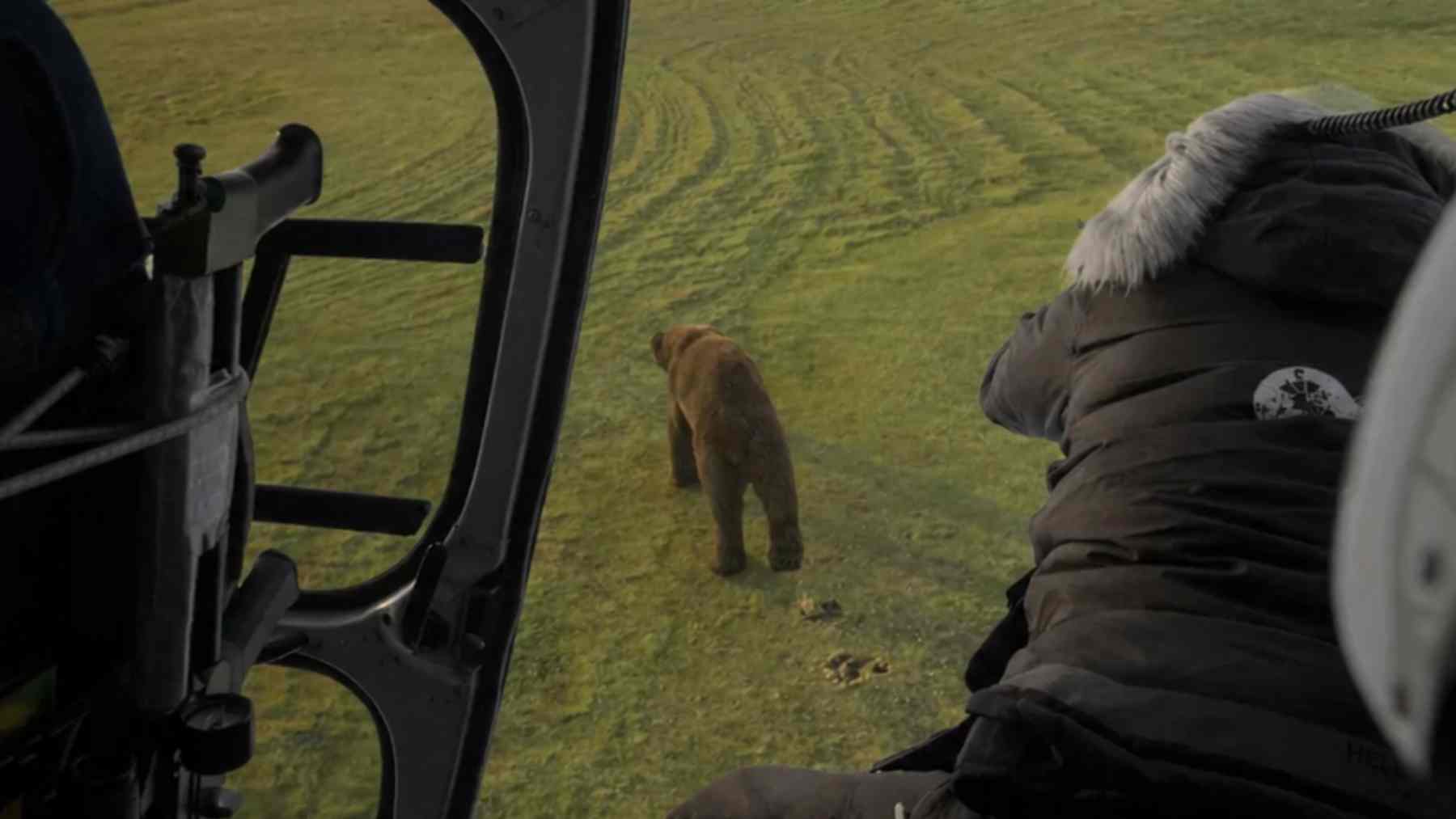
Alaska is once again in the spotlight for a wildlife strategy that sounds harsh on first hearing. State officials want to revive a predator control program that includes killing brown bears and black bears from helicopters in parts of southwest Alaska, arguing it could help a struggling caribou herd rebound. Conservation groups are now asking a court to block the next round before it begins.
At the center of the fight is a familiar question with no easy answer. When a key prey species collapses, is it responsible science to thin predators, or a risky shortcut that ignores bigger problems like habitat change and disease. Alaska’s Mulchatna caribou are caught in that tension, and so are the people who depend on them.
What the injunction would stop
On April 6, 2026, the Alaska Wildlife Alliance and the Center for Biological Diversity filed an emergency motion in Alaska Superior Court seeking a preliminary injunction. They want to halt bear killing operations in the Mulchatna Caribou Herd Predation Management Area while their broader lawsuit continues. The groups warn the state could resume killing bears as soon as May if the court does not step in.
The underlying regulation is not small scale. The Mulchatna predation management area covers about 39,683 square miles, which is roughly 25.4 million acres, and it authorizes lethal removal of wolves and bears using aircraft, including helicopters. It also allows removals to continue through July 1, 2028.
State officials say the work is meant to be targeted. In public reporting, Alaska has described a “focus area” around calving grounds that is about 1,200 square miles, or about 768,000 acres, while critics argue the legal authority effectively spans most of the herd’s range. That gap in framing is one reason the debate stays so heated.
Why this caribou herd matters
The Mulchatna herd is not just another wildlife statistic. It has long been an important source of food for subsistence hunters in dozens of communities, which is a very different reality than buying meat at a grocery store. When the herd shrinks, that ripples through culture, traditions, and household freezers.
The population swing has been dramatic. The herd peaked at about 190,000 animals in the late 1990s, then fell to around 13,000 by 2019, according to reporting that cites state information. Hunting has not been allowed since 2021.
Alaska’s intensive management objective for Mulchatna is far higher than today’s numbers. The state’s target range is 30,000 to 80,000 caribou, a level officials consider necessary to support sustainable use. Recent estimates place the herd in the low tens of thousands, well below that benchmark.
What the numbers say so far
Alaska’s Department of Fish and Game has been tracking whether calf survival is improving, because calves are the pressure point in many predator prey systems. In a Fall 2025 update, department biologists reported a combined 2024 calf to cow ratio of 43 calves per 100 cows, and they noted that the western subgroup reached 54 calves per 100 cows. The agency said that western ratio was the highest recorded since 1999, and it suggested a “positive response” to predator control that targeted bears and wolves on the western calving grounds.
But calf ratios are not the same thing as a herd recovery. A 2024 population assessment memo from the department said that since 2019, the combined estimate for the eastern and western segments has stayed relatively stable at about 12,500 to 13,450 animals. That is still far below the 30,000 to 80,000 objective.
The department’s own reporting also hints at the complexity behind the scenes. It has described ongoing research into how nutrition affects reproduction and calf recruitment, along with continued monitoring of disease and predation impacts. In other words, predation is part of the story, but not the only chapter.
Where the science gets complicated
Predator control can work in certain conditions, especially when predation is the main “limiting factor” and habitat can support more animals. Alaska’s argument is that bears and wolves have been significant calf predators in the Mulchatna area, so reducing predation during sensitive seasons could help the herd grow. That logic is scientifically plausible, and it is also why the approach keeps resurfacing in policy.
The trouble is that ecosystems rarely cooperate with simple models. If food availability, disease, weather, wildfire, or changing habitat quality are doing most of the damage, killing predators may produce only a temporary bump, or shift pressure somewhere else. Critics point to climate change and disease as major drivers, and the state itself acknowledges that multiple factors influence survival.
Even the intensive management paperwork reflects that uncertainty. In its February 2025 annual report, Fish and Game noted that wildfires in 2021 burned about 656 square miles, or roughly 420,000 acres, in the eastern range and “likely degraded” caribou habitat. That’s a reminder that you can thin predators perfectly and still lose ground if the landscape underneath the herd is changing.
The legal and ethical lines Alaska is walking
The program is controversial partly because of how it is carried out. Under the state’s 2022 bear control plan, officials killed 175 brown bears and five black bears in 2023 and 2024, according to reporting on the lawsuit history. Courts later struck down an emergency reinstatement in 2025, but not before the state killed 11 additional brown bears.
There is also a procedural track record that is hard to ignore. In January 2026, Alaska Public Media reported that a judge ordered the state to pay $513,000 related to a lawsuit over the Mulchatna predator control program, with the dispute centering on issues like public notice. For many Alaskans, that kind of ruling raises a basic governance question about transparency, not just wildlife biology.
Then there is the constitutional issue. The new motion and lawsuit argue that Alaska’s “sustained yield” obligation applies to bears too, not only to the prey species people want to hunt, and they say the state still lacks reliable bear population information in the targeted area. Trustees for Alaska attorney Michelle Sinnott has described the policy as a “blank check” to kill bears, while the state has said it is trying to rebuild the caribou herd without jeopardizing long term bear sustainability.
What a broader recovery plan could include
One point both sides indirectly agree on is that monitoring matters. If predator control is used, it works best as a tightly measured experiment, with clear population baselines, transparent reporting, and pre set thresholds that trigger changes when results do not materialize. Alaska’s intensive management framework includes reporting requirements and review triggers tied to metrics like calf to cow ratios and detectable increases in caribou numbers.
A broader plan also means looking beyond predators. Fish and Game has said it is researching nutrition, reproduction, and disease, and it has tracked indicators like pregnancy rates and calf metrics over time. Those details may sound technical, but in practical terms they tell you whether the range can support more animals even if predation pressure drops.
And there is a bigger context in Alaska’s own policy approach. The department says predation control programs authorized under intensive management are active in four areas statewide, covering about 5 percent of Alaska’s land area, and that predators are intended to be reduced but not eliminated. That framing matters, because it highlights the state’s goal of balancing prey harvest with predator sustainability, even when the tool is politically explosive.
What happens next
The next major checkpoint is the court’s response to the preliminary injunction request. If the judge grants it, the state would be blocked from conducting bear killing operations in the Mulchatna management area while the lawsuit proceeds, at least for now. If the request is denied, the program could resume during the spring season when caribou calves are most vulnerable and when bears with cubs may be out of dens.
Longer term, the decision could shape how wildlife agencies justify lethal predator control in a warming, fast changing North. The Mulchatna herd is a real test case for how modern conservation weighs human needs, animal welfare, and the messy science of ecosystems. This debate is not staying inside Alaska’s borders.
The press release was published on “Center for Biological Diversity.”