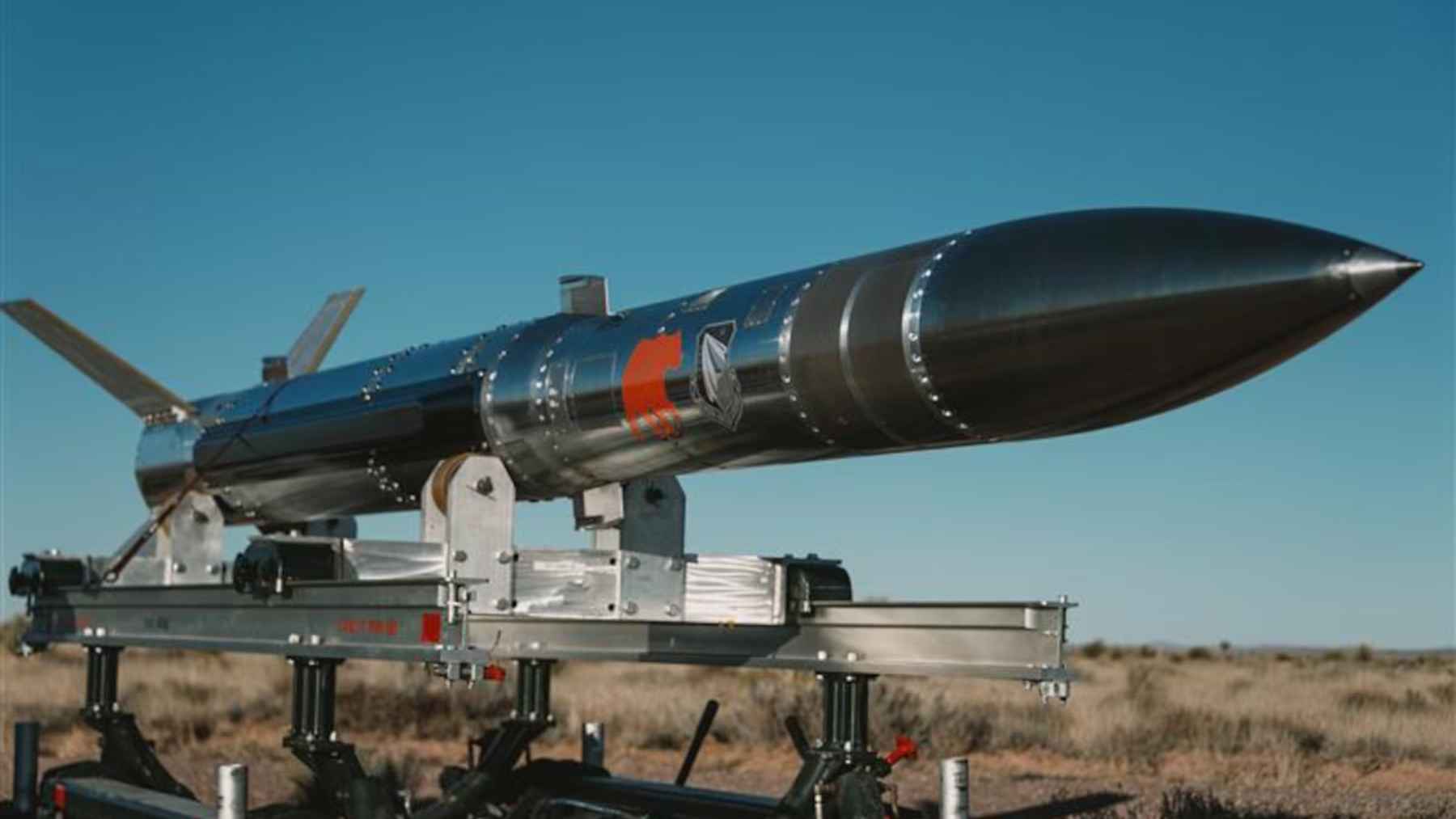
Something unusual happened in U.S. missile testing this spring. The Air Force Research Laboratory (AFRL) and startup Ursa Major flew the Affordable Rapid Missile Demonstrator (ARMD) with a storable liquid rocket engine and hit supersonic speeds.
That is defense news, sure, but it is also an environmental story hiding in plain sight. When rockets move away from cryogenic tanks and highly toxic chemicals, the changes show up in worker safety gear, fuel logistics, and what happens if anything leaks at a test range.
A supersonic milestone, not the finish line
AFRL says the ARMD flight demonstrated “concepts of operations” and reached supersonic speeds, with the missile staged for flight on January 27, 2026. In practical terms, it was proof that the propulsion system can leave the ground and behave as expected in the real world.
So why do some reports call it “hypersonic” when the test was supersonic? ARMD is meant to move quickly from a first flight into later demonstrations aimed at the much tougher hypersonic regime.
Hypersonic flight is generally defined as Mach 5 or higher, and NASA notes that typical hypersonic aircraft speeds are above about 3,000 miles per hour. That distinction matters because heating and even the chemistry of air around a vehicle can change dramatically at those extremes.
Why “storable” changes the logistics
Most people picture rocket fuel as something that has to be babied, chilled, and loaded at the last minute. A storable liquid engine is built for the opposite, meaning propellants can sit for long periods without cryogenic cooling and still be ready to go.
Ursa Major says its Draper engine is a closed catalyst cycle design that produces about 4,000 pounds of thrust and runs on hydrogen peroxide and kerosene.
The company also describes it as throttleable, which means it can adjust thrust rather than burning at one fixed level like many solid motors. In a 2025 contract announcement, Ursa Major said Draper had been hot fired more than 250 times and was designed to be storable for at least 10 years.
It sounds niche. It is not. A storable, throttleable engine can change how often equipment is moved, how long propellants sit on site, and how complicated the ground crew’s checklist gets on launch day.
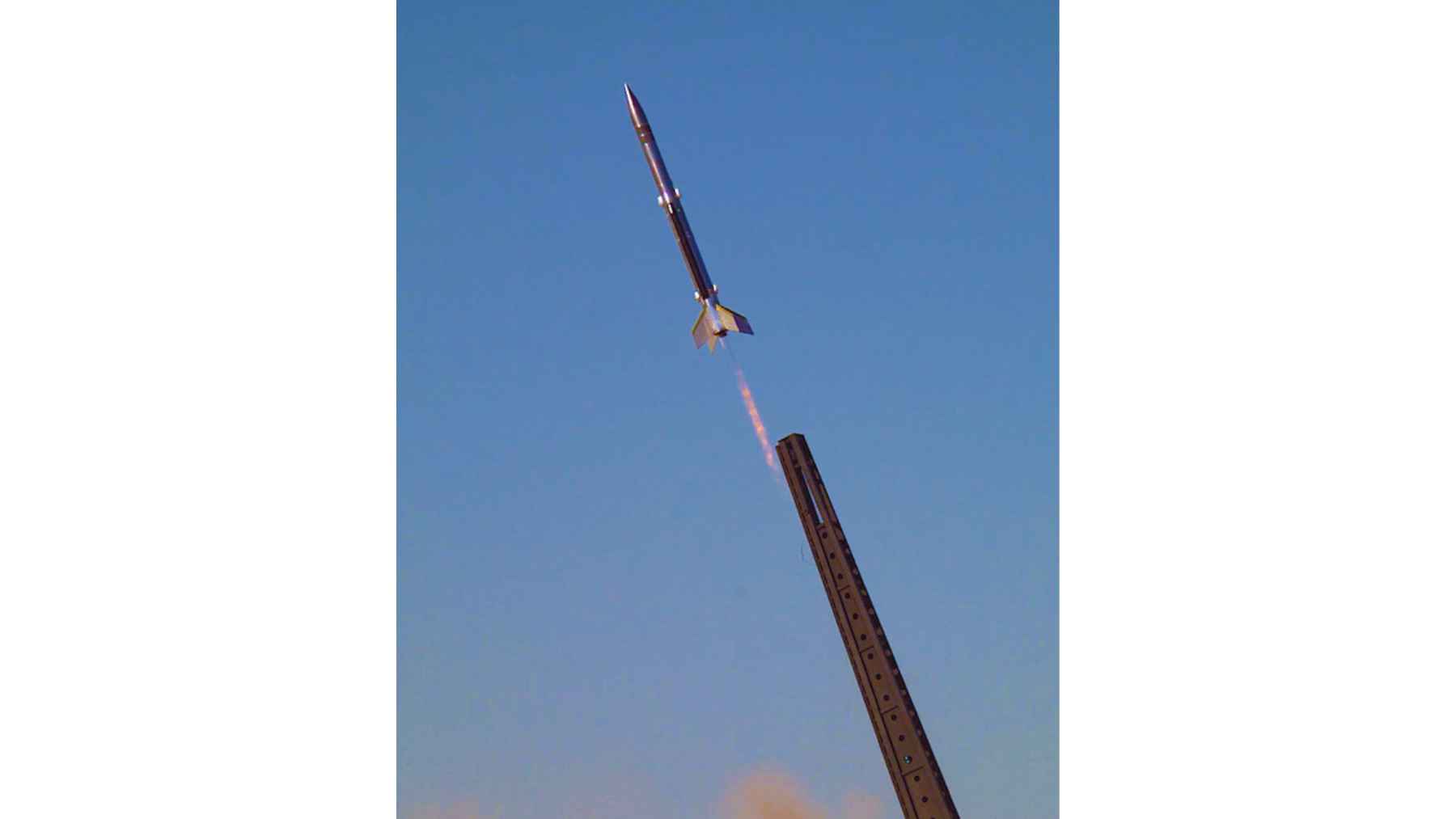
Missile launching from a ground platform with visible exhaust plume, rising into the sky during a propulsion test.
Non-toxic propellants and what that really means
Rocket history is full of chemicals that get the job done but are hazardous to humans and ecosystems. Hydrazine, a long-used spacecraft propellant, is treated as highly hazardous, and aerospace groups have documented how extensive precautions are needed when it is handled and loaded.
Draper’s oxidizer choice is part of a broader shift toward lower-toxicity options. High-test hydrogen peroxide can be catalytically decomposed into water and oxygen, releasing heat that can be harnessed for propulsion, and Ursa Major says it can reduce environmental harm compared with traditional hydrazine systems.
But “non-toxic” is not the same as “harmless.” Concentrated peroxide is still reactive, and kerosene combustion still produces carbon dioxide and other exhaust products, so the climate math does not vanish just because handling is simpler.
3D printing can cut waste, but it is not magic
Another quieter piece of the story is how these engines are built. Ursa Major says Draper’s components are largely 3D printed, and in ARMD it also acted as the prime contractor that integrated the full vehicle, not just the engine.
Additive manufacturing can reduce material use because it builds parts layer by layer instead of machining away most of a metal block. One life-cycle assessment focused on industrial machinery and aeronautical parts found metal additive manufacturing reduced potential environmental impact by more than 60%, largely due to reduced material consumption.
Still, the picture is mixed. Reviews warn that, depending on the process and the scale of production, energy use and powder handling can offset some gains, so “printed” does not automatically mean low-carbon.
The CO2 question that does not go away
Even if a propellant is easier on workers, rockets are not climate-neutral. If the fuel is a hydrocarbon like kerosene, burning it produces carbon dioxide, and that is true whether the engine is on a test stand or inside a flight vehicle.
At the same time, local impacts can be very real, especially near ranges where exhaust, noise, and accidental spills meet wildlife habitat. A switch away from the most toxic propellants can reduce the stakes of a leak, which is the sort of unglamorous improvement that matters to cleanup crews and nearby communities.
For readers trying to make sense of the “green” label, a good rule is to separate toxicity from greenhouse gases. Hydrogen peroxide systems can reduce some hazards, but emissions depend on what the fuel is and how often the system is used.
What to watch next
AFRL framed this flight as part of a push to speed up technology delivery, not as a one-off stunt. In its release, the lab quoted Brigadier General Jason Bartolomei saying “we are not just building a single missile” and that the approach aims for a cost-effective, mass-producible deterrent.
Ursa Major’s CEO Chris Spagnoletti also highlighted the pace, saying the team went from contract to a flight-ready “all up round and propulsion system” in eight months. If that speed holds as testing advances, it could change how quickly new propulsion ideas are evaluated and either adopted or discarded.
The big question is whether “affordable” and “safer to handle” becomes a new baseline, or just a niche. Either way, the propellants and manufacturing choices being tested now are a reminder that environmental considerations can show up in unexpected corners of high-speed aerospace.
The official statement was published on the Air Force Research Laboratory.