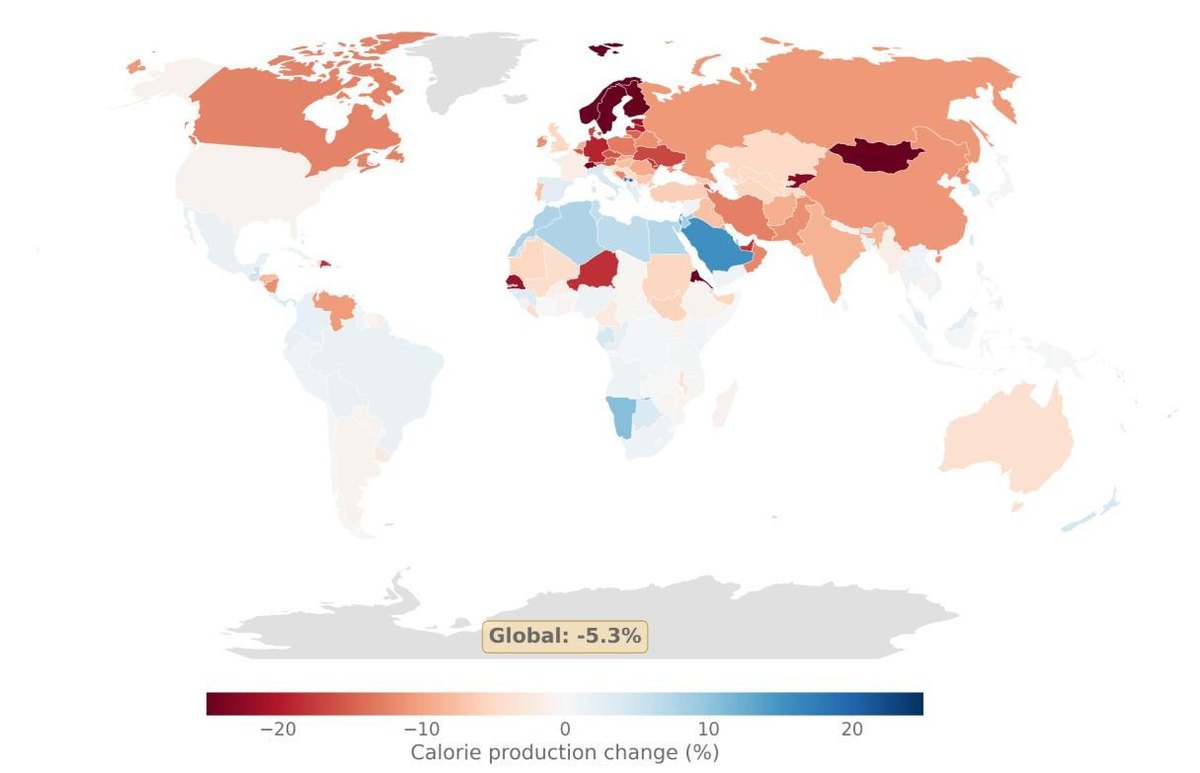
An unreviewed preprint from the Alliance to Feed the Earth in Disasters (ALLFED) finds that a simulated AMOC collapse would cut calories from wheat, corn and rice by roughly 16 to 19 percent in Germany and Ukraine. In the most pessimistic market case, cereal prices could climb up to 40 percent. The study, led by Rebecca Frank, was posted Aug. 27 on Research Square and has not been peer reviewed.
Globally, the eight authors find a 5.3 percent decline in calories from the three grains, a figure they say hides critical regional failures.
The current that keeps Europe mild
The AMOC, the Atlantic Meridional Overturning Circulation, carries warm water like the Gulf Stream toward the pole. There, NOAA explains, the water cools, grows denser and sinks, then flows south in the deep ocean, a loop that takes an estimated 1,000 years.
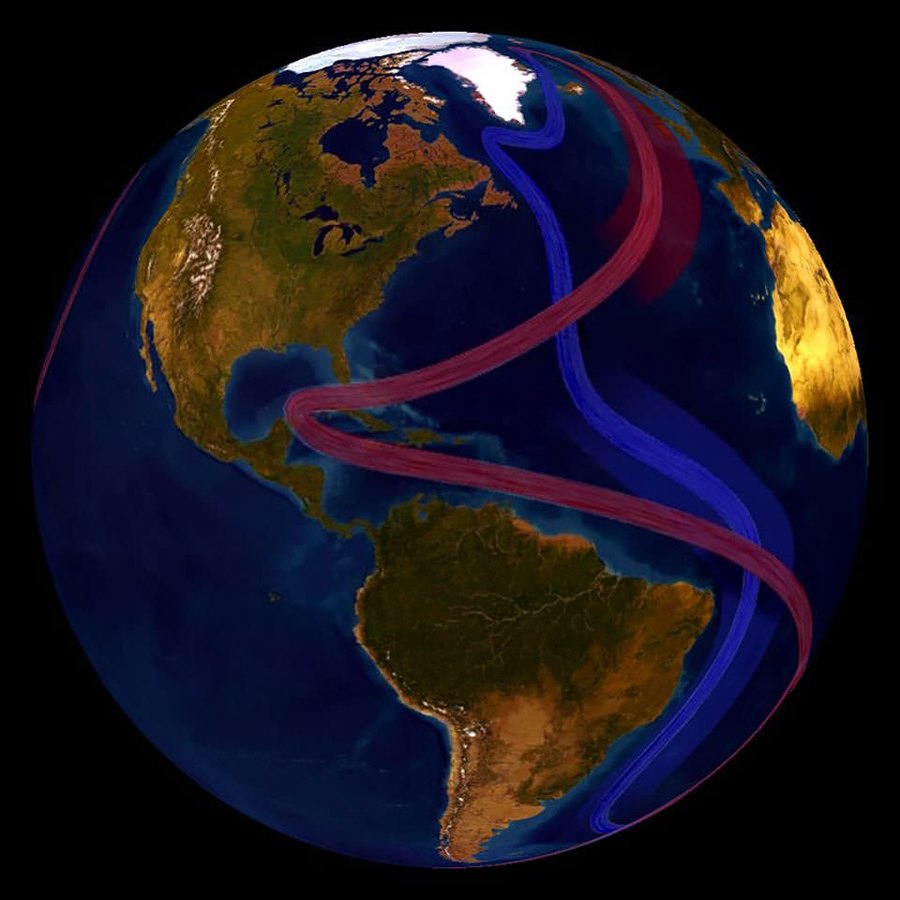
Utrecht University says the current helps keep Western Europe’s climate relatively mild. The AMOC was thought to tip at around 4°C (7.2°F) of warming, but in a new Nature Climate Change study, Utrecht researchers argue there is no fixed threshold. “The stability of the circulation depends on how fast the climate is changing,” said lead author René van Westen. Even so, the ALLFED team writes, the new climate would arrive gradually over several decades.
How the team built a colder century
ALLFED, based in Lafayette, Colorado, posted the paper on July 7, 2026. Frank wrote the draft, Simon Blouin ran the crop simulations, Florian Jehn built the trade network and Michael Hinge did the economics, under ALLFED director David Denkenberger of New Zealand’s University of Canterbury.
Because climate models carry biases in absolute weather values, the team started from real weather: NASA’s POWER daily records for 2001 to 2020, looped five times to fill a century. They shifted that record month by month using HadGEM3-GC3.1-MM, a model run with and without an AMOC collapse.
In that run, cities like London and Reykjavik cool by 5.4 to 9 degrees F (3 to 5 degrees C). Other recent simulations project drops of 7°C to 13°C (12.6 to 23.4 degrees F) for the same regions, the paper notes, in the range of a model that found 10 to 15 degrees C of cooling in northwestern Europe.
The crops came from Mink, a global crop model built on DSSAT 4.7, with fields, fertilizer and carbon dioxide kept at today’s levels. Wheat, corn and rice together account for nearly half of the calories people eat worldwide.
Germany, Ukraine and Canada lose the most
Losses approach 40 percent in marginal northern farming zones such as Scandinavia, according to the authors, but the bigger worry is the farm belts that feed the grain trade. Production falls roughly 16 to 19 percent in major European breadbaskets such as Germany and Ukraine and 12.4 percent in Canada.
A University of Exeter team found something similar for Britain in 2020. Paul Ritchie of Exeter said a collapse would bring an average temperature drop of 3.4°C (about 6.1°F) and 123 mm (4.8 inches) less rain during the growing season, changes that “could make most land unsuitable for arable farming.”
Rain was the swing factor in the ALLFED run too. If irrigated fields kept their water, the global loss shrank to 3.3 percent. If irrigation failed everywhere, it reached 13.7 percent, an extreme the authors call practically unrealistic. The drying would be most acute in the Indian subcontinent and the Middle East and North Africa, they add, where pumping more groundwater risks depleting non-renewable aquifers.
Wheat gaps and a 40 percent price spike
Jehn’s trade model cut each exporter’s 2022 shipments, from FAO data, in line with its lost harvest. Since countries tend to feed themselves first, the real drop in exports could be worse, the authors note.
Wheat shows the worst gaps, in importers such as Guinea, Liberia, Thailand and Spain. Corn gaps hit most of Europe except self-sufficient France, plus Libya, Egypt and Mauritania. Rice gaps showed up in Kazakhstan, Afghanistan, Kenya, Ethiopia and the Middle East.
Hinge’s model tested 10,000 random yield scenarios. Under pessimistic short-run assumptions, global cereal prices could spike up to 40 percent above baseline, easing to a long-term rise of about 17.5 percent once farmers plant more land and redirect feed and biofuel crops. Using World Bank figures, the team writes that a sustained increase in that range could “push between 30 million and 340 million additional people into food poverty.”
Export bans could make things worse. Such policies accounted for roughly half of the 90 percent rice price surge during the 2008 to 2011 crisis, the authors note.
Greenhouses, seaweed and less biofuel
Moving farms elsewhere is not the answer, the authors argue, since the world may already need 0.8 million to 3.9 million square miles (2 million to 10 million square kilometers) of new cropland by 2050. Pushing farms into the tropics would speed up deforestation and turn a climate tipping point into a biodiversity crisis. Today, a third of global farmland drives two-thirds of the environmental damage.
Their list sticks to land already in use: grain moved from feed and biofuel to people, more greenhouses, like the Swiss greenhouse that grows tomatoes under solar panels, and resilient foods such as single-cell proteins, leaf protein concentrate, cellulosic sugar and seaweed farming.
What the preprint cannot say
One 100-year run from one climate model cannot separate real changes in yield volatility from noise, the authors write, and Mink simulates only one harvest a year, missing possible failures of later rice crops. Because crop models tend to miss damage from extremes, the team calls its 5.3 percent figure likely a cautious estimate.
Whether a collapse comes at all is still open. The UN climate panel’s 2021 assessment found the AMOC is very likely to weaken over the 21st century under all emissions scenarios, and added: “There is medium confidence that there will not be an abrupt collapse before 2100.” Watching the current is getting harder too, after a U.S. plan to pull 900 deep-sea instruments meant to study the weakening current alarmed scientists.
The ALLFED authors stress that “these findings do not represent a definitive forecast of the crisis.” The models instead measure the size of the adaptation gap, they write, and the team next wants to add soybeans, multiple cropping and knock-on tipping points such as Amazon dieback.
The full study was published as a preprint on Research Square.
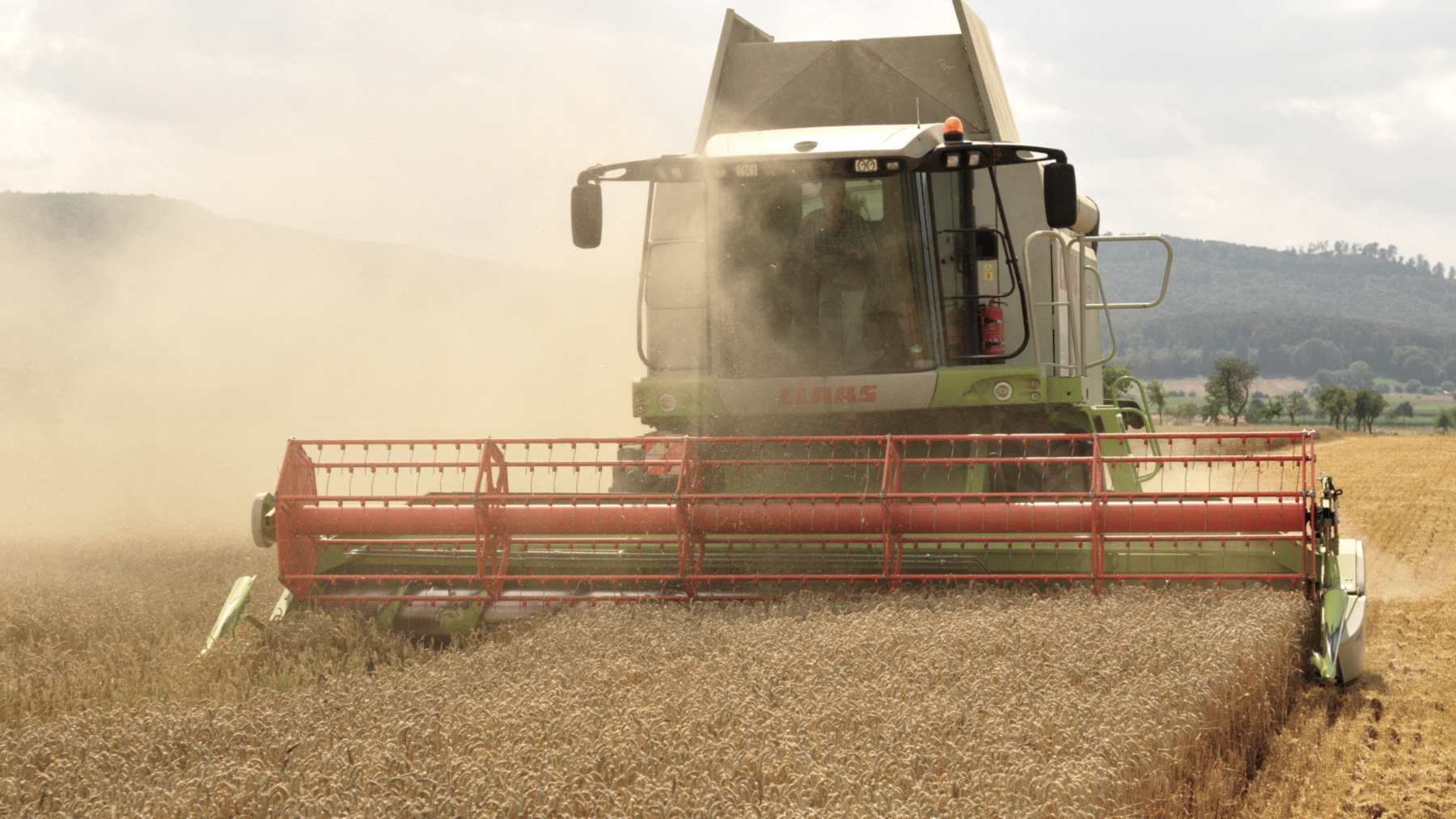
Photo: Michael Gäbler / Wikimedia Commons, CC BY-SA 3.0