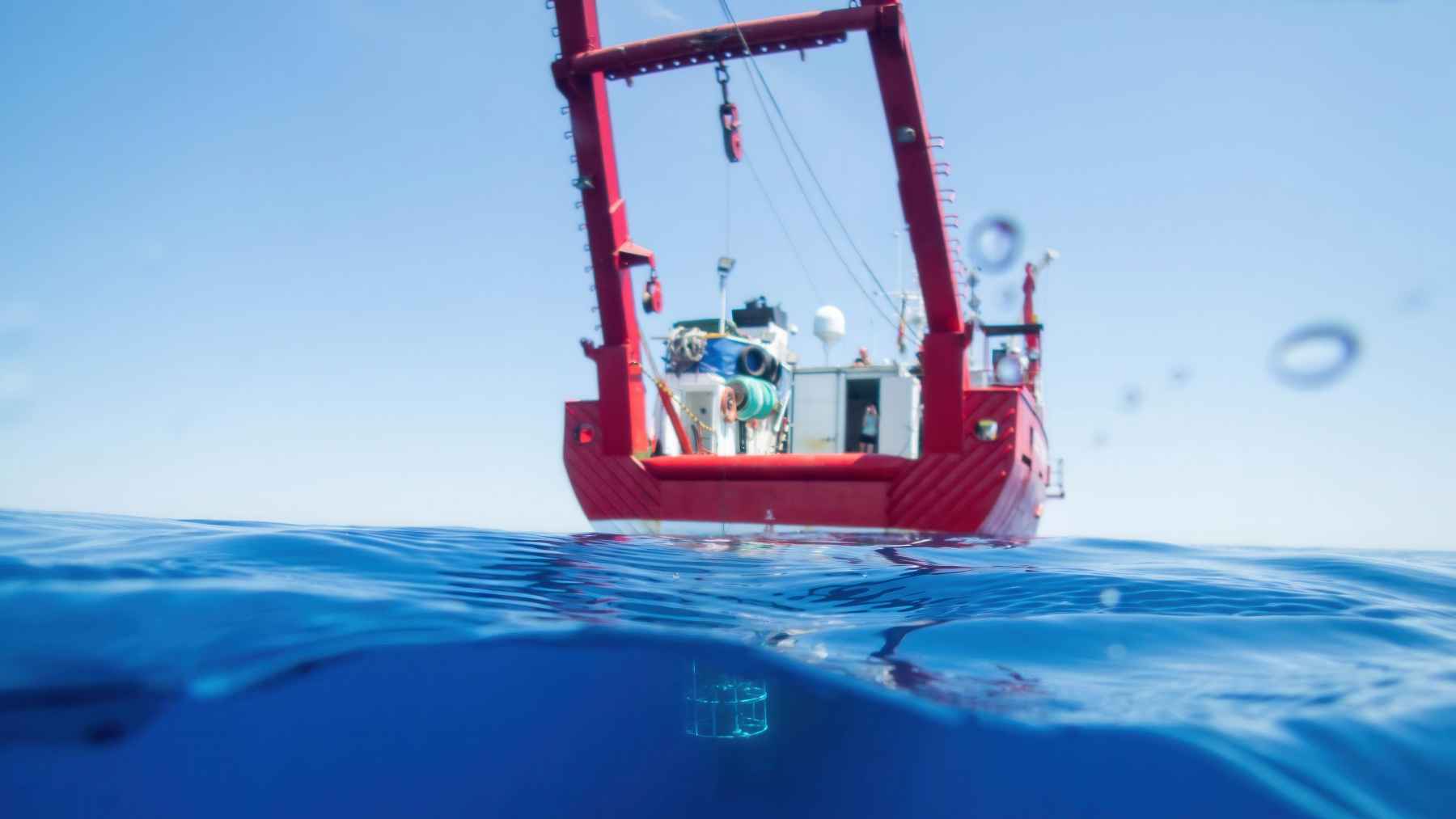
The federal government is dismantling most of a sprawling ocean monitoring network that has spent more than a decade watching the Atlantic and Pacific from below the surface. Under Trump administration cuts, the Ocean Observatories Initiative is losing more than 900 sensors, including a buoy set to be removed from about 260 feet below the Pacific off Oregon.
The $386 million system was built to run for decades, but most of it is now scheduled to be pulled from the water by 2027.
Why does that matter to anyone outside a research lab? The ocean absorbs most of the excess heat tied to greenhouse gas emissions and a large share of carbon pollution. It also shapes storms, fisheries, and coastal hazards, the kinds of things that later show up as flooded streets, strange winter weather, or a seafood counter that suddenly looks more expensive.
What is being dismantled
The Ocean Observatories Initiative, known as OOI, is not one machine. It is a network of buoys, cables, gliders, and seafloor instruments that feeds real-time data to scientists, students, policymakers, and the public.
The program says its data from more than 900 instruments are freely available, a rare public window into places most people will never see.
The cut does not affect every piece equally. OOI reported that the National Science Foundation has started “descoping” the facility and plans to remove all in-water infrastructure from the Irminger Sea, Station Papa, Endurance, and Pioneer arrays. The Regional Cabled Array will remain operating for now.
Why quick trips are not enough
Scientists can still sail to sea. The problem is that a ship visit is a snapshot, not a movie. A sensor sitting in rough water through winter storms can catch changes that a short research cruise might miss.
NSF described OOI in 2023 as a set of platforms that measures ocean processes from the seafloor to the surface. Lisa Clough, then head of NSF’s Division of Ocean Sciences, said OOI was directly monitoring “critical organs of the Earth” and that continuous measurements were needed in critical places.
The Atlantic current at stake
One of the biggest questions involves the Atlantic Meridional Overturning Circulation, or AMOC. Think of it as a large Atlantic conveyor belt that moves warm water north, helps move colder deep water south, and influences climate across the Northern Hemisphere. When that motion weakens, weather patterns and sea levels can shift in ways that reach far beyond the ocean.
Recent research does not speak with one voice, and that matters. A NOAA-linked summary of a 2024 study found that a deep part of the AMOC weakened by about 12 percent between 2000 and 2020, while a 2025 Nature study using 34 climate models suggested a full collapse this century may be less likely than some earlier warnings. The shared message is not comfort, though. Watch closely.
A hit to fisheries data
On the Pacific Northwest coast, the issue is not abstract. The Coastal Endurance Array sits in an upwelling region, where winds help pull cold, nutrient-rich water toward the surface. Those zones take up less than 5 percent of the ocean’s surface but account for about a quarter of the global fish catch.
For fishing crews, seafood processors, and coastal towns, that kind of monitoring is part of the early warning system. Warmer water, lower oxygen, or rising acidity can change where fish go and when young fish survive. It can show up later at the dock, in restaurant prices, and in local jobs.
Funding pressure had been building
The budget fight did not appear out of nowhere. OOI said the NSF fiscal year 2026 request would reduce its funding by 80 percent in the program’s tenth year. It also noted that the system included five ocean-based observatories, stretching from North Carolina and Greenland to Alaska and the Pacific Northwest.
NSF has described the change as a shift toward emerging technologies and a more flexible way to manage research infrastructure. On the other hand, the National Academy of Sciences said its 2025 ocean science report recommended continued funding for core infrastructure that supports major research priorities, including OOI.
What scientists lose next
The ocean does not send calendar invites. El Niño, marine heat waves, harmful algal blooms, and low-oxygen events can build out of sight before people on land notice. That is why deep, continuous measurements matter, especially when satellites mostly see the surface.
Several researchers have warned that losing ocean observations will weaken forecasts and early warnings. Samantha Burgess of the Copernicus Climate Change Service put it simply, saying scientists “can’t see the deep ocean from space.” It is a blunt reminder that some blind spots cannot be fixed from orbit.
A smaller window into a changing ocean
There is still value in the decade of data already collected. Those records will help researchers compare the past with the future, and OOI has urged scientists to keep using the information in papers, presentations, and public work. But a long-term record becomes more powerful when it keeps going.
At the end of the day, the issue is not only about instruments. It is about whether the country keeps watching the ocean closely enough to understand what is coming next.
The official announcement has been published by the Ocean Observatories Initiative.