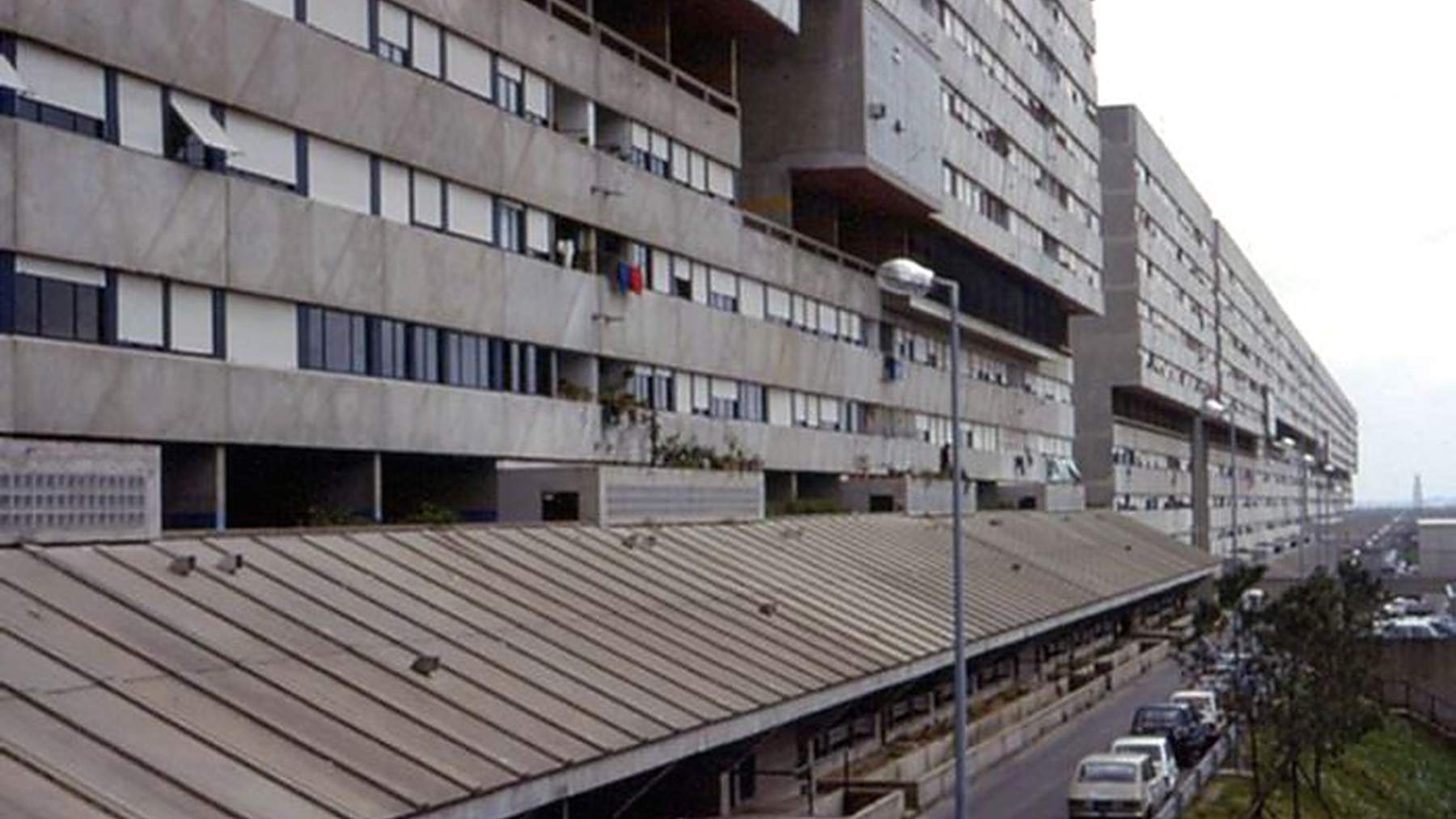
Rome built a public housing block nearly 3,300 feet long in Corviale, on the city’s outskirts, between 1975 and 1982. The Italian Ministry of Culture’s architecture census says the complex was planned for 8,500 people, 6,000 of them in the main building.
More than four decades later, the regional housing agency ATER is still finishing the floor meant to serve them. Director general Marco Rocchi updated the Lazio Regional Council at an April 9, 2026, hearing. He said about 60 of the floor’s 103 apartments were renovated and assigned, with the last section back under construction.
A floor reserved for shops
Architect Mario Fiorentino heads the list of designers behind the project, which was drawn up from 1972 to 1974 and built from 1975 to 1982. The census describes Corviale as a fragment of linear city across about 148 acres. Homes, schools, neighborhood facilities, green space and sports grounds all sat inside it.
According to the census, the main building splits into five parts and rises 11 levels. Pedestrian bridges tie it to a lower two-story block beside it.
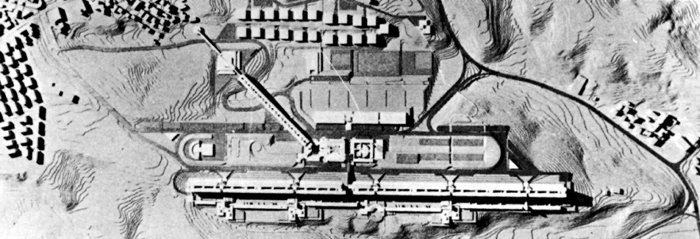
A free floor inside the main building was left open for residential services and shops. Lazio officials call it the fourth floor, while the census lists it as the fifth level. Those businesses never arrived as planned.
The census says the floor was soon occupied illegally and turned, with makeshift means, into a kind of small hamlet at the heart of the building. The Lazio Region places those occupations in the 1980s.
Where $65 million is going
Mayor Roberto Gualtieri presented Rome’s neighborhood plan to residents on April 9, 2024, and did not defend the original result. “The idea was good, but many things did not work,” he said, translated from Italian. He listed decay, missing maintenance and a focus on housing over services, greenery and places to meet.
European Union recovery money funded the program, budgeted at 57.8 million euros, about $65 million at current rates. Rome said it directly affected more than 4,500 people in an area of about 16,000 residents.
ATER’s work on one section of the complex and its shared rooms took the largest share, 20.5 million euros. A civic center and business incubator received 12.9 million euros. A sports hall got 9.7 million, and two new parks 9.3 million.
Energy upgrades run on a separate track funded partly through Italy’s complementary recovery fund. Regional official Pierpaolo Rocchi put those works and related renovations at about 50 million euros, or $56 million. They had passed 90 percent completion, and ATER’s director said they lifted the building five energy classes.
Moving tenants floor by floor
Rebuilding the occupied floor has meant emptying it in stages, with tenants moved into other ATER homes. In May 2021, the Lazio Region said crews were demolishing the illegal structures to create the 103 apartments. That job carried a 10.5 million euro budget, about $11.7 million.
By then 31 apartments had been handed over, and the work was expected to last four years. The census says the first homes on that level were assigned in 2020, under a design called the Green Kilometer. Marco Rocchi told the 2026 hearing that illegal occupations had slowed the remaining units. Surveys and clearances continue alongside the last phase of construction.
His report also exposed a financial problem that new walls will not solve, with rent arrears at about 70 percent. Large blocks that house many households at once are not unique to Rome, as a Chinese family’s 15-story building for its members shows. Committee chair Massimiliano Valeriani asked for stronger political backing. “We cannot leave all the weight on ATER,” he said, translated from Italian.
Wartime ordnance slowed the parks
Outside the building, the city is reworking two green areas on either side of the estate. A May 2025 city update put the eastern park at about 12 acres, with roughly 1.9 miles of paths. Plans there call for over 100 new trees and about 1,000 shrubs.
The western park covers about 36 acres, with some 450 trees and a teaching orchard. An old farm building there is due to become a “House of Biodiversity.” Early digging turned up war ordnance and 300 metric tons of debris, and clearance stopped work until January 2025.
Shade will decide how much people use those paths in summer, as Singapore’s million-tree push for shade suggests. Giovanni Caudo, who chairs Rome’s recovery-plan committee, said physical works need social programs alongside them. Without those, he warned, the city risks “cathedrals in the desert,” translated from Italian.
The Renato Nicolini Library has already returned to public use, reopening on December 18, 2025, after energy upgrades. It offers about 8,600 square feet, around 20,000 volumes, two study rooms, a coworking room and a children’s room.
No final bill for Corviale
Rome’s published totals do not line up neatly across the years. The city cited 57.8 million euros for its plan in 2024 and 50 million in July 2025. None of these statements explains any overlap with the regional energy money.
Those statements also give no date for assigning the last of the 103 apartments. Nor do they confirm which park sections were finished by June 30, 2026, the deadline for spending the European funds.
Repair disputes are hardly unique to Rome, as a New York settlement over thousands of building defects showed earlier this year. Regional lawmakers agreed in April to reconvene on Corviale, where the test now is upkeep after the crews leave.
The latest progress report comes from the Lazio Regional Council’s April 9, 2026, committee hearing.
Photo: Censimento delle architetture italiane / Italian Ministry of Culture