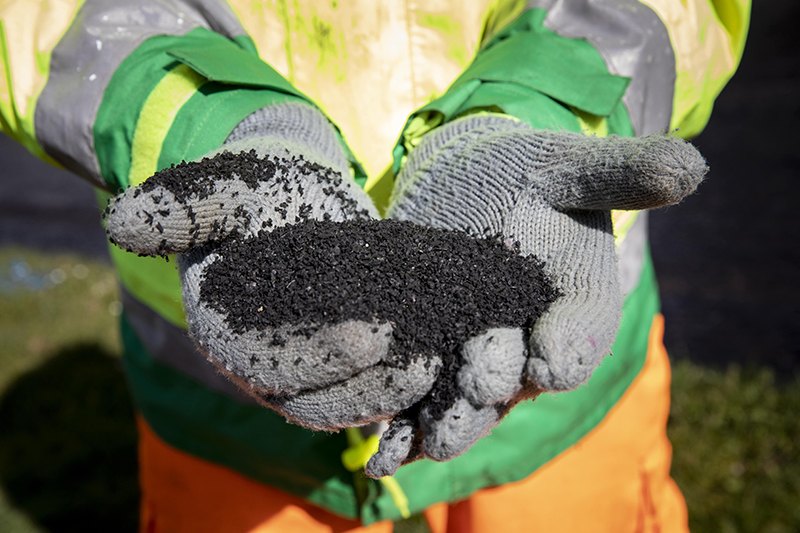
Worn-out tires went into the surface of Britain’s M1 motorway in 2019, on a southbound stretch near Leicester. Highways England, now National Highways, funded the trial between junctions 23 and 22. Tarmac, the company behind the mix, estimated that up to 750 tires could go into each kilometer of road, or about 1,200 per mile.
Since then the material has earned a national road certificate and reached residential streets in northern England. The official paperwork also shows that the carbon savings claimed for those streets rest on more than the rubber.
A motorway test near Leicester
The government announced the trial on August 7, 2019. It said the M1 would test the durability of the new surface on a heavily used part of the network. Tarmac adds granulated tire rubber to asphalt, the mix of stone and bitumen that forms a road’s top layer.
According to Tarmac’s product page, the M1 section was the first installation of ULTIPAVE R. That product carried more rubber than the asphalt tried earlier with local councils. Tarmac calls it the first motorway resurfacing scheme to use granulated rubber from Britain’s own tire waste.
Forty million tires a year
According to the 2019 release, Britain was producing some 40 million waste tires a year. More than 500,000 disused tires were leaving the country annually to be landfilled abroad, since EU rules banned tires from landfill sites.
That same release pointed to a single site in Kuwait holding over seven million tires. It described this “tyre graveyard” as visible from space. Other outlets for waste tires have included artificial reefs built from bundled car tires, so a road surface offered a use closer to home.
Martin Bolt oversaw innovation projects for Highways England in the Midlands, and he set the ambition high at the launch. “This trial could well be the first step to rapidly reducing the number of tyres piling up in the UK and beyond,” he said.
Paul Fleetham, Tarmac’s managing director at the time, called used tires “a previously overlooked waste stream.” The company’s product page now says Britain exports one in four of its tires. That equals 150,000 metric tons (about 165,000 U.S. short tons) a year.
Bolton and Padiham side streets
In October 2020, the mix reached Seymour Road in the Astley Bridge area of Bolton. Tarmac’s case study records 200 metric tons (about 220 short tons) laid across 2,484 square meters (about 26,700 square feet). Crews first planed the old surface to a depth of 35 millimeters (about 1.4 inches).
By Tarmac’s account, the job kept around 200 tires out of landfill, roughly one per metric ton of asphalt. Bolton Council needed the work finished in a single day. The company says the warm mix cooled fast enough to reopen the road quickly.
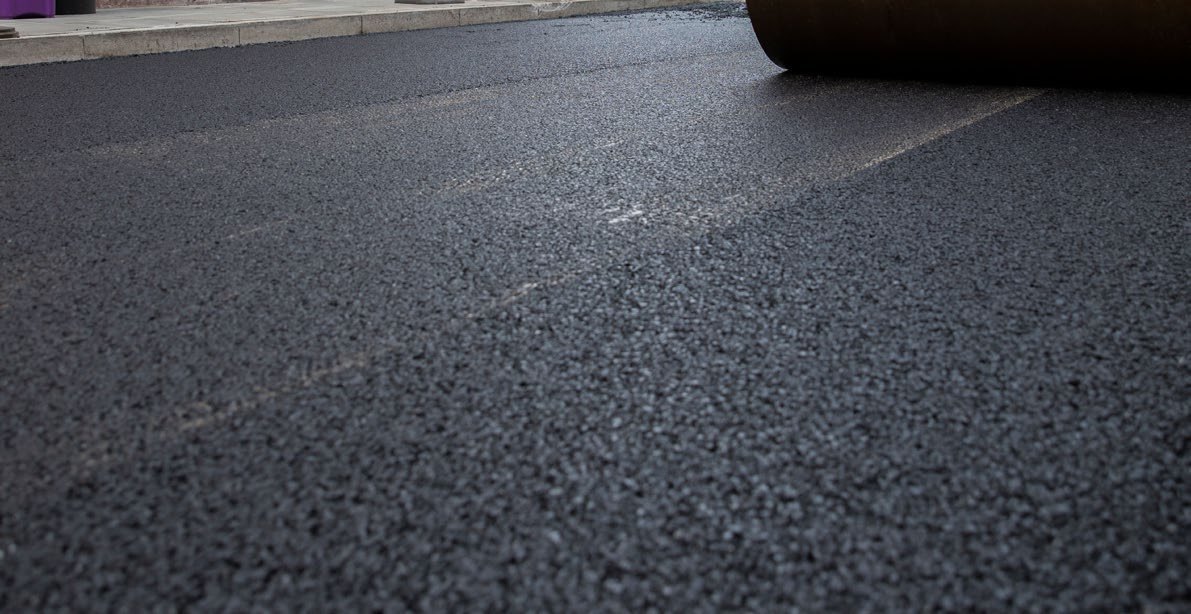
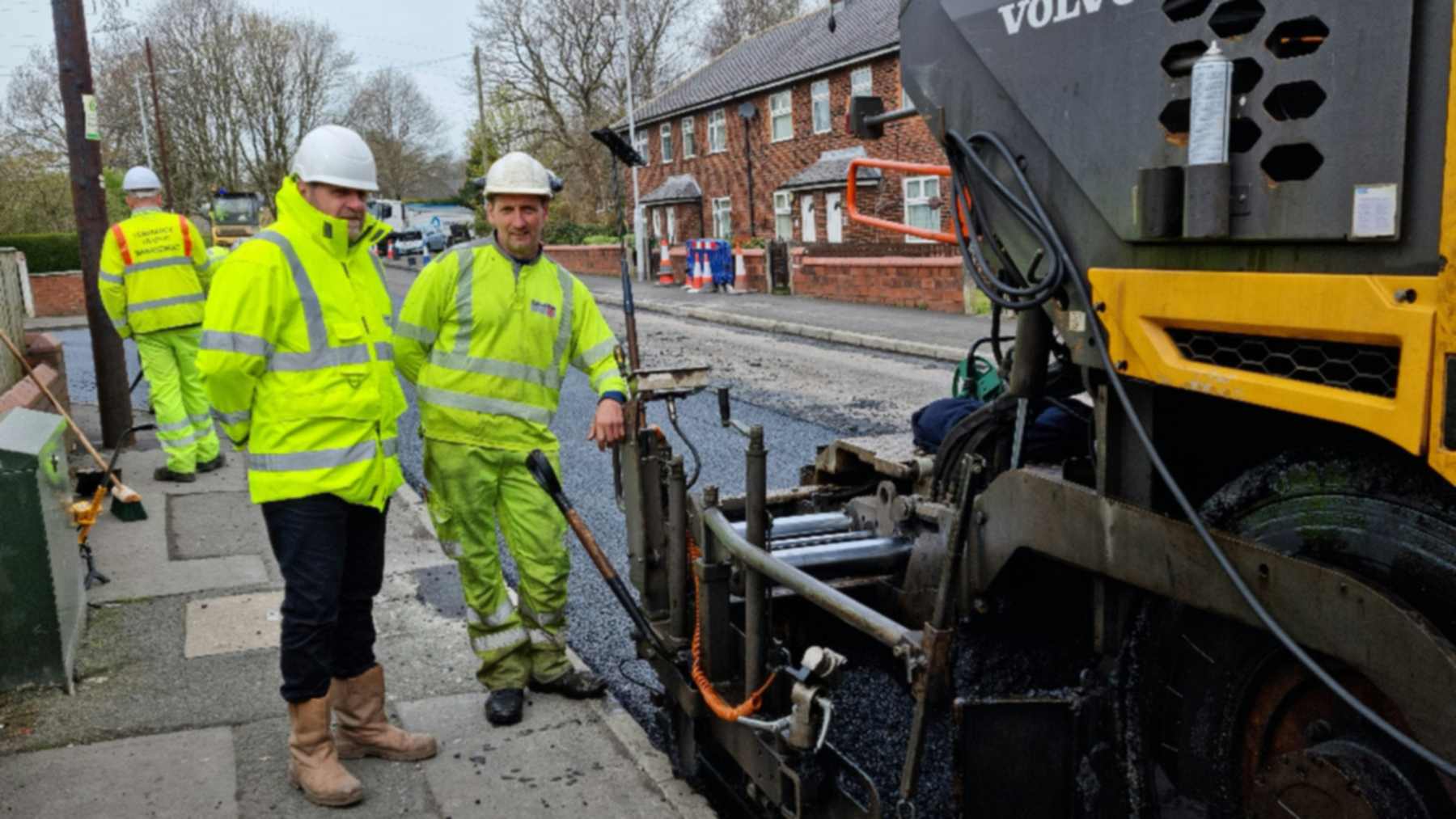
Lancashire County Council followed in April 2022 on Abingdon Road in Padiham. Crews there laid 160 metric tons (about 176 short tons) of ULTIPAVE R.
“I was quite surprised how much rubber is in the mix,” Phil Durnell, the council’s director of highways and transport, said in the council’s announcement. According to Durnell, 150 end-of-life tires went into the road in one day.
Warm mix behind the carbon numbers
Carbon claims for these streets need careful reading, because the rubber arrived alongside other changes. In Bolton, Tarmac reported a 9 percent cut in emissions and attributed it to the warm mix binder. Warm mix asphalt is made at lower temperatures, and Tarmac listed the tires separately as waste kept out of landfill.
Padiham’s saving was larger, at more than 30 percent, and it covered the whole job. Durnell explained that the lower layers had been recycled with a cold foam process. “Overall, by using recycled materials in the lower layers and rubber modified asphalt surfacing, we have lowered the carbon footprint of this scheme by over 30%,” he said.
The 1,200-per-mile ceiling
Rubber still plays a part in those savings, since the council says it means less fossil-derived bitumen in the mix. Barcelona is preparing its own low-carbon road surface with olive pits and pine waste. Any such project faces the same question of which ingredient earns which share.
Tarmac’s tire count has also moved between documents. Its current product page and the 2019 release use up to 750 per kilometer. Its 2021 sustainability report and the Bolton case study use 500, roughly 805 tires per mile.
Every version says the total depends on layer thickness. All of them are company estimates of what a road could absorb, so none works as a count of tires on a given mile.
Rubberized asphalt has also drawn wider debate over durability, noise and environmental side effects. Independent testing came through the British Board of Agrément, which first certified the product on August 27, 2020.
Its fourth issue, dated October 24, 2025, covers a 14-millimeter warm version. The certificate records passes on bonding, water sensitivity and surface texture. It also includes a visual inspection standard running to 24 months after a road opens to traffic.
M1 tire tally remains an estimate
Neither the 2019 release nor Tarmac’s product page states how long the M1 section was or how many tires went into it. The headline figure therefore remains an upper estimate for the material as a whole.
For its part, the certificate rates how the surface performs as a road and never mentions carbon or recycling. Materials spread on roads can carry environmental costs of their own that a performance test would not catch.
Lancashire says it hopes to use the technique as part of its highways decarbonization strategy. Tarmac continues to market the product for motorways and major roads. A full accounting would still need data on rubber processing, transport, service life and eventual removal of the surface.
Photo: Lancashire County Council