Taipei’s old Zhongshan Bridge has now spent more than 23 years in 435 pieces. City crews cut the 1933 concrete arch bridge apart between December 2002 and April 2003. The goal was to clear a flood bottleneck on the Keelung River, and the sections still sit at the former Zaichun swimming pool site near the bank.
On September 16, 2026, Taipei’s Hydraulic Engineering Office said a reconstruction concept report should be ready in January 2027. The city’s press release sets a month for that paperwork, but no date for a finished bridge.
Cut apart at the Yuanshan bottleneck
Below Yuanshan hill, the Keelung River gets suddenly narrower and bends hard, and officials call that stretch the Yuanshan bottleneck. According to Taiwan’s Control Yuan, which oversees public agencies, the old bridge sat at its tightest point and took the first hit in major typhoon floods.
Typhoon Nari battered greater Taipei in 2001. Taipei’s fix carried an official label, relocation and preservation, and it meant three things in practice: take the bridge down, store it and rebuild it somewhere else.
Some cities answer heavy rain with sponge city surfaces that soak up stormwater, while at Yuanshan Taipei pulled an obstacle out of the river instead. On January 5, 2004, it listed the dismantled crossing as a historic building.
Arches finished in March 1933
The first crossing here dates to 1901. Japan’s colonial government built the Meiji Bridge that year to link Taipei with Taiwan Shrine on Yuanshan. It had an iron truss frame and a wooden deck, says the National Cultural Memory Bank run by Taiwan’s Ministry of Culture.
Work on its concrete replacement began on January 25, 1930, and ended on March 20, 1933. The ministry’s collections database credits the design to Kaoru Ide, an engineer in the colonial building section.
The new bridge ran about 394 feet (120 meters) long and 56 feet (17 meters) wide. It had one large arch between two smaller ones, granite railings and a pair of bronze lamps at each end. The memory bank entry calls it Taiwan’s first reinforced concrete bridge.
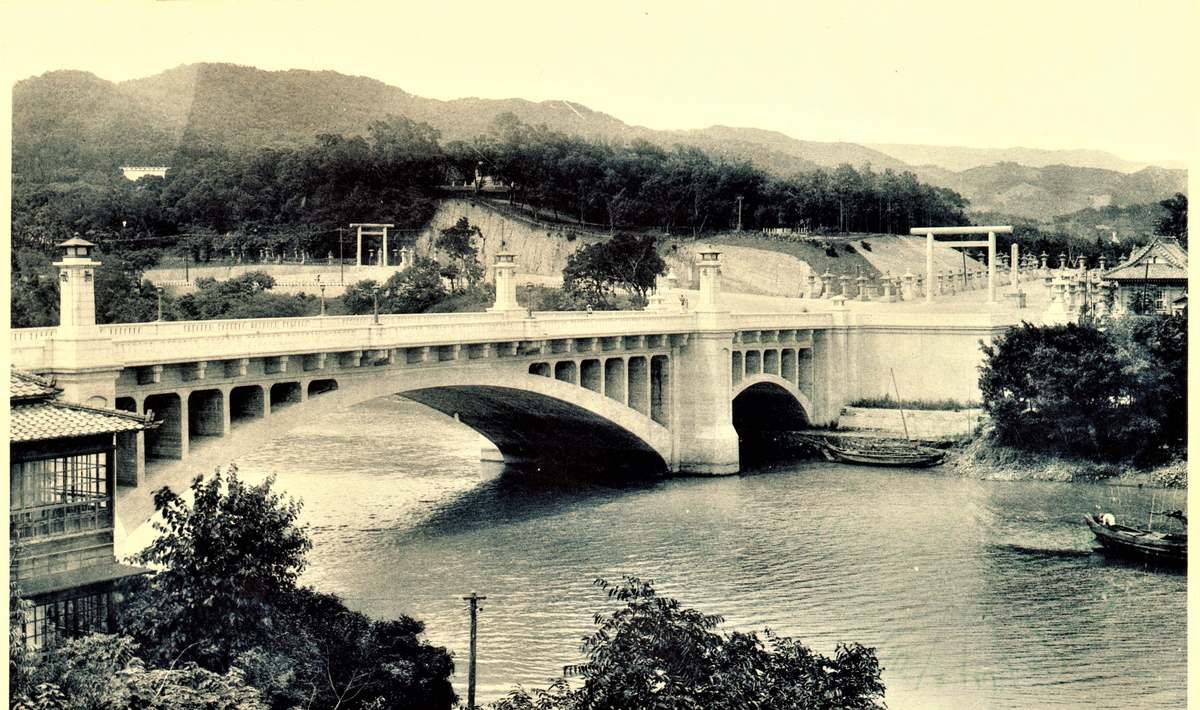
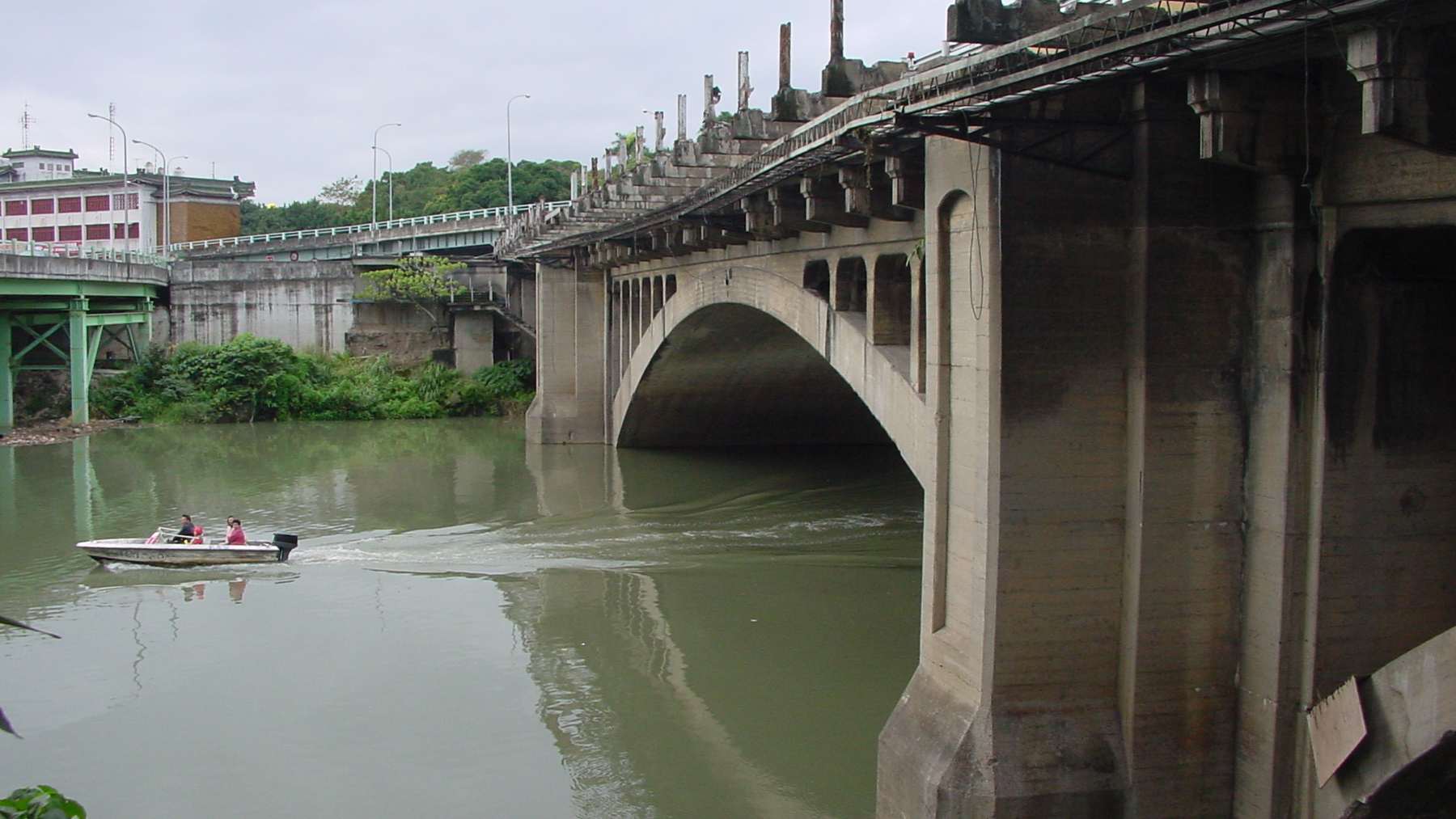
After World War II, the crossing took the name Zhongshan, like the road it carried. Traffic kept growing, so crews began widening it from two lanes to four at the end of 1967. They stripped off the Japanese-style railings, towers and lamp posts, and the bridge reopened in 1968.
Watchdog findings from 2020
In January 2020, the Control Yuan formally faulted the Taipei City Government over the bridge. Members Chen Shih-meng and Kao Yung-cheng led the case. They found that Taipei announced the removal before its own tests on raising the bridge in place were done.
At the time, the central government was running a wider Keelung River program. Its centerpiece, the Yuanshanzi flood diversion project, had a budget of NT$6 billion. Taipei still tore the bridge down while that work was underway.
More than 16 years later, the members wrote, the city still had no concrete plan to rebuild it. In their view, that proved it never had a workable one. They also faulted national officials for poor river coordination after Typhoon Nari.
Three sites, three objections
On February 24, 2020, Taipei’s cultural heritage review committee approved the bridge’s restoration and reuse plan by 8 votes to 4. Revisions were required. The plan weighed three locations: a spot in the river’s flood channel, Xinsheng Park and the old Zaichun pool site.
Xinsheng Park drew an objection from the city’s parks office. The park holds more than 2,000 trees, many over 30 years old, according to the meeting minutes. People walk and jog there along shaded paths past rose beds and a maze garden.
For the parks office, a structure that big would mean tearing out facilities and moving many trees. So it said no. Cities such as Singapore now plant trees by the million for shade and cooler streets.
At the pool site, where the pieces already rest, the problem is different. One committee member wrote that it overlaps the Jiantan archaeological site. Rebuilding it there as a field of fragments would also erode its heritage value, the member added.
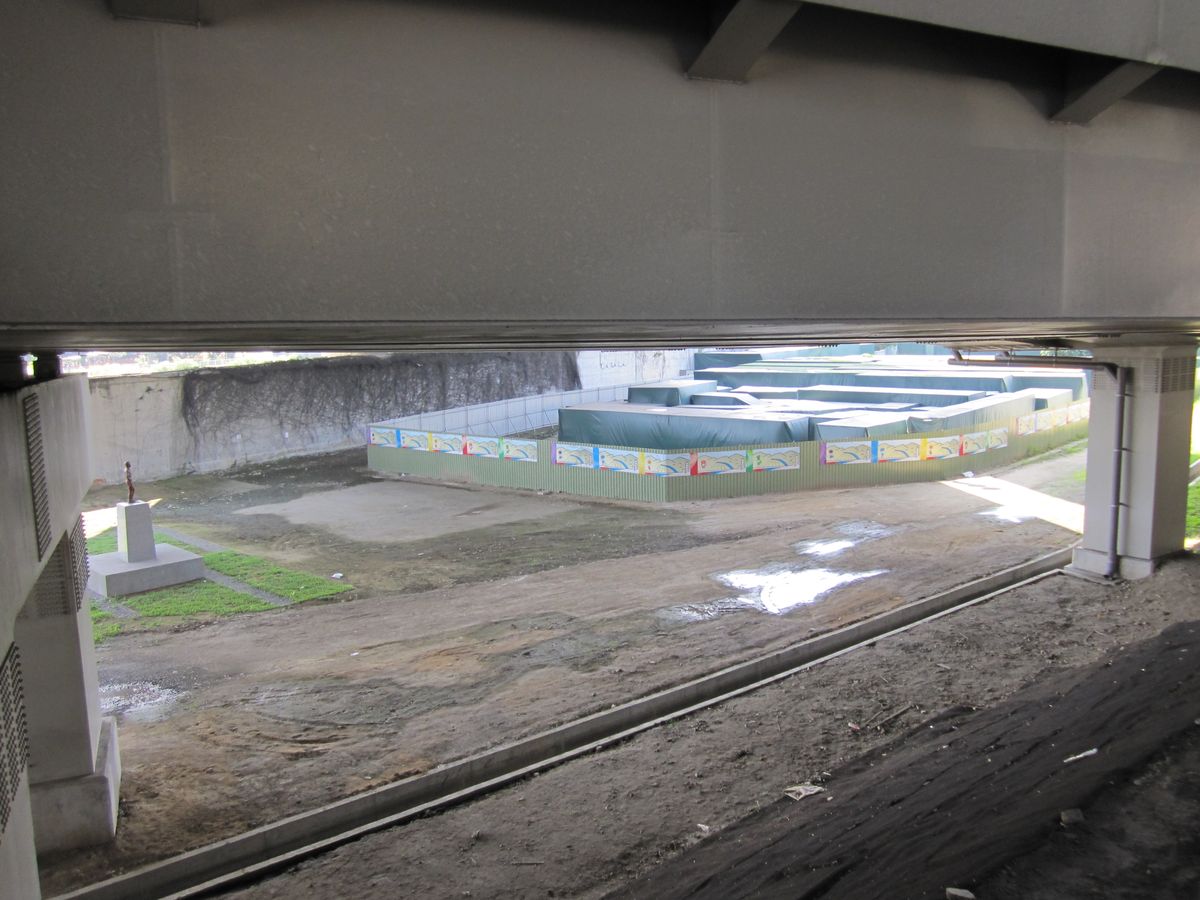
Another member wanted the bridge put back in its original form. The road to Taiwan Shrine was a big part of why it was listed, that member argued, so any new site should respect that tie. Restorers face similar trade-offs at Cambodia’s Ta Prohm temple, where giant trees crack the walls and also hold them up.
Report due in January 2027
Taipei is now studying whether the old Zaichun pool site can work. Its guiding principles, translated from Chinese, are “preserving history, ensuring flood protection, and integrating with the city.”
According to the Hydraulic Engineering Office, the restoration plan cleared heritage review in 2020. Inspections in 2022 and 2023 then checked the condition of all 435 pieces, and those results now feed the planning.
Experts met on May 21, 2026, and a guided site walk followed on August 25. Student workshops were planned for October. The city expects to present the concept at a briefing in January 2027, when the report is due.
Budget and design still unwritten
The September release names no budget, no design and no construction schedule. It also does not say what the rebuilt bridge would be for. The 2020 committee debate ranged from a working crossing to a display of fragments.
The release also does not say how the city would handle the archaeological concerns raised in 2020. Back then, one committee member noted that more than 20 sites had been scouted in over a decade. Until the January report appears, the 435 pieces stay where they have been since 2003, beside the river they once crossed.
The latest official update was published by Taipei’s Public Works Department on September 16, 2026.
Photo: 林高志 / Wikimedia Commons, CC BY-SA 4.0