Children growing up around medieval lead mining in England’s Peak District were taking in heavy doses of lead by the mid-600s. That is the finding of a study of 15 skeletons from three Derbyshire cemeteries. Some carried as much lead in their teeth as people raised in Industrial Revolution cities a thousand years later.
The research, published in Antiquity on October 13, 2026, was led by Professor Christopher Loveluck of the University of Nottingham. Partners included the British Geological Survey, the University of Sheffield, York Archaeology and the Castleton Historical Society. Their data also hint that exposure followed social rank, with people buried with weapons showing far lower readings.
Enamel keeps a childhood record
Between the late 1100s and the 1500s, the Peak District was western Europe’s largest lead-producing region. Its post-Roman beginnings have been much harder to date. According to the Antiquity announcement, miners re-smelted old Roman and medieval waste from the 1500s to the 1800s, wiping out much of the physical evidence.
So the team turned to tooth enamel, the hard outer coat of a tooth. It forms between about ages four and 12 and never remodels. Lead absorbed in childhood stays locked inside, much as enamel drilled from fossil teeth preserves chemical clues for far longer.
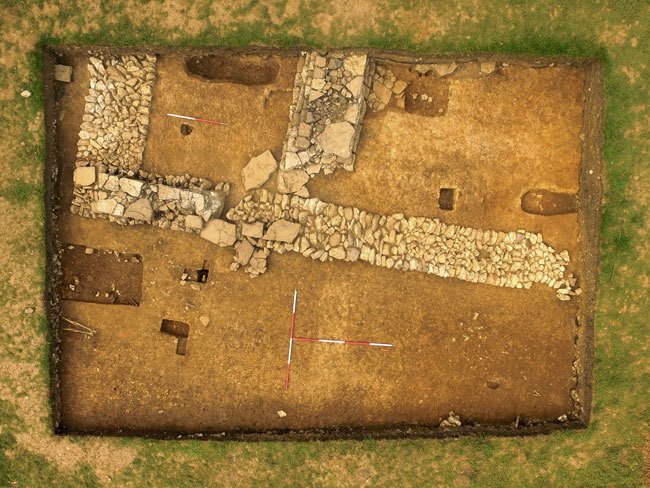
The team sampled five people at each of three sites, with the earliest from Wigber Low, a cemetery with grave goods dated to about AD 625 to 685. In Castleton, Joule Yard covers the 600s to the early 1000s. Spital Field, tied to a medieval hospital, runs from the late 1000s into the early 1500s.
Readings that match Coventry and Chelsea
Measured in parts per million (ppm), a unit for very small amounts, enamel values above about 0.6 to 0.7 ppm usually signal human activity. All but one of the 15 medieval individuals topped 10 ppm, four went above 40 ppm, and the highest reached 69.1 ppm, the paper reports.
Two people from Wigber Low had levels found elsewhere in Britain only at Castleton and in post-1750s populations from Coventry and from Chelsea, in London. “The team is delighted to have finally confirmed definitively the date by which the early medieval lead industry was established in the Peak District, by the mid-seventh century AD,” Loveluck said.
By roughly 680 to 750, every person sampled at Joule Yard had more than 25 ppm. Castleton sits about 30 miles (48 kilometers) north of Wigber Low.
The authors read that jump as a sign that the whole settlement lived in a contaminated environment by the mid-700s.
Swords and a crystal ball
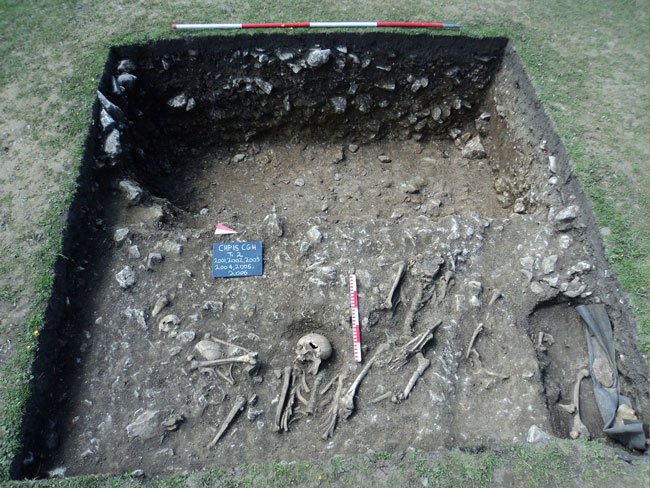
Wigber Low gave the sharpest contrast. Both local men there went into the ground with weapons, one of them with a sword that was already old when he died, and their enamel held just 10.9 and 2 ppm.
The man in the grave without goods had 29.5 ppm, and his isotopes point to a childhood possibly spent in western Britain. Of the two women, one reached 69.1 ppm. The other, buried with a crystal ball amulet, an iron-bound wooden box and a knife, stayed at 13.2 ppm.
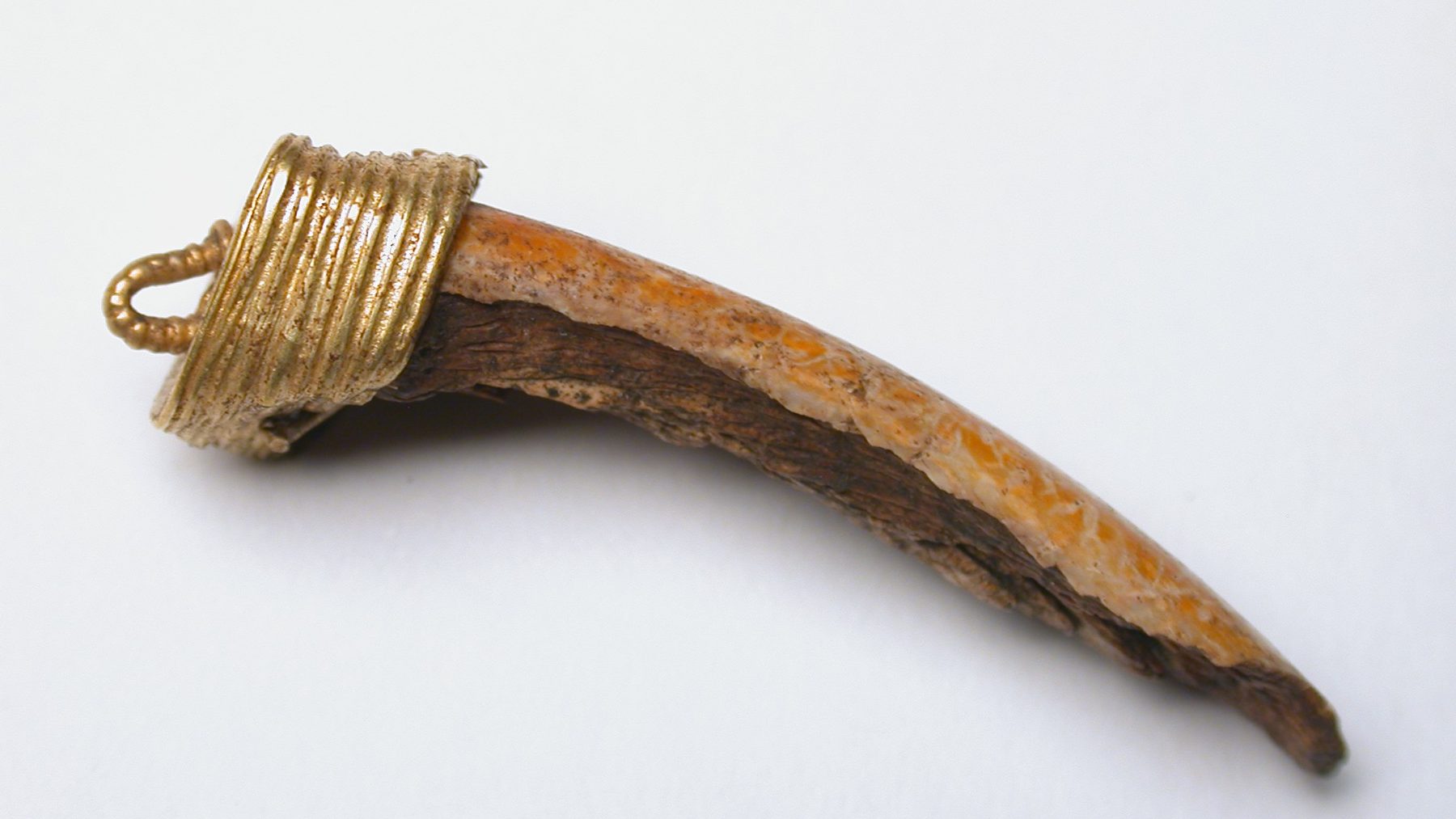
A gold and beaver-tooth pendant about 1.5 inches (37 millimeters) long lay close to her grave. The lower readings of these three better-furnished graves “could reflect legacy landscape lead pollution from Roman production in the region,” the authors write.
In the authors’ view, the men with weapons may have benefited from controlling the trade, while lower-status households may have produced lead for estate owners and women may have processed ore as children. Excavations at early medieval mines in Melle, France, suggest children could have absorbed lead while washing ore or just standing close by, a hazard that still reaches families living beside mines today. Teeth can’t say who did which job, though.
Three women dead by 25
All three women in the study died between about 17 and 25, and each had high childhood lead. Most of the men lived into middle or old age, said Dr. Anna Bloxam of the University of Nottingham, co-director of the Castleton excavations.
“Our results indicate that in these mining communities, girls and boys alike were raised in dangerously polluted home environments,” Bloxam said. Both Wigber Low women lay near young children, aged about two and five.
Pregnancy can release lead stored in bone back into the blood and expose the fetus, as the World Health Organization explains. The agency adds that no level of lead exposure is known to be free of harmful effects.
Castleton’s peak around 1200
At Spital Field, all five individuals measured between 25 and 68 ppm. The two highest share near-identical radiocarbon dates of about 1175 to 1270.
That window fits the royal Pipe Rolls, tax records showing Peak District output at its medieval height from the mid-1180s to 1215. It also lines up with a lead peak around 1200 in the Colle Gnifetti ice core from the Swiss-Italian Alps. Earlier work on that core, one of the ice records of past air, traced that lead mainly to British sources.
Strontium and oxygen isotopes, which reflect where a child grew up, point to little migration into the area. In the Peak District, the authors write, lead production was “a long-term, inherited tradition,” passed down within local families.
Fifteen teeth, no cause of death
Fifteen medieval individuals cannot stand in for centuries of mining households. With only three women sampled, the group is far too small to show a pattern across a population.
Enamel readings also cannot be turned into a past blood lead level. The authors describe the link between heavy exposure and early death as tentative, based on a modern study of age at death. Nothing in the bones shows that lead killed these women or that they died in pregnancy.
The results describe medieval villages, not today’s Peak District, where the paper says historic pollution is now carefully managed. The full study was published in Antiquity.
Natalie Ward is senior conservation archaeologist at the Peak District National Park Authority. For her, the work recalls an era “when this was a landscape of extraction and industry.” Many visitors know the park only for its countryside.
Photo: Sheffield Museums Trust