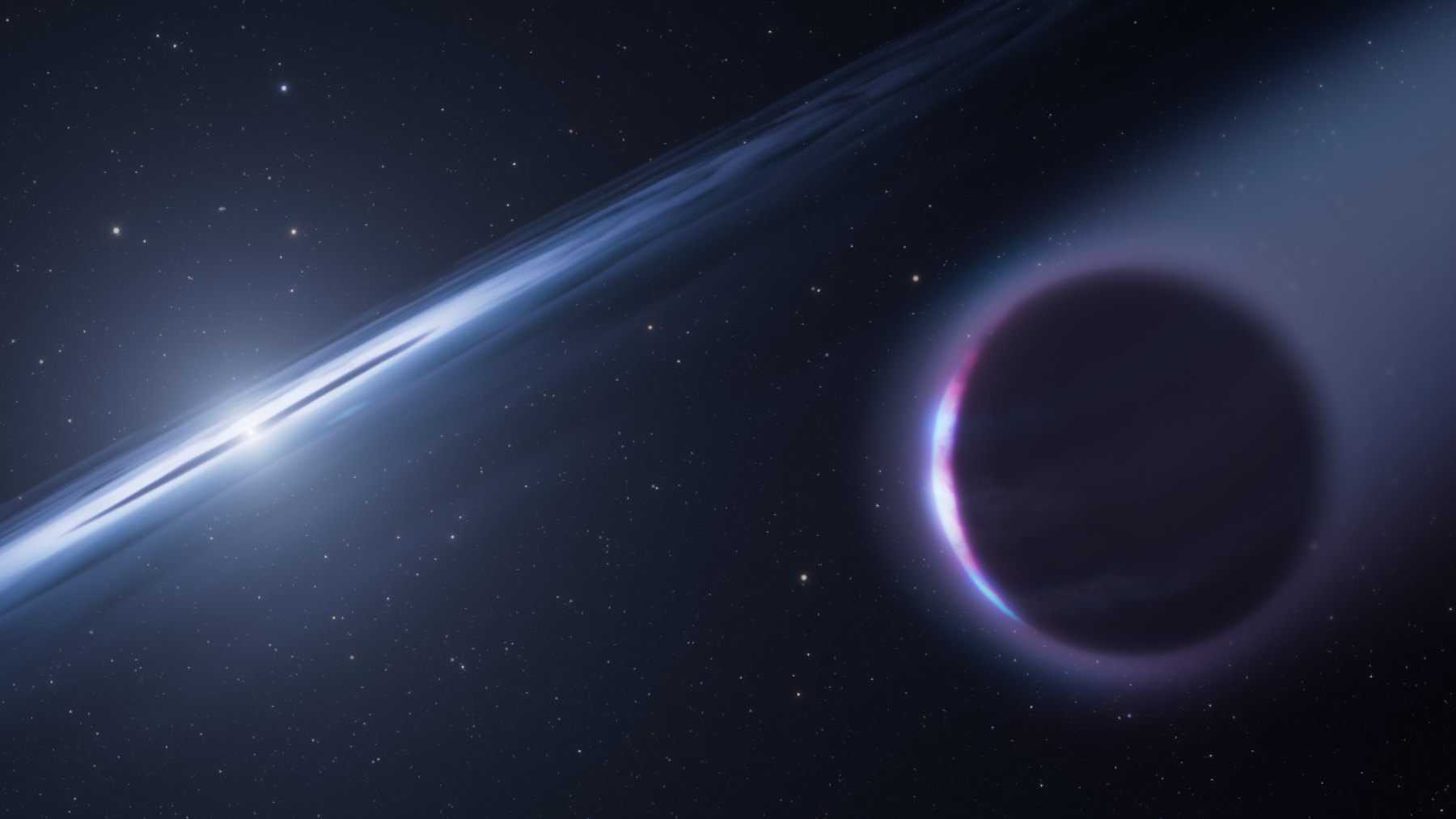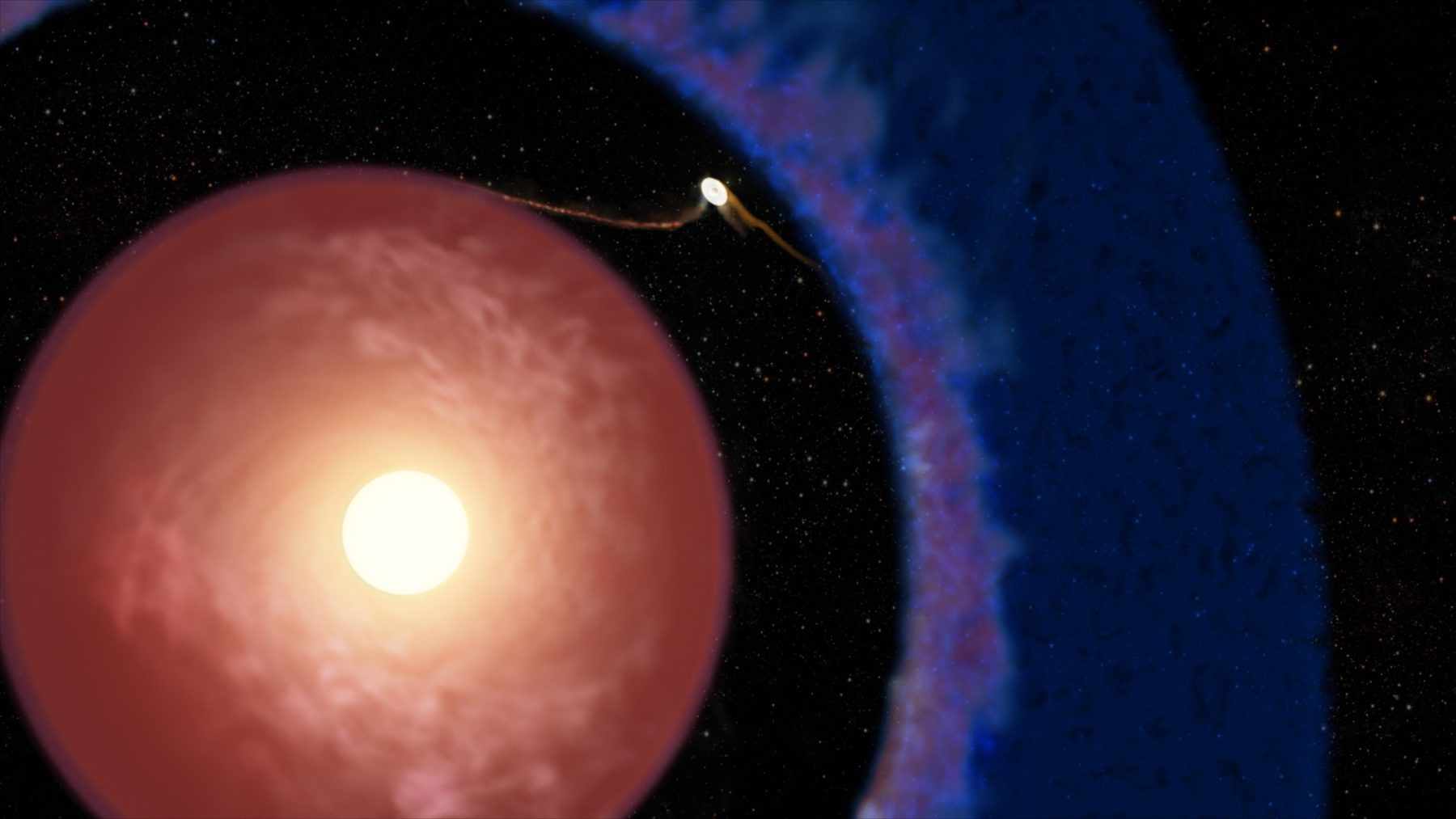
Astronomers have confirmed the youngest exoplanet detected so far, a giant world called Elias 2-24 b. It is less than 1 million years old and is still pulling in gas from the disk around its star, about 450 light-years from Earth. The planet turned up in Keck Observatory images from 2018 and 2020 that had been sitting in an archive.
The study was led by doctoral student Andrea Bernardi of Diego Portales University in Chile. It appeared on September 16 in The Astrophysical Journal Letters. Eleven scientists from Chile, the US, Belgium, France and Italy signed the paper, and their planet does not fit neatly into ideas about how quickly planets form.
Four record holders, all five million
Until now, four worlds shared the title of youngest known planet. Two orbit the star PDS 70 and two orbit the young star WISPIT 2. All of them are more than 5 million years old, according to NASA’s announcement.
Elias 2-24 b is at least five times younger than that group. Earth, for comparison, formed about 4.5 billion years ago. A planet under a million years old is caught almost at birth.
Co-author Lucas Cieza is a professor at the Instituto de Estudios Astrofísicos in Chile. “Elias 2-24 b shows us that even our best planet-formation models are still missing some important processes,” he said.
A dark ring in the dust
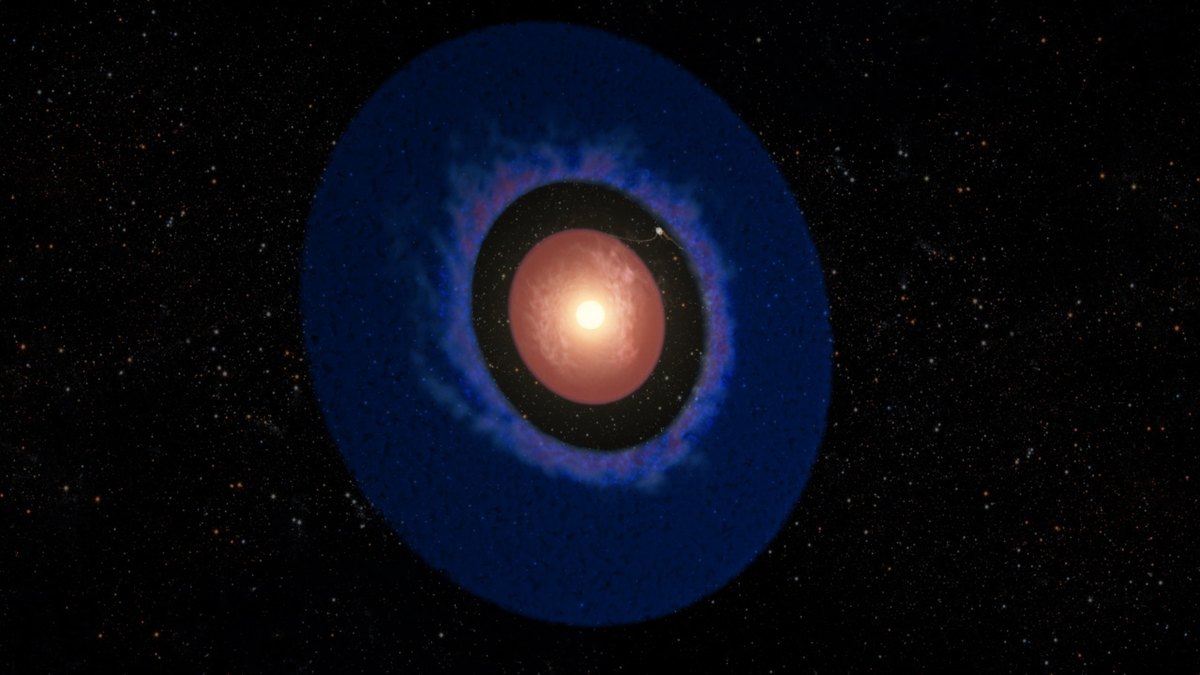
Young stars are wrapped in flat, rotating disks of gas and dust left over from their own birth. Planets grow inside those disks. As they orbit, they sweep material aside and leave dark rings called gaps.
About a decade ago, the ALMA radio observatory in Chile showed such a gap around Elias 2-24. The European Southern Observatory’s Very Large Telescope later picked up a faint point of light inside it.
Astronomers then argued over whether that dot was really a planet. Standard theory said the gap had formed too early and too far out for a giant world.
“The planets should be found within the gaps, since they are carving them,” Bernardi said in the NASA release. “And that’s exactly where we found Elias 2-24 b.”
Seven stars behind a coronagraph
In May and June 2018, the Keck II telescope in Hawaii observed seven young stars with its NIRC2 camera. That camera has a vortex coronagraph, a mask that blocks a star’s glare. Fainter objects next to the star then become visible.
Study co-author Alice Zurlo, a professor at Diego Portales University, made the 2018 observation of Elias 2-24. The data showed a faint signal, but not enough to call it a planet, according to Keck Observatory.
Years later, Bernardi reprocessed those images with newer techniques and added a Keck epoch from June 2020. In both, the source sat in the same narrow gap. It lies about 55 times farther from its star than Earth is from the sun, roughly 5.1 billion miles (8.2 billion kilometers).
Its position across the two dates did not match a distant background star. “Astronomical data can have a remarkably long shelf life,” said John O’Meara, chief scientist at Keck Observatory.
A Jupiter built on fast-forward
Most astronomers explain giant planets with a model called core accretion. First, small solid bodies clump together into a heavy core. Then the core’s gravity pulls in a thick envelope of gas.
According to NASA, current models need about 5 million years to build a Jupiter at Jupiter’s distance from the sun. Farther out, they need even longer. Elias 2-24 b sits about 10 times farther from its star than Jupiter does from ours.
Even so, it already behaves like a giant planet in the middle of forming. The authors write that it shows core accretion can build a Jupiter-like world in a million years or less. Keck Observatory says the planet is now in a short phase of rapid gas capture that builds its atmosphere.
Two to four Jupiters, at most
Using the planet’s brightness, the team estimated a mass of 1.9 to 4.0 Jupiters, depending on the model. The paper treats these numbers as upper limits.
The problem is the gas still raining onto the planet. That infall glows on its own, and the models used here assume all the light comes from the planet itself. At this age, the paper warns, accretion light can outshine the planet, which inflates its mass on paper.
In the Keck release, Zurlo called the planet “a rare gem” because models still struggle to predict its mass and brightness. Its estimated temperature spans about 1,100 to 2,000 kelvin, a very wide range.
An orbit nobody has traced
Between June 2018 and June 2020, the planet should have crept only about 1.5 degrees around its star. The error bars on the Keck images are bigger than that. A measured orbit would give a mass that leans much less on computer models.
By the team’s own calculation, images taken in 2026, eight years after the first Keck epoch, should show the shift plainly. The team also wants spectra, the planet’s light split into its colors, to read its atmosphere and temperature and see how fast it is still growing.
Cieza put the wider problem bluntly in the NASA release: “We are mostly blind to these baby planets right now.” NASA’s Nancy Grace Roman Space Telescope launched on August 30 with its own coronagraph. It could spot planets on much tighter orbits, including true Jupiter analogs.
The full study was published in The Astrophysical Journal Letters.
Image: W. M. Keck Observatory/Adam Makarenko