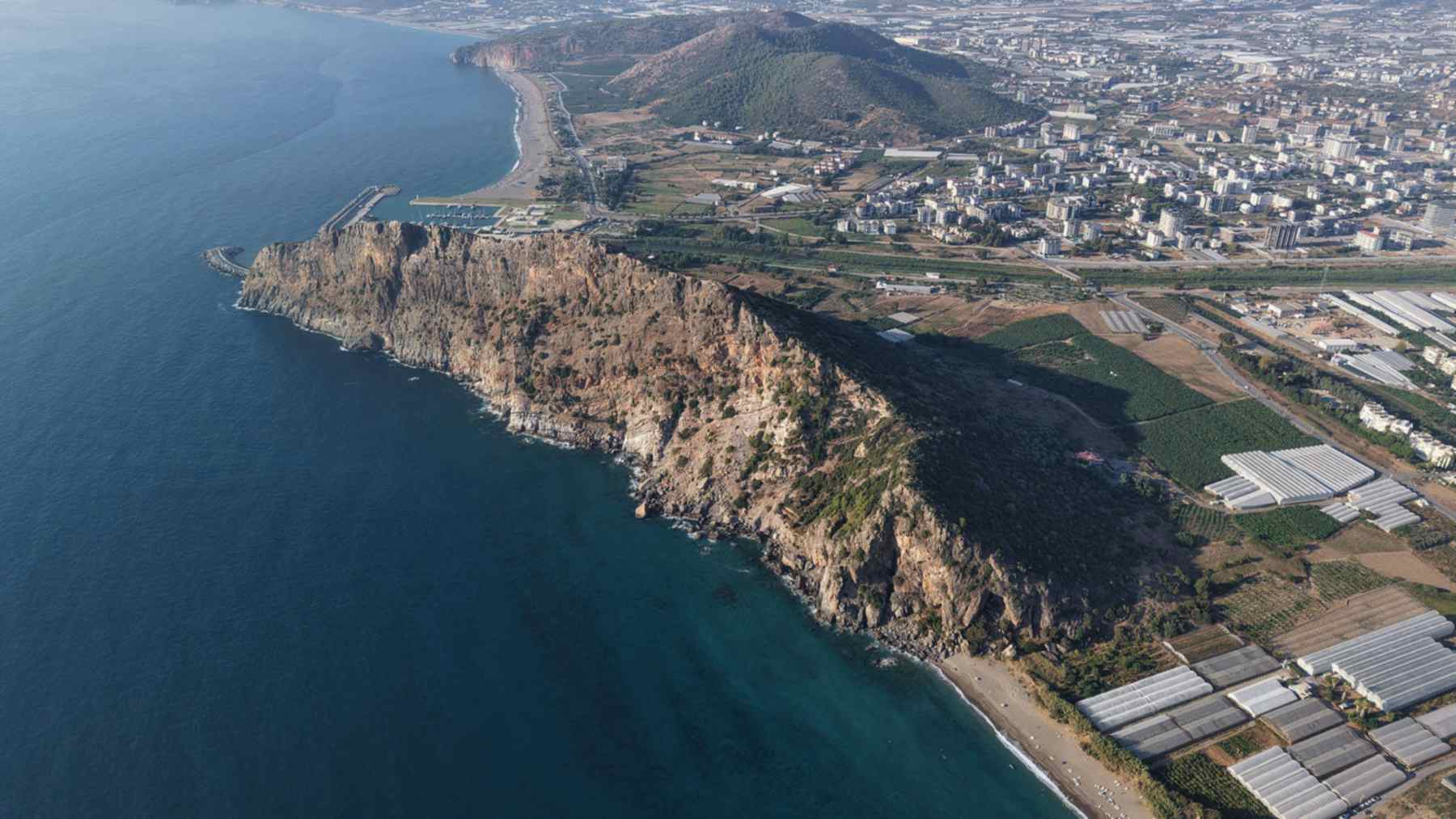
Geologists are planning a borehole in Valsesia, an Alpine valley in northern Italy, that could reach Earth’s mantle. The paper puts the crust-mantle boundary there at only about 1.2 miles (2 kilometers) down, near the villages of Balmuccia, Isola and Vocca.
The plan is the second phase of DIVE, short for Drilling the Ivrea-Verbano zonE. More than 100 scientists take part, with support from the International Continental Scientific Drilling Program. A perspective paper published on September 18, 2026 calls it a chance to explore the boundary at that depth “for the first time in the history of science.”
Alpine collision tilted the crust
Under most continents, the mantle lies far beyond any drill. The average continental crust is about 22 miles (35 kilometers) thick. Germany’s KTB borehole, one of the deepest scientific holes on land, stopped at 5.7 miles (9.1 kilometers).
In the Ivrea-Verbano Zone, plate tectonics did part of the job. The collision that raised the Alps pushed a slice of deep crust upward and tilted its layers almost upright. Rocks that formed miles down now crop out on hillsides.
Surveys have also found a dense mass known as the Ivrea Geophysical Body. It sits roughly 0.6 miles (1 kilometer) below the surface near Balmuccia. According to the paper, its “petrological and geochemical identity remains enigmatic.”
Wave speeds mark the Moho
Seismologists find the base of the crust by timing earthquake waves. It is the same method behind high-resolution seismic models of the deep Earth. At the boundary, compressional waves jump from under 7 kilometers per second to more than 8.
That jump is called the Mohorovičić discontinuity, or Moho, after the Croatian seismologist Andrija Mohorovičić. The authors write that it “may appear as clear-cut as a pencil-drawn line in geophysical data.” Real rocks can be messier, since different types carry waves at similar speeds.
Peridotite or amphibole gabbro
Mattia Pistone of the University of Georgia led the paper. He is also affiliated with Italy’s National Institute of Geophysics and Volcanology, and 11 colleagues co-signed the work. Using measured wave speeds and densities, they lay out two scenarios for the Valsesia hole.
Scenario one treats the dense body as a piece of the Adriatic mantle. If so, the drill hits peridotite, the green, olivine-rich stuff the upper mantle is made of, and the local crust is only about 16 miles (25 kilometers) thick.
Scenario two swaps peridotite for amphibole gabbro. That dark rock forms when crystals pile up at the bottom of a cooling magma chamber, and it belongs to the crust. Then the crust runs 28 to 31 miles (45 to 50 kilometers) deep, with what geologists call the petrological Moho buried far below the seismic one.
Pistone’s group expects either result to teach something. A gabbro core would still add knowledge, since in that case “the findings will increase our understanding of lower crustal rocks.” Peridotite, on the other hand, would let geologists study the crust-mantle boundary in place, something no drilling mission has done.
Ossola cores from 2,984 feet
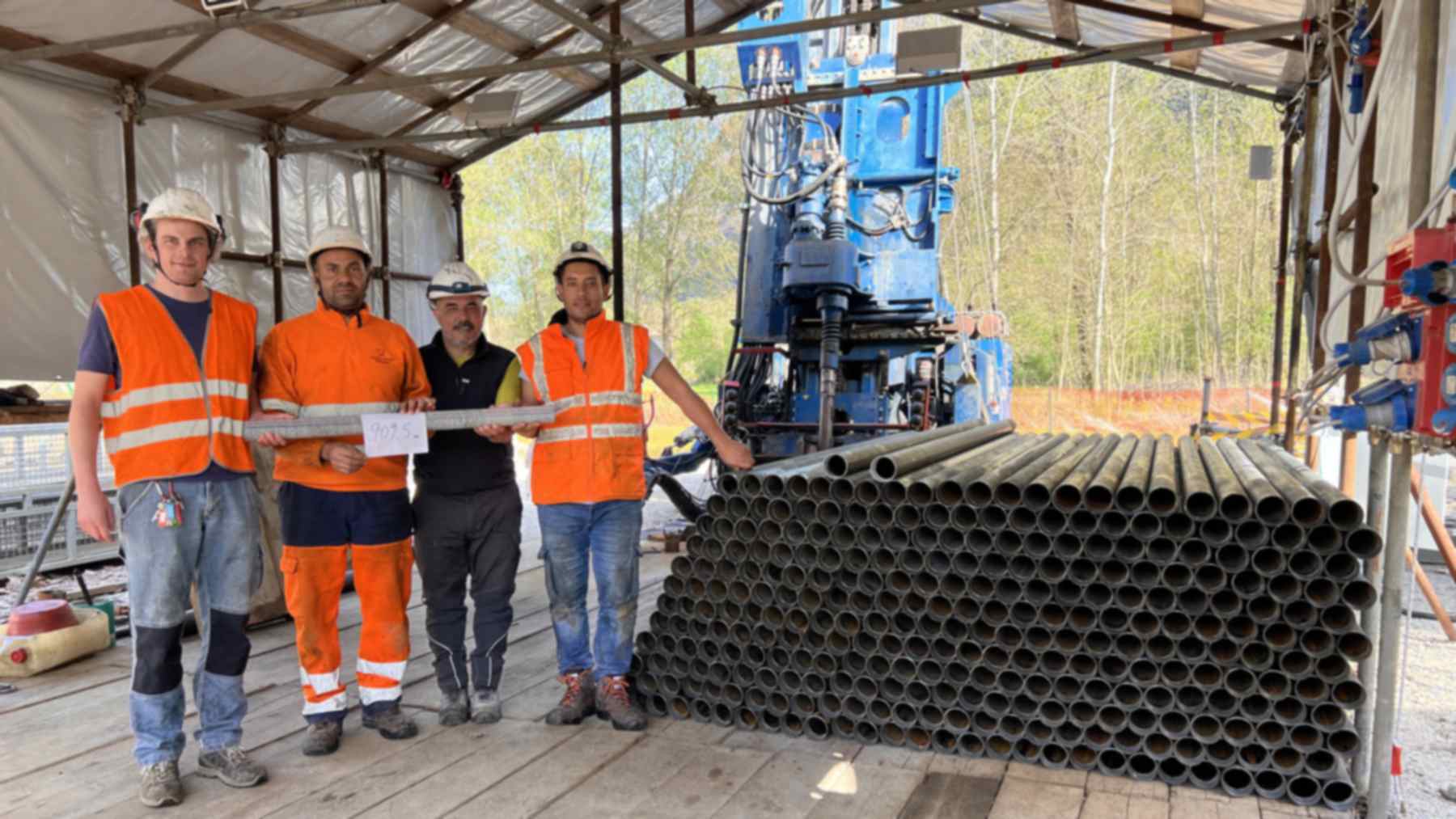
From October 2022 to April 2024, DIVE drilled two holes in the nearby Ossola Valley. Ornavasso’s hole bottomed out at 1,898 feet (578.5 meters) in ancient sediments that heat and pressure had turned into metamorphic rock. At Megolo di Mezzo, in Pieve Vergonte, the second hole went 2,984 feet (909.5 meters) through rocks of magmatic origin.
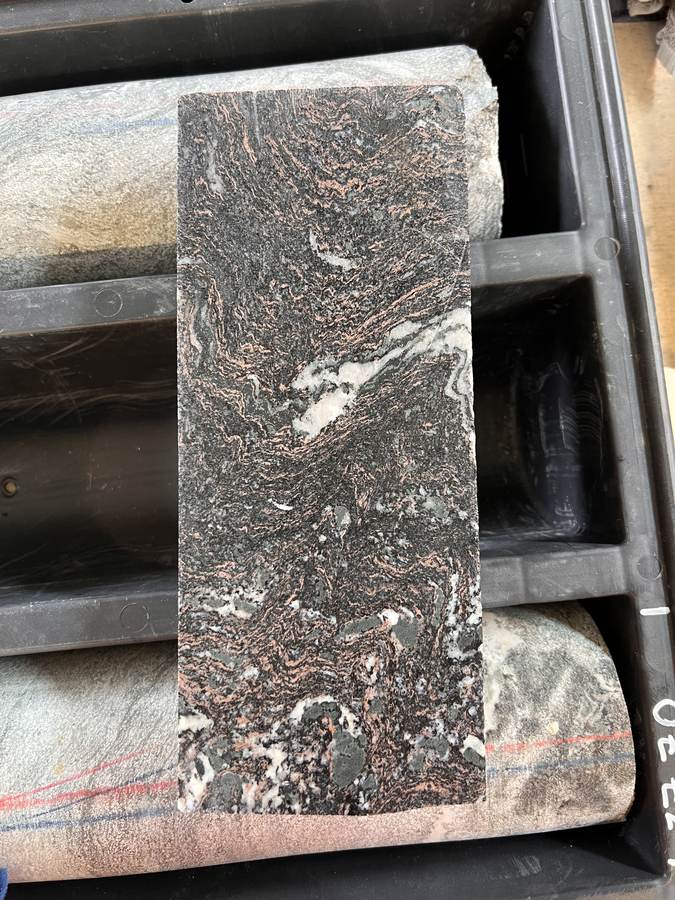
Othmar Müntener of the University of Lausanne led a 2025 conference abstract on the results. Core recovery was close to 100 percent in both holes. Cores are the rock cylinders a hollow drill bit brings up, and these went to a German federal repository in Berlin for scans.
Gas monitoring in the boreholes picked up hydrogen, methane and carbon dioxide. The team reads that mix as a sign of several fluid sources and of microbial activity. They took microbiology samples every 66 feet (20 meters), much as others have studied microbes living deep underground.
The magmatic rocks measured 2.8 to 3.4 grams per cubic centimeter, against 2.5 to 2.8 for the sediments. In the abstract’s words, the bottom of the drilled section “enters the continental crust-mantle transition zone.”
Project Mohole managed 581 feet
Reaching the Moho has been a goal since the late 1950s. Project Mohole ran from 1958 to 1966 with National Science Foundation funding. Off Guadalupe Island, Mexico, it drilled only 581 feet (177 meters) and recovered mostly seafloor sediment.
Ocean drilling has since come much closer to the mantle than Mohole did. In 2023, IODP Expedition 399 worked at the Atlantis Massif, near the Mid-Atlantic Ridge. It pulled up about 4,160 feet (1,268 meters) of mantle rock cores from a single hole.
Even so, the paper notes, no ocean mission has recovered a complete section of oceanic plate. Italy’s deep geology holds other surprises, like a huge magma reservoir beneath Tuscany.
Valsesia has no start date
The DIVE team posted an announcement on September 23, 2026. It said the second phase is being planned for a possible start in the next few years. Researchers presented it to residents at Palazzo d’Adda in Varallo on October 2.
A 2017 planning workshop report favored four drilling operations in the Sesia and Ossola valleys. So far, two are done. The two scenarios also rest on seismic and density data, and only rock from the hole can settle them.
The full study was published in Rendiconti Lincei. Scienze Fisiche e Naturali.
Photo: DIVE project