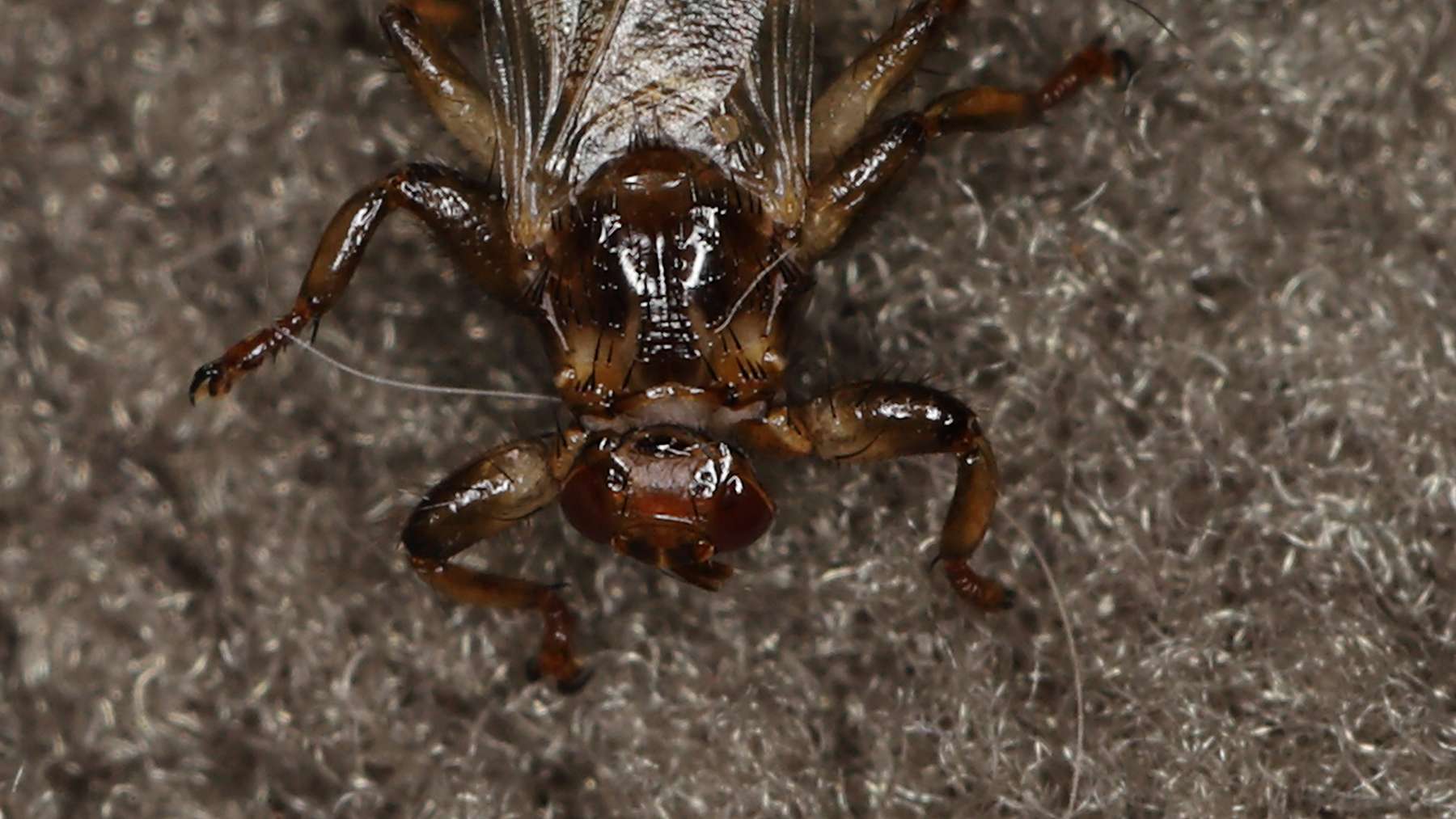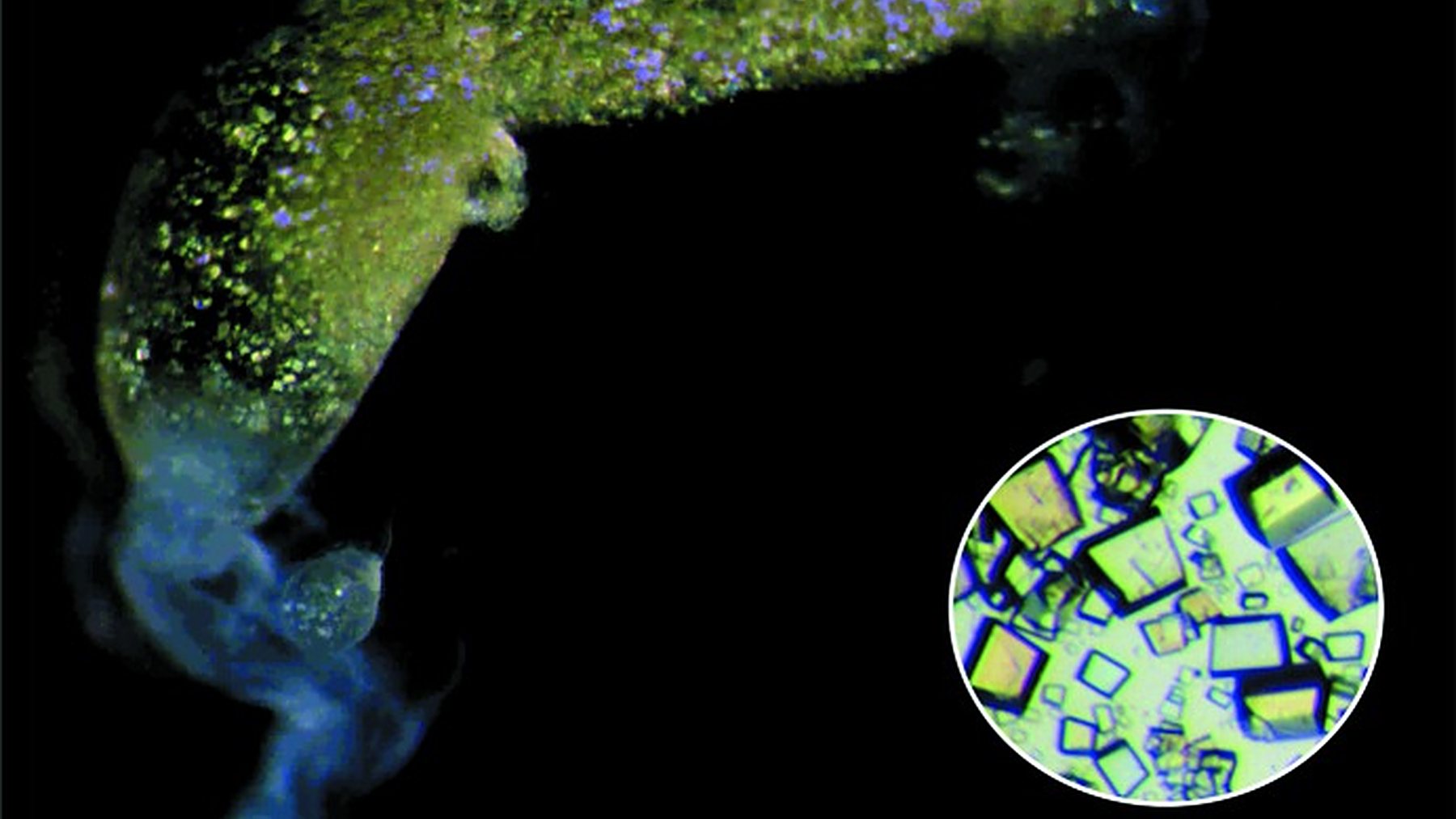
Cockroach milk turns into protein crystals inside the unborn young of the Pacific beetle cockroach, Diploptera punctata. By weight, those crystals hold more than three times the energy of cow’s milk. The team that worked out how they are built received the 2026 Ig Nobel Prize in Chemistry on September 3 in Zurich, Switzerland.
Their paper came out in 2016 in the journal IUCrJ. The authors described it as the first structure determined directly from a crystal that grew naturally inside a living organism. Improbable Research hands out the Ig Nobels each year for science that first gets a laugh and then makes people think.
A brood sac instead of eggs
Most cockroach species lay their eggs inside a protective case. D. punctata is the only cockroach known to be viviparous. The mother nourishes her embryos inside her body, much as mammals do.
According to the study, a female carries 9 to 12 embryos in a brood sac. The wall of that pouch secretes a protein-rich liquid. The embryos have little yolk, so they drink the milk early, and their body protein rises 60-fold before birth.
Soon after the milk reaches an embryo’s midgut, its proteins pack together into tiny crystals. The authors call this roach one of the few examples of live birth among insects. Still, nature has plenty of unusual parents, from pregnant seahorses to flamingos that feed chicks crop milk.
About 66 calories per ounce
The numbers sit in a small table in the paper’s supplementary file: 232 kilocalories per 100 grams for the crystals and 66 for cow’s milk. Converted to ounces, it’s about 66 calories versus roughly 19.
So the crystals pack about three and a half times the energy. Even water buffalo milk, the richest of the five mammal milks listed, stops at 110 kilocalories, under half of what the cockroach crystals carry.
According to the authors, each crystal also carries a full menu. “Lili-Mip serves as a complete nutrient,” they write. It supplies every essential amino acid, sugars attached to the proteins, and fats such as linoleic and oleic acids.
Synchrotrons in Japan and Switzerland
To collect the crystals, the team eased embryos out of a 54-day-old female. Each midgut was cut open and the crystals were drawn up with a pipette. One crystal measured about 15 by 20 micrometers, much narrower than a human hair.
X-ray crystallography came next. The method shows how atoms are arranged by tracking how a crystal scatters an X-ray beam. The sharpest data, at 1.2 angstroms, came from the Swiss Light Source in Villigen, Switzerland.
The project began at the Photon Factory in Tsukuba, Japan, Nagoya University said on September 9. That facility belongs to the High Energy Accelerator Research Organization (KEK). Coauthor Leonard Chavas, a former professor at Nagoya, later ran more tests at two synchrotrons in central Japan.
Twenty-five years from hunch to prize
As an undergraduate 25 years ago, Nathan Coussens suspected the crystals were more than waste. He put them in an X-ray beam and found they were proteins, Purdue University said.
Coussens was working in the lab of Ramaswamy Subramanian, now a professor in Purdue’s Department of Biological Sciences. Solving the atomic structure took more than a decade, with 11 authors from five countries on the final paper.
Coussens now directs a pharmacology lab at the Frederick National Laboratory for Cancer Research. Chavas heads DECTRIS Japan, a detector company. Both men went to Zurich with Subramanian to collect the prize.

“The most unexpected questions can lead to fascinating discoveries,” Subramanian said in the Purdue statement. He added that “underneath that was a serious effort to understand how nature solves a biological problem.”
Mixed ingredients, perfect order
Lab crystals usually need pure, identical proteins. Mixtures tend to spoil the order. These crystals hold different protein versions, different sugar chains and two kinds of fat, yet they still form a tightly packed lattice.
The proteins belong to the lipocalin family, which folds into a barrel that can hold a fat molecule. A 2004 genetic study had already found 22 distinct milk protein sequences in this species. Cockroach genomes keep surprising scientists in other ways too.
For the authors, the crystals work as a slow-release pantry. As an embryo uses up the nutrients dissolved in its gut, more protein dissolves from the crystals “to supply nutrients as they are needed.”
Young D. punctata reach adulthood in 43 to 52 days. A related cockroach whose embryos get no milk, Rhyparobia maderae, needs about 160. The paper suggests the energy-dense milk might explain part of that gap.
Never tested as human food
Despite the prize, cockroach milk is not a breakfast option. The study measured an insect embryo’s food store. It did not test digestion, safety or any way to make the crystals in bulk.
The calorie figure is itself a calculation. The team estimated it from the crystals’ protein, fat and sugar content. The authors also admit that the role of all that mixing “is currently unclear.”
At Purdue, Subramanian is using the very stable protein frame to design new proteins with help from artificial intelligence. Other 2026 Ig Nobel winners shared the same taste for odd questions, among them the Swiss volunteers who buried cotton underwear to test their soil.
The full study was published in IUCrJ.
Image: Banerjee et al. / IUCrJ (CC BY)