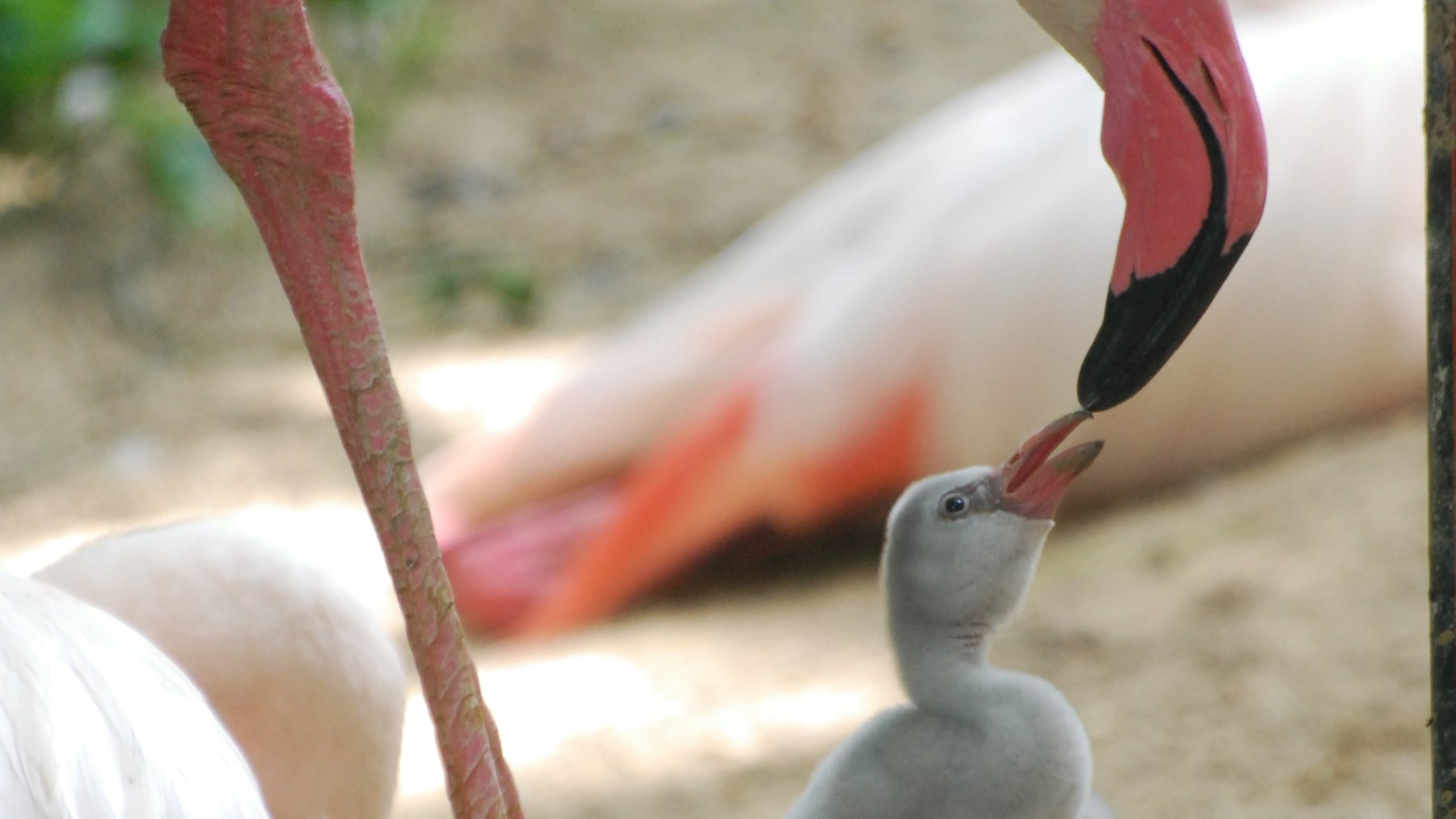
Nine fluffy chicks are offering a behind-the-scenes look at one of flamingo parenting’s strangest trade-offs. At the Smithsonian’s National Zoo, feeding babies means producing red “crop milk,” a process that can leave the adults much paler.
The zoo’s July 17, 2026, account reported 66 American flamingos, including nine chicks hatched in 2026. Bird House curator Sara Hallager describes a nursery supported by careful egg management, shared parenting and regular health checks, not simply a flock left to figure things out.
Why pink parents can turn almost white
A flamingo’s color starts with its food. Natural pigments called carotenoids, found in algae and passed along through animals such as brine shrimp, help give its feathers their familiar pink appearance.
Those pigments also enter the nutrient-rich secretion parents feed their chicks. Producing that food can leave both mothers and fathers pale pink or nearly white by the end of the nesting period.
This color change is not automatically a sign of poor health. San Diego Zoo and the Wildfowl and Wetlands Trust describe parents regaining their pink appearance as chicks become independent and new feathers grow. Still, appearance alone cannot tell keepers whether a bird is thriving.
Baby flamingos need more than shrimp
Despite its name, crop milk is not dairy, and it does not come from mammary glands. It is a secretion from the upper digestive tract, rich in fat and protein, that parents deliver directly from bill to bill. Chicks hatch with straight bills and need time to develop the filtering structures adults use to collect food from water.
Why might a chick look as though it is bleeding? Red crop milk can splash onto its gray feathers during feeding, a sight Hallager says sometimes alarms visitors. A fuller crop, the food-storage pouch near the base of the throat, also helps keepers spot which youngsters have eaten.
The egg swap that gives chicks a safer start
Long before the first feeding, keepers face a more delicate problem. Flamingos usually lay a single egg on a mud nest, but an accident can destroy it before a chick ever emerges.
“Parents have a habit of accidentally kicking eggs off the nest or forgetting to turn them,” Hallager explained. To reduce those risks, staff replace newly laid eggs with replicas and move the real ones into incubators where temperature and humidity can be controlled.
Meanwhile, the adults continue sitting on their substitute eggs, giving keepers a chance to observe their nest care. As hatching begins, the most attentive pairs are given priority to receive a real egg.
A noisy nursery with its own babysitters
How does a parent find its baby in a crowd of almost identical gray chicks? Each youngster has a distinctive call, allowing parents to recognize their own offspring even within large gatherings. That matters in the wild, too, where flocks can contain thousands of birds.
Chicks also gather in groups known as “crèches,” where other adults provide supervision while their parents are away. Hallager likens these helpers to “aunts and uncles,” a bit like a shared neighborhood nursery. But parents still return to deliver meals to the chicks they are raising, so the arrangement does not remove their feeding responsibilities.
Independence does not end the feeding requests
By around three months, the zoo says, chicks can feed themselves and move around confidently. That does not mean their parents are off the hook, since some youngsters continue begging for crop milk and receiving it for more than six months.
Feeding independence and adult appearance are not the same milestone. A chick may be able to collect its own food well before it looks like the bright pink bird visitors expect, since adult coloration takes several years to develop.
The care behind every successful hatching
The human side of the nursery involves plenty of recordkeeping. Hallager’s team tracks weight checks, veterinary examinations and vaccinations, including those against West Nile virus, as part of the continuing care that follows each chick’s arrival.
The Bird House team has been helping raise flamingos since 1992. The nine chicks described in the July update are the latest example of parents and keepers doing different parts of the same demanding job.
Beyond the zoo, American flamingos depend on shallow-water habitats that can be damaged by mining and human disturbance. Caring for chicks in a managed flock does not replace protecting those places in the wild.
The official account was published on the Smithsonian’s National Zoo and Conservation Biology Institute website.