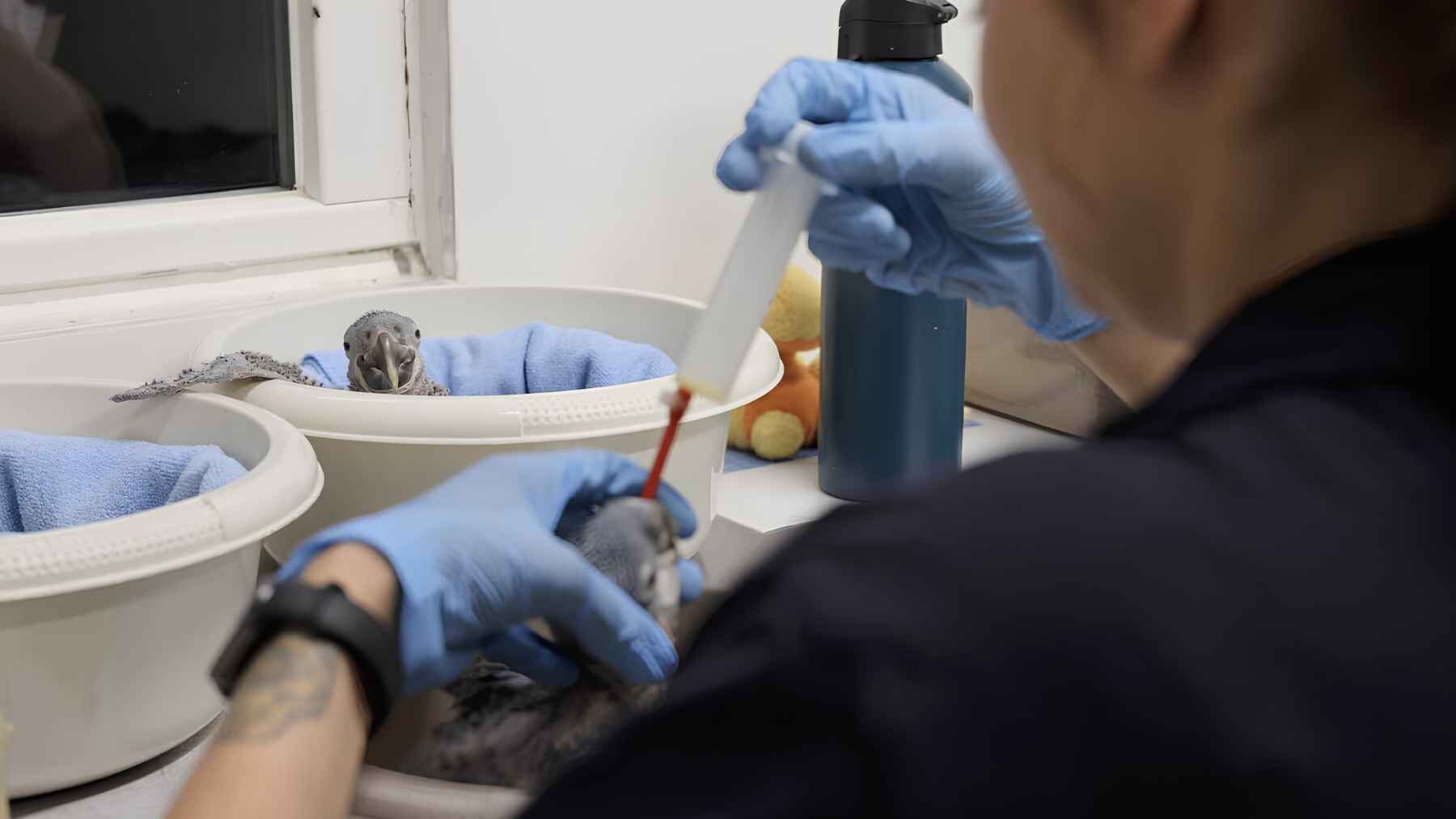
Two Lear’s macaw chicks hatched on July 1 and 3 at Pairi Daiza’s Center for the Conservation of Rare Birds in Belgium. Their arrival makes the park the only nature conservation center open to the public that has successfully bred the hyacinth, Spix’s and Lear’s macaws, according to Pairi Daiza.
That distinction may sound like one more trophy for a park that already holds three Guinness World Records. However, the real story is smaller, louder and far more demanding, built around two fragile chicks and a breeding strategy that had to change after an earlier failure.
Two hatchings after an early setback
The chicks are the first offspring of a male born in June 2014 and a female born in July 2017. During the pair’s first breeding attempt last year, the young parents broke their only egg, prompting the zoological team to rethink its approach.
Lear’s macaws naturally breed in colonies, so keepers placed Pairi Daiza’s three unpaired males in neighboring aviaries without allowing direct contact. A few months later, the breeding pair produced two fertilized eggs, which staff moved to the incubation room after the birds damaged their nest box.
Care around the clock
The work did not stop when the shells opened. During their first days, the chicks required as many as 12 hand feedings daily, followed by 5 feedings a day when Pairi Daiza announced the births three weeks later.
“At first, we fed them every three hours, day and night,” rare-bird keeper Chloé Meunier said in the material provided for this report. That is the less glamorous side of conservation breeding, where alarms, careful measurements and repeated checks matter more than any record certificate.
What the chicks can teach researchers
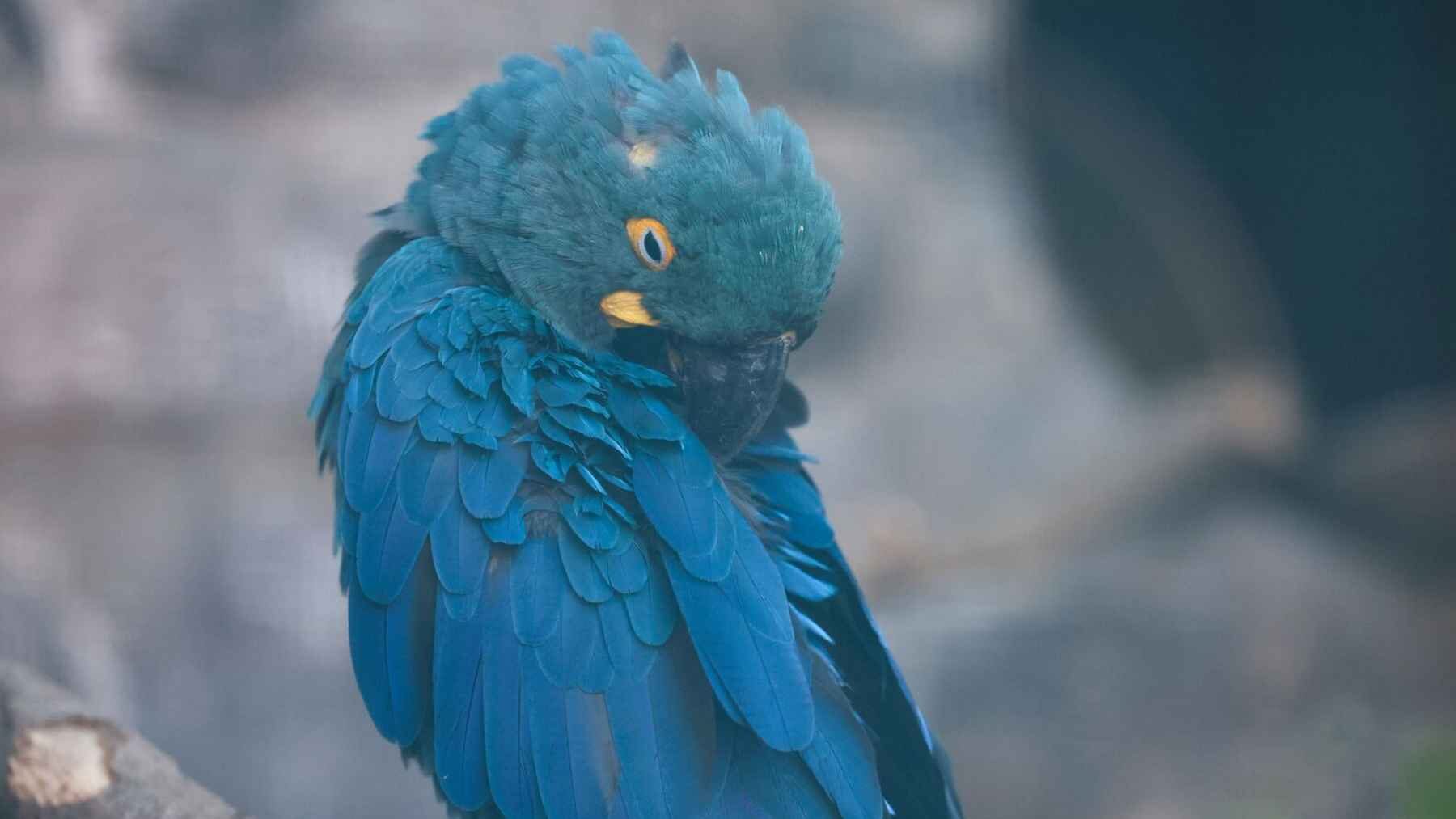
The birds’ distinctive blue feathers were not expected to become visible until several weeks after hatching. More importantly, the team is tracking their reproduction, development and behavior so that the observations can be shared with other specialists working to conserve the species.
“For such a rare species, every observation counts,” Pairi Daiza curator Steffen Patzwahl said. A successful hatch is good news, yet the knowledge gathered along the way may be the part that travels farthest.
Why Lear’s macaw remains vulnerable
Lear’s macaw is endemic to the dry Caatinga of Bahia in northeastern Brazil, where it nests in sandstone cliffs and survives within a very limited range. Habitat loss, hunting and trafficking once pushed the wild population down to as few as 60 birds in the 1980s.
Conservation work involving protected habitat and local communities helped the species recover to nearly 2,000 birds by BirdLife’s 2022 account, yet its restricted distribution keeps those gains fragile. The species remains listed as Endangered, and BirdLife warns that its Caatinga habitat continues to be degraded for agriculture.
Captive breeding is one part of the answer
So why celebrate two chicks raised in Belgium? Carefully managed populations can preserve husbandry knowledge, support research and create options for future recovery work, but they do not replace protection for wild birds and their habitat.
The IUCN Species Survival Commission describes modern zoos, aquariums and botanic gardens as potentially important conservation partners while stressing that the ultimate purpose is for species to thrive in nature. Effectively, Pairi Daiza’s achievement matters most when its data connect with field conservation, government agencies and the communities living alongside Lear’s macaws in Brazil.
The three blue macaws
Pairi Daiza has now bred the hyacinth macaw, the Spix’s macaw and the Lear’s macaw. The Spix’s story shows what coordinated work can look like, since the Pairi Daiza Foundation and its partners helped reintroduce 20 captive-bred birds in Brazil in 2022, with reproduction reported in the original region in 2023.
That history also adds perspective to the latest births. A chick in an incubator is not yet a recovered wild population, but it can become part of the expertise, planning and international cooperation needed to keep a species from disappearing.
Three records under one glass roof
Pairi Daiza’s new Edenya complex opened to day visitors on February 7, 2026. Guinness World Records verified its 40,447-square-meter footprint (435,368-square-foot) as both the world’s largest tropical greenhouse and the largest covered zoological ecosystem, with the record measurements dated February 6.
A third record followed in July for the most plant species cultivated in a tropical greenhouse. Pairi Daiza documented 1,675 species gathered over nearly seven years across the four-hectare indoor garden, and the park says none of those plants was collected from the wild.
The quiet work behind the spectacle
Edenya also offers 88 resort suites, animal-viewing spaces and an underwater restaurant, making it easy for visitors to focus on the scale and spectacle. Yet the Lear’s macaw story unfolded in an incubation room, one feeding and one observation at a time.
That contrast may be Pairi Daiza’s most useful message. Records can attract attention, but conservation earns its value through patient science, transparent collaboration and long-term protection both inside breeding centers and across the landscapes where animals belong.
What happens next
Pairi Daiza says the two chicks will help expand knowledge of Lear’s macaw reproduction, development and behavior, which the team plans to share with international conservation specialists. For now, the milestone is promising rather than final, and the birds will remain under close care as they grow.
The official announcement was published on Pairi Daiza’s website.