A young Iron Age woman found in a Northern Ireland bog was deliberately decapitated, most likely from behind with a bladed weapon. The evidence was set out at a public event at the Ulster Museum in Belfast. It was modelled on a modern coroner’s investigation.
She is known to researchers as the Ballymacombs More Woman. She was aged roughly 15 to 22 and lived more than 2,000 years ago, according to the University of Glasgow, one of the research partners. Her remains were found near Bellaghy in 2023.
Not quite an inquest
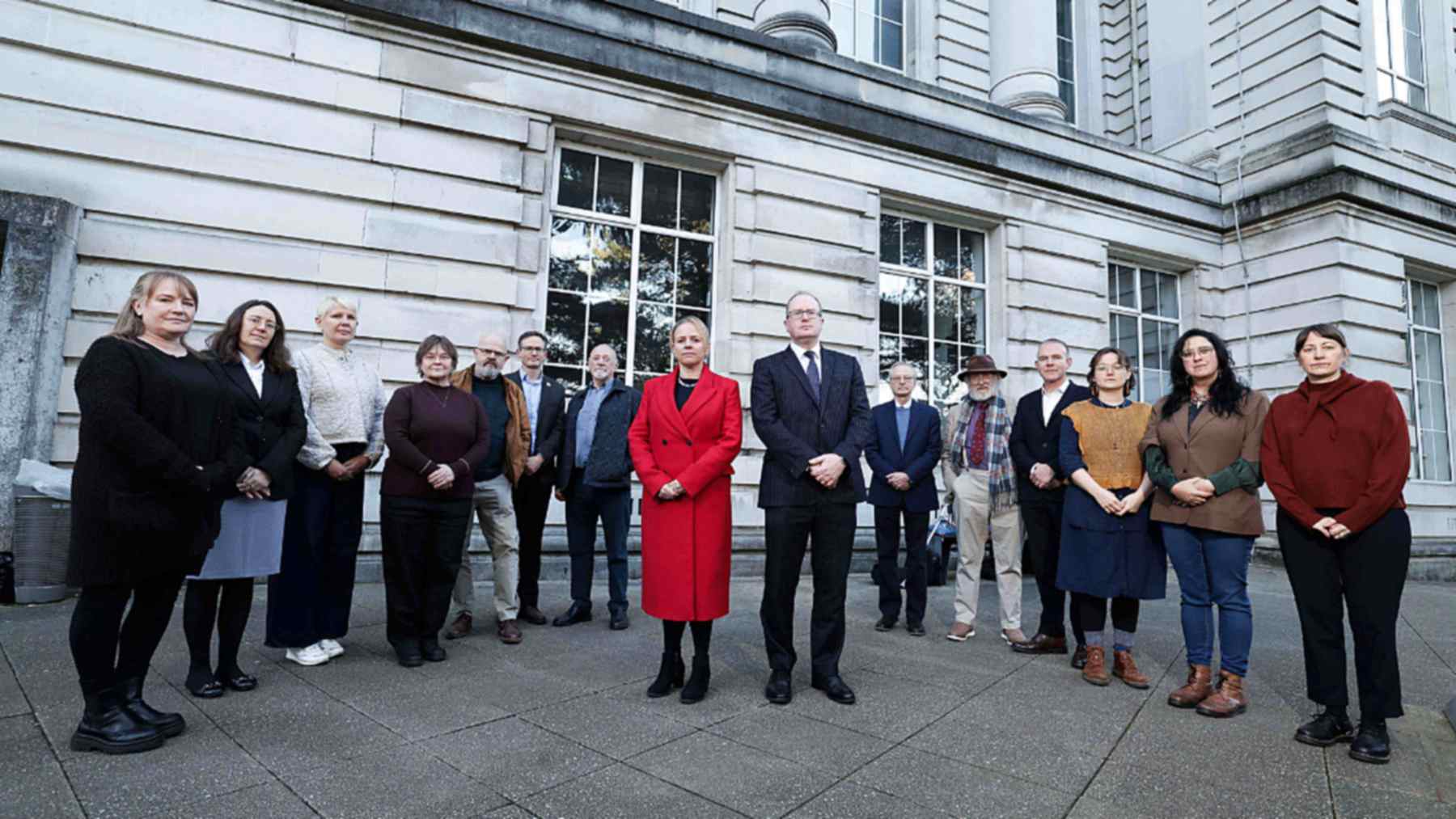
The event at the museum was not a real inquest, the university says. It borrowed the structure and methods of a coroner’s investigation as an educational exercise. The Lady Chief Justice was consulted beforehand and endorsed the event.
Like any coroner’s case, it asked the same basic questions. Who was the woman? Where and when did she die, and how did she come by her death?
“The purpose of the exercise is not to impose modern legal conclusions upon the distant past,” said coroner Joe McCrisken. He said it gave a way to weigh the evidence and tell the story of a previously unknown young woman.
What the evidence showed
National Museums NI led the research with partners in Ireland, the UK and Denmark. Witnesses at the hearing included officers from the Police Service of Northern Ireland. Workers from Bulrush Horticulture, whose work led to the discovery, also took part.
Scientists used micro-CT scanning, digital mapping and 3D imaging. They also studied her bone, hair, skin and nails, and a textile found with her. Together, the results shed light on her age, diet, health and injuries.
Her head was never recovered from the bog, and it is still missing. In February 2025, the museum reported cut marks on her neck vertebrae. A Queen’s University Belfast expert described a very violent death, with blood flowing from her throat before she was beheaded.
The museum also estimated her height at around 5 feet 6 inches. Following the custom for such finds, she was named after the townland where she was found and her sex.
A possible ritual killing
The exact circumstances of her death are still unknown, the researchers say. The evidence suggests she may belong to a wider tradition of ritual killing and sacrifice. That tradition is seen in bog bodies across Iron Age north-western Europe.
She joins internationally famous finds such as Tollund Man and Grauballe Man. In Ireland, Clonycavan Man and Old Croghan Man were found in bogs too. Wet ground has kept other ancient objects intact for thousands of years, including a 5,500-year-old door pulled from a Swiss marsh.
Early checks had suggested the remains belonged to a young man aged 13 to 17, National Museums NI said in February 2025. Further analysis showed she was most likely female. That makes her rarer, because most bog bodies from the period are men.
A fringed fabric from her time
Professor Susanna Harris and PhD researcher Nysa Loudon of the University of Glasgow studied fibrous material found with the body. It was made using twining, a technique that creates a border with a loose, hanging fringe.
“We were able to radiocarbon date the twining made from plant fibres to between 363 BC and 160 BC, matching the date range established for the body,” they said. They think it may have been part of a garment, a body ornament or a decoration placed on the ground.
Detailed lab work keeps rewriting what we know about ancient lives. Studies like this one sit alongside work on a 4,000-year-old Stone Age grave found by English anglers beside a Norwegian mountain lake, and on lead levels in children who grew up near England’s medieval mines.
Her story goes on display
“She is one of the most important discoveries to have been found on the island of Ireland,” said Niamh Baker, curator of archaeology at National Museums NI.
“Ballymacombs More Woman was once a person, just like us,” said Hannah Crowdy, the museum’s head of curatorial. She said the findings will help inform new interpretation planned for the Early Peoples gallery at the Ulster Museum.
Crowdy added that the discovery raises questions about how museums care for human remains today. The museum, she said, wants to share the woman’s story in ways that are enlightening but fully respectful.
Photo: National Museums NI