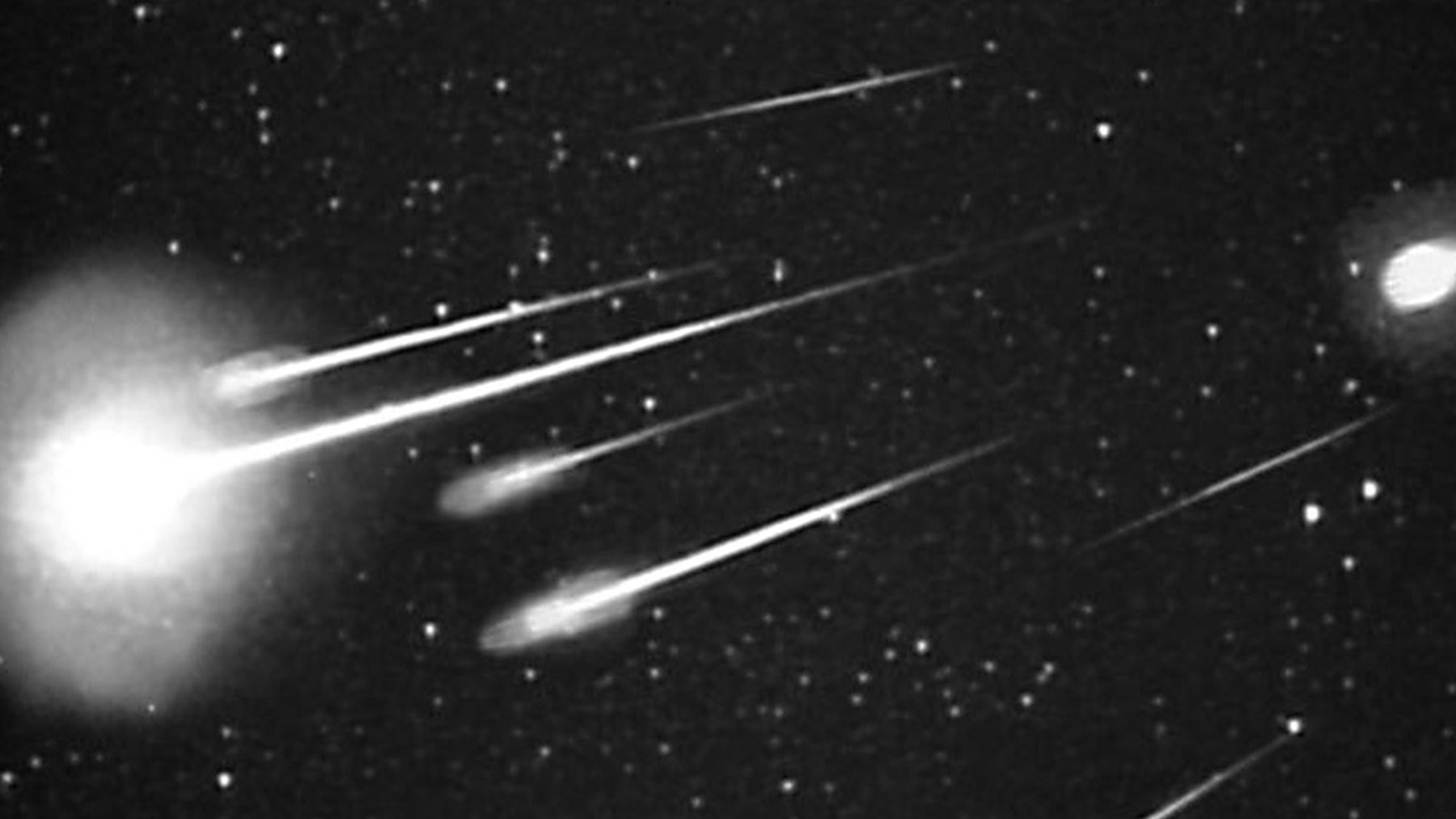
The Leonid meteor shower peaks over the UK tonight as Earth crosses dust from Comet 55P/Tempel-Tuttle. The Royal Observatory Greenwich expects 10 to 15 meteors an hour at the peak. The maximum falls on the evening of November 17 and runs into the early hours of November 18.
Timing favors British skywatchers this year. The Moon will be waxing gibbous, the observatory says, but it “will set just before midnight on this night, allowing you to see the rest of the peak without the Moon’s light pollution.”
Moonset before midnight helps
NASA’s November skywatching guide, published on November 2, agrees on the dark hours. It lists November 17 to 18 for the Leonids, before dawn and after moonset. Raquel Villanueva of NASA’s Jet Propulsion Laboratory presents the guide and kept expectations modest: “Under ideal conditions, the shower could produce around 15 meteors per hour, though most viewers will see fewer.”
NASA suggests the early morning hours of November 17 and 18. Greenwich puts the maximum on the evening of the 17th, running into the small hours of the 18th.
Anyone who misses tonight still has a chance. According to the Royal Observatory, the shower continues at a reduced rate for several days either side of the peak. Its activity window runs from November 6 to November 30, much longer than the brief peak of the Quadrantid meteor shower in January.
Fast meteors from Tempel-Tuttle
Every Leonid is a fragment shed by Comet 55P/Tempel-Tuttle. According to NASA’s Leonids fact page, the comet takes 33 years to orbit the Sun. Ernst Tempel found it in 1865 and Horace Tuttle found it again in 1866, and its nucleus is only about 2.24 miles (3.6 kilometers) across.
Greenwich says some of the particles are as small as a grain of sand. They hit the atmosphere at up to about 43 miles (70 kilometers) per second and vaporize. NASA ranks the Leonids among the fastest meteors and calls them bright and sometimes colorful.
Fireballs, NASA notes, come from larger pieces of comet material and glow longer than an ordinary streak. Earth-grazers are the other, skimming close to the horizon with long, colorful tails. Similar debris feeds other autumn showers, including a comet nearly 3 miles wide behind the Taurid meteor shower.
Where to look from Britain
The meteors seem to stream from the “sickle” of the constellation Leo the Lion. That head of the lion gives the shower its name. NASA’s chart for November 18 shows the point in the east before sunrise, close to Jupiter and Mars.
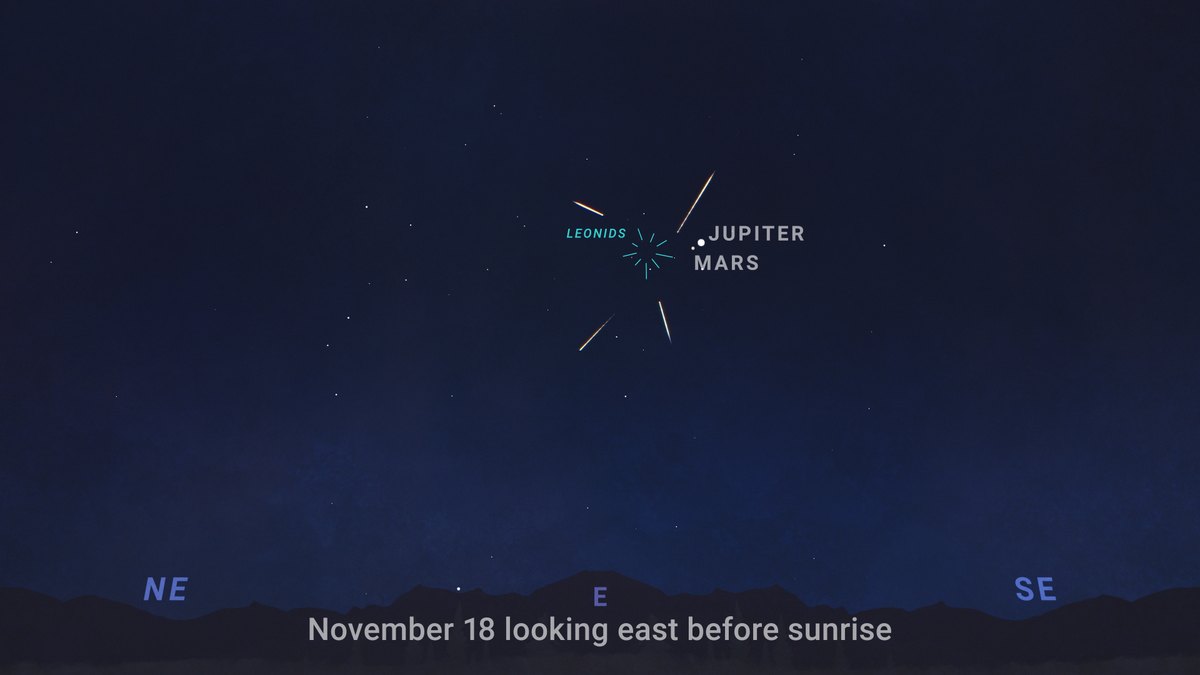
Staring at Leo itself is not the best plan, NASA advises. Meteors near the radiant look short because of an effect called foreshortening. Those farther away appear longer, so the agency suggests lying flat with your feet toward the east.
Greenwich recommends a safe spot away from street lights, ideally in a wide open space. No binoculars or telescope are needed, though eyes need about half an hour to adjust to the dark, NASA says. The observatory also suggests a comfy chair and warm clothes, because “Hunting for meteors, like the rest of astronomy, is a waiting game.”
Tonight also has a space link of its own. NASA has picked November 17 to mark Voyager 1 becoming the first human-made object one light-day from Earth, with a public activity called Shine Bright for Voyager’s Light-Day.
Storms of 1833 and 1966
Roughly every 33 years, in step with the comet’s orbit, the Leonids can turn into a meteor storm. Greenwich lists storms in 1799, 1833, 1866, 1966 and 1999 to 2001. The expected displays of 1899 and 1933 were disappointing, it adds.
The 1833 storm brought an estimated 100,000 meteors per hour, according to the observatory. In 1966, NASA says, thousands of meteors per minute fell for 15 minutes. There were so many that they appeared to fall like rain.
NASA defines a storm as at least 1,000 meteors per hour. The 1999 to 2001 storms produced about 3,000 an hour, Greenwich says. Tonight’s 10 to 15 an hour belong to an ordinary year.
Real counts often fall below 15
The peak figures assume a dark sky and a patient observer. NASA’s fact page warns that Leonid rates are often as low as about three meteors per hour. It still counts the Leonids as a major shower.
Neither guide can promise clear skies, and cloud can hide the whole display. The two agencies also describe the best hours a little differently. Watching from just after moonset until dawn covers both.
The viewing details come from the Royal Observatory Greenwich guide to the 2026 Leonids. NASA’s November 2026 skywatching guide, published on November 2, adds the Moon and rate forecast.
Photo: NASA/Ames Research Center/ISAS/Shinsuke Abe and Hajime Yano