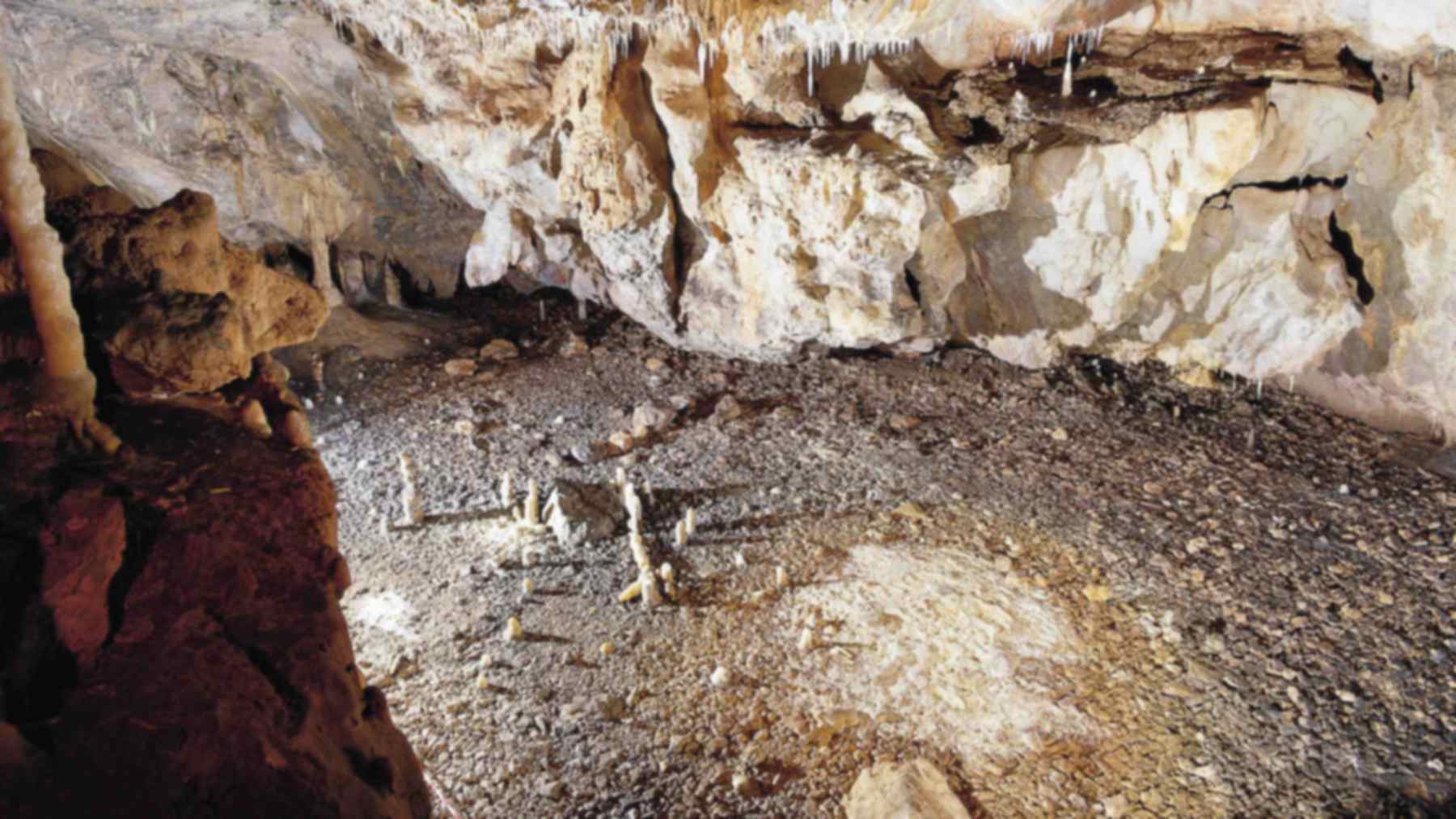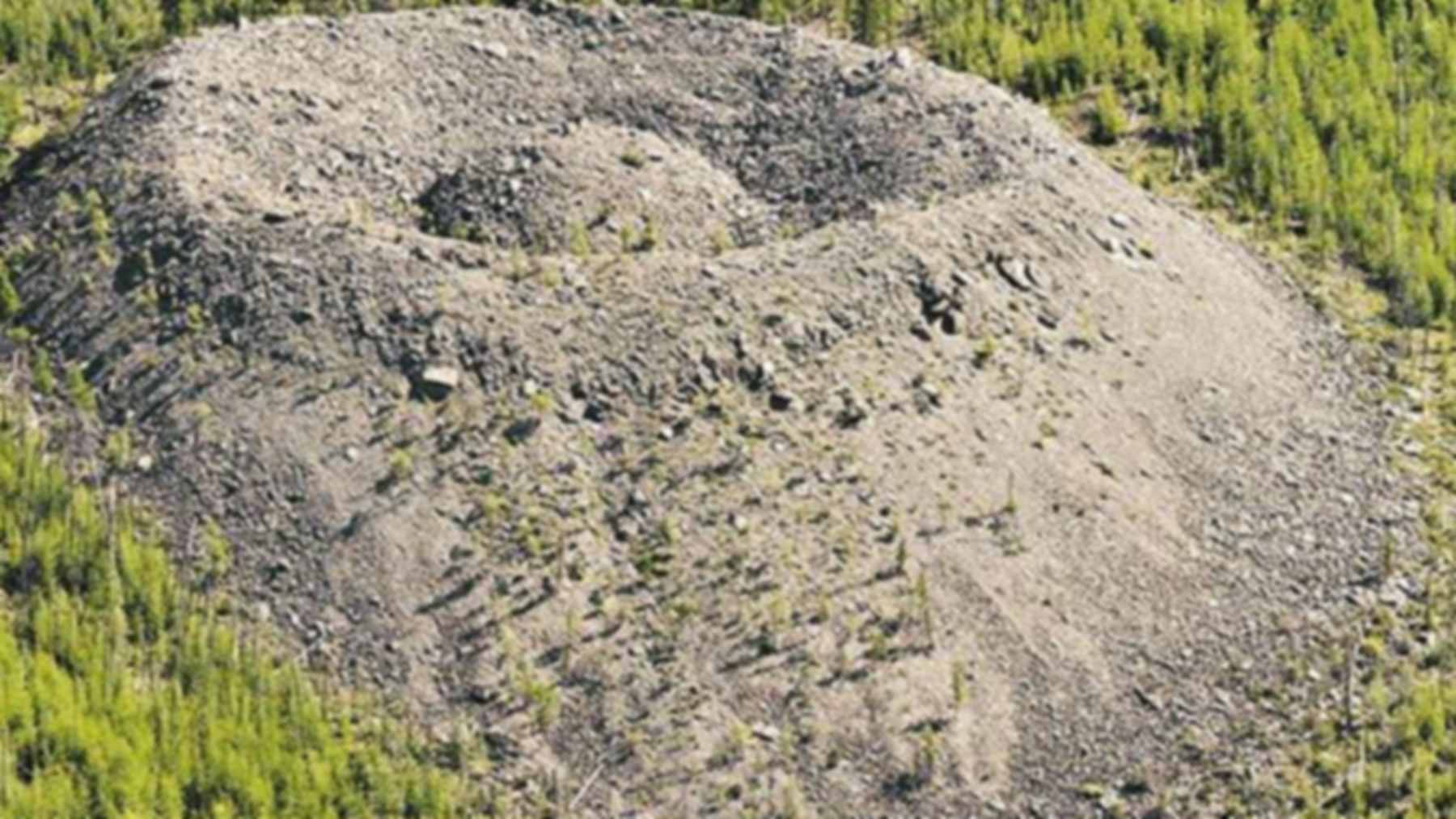
Irkutsk geologist Vadim Kolpakov came across the Patom crater in 1949, on the Patom Highland above the Lena River. It sits about 112 miles (180 kilometers) from the town of Lensk. The mound of broken rock measures about 525 feet (160 meters) across, and its origin stayed in dispute for decades.
Expeditions in 2006 and 2008 finally mapped the site and sampled its rocks and larch trees. Viktor Antipin and Viktor Voronin reported the results in 2010 in SCIENCE First Hand, a Novosibirsk popular science journal. They argued that the structure rose from deep underground and kept growing for centuries, with the last ring swell taking more than 300 years to form.
Kolpakov’s super-dense meteorite
Kolpakov proposed a meteorite impact in 1951, and geologist S.V. Obruchev doubted him that same year. Obruchev suggested an outburst of steam and gas from great depth, in ground cut by tectonic faults.
The Siberian Committee on Meteorites sent a volunteer expedition in 1963, but it failed to settle the matter. Other proposals included an extinct volcano and a young kimberlite pipe, a rock column that can carry diamonds.
Kolpakov kept looking to the sky well into the 2000s. In 2007 he and an Irkutsk astronomer wrote that only a super-dense meteorite could have made such a shape. No meteorite of that kind had ever been observed.
Drilling into Australia’s Hickman crater turned up nickel from an iron meteorite, the kind of signature an impact leaves.
Four zones, built in stages
Geologists, geophysicists, biologists and astronomers from Irkutsk drew the first geological map of the site. It shows an outer slope, a ring swell, a ring trench and a central hill. Limestone makes up most of the rock.
Moss and larch cover the inner swell, which also holds blocks of schist and sandstone. The later outer swell contains neither rock and carries only a few young trees. Barely weathered crystalline limestone tops the central hill, apparently the last part to form.
According to the authors, a meteorite would have shaped all those parts at once. “Zoning of the Patom crater rocks contradicts the impact hypothesis of its formation,” they write. They also compare its form to modern volcanic structures, since it “looks like a deposition truncated cone with steep slopes and a pit on the top.”
Larch scars from 1841
Tree rings supplied the timeline, after the team’s biologists cut stem disks from larches around the mound. The oldest tree on the outer part took root in 1770, so the loose rock there is older. Debris on the early swell came out at about 250 to 300 years old.
On the outer slope, the search turned up no tree older than 480 years. Larches in the area average around 600 years, and some reach 1,100. The authors infer a local earthquake about 500 years ago, and they date the crater’s birth to around 1500.
Most trees near the northern edge of the talus slope, the apron of fallen rock, showed damage from 1841 or 1842. Their rings looked abnormal, their trunks bent, and stones had scarred their bark.
The researchers found no sign of fire and blamed boulders rolling downhill as the outer swell took shape. Wood can keep such records far longer, as a Swiss larch that stopped growing about 10,300 years ago shows.
Rotten eggs on the swell
Lab work at the Institute of Geochemistry in Irkutsk also went against a meteorite. Nickel, the indicator metal for space rock, ran at about half the surrounding level in the crater’s sandstones. In the schists it reached nearly one third of that level.
Inside the mound, some sandstone blocks held up to 557 parts per million of rare-earth elements. That is six times the level in sandstone around the crater. Some samples matched the pattern of carbonatite volcanoes in the East African Rift, which produce carbonate-rich rock.
Limestones from the central hill and ring swell held around 9 milliliters of carbon monoxide per gram of rock. Their sulfur climbed to 0.3 percent, against under 0.1 percent in most other rocks at the site.
Hydrogen sulfide gave the last clue, since the team reported “a strong smell of rotten eggs on the ring swell.” Their verdict on an endogenic origin, meaning one deep inside the Earth, was firm: “Thus, the endogenic origin of Patom crater can be considered to be proved.”
Shape alone can mislead, as with a 3.7-mile ring in far eastern Russia that looks like a crater or volcano. That is why the rock samples carry so much weight here.
No drill core from below
All of this evidence comes from the surface, and the authors say drilling is needed to reach the deep sources. They have mapping, tree rings and rock chemistry, but no core from the channel they suspect fed the central hill.
Weathering is changing the site as well, because the talus slope has grown since the discovery era. Antipin and Voronin also see practical interest in rocks rich in strontium and rare-earth elements. They give no estimate of any quantity.
The chemical analysis appeared in a 2008 paper by Antipin and A.M. Fedorov in Doklady Earth Sciences. The combined account ran in SCIENCE First Hand on December 24, 2010.
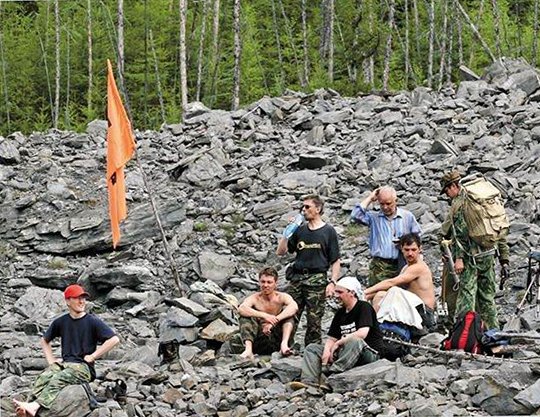
Photo: Expedition participants / SCIENCE First Hand