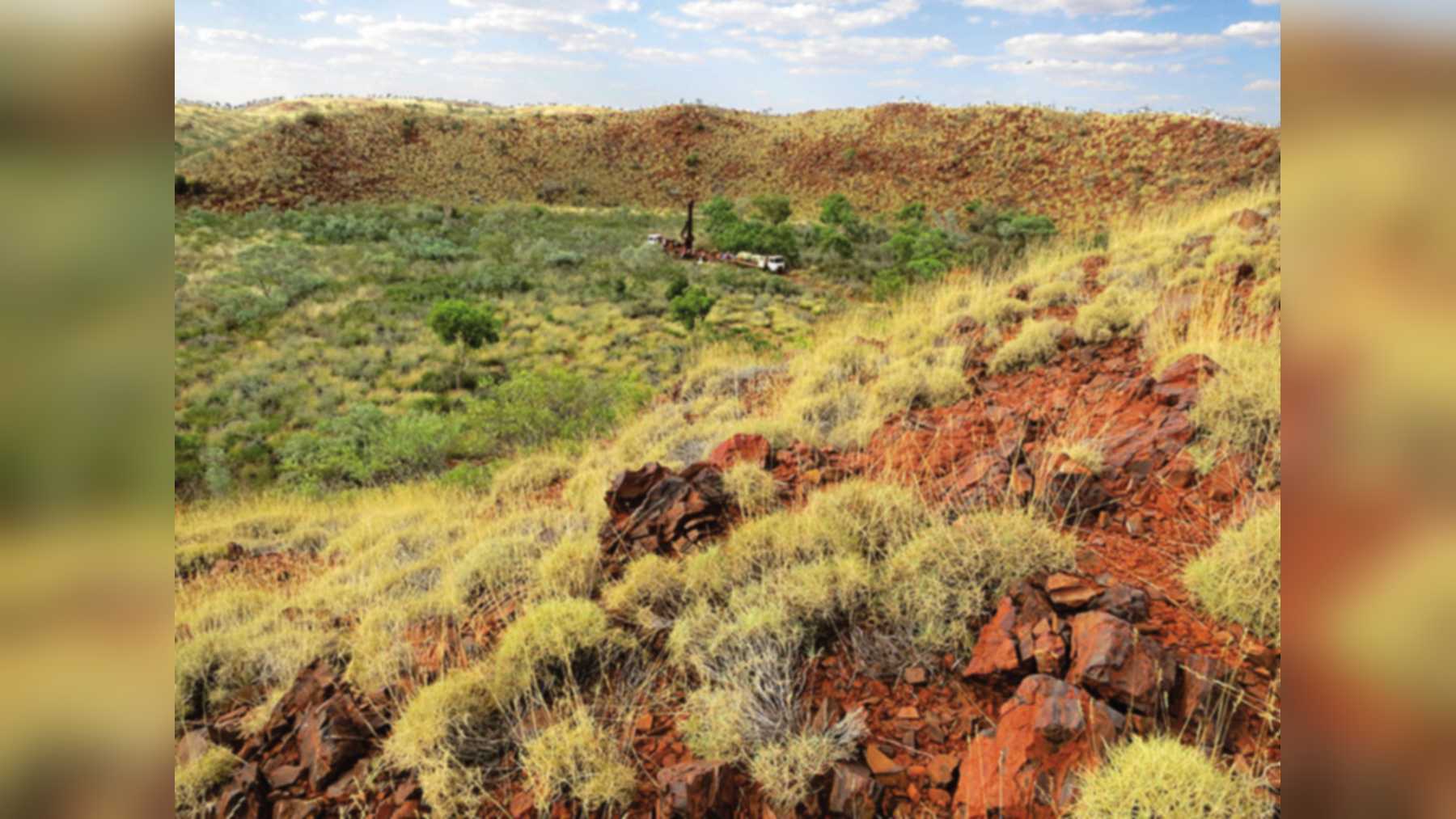
Hickman Crater is a ring of rock about 850 feet (260 meters) wide in Western Australia’s Pilbara region. Arthur Hickman, a geologist with the Geological Survey of Western Australia (GSWA), first noticed it on Google Earth imagery in 2007.
Drilling and lab work have since shown that an iron meteorite made it. The crater lies in the Hamersley Range, about 22 miles (36 kilometers) north-northwest of the mining town of Newman.
Spotted on Google Earth in 2007
According to GSWA geologist Peter Haines, the partly eroded rim rises up to 98 feet (30 meters) above a flat floor. It sits where the Woongarra Rhyolite, a volcanic rock about 2.45 billion years old, meets the younger Boolgeeda Iron Formation.
Andrew Glikson of the Australian National University named the site after Hickman. The first study of the crater came out in 2008 in the Australian Journal of Earth Sciences. Glikson, Hickman and John Vickers favored an impact by a body roughly 33 feet (10 meters) across.
Back then, nobody had a piece of the meteorite. Glikson’s team checked two goethite veins in the rim for nickel and platinum and got nothing unusual. Instead, they argued from the bowl shape, the cracked rhyolite and a spray of ejecta up to about 980 feet (300 meters) north of the rim.
A 212-foot hole through the floor
In small craters, mud washed in after the impact buries the floor where the clues are. Haines, writing in a 2014 GSWA abstract, said “drilling is often the only way to recover samples.”
In late 2012, GSWA and the mining company Atlas Iron cored a vertical hole in the center of the floor. It reached 212 feet (64.7 meters).
Haines later described the core in a 2017 statement from the state mines department: “The 65 metre deep drillhole found that the centre of the crater is filled in by about 48 metres of sediment that was washed in after the crater formed.”
Under the mud sat 22 feet (6.7 meters) of breccia, angular chunks of rhyolite and banded iron with bits of bubbly glass stuck in between. Then came cracked, altered rhyolite all the way to the bottom of the hole.
Red clay at the base of the fill suggests a small lake once pooled in the bowl, cut off from any stream. The upper 100 feet (30 meters) of fill are sandier. Haines links that switch to a creek breaking through the northwest rim.
Nickel at 2,381 parts per million
Haines analyzed six samples spaced through the breccia, as he reported in a 2025 abstract for the Meteoritical Society. Nickel ranged from 295 to 2,381 parts per million. The local rhyolite holds less than 3.
Iridium told the same story. Ordinary crust has almost none of it, yet the breccia carried 9 to 85 parts per billion. Every sample outside that layer came back under the lab’s 1 part per billion limit.
The mix of platinum-group metals matched IAB irons, a family of iron meteorites. In that 2017 statement, Haines said the crater’s internal structure “confirms that the crater was produced by a meteorite impact.” Similar metal clues helped trace the asteroid behind Chicxulub, a far larger crater in Mexico.
Metal beads inside bubbly glass
A team led by Aaron Cavosie of Curtin University studied a 2-centimeter piece from the 2012 core for a second 2025 abstract.
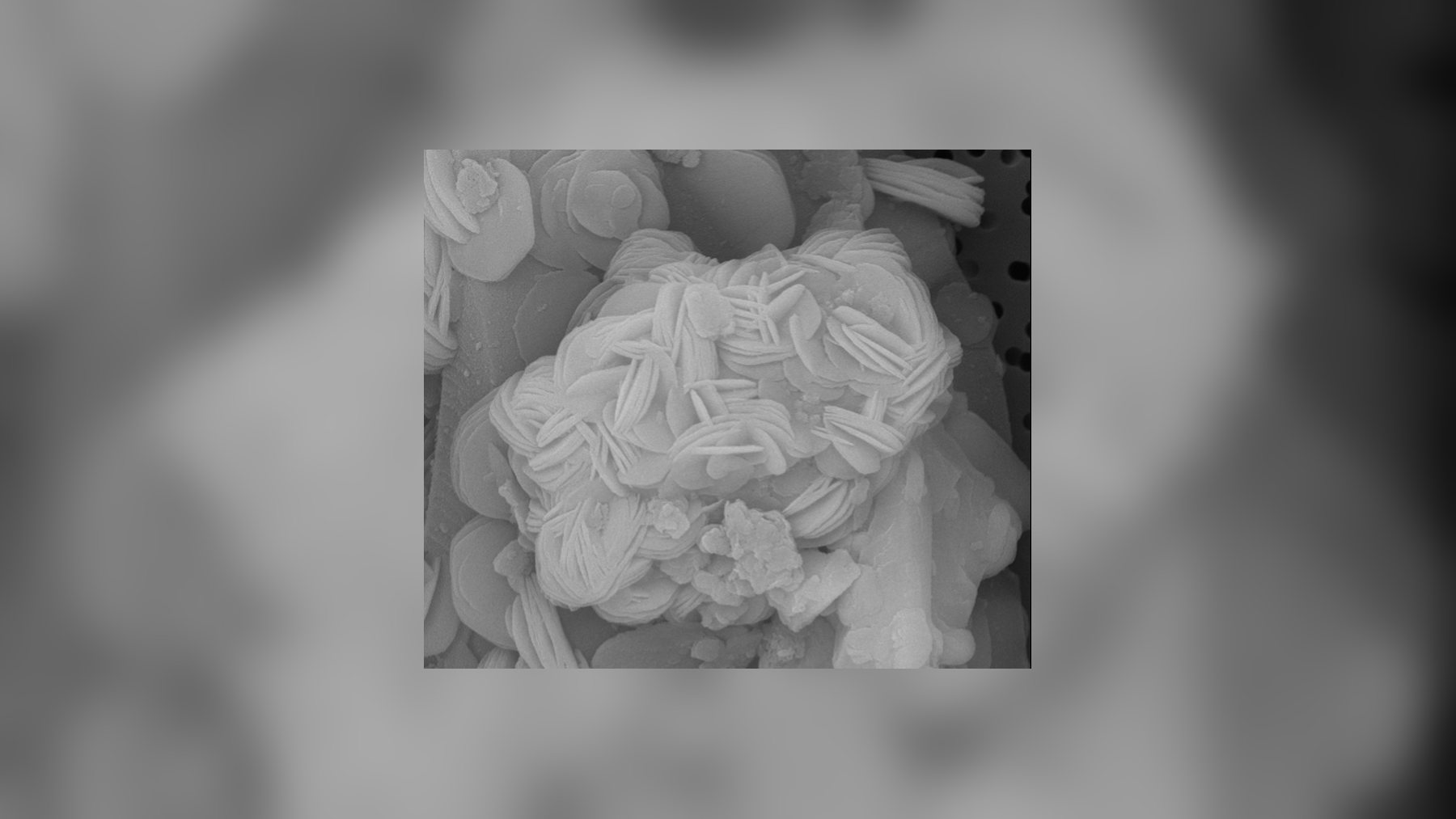
The dark glass is full of bubbles and looks like pumice. It holds a bead 20 micrometers wide made of 66 percent iron and 33 percent nickel, which the team reads as a scrap of the meteorite. Smaller iron-nickel spheres line its surface.
Nickel and cobalt levels suggest parts of the glass are up to 13 percent meteorite. The authors call this “unambiguous diagnostic evidence of a meteorite impact origin for Hickman crater.”
Quartz without shock lamellae
One classic impact marker never turned up. Quartz grains in the core are badly fractured, but Haines found no planar deformation features. These thin parallel bands form only under extreme shock pressure.
His 2014 abstract suggests air drag slowed the small iron body before it hit, lowering the pressure. Iron objects make most craters this size, the same report notes. Stony ones of similar mass usually explode in the air, like the meteor that broke apart over New England.
Impact date still spans 90,000 years
The 2008 study put the crater at about 10,000 to 100,000 years old. Glass from the core went off for argon dating by 2014. Yet the 2025 abstracts still rely on the old estimate.
A team with John Fairweather of the University of Western Australia as first author spent two days at the crater in April 2025. His team collected varnish, rock and soil for four dating methods. Their abstract calls the crater an ideal calibration point for rock varnish.
That dark coating also covers rock art at Murujuga, about 310 miles (500 kilometers) away. A firm impact date could help date those engravings, but the team had not reported results when it wrote the abstract. Dating is far simpler when an impact is caught as it happens, as with a 728-foot crater that formed on the moon in 2024.
Most of the newer evidence is in conference abstracts, not full papers. The studies even disagree on the angle. The 2008 paper read a strike from the south, while Haines’s 2025 abstract describes an oblique hit from the east.
The 2008 study of the crater was published in the Australian Journal of Earth Sciences.
Photo: Geological Survey of Western Australia