Dust buried more than 2,300 feet (700 meters) deep in an Antarctic ice core has grown new iron minerals inside the ice. The study, published September 24, 2026, in Communications Earth & Environment, links that process to Martian dust. Its authors say the same chemistry could make dust red and magnetic without a long warm, wet era on Mars.
The work was led by Luca Lanci of the University of Urbino in Italy. Co-authors include Barbara Delmonte of the University of Milano-Bicocca, Paul Niles of NASA’s Johnson Space Center and Nancy Bertler of Victoria University of Wellington. Their samples came from the Roosevelt Island Climate Evolution project, known as RICE.
Ten depths in the Roosevelt core
Roosevelt Island is an ice-covered rise inside the Ross Ice Shelf. An ice core drilled there is a long cylinder of ice, with each layer holding the snow, gas and windblown dust of its time.
In their reply to the journal’s reviewers, the authors say they studied several hundred single grains. The grains came from 10 depth levels, between roughly 1,000 and 2,450 feet (about 300 and 750 meters).
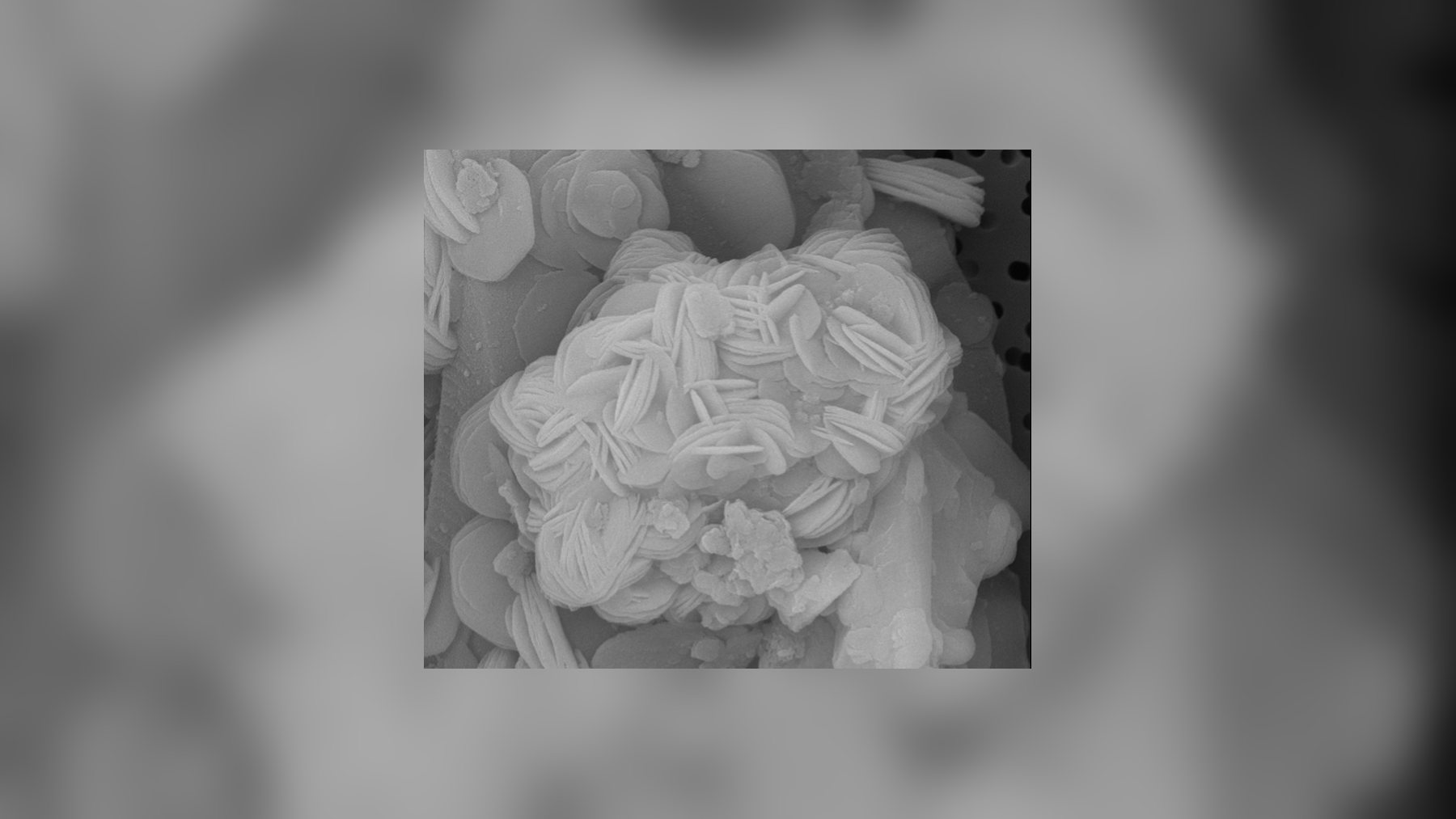
Higher in the core, feldspar, plagioclase and sharp volcanic shards arrived as single particles. Below about 2,300 feet, in ice from the last glacial maximum and older, many grains were clumped and coated with crystals. Those crystals had sharp edges and intact faces that a long trip on the wind would have worn away.
Brine pockets between ice crystals
Writing on the Springer Nature research blog, Lanci and Delmonte explain where the liquid comes from. As ice recrystallizes under pressure, it pushes dissolved salts into veins and pockets only microns wide. Those acidic brines stay liquid far below the normal freezing point.
“Dust grains sitting in these brines are not passive bystanders,” they wrote. The grains dissolve a little and swap ions with the fluid. New minerals then grow on their surfaces, long after the dust blew in from the southern continents.
According to the manuscript posted with the peer review file, RICE ice at those depths sits near 19 to 21 degrees Fahrenheit (minus 7 to minus 6 degrees Celsius). The authors describe the coastal site as warmer and wetter than the inland sites where jarosite turned up before.
Jarosite, goethite and hematite together
Jarosite is an iron and potassium sulfate that is common on Mars and rare on Earth. Several of the same scientists found it growing inside deep ice at Talos Dome, in East Antarctica, in a 2021 study.
Under the electron microscope, the RICE grains showed more than jarosite. The team identified goethite or lepidocrocite, and hematite or maghemite, sometimes on the same grain. Their methods could not separate the two members of each pair.
A sample from 2,481 feet (756.2 meters) held flat jarosite crystals with small amounts of what was likely goethite. At about 2,330 feet (710.2 meters), tiny crystals of hematite or maghemite coated whole clumps of dust. Lanci and Delmonte read that as “a mosaic of micro-environments.”
Glaciologists have a clunky name for all this, englacial authigenesis. It just means minerals that grow in place, inside a glacier or ice sheet.
Opportunity’s magnet and red dust
Mars has its own record of magnetic dust. In March 2004, NASA reported that a magnet on the Opportunity rover gathered dust in a dark ring while its center stayed clean. The agency concluded that “nearly all of the dust particles in Mars’ atmosphere are magnetic.”
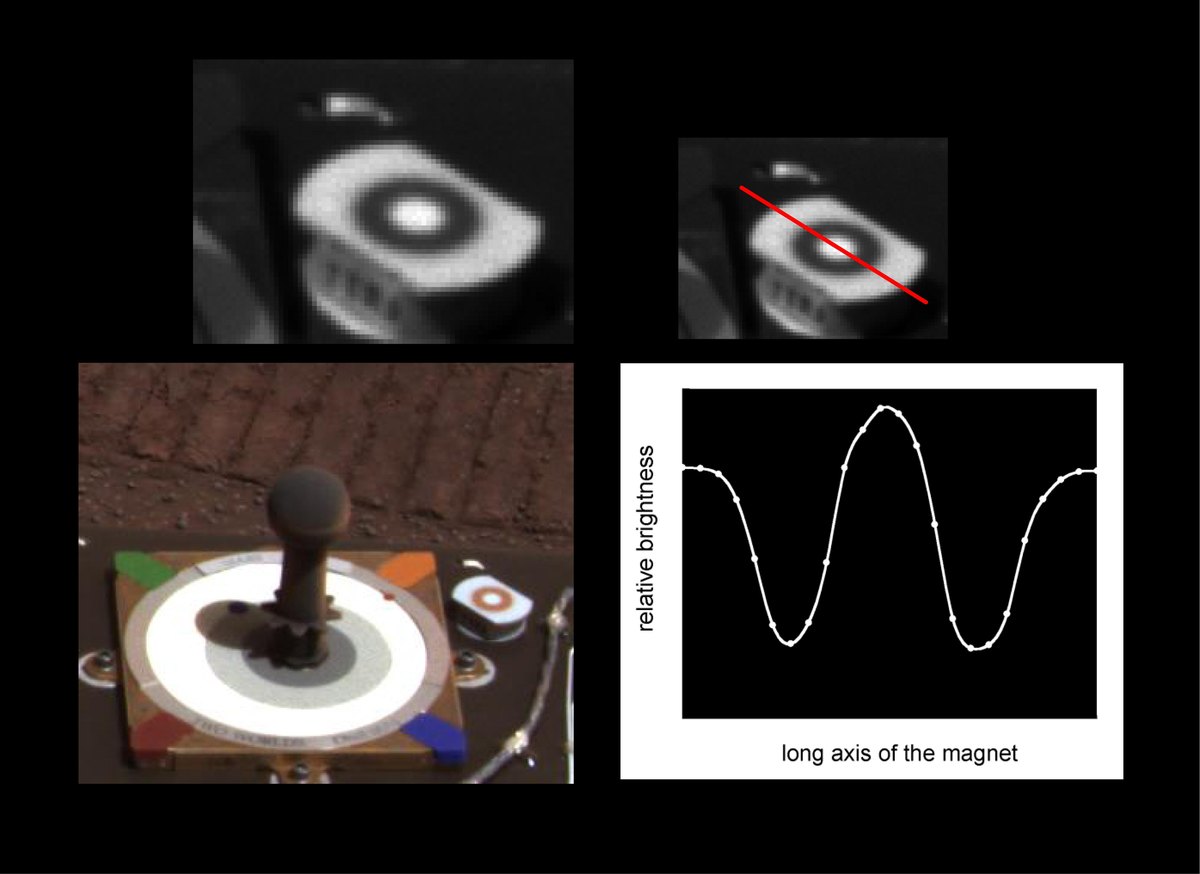
The new paper offers one route to that result. Its abstract proposes that dust buried again and again in Martian ice could be oxidized, clumped and magnetized “without requiring prolonged warm and wet surface conditions.” Shifts in the planet’s tilt and orbit have likely moved ice and dust around for at least two billion years, the manuscript says.
A 2025 study led by Adomas Valantinas of Brown University took a different view. It found that ferrihydrite, a water-bearing iron oxide, best explains the red color of Martian dust. Valantinas and colleagues tied that mineral to a cold, wet period on early Mars.
Water stays in the ice model, only in tiny amounts. Brines also appear in work on the frost that Viking 2 photographed on Mars. Other evidence, such as wave ripples left by ancient Martian lakes or rocks in Jezero Crater altered by water, still stands.
Paleoclimate proxies get a wrinkle
Back on Earth, hematite from dry soils and goethite from wetter ones help scientists read the climate of faraway dust sources. At Dome C, hematite reaches 11 to 12 percent of the dust in interglacial ice, the manuscript notes. A few extra crystals grown at depth could tilt that reading.
Bulk methods see the iron oxides but cannot say when they formed. Looking at grains one by one can, the team argues. The same crystals may also account for oddly strong dust magnetism found below about 8,200 feet (2,500 meters) in the Dome C and Vostok cores.
Lanci and Delmonte admit it was “an uncomfortable finding” for ice core science. It is a point worth keeping in mind for efforts like the Antarctic snow cave built to store ice cores for centuries.
Martian grains remain unexamined
Every sample in the study comes from Antarctica. The manuscript proposes a test for future Mars missions. If the ice route is right, Martian dust should show cores of igneous rock wrapped in coatings, with iron oxides bound tightly to sulfates.
The journal published its peer review file, and one referee pushed back. Two ice cores, Talos Dome and RICE, seemed too few to call the process widespread. Much of the case also leaned on microscope images with limited chemistry.
The paper also leaves open how much Martian dust formed this way. Lanci and Delmonte tell the story behind the work on the Springer Nature research blog.
The full study was published in Communications Earth & Environment.
Image: Luca Lanci and Barbara Delmonte