Madagascar has one more baobab species than botanists thought. A study published July 12, 2026, in the journal Taxon brings back Adansonia bozy, a tree from the island’s northwest. It was first named in 1910 and then lumped in with a look-alike in 1952, so the island now counts seven endemic baobabs and the world nine.
The tree grows around the Sambirano River in Antsiranana Province, where farmland has been replacing forest. Based on its known range, the researchers believe it is endangered. That is their own assessment, not yet an official IUCN Red List entry.
Specimen 8159, from January 1909
In January 1909, the French botanist Henri Perrier de la Bâthie pressed a sample at Andranomandevy, in the Sambirano valley. That sheet, number 8159 at the Paris herbarium, still anchors the name. In 1952 he filed the tree as a variety of Adansonia za, the most widespread baobab on the island.
Undoing that decision became the doctoral project of Nisa Karimi, now an assistant scientist at the Missouri Botanical Garden, who took it on as a PhD student in the former Department of Botany at the University of Wisconsin–Madison. Her co-authors were David Baum in Madison and Corrinne Grover and Jonathan Wendel at Iowa State University.
“It’s surprising that we’re still answering basic biological questions about baobabs, in terms of how many species actually exist on the landscape,” Karimi says in a UW–Madison story from Aug. 17.
Hidden diversity of this kind turns up in other groups too: a Himalayan viper described in 1864 turned out to be five species.
Flowers that open after dusk
Some of these baobabs are almost impossible to tell apart by their leaves. “To know what you’re looking at, you have to see them in flower,” Karimi says.
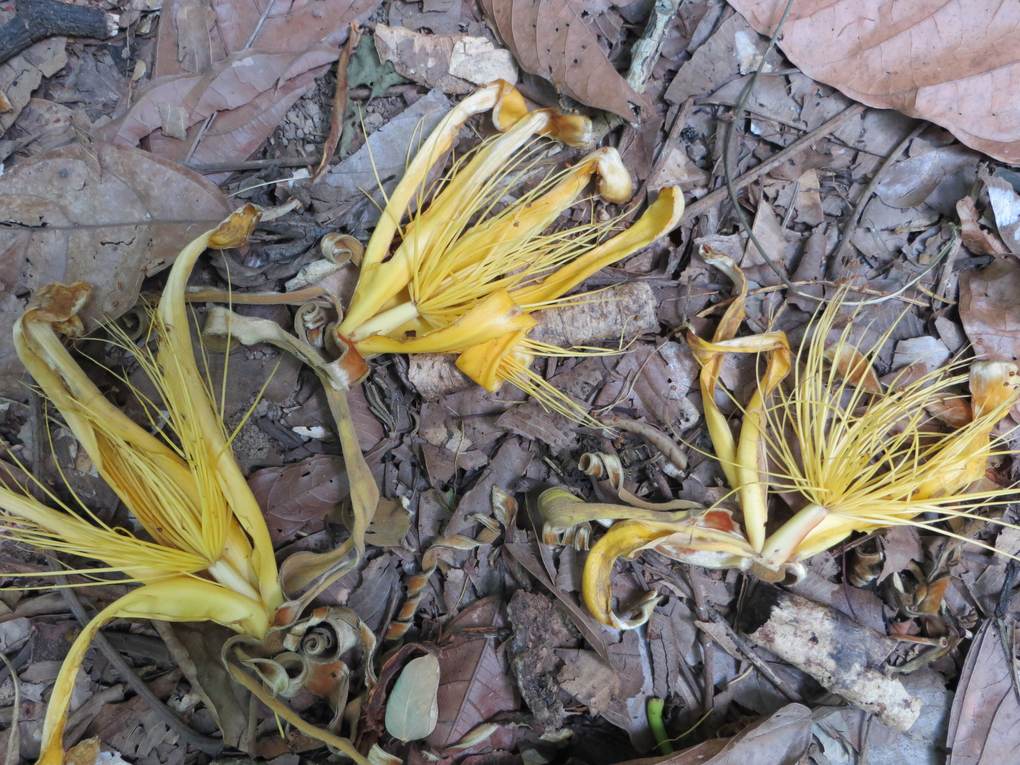
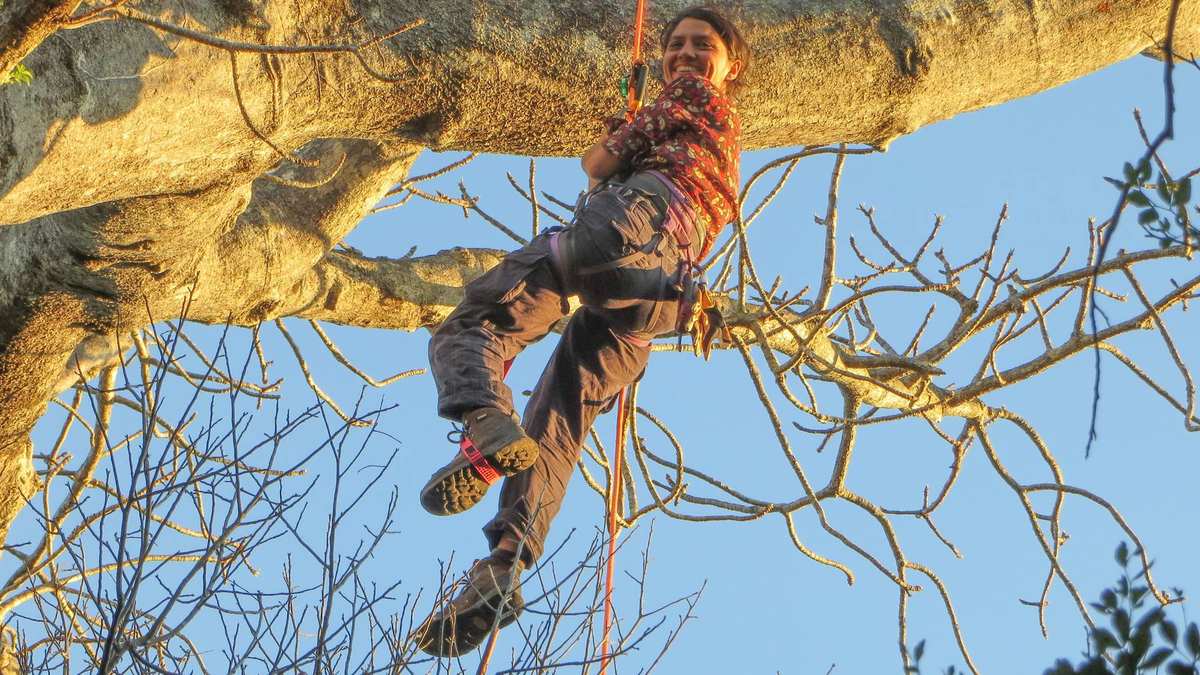
Each species blooms for about a month, according to the university. The flowers open only after dusk, sometimes more than 100 feet (30 meters) above the ground. Karimi learned to use a climbing rig on a tree in Baum’s backyard in Wisconsin.
According to the paper’s appendix, the team collected samples at Ambolohazo in the Sambirano valley on Nov. 17, 2014, under Malagasy permit No. 195/14, with vouchers at the Wisconsin State Herbarium.
Back in Madison, the leaves caused trouble because they were rich in polysaccharides, so grinding them produced a slimy mass that broke up the DNA. The university says it took a lot of trial and error before Karimi got long, intact strands.
206 genes split A. za
The group used targeted sequence capture on 70 samples, 58 of them from Madagascar. The method pulls hundreds of chosen genes out of each genome. In the end they kept 206 genes for the analysis.
Most results matched the known species, but A. za split into a northern group and a southern one. The northern trees included the three samples from the old variety bozy. They proved closer kin to A. perrieri and A. madagascariensis than to southern A. za.
Baum, who has studied baobabs for over 40 years, sets out the rule the team followed. “Any group that we choose to recognize in a taxonomy should be composed of organisms that are more closely related to each other, than to anything outside the group,” he says.
The trees also look a little different, since A. bozy leaflets sit right on the stem without stalks. Its petals look more solidly yellow, while southern A. za petals often carry an orange streak down the middle.
The authors point to the Sambirano itself to explain the split. The river rises in one of Madagascar’s highest massifs, and its long corridor probably kept the two groups apart. Isolation also shaped the Magnolia aromatica trees hidden in China’s karst sinkholes.
Cacao and slash-and-burn rice
The Sambirano basin “is suffering from significant forest clearance, particularly due to cacao plantations and slash-and-burn rice cultivation,” the paper says. The IUCN already lists three of the six previously recognized Malagasy baobabs as endangered or critically endangered.
Conservation funding in Madagascar often goes first to threatened species, so a formal name may bring more help, Karimi told the university. “You can’t conserve anything if you don’t know how to describe and name them,” she says.
A. za is now a smaller species, and its own status may need a new look, according to UW–Madison. Scientists made a similar move when they split the Iberian rabbit from the European rabbit.
Sambirano surveys still pending
Nobody has yet counted how many of these trees are left. The authors want surveys across the Sambirano basin. A few stands may also grow farther south, near Marofandelia and on the western slopes of Manongarivo, but more collecting is needed to confirm it.
They also note that limited sampling and badly fragmented habitat may be amplifying the pattern. Another common baobab, A. rubrostipa, may need splitting as well.
The full study was published in Taxon.
The National Science Foundation paid for the work through grant DEB-1354268, according to UW–Madison.
Photo: David Baum / University of Wisconsin–Madison