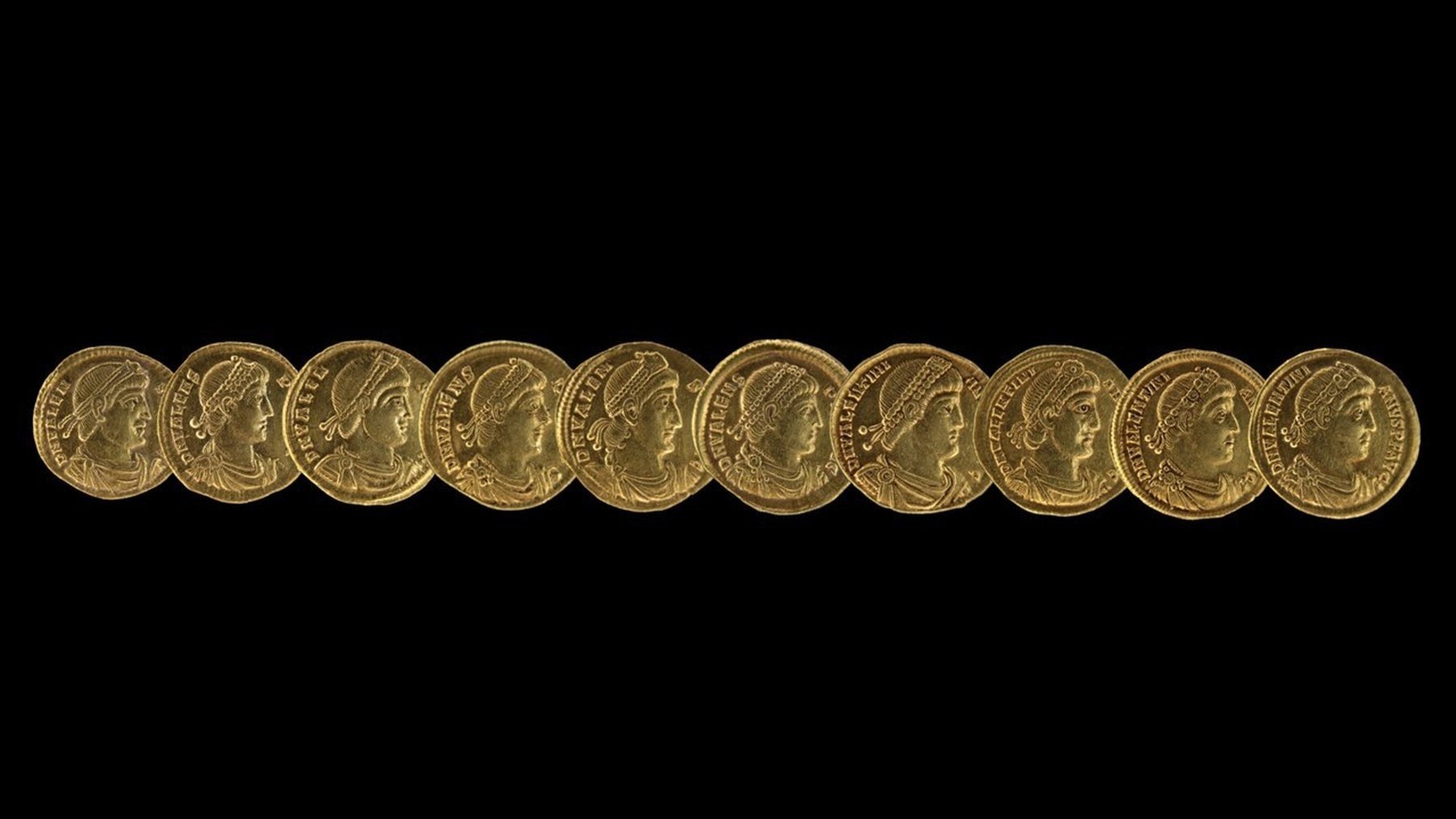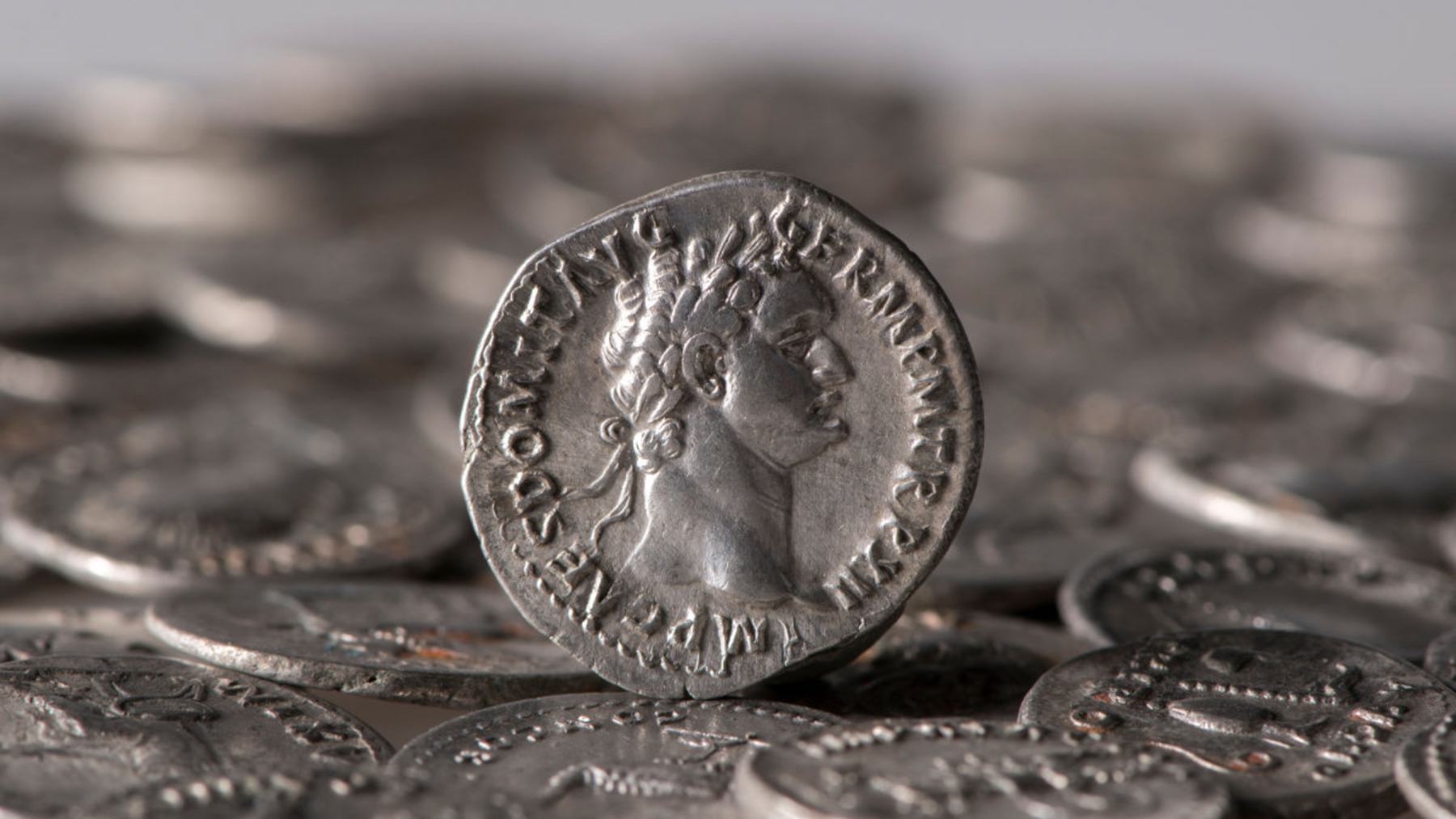
Workers digging a new kitchen foundation in Marblehead, Massachusetts, uncovered the gold and silver coins now known as the Marblehead Hoard. Numismatic Guaranty Company (NGC) graded 82 of them, dated from 1726 to 1814, and announced the find on July 20, 2023.
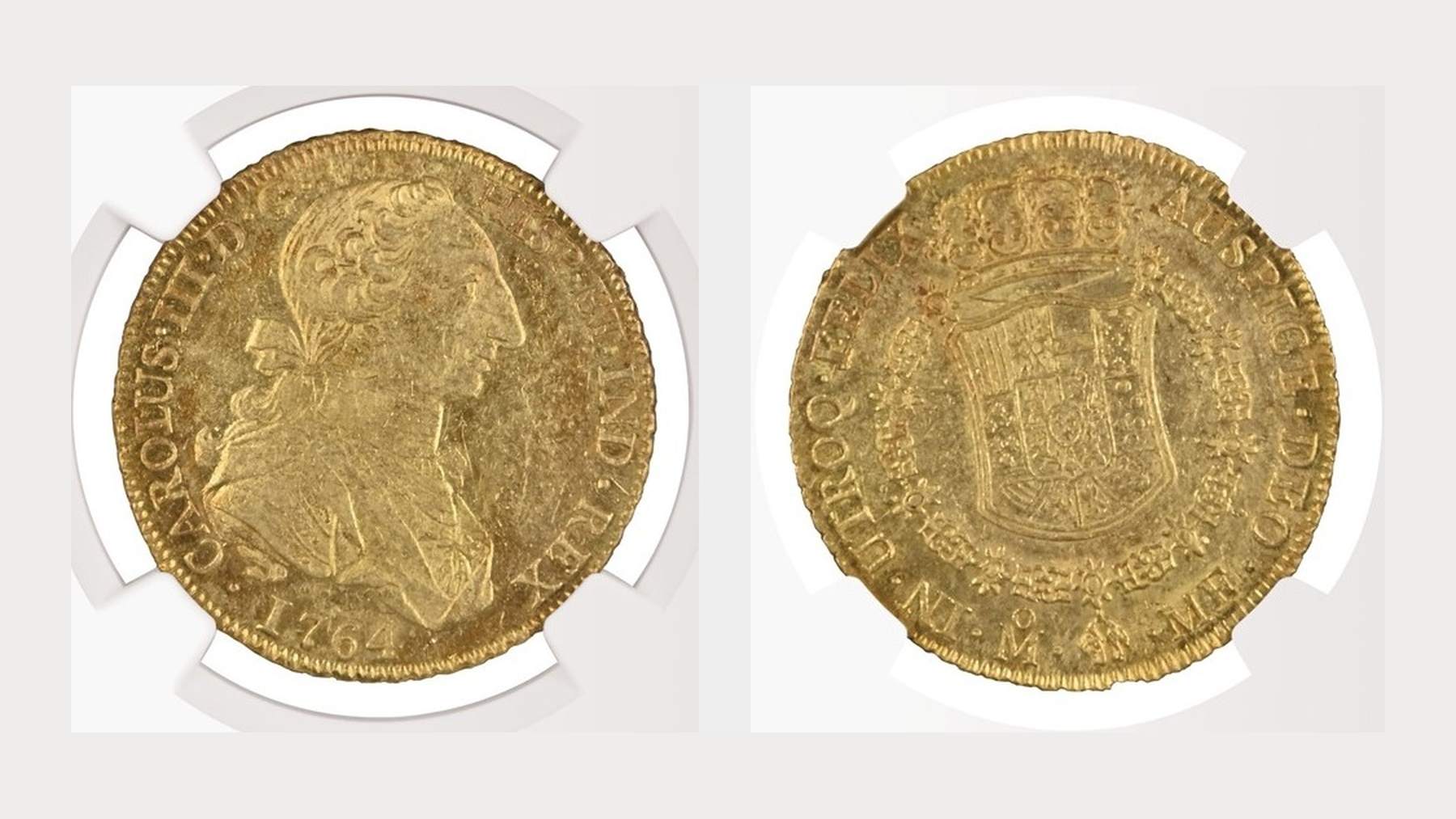
The top piece, a gold coin struck in Mexico City in 1764, carried an auction estimate of $7,000 to $10,000. Together, the coins show the money that passed through a New England port in the decades after independence.
Four feet under a kitchen
The house is a colonial-era home in Marblehead, a coastal town just north of Boston. According to the Stack’s Bowers Galleries catalog, workers were digging four feet (1.2 meters) into the earth to set the new foundation.
Most of the pieces came from Spanish Empire mints in Mexico, Colombia, Spain, Chile, Peru and Bolivia, NGC reported. The rest came from France, Brazil and the United States, for nine countries in all. Similar buried savings turn up now and then, from Civil War coins in a plowed Kentucky field to 934 Roman denarii near Cologne.
NGC sealed each coin in a plastic holder with a label reading “Marblehead, MA Hoard.” The company called the group “a snapshot of what circulated in the early United States.”
Mexico City gold at $10,000
The star lot was a Mexico 1764 8 escudos, a large gold coin with the portrait of Spain’s King Charles III. He ruled from 1759 to 1788, when his empire covered much of the Americas.
NGC graded the coin AU 55, short for About Uncirculated. On its scale, that means slight wear on less than half of the design, with full details. The grader also listed it as one of only three examples in its census, tied for the highest grade.
A second gold 8 escudos, struck in Colombia in 1789, shows Charles IV and carried an estimate of $2,000 to $2,500. Other gold pieces from Chile, Colombia and Mexico were listed at $1,600 to $2,400 each.
Stack’s Bowers set those figures before sessions held on August 15, 18 and 22, 2023. NGC published them as estimates, not as final prices.
Only one American silver dollar
Only one coin in the hoard was made in the United States, a 1798 Draped Bust silver dollar. It sold as lot 6055 for $3,840, according to the PCGS auction price record.
The catalog describes gray centers with russet, brown and soft green color at the edges. NGC gave the dollar an “Excavation Recovery” certification, the same designation it gave the hoard’s French écu.
One domestic dollar among 82 coins fits the history told by the United States Mint. In its account of circulating coins, British pounds, German thalers and Spanish milled dollars all circulated in colonial times. The Spanish dollar became a favorite because its silver content stayed consistent.
French crowns at 110 cents
The Coinage Act of 1792 created a national mint in Philadelphia. It also tied the new dollar to the Spanish milled dollar. The Mint delivered its first circulating coins, 11,178 copper cents, on March 1, 1793.
Silver and gold striking began in 1794 and 1795, yet the Mint struggled for years to supply enough coins. Congress filled the gap with foreign money.
An act of April 10, 1806, made foreign gold and silver coins legal tender at fixed rates. A Spanish milled dollar counted as 100 cents and a crown of France as 110 cents, if each met a minimum weight. The Treasury Secretary had to order assays of those coins at the Mint at least once a year.
The hoard’s French piece is an écu dated 1789, from late in the reign of Louis XVI. He ruled from 1774 until he was deposed in 1792. NGC points out that 1789 was the year the French Revolution began.
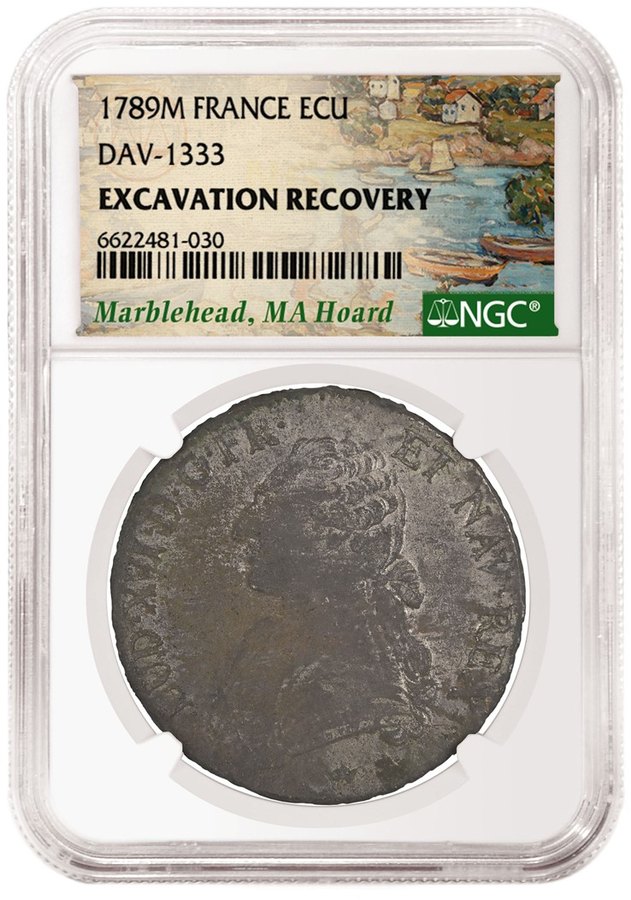
The catalog calls coins like these “the backbone of commerce, serving to fill the gaps that American-made coins could not yet fill in.” Foreign coins kept that legal status until the Coinage Act of 1857, the Mint says.
John Sparhawk’s West Indies sloops
The catalog names John Sparhawk, a merchant who owned the house from the 1790s through the 1830s, as the likely owner. He owned the sloop Dispatch, commanded by Elias Hulen Jr., which probably worked the West Indies trade.
By 1798 he also owned the Abigail, under Captain Elias Grant. The catalog cites a record of that vessel coming home in September 1798 “laden with molasses and brown sugar.” In the early 1800s, Sparhawk built a store next to the house, which he used and also leased out.
A 1915 list of local captains by Benjamin J. Lindsey, made for the Marblehead Historical Society, backs up part of the story. It shows Elias Grant, baptized January 5, 1755, in command of the Abigail in 1798, though it calls her a schooner.
Whoever buried the coins is unknown
Since the youngest coin is dated 1814, the group cannot have gone underground before that year. The catalog says the coins were “undoubtedly” buried soon after. That is the auction house’s reading, and the coin dates only fix the earliest possible burial.
Owning the house does not prove that Sparhawk hid the money. No account explains who buried the coins or why. Unlike the 141 Roman gold coins that archaeologists recovered in Luxembourg, these came out of a construction trench, not a supervised dig.
NGC’s announcement gives only estimates for the gold coins. What the 1764 Mexican coin finally fetched is not stated there, and neither source says what the homeowners received.
The official announcement was published by Numismatic Guaranty Company on July 20, 2023.
Image: NGC