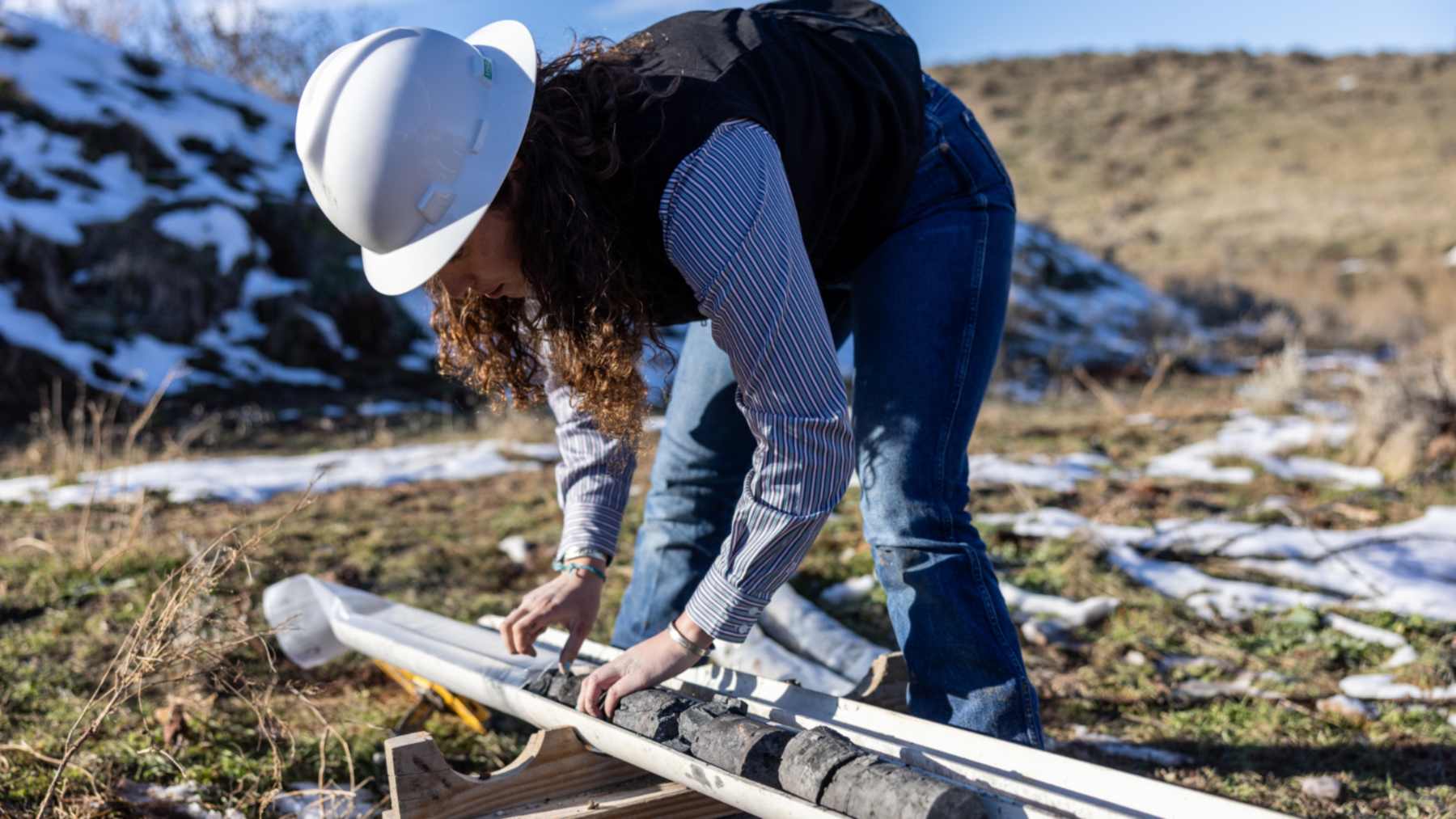
Randall Atkins went to Wyoming looking for coal. In 2011 his company bought the defunct Brook Mine near Sheridan for $2 million, WyoFile reported, citing Atkins. Years later the federal National Energy Technology Laboratory asked to test samples of the mine’s coal and the clays mixed in with it.
What the lab found turned a small coal property into a rare earth deposit that Ramaco Resources now describes as “the largest unconventional deposit of rare earth elements and critical minerals discovered to date in the United States.” Ramaco’s analysis suggests the mine holds “enough rare earths that we may be able to supply this country for well over the next 100 years,” WyoFile quoted Atkins as saying. The first production is now expected in 2031, and investors have sued the company over what it said about progress at the site.
Metals in the clay, not the coal
NETL has worked with Ramaco’s carbon unit since 2018 under a cooperative research agreement, the laboratory says. The metals sit mostly in soft claystones and carbonaceous shales next to the coal seams, according to a July report by the engineering firm Hatch, so they can be dug with ordinary surface mining. The report lists gallium, germanium, scandium and rare earth elements among the targets.
One account by the company put the deposit’s worth at about $37 billion, WyoFile reported. In its Aug. 4 second-quarter results, Ramaco said internal modeling based on Hatch’s costs shows a potential net present value of $8 billion and average adjusted EBITDA of $1.3 billion a year. Those are the company’s own projections. The same release calls Brook Mine “an exploration stage property,” and Ramaco’s critical minerals page warns that “inferred mineral resources are not mineral reserves and do not have demonstrated economic viability.”
Why the metals matter
Neodymium, praseodymium, dysprosium and terbium go into the permanent magnets in many electric vehicle motors and some wind turbines, and dysprosium and terbium help those magnets keep working in the heat. Demand for the four “has doubled since 2015 and is set to expand further by a third by 2030 under today’s policy settings,” according to the International Energy Agency.
China dominates every step. In 2024 it produced 60% of the world’s mined magnet rare earths, 91% of the refined output and 94% of the permanent magnets, the agency says. A mine in Wyoming would cover only the first of those steps, which is part of why new rare earth finds draw so much attention.
A process that had to be redone
Getting the metals out has been harder than planned. A 2025 design by Fluor relied on a caustic leach followed by two acid leaches. In later tests that process showed “high reagent and water consumption and rheological challenges,” Hatch writes, and outside laboratories had “difficulties replicating conceptual study results.”
Ramaco switched to carbochlorination, which uses chlorine and carbon at high temperature and is used commercially in the titanium industry, according to the report. The plant would turn out gallium metal, germanium and scandium oxides and a mixed rare earth carbonate, with high-purity alumina and silica as byproducts. Ramaco’s own bench-scale testing of the method was set to start in September 2026, once its laboratory was finished.
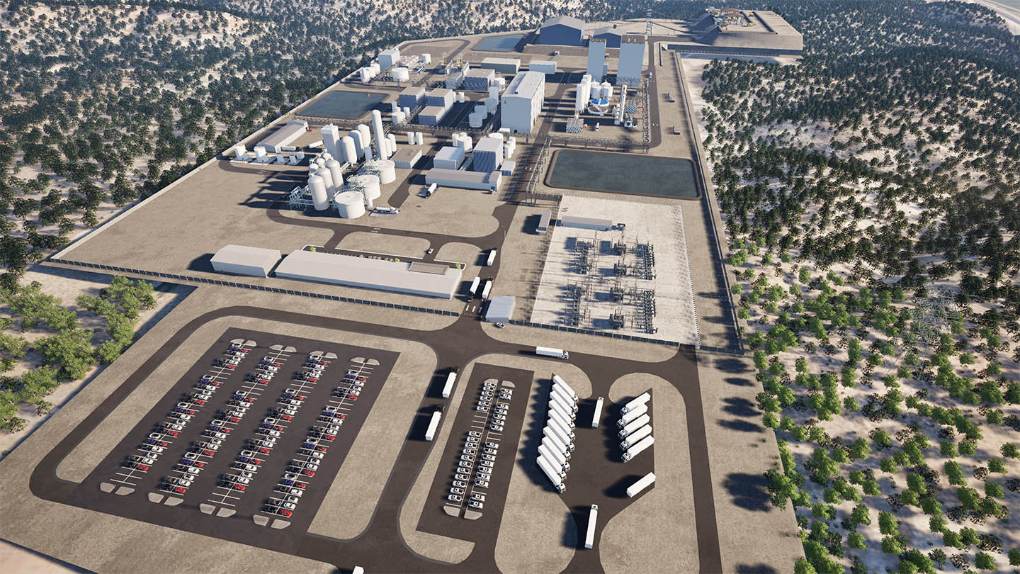
Ramaco’s results release says Hatch estimated construction at $3.2 billion, plus about $800 million in contingency, roughly $4 billion in all. In the report, that total is an order-of-magnitude estimate for a plant handling 2.6 million metric tons of feed a year, double the base design, which comes to about $2.6 billion with contingency included. Hatch’s schedule puts the start of production in 2031, two decades after the purchase.
“The Hatch report validated our decision to pursue the new carbochlorination refining process,” Atkins said in the results release. “We intend to pursue various testing and engineering optimization to improve on project economics, timing and capital costs.”
A lawsuit over progress at the site
In January an investor, Lynn Henning, filed a class action in federal court in New York against Ramaco, Atkins and Chief Financial Officer Jeremy Sussman, WyoFile reported. The complaint cites the short seller Wolfpack Research, which said drone footage showed no progress at the mine after a July 2025 grand opening attended by Energy Secretary Chris Wright and Wyoming Gov. Mark Gordon.
“We believe we have meritorious defenses to all claims in this matter and provide no additional comment,” a Ramaco spokesperson told WyoFile.
On a Feb. 26 earnings call, Chris Blanchard, Ramaco’s executive vice president of mine planning and development, said the pit had been expanded to dig thermal coal for a trial with a regional customer. “During this mining,” he said, “we also segregated several hundred additional tons of rare-earth element and critical-mineral ore from two different enriched strata zones for continued optimization testing.”
Ali Nejadmalayeri, a finance professor at the University of Wyoming, called it a “fairly standard securities class action” after reviewing the complaint. “From a finance perspective, it’s not uncommon to see litigation follow situations where there is a sharp price adjustment tied to new information,” he told WyoFile.
Coal is still part of the plan
The mine is still a coal mine. Hatch’s design also uses the feedstock as an energy source for the carbochlorination reactors, and the state of Wyoming gave Ramaco a $6 million grant in May 2025 to develop a facility that would produce rare earth oxides from coal resources.
The pilot plant’s building in Wyoming was expected to be finished this fall, with its equipment built by Zeton in Canada and full pilot operations planned for 2027, according to the results release. Ramaco expects an interim study of revised economics by the end of 2026.
“Even at currently permitted levels, on roughly one-third of the mine’s total acreage, we should be able to operate the mine for generations,” Atkins said.
Photo: Ramaco Resources