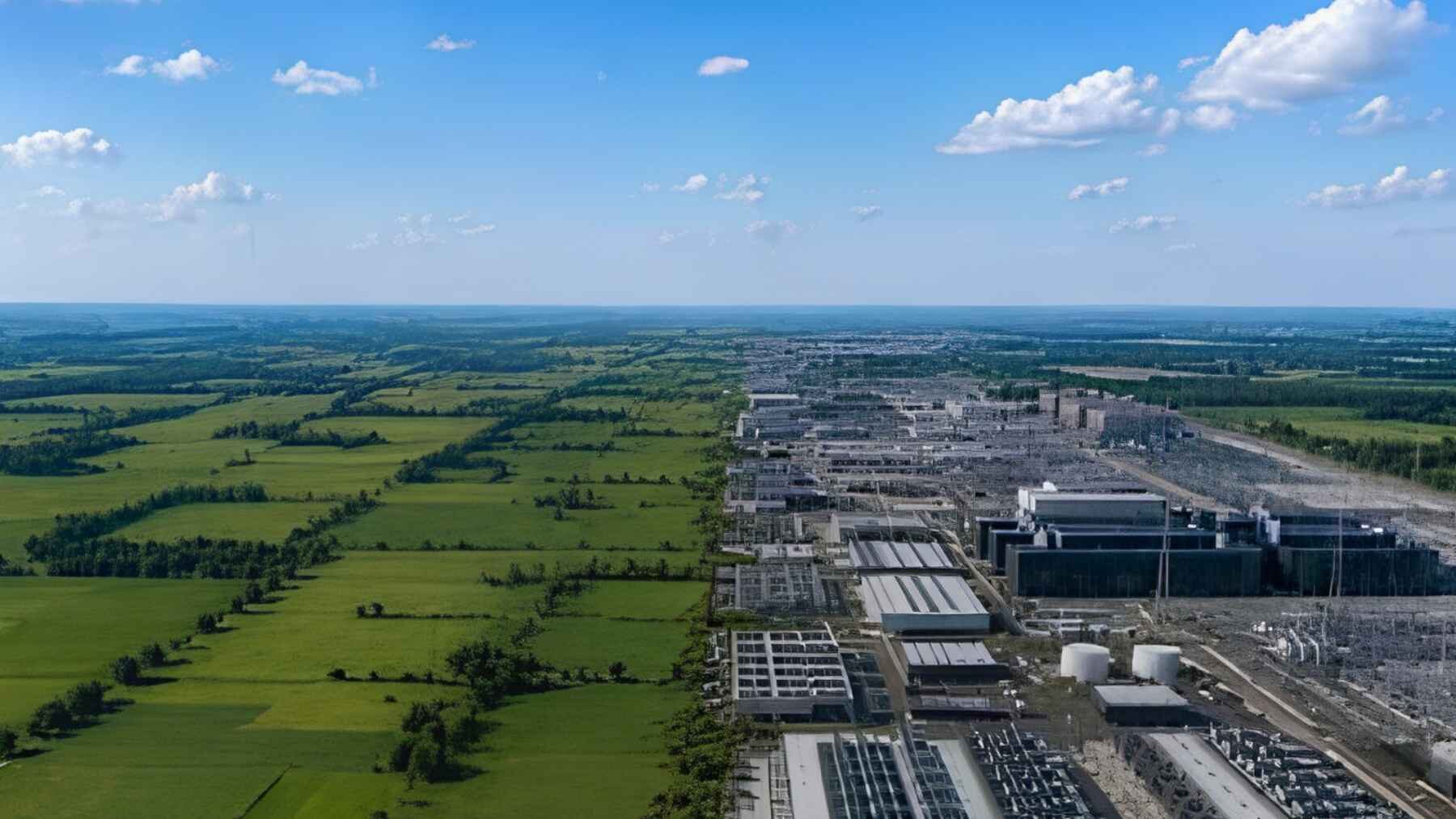
Taylor, Texas, is facing a question that sounds simple until you follow the paperwork. What happens when land once tied to a future public park is sold for a data center built for the age of artificial intelligence?
The land was originally sold by the Bland family for $10 in 1999, with the City of Taylor’s own project page saying the deed notes described it as land “to be held in trust for future use as parkland” by Williamson County. Now, after several transfers, the Taylor Economic Development Corporation has sold the property to BPP Projects LLC for $10 million, clearing the way for a proposed 135,000-ft.² Blueprint Projects Data Center.
A $10 deed becomes a $10 million sale
The official property history shows how the land moved over time. It went from the Bland family to the Texas Parks and Recreation Foundation in 1999, then to the Williamson County Park Foundation in 2003, then to the City of Taylor later that same year.
The city says the 1999 parkland language appeared in the notes about the grantee, but says it was “not a deed restriction.” That detail is now central to the dispute, because residents argue the original intent was clear even if the city’s legal reading is different.
By 2009, according to the city’s timeline, the property had been sold to the Taylor Economic Development Corporation in exchange for 39 acres elsewhere and $15,000. On April 11, 2025, the EDC sold it to BPP Projects LLC for $10 million.
Why neighbors are angry
For nearby residents, this is not just a land-use debate. It is about a promised green space, children without a park, and the feeling that a community asset quietly became an industrial project.
The opposition has focused on noise, light pollution, air concerns, water questions, property values, and the idea of placing a large industrial building near homes. Carrie D’Anna of the Halt Taylor Data Center Coalition told Fox 7 Austin, “that industry doesn’t belong on that land.”
A lawsuit filed by five nearby residents argued the data center was being built on land that was supposed to become a park. A state district judge dismissed the case in October 2025 and denied a temporary injunction, while opponents said they were pursuing an appeal.
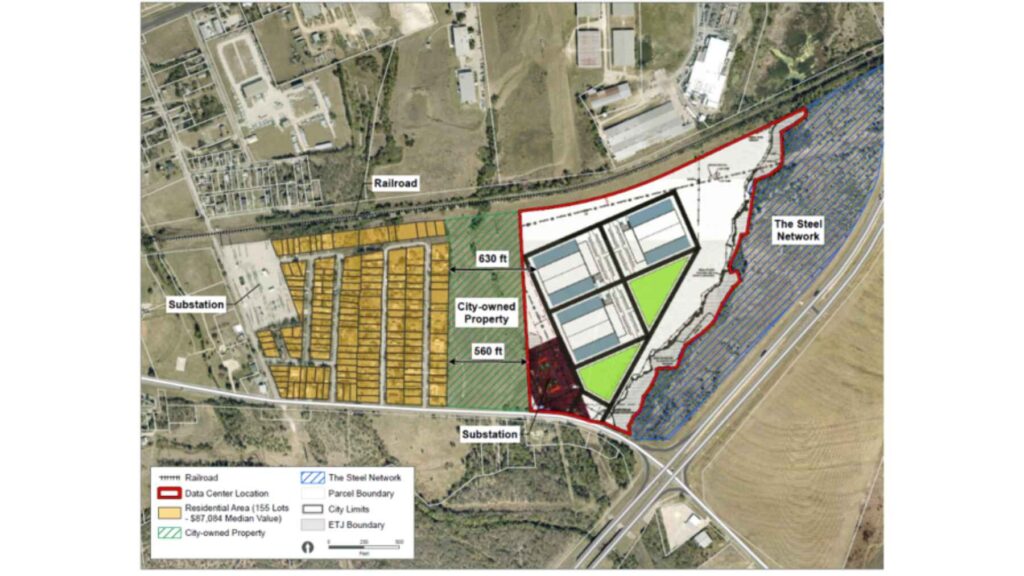
A planning map outlines the proposed Blueprint Projects data center in Taylor, Texas, highlighting its location near homes, utility infrastructure, and city-owned property.
What Taylor says it could gain
City officials are pointing to money, and a lot of it. Taylor says the project could bring as much as $30 million in additional city revenue over the next 10 years, with funds that could be used for property tax relief, streets, sidewalks, parks, and other services.
The city also says the school district projects as much as $20 million that could go toward better facilities, higher teacher wages, and education improvements. Basically, that is the argument officials are making to residents who are worried about what will rise behind their neighborhoods.
The proposed facility would include three buildings, an electricity substation, backup generators, and a closed-loop cooling system. It is planned in three phases, with a total investment listed at $1 billion.
The environmental questions
The city says it hired HDR to assess environmental impact after resident feedback. Its summary says the project would be connected to the electric grid, would use diesel backup generators during outages, and would rely on closed-loop cooling that is not expected to create a large demand on the city’s water system.
That answer may ease some concerns, but it does not erase the bigger issue. Data centers are power-hungry buildings, and for families already watching the electric bill, that part feels very real.
A Department of Energy-backed report from Lawrence Berkeley National Laboratory found that U.S. data centers consumed about 4.4% of total U.S. electricity in 2023. By 2028, they could consume between 6.7% and 12%, depending on how fast AI hardware, cooling systems, and computing demand grow.
AI infrastructure meets local land
The Taylor fight is part of a larger national pattern. Towns are being asked to host the physical side of the digital world, including servers, substations, backup power, cooling equipment, roads, and security lighting.
For the most part, these projects are sold as economic development. Residents, however, often experience them in a more everyday way, through traffic during construction, background noise, bright lights, and the worry that a quiet edge of town will stop feeling quiet.
That is why Taylor’s case has traveled far beyond Williamson County. It combines two emotional issues at once: the rapid buildout of AI infrastructure and the loss of land many residents believed had been set aside for public use.
A park promise still hangs over the project
There is a difference between what a project can legally do and what a community believes should have happened. That gap is where this story lives.
A park is not complicated. It is shade, grass, walking space, and a place where children can run around without anyone needing to buy a ticket. A data center, on the other hand, is the machinery behind modern life, useful to millions but often burdensome to the people who live closest to it.
Taylor officials say the project meets the city’s land-use framework and could bring major public revenue. Residents fighting it say the original promise should matter more than the final sale price.
The official statement was published on the City of Taylor.