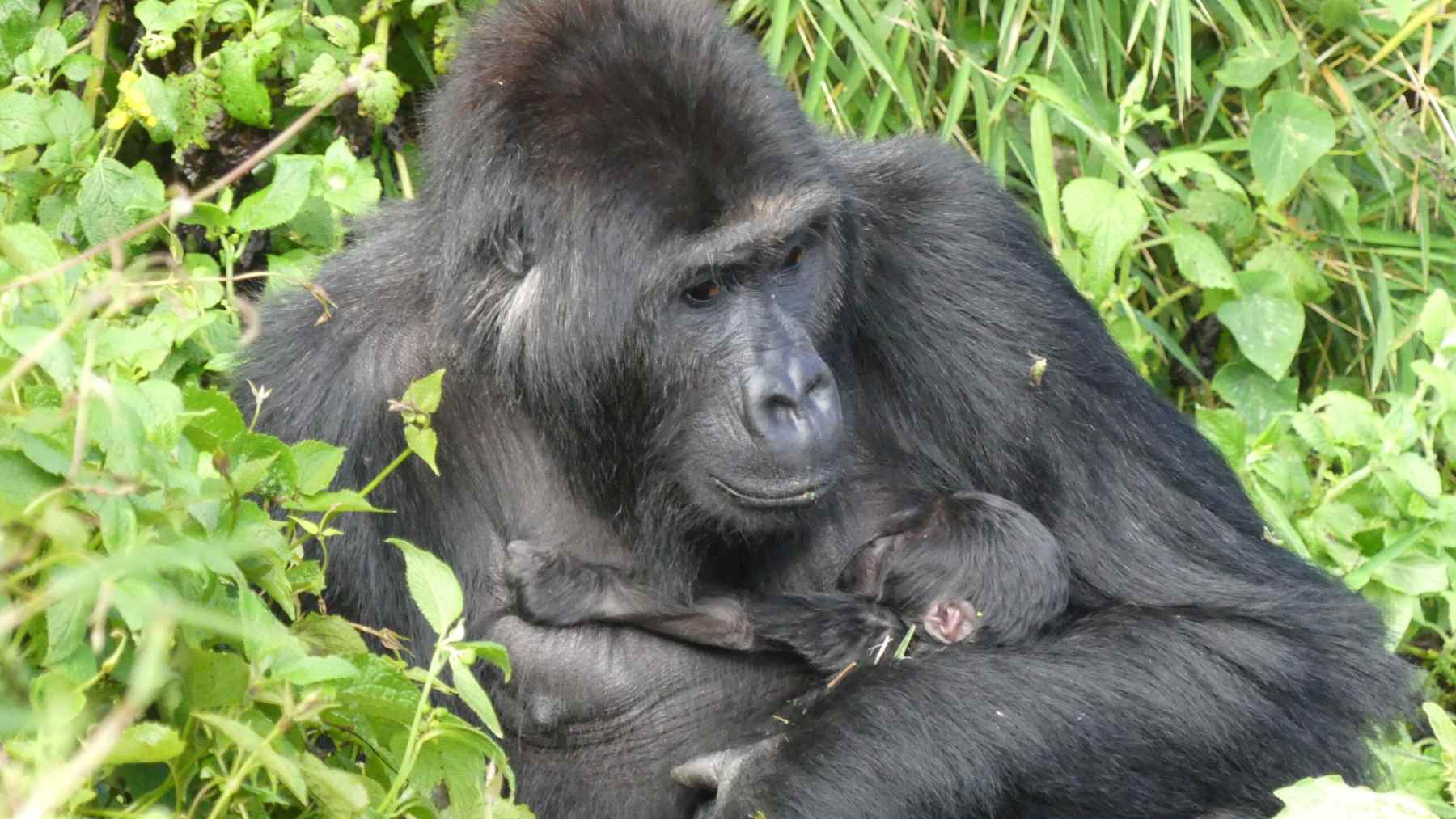
Devotte Kavira Kihira and Kambale Muviri were the caregivers on duty in 2016 when Lulingu arrived at GRACE, the only sanctuary in the world for rescued Grauer’s gorillas, in eastern Congo. She was about 18 months old and had been taken from her family for the illegal wildlife trade. They fed her and comforted her around the clock. This year Lulingu had a baby of her own, in the wild.
“I was so happy to learn that Lulingu had given birth,” Devotte said in GRACE’s account of the birth. “I cared for her during quarantine and helped her integrate into her GRACE family. Now, I feel like a grandmother to this baby.”
Lulingu gave birth on May 21 on Mount Tshiaberimu, in Virunga National Park, the sanctuary and its partners said in a joint press release on Sept. 10. The father is Mwasa, the wild silverback whose group she joined, which the partners see as a sign she has fit into the wild population. She is one of the first eastern lowland gorillas, as Grauer’s gorillas are also known, ever returned to the wild.
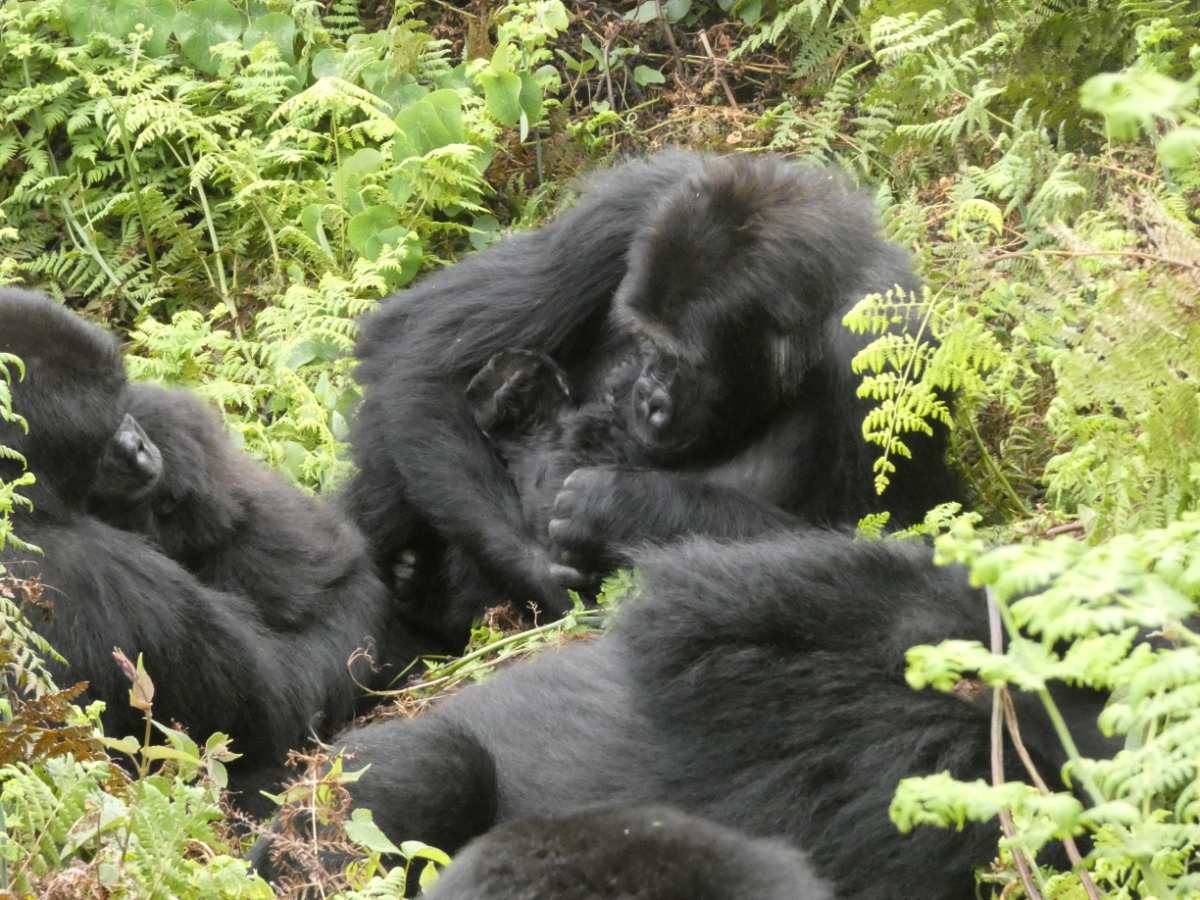
Eight gorillas on one mountain
When the project began, Mount Tshiaberimu had just eight Grauer’s gorillas, GRACE said when the females were released. A model of different scenarios found a high probability that the population would die out within two generations unless new females were added.
The 2023 study behind that plan, published in The Journal of Wildlife Management, counted six gorillas on the mountain, only two of them adult females. It ran each scenario over 50 years and recommended moving at least three females there to rescue the population in the short term. It also left inbreeding, habitat quality, disease and human pressure as questions for later stages.
Fewer than 6,800 Grauer’s gorillas remain in the wild, according to GRACE, which blames habitat destruction, wildlife trafficking and conflict for their decline.
A surrogate mother named Pinga
Congo’s nature authority, ICCN, and the veterinary group Gorilla Doctors rescued Lulingu. She was the youngest orphan GRACE had ever taken in. Months after she arrived, an older female named Pinga took her into the sanctuary’s gorilla family, where she learned how to live in a group.
“She arrived here when she was very small,” Kambale said in GRACE’s account. “I cared for her in quarantine and helped teach her how to eat, and now she has become a mother.”
That family included Isangi, Mapendo and Ndjingala, the three females who would go back to the wild with her. All four were rescued from the trade as infants and arrived at GRACE between 2010 and 2016.
The fence comes down
In October 2024 the four were flown by helicopter to a rewilding facility on the mountain. In late November, Mwasa began visiting the fence line. After several days of close contact it was clear the gorillas wanted to be together, GRACE says, and part of the fence was taken down. On Dec. 3, 2024, the four walked out and followed him into the forest.
Mwasa’s group already had an adult female, Mwengesyali, and a juvenile, Kavango. Within months the newcomers were eating more plant species than any other gorillas on the mountain, bamboo leaves and shoots among them, GRACE reported in 2025.
The release capped a rewilding effort of more than five years led by GRACE, Virunga National Park and local communities, with support from Gorilla Doctors and Re:wild. It followed the International Union for Conservation of Nature’s guidelines for reintroducing great apes, the partners say.
Pregnancy tests on leaves
The monitoring team had seen the females mating with Mwasa. To check for pregnancies, it collects urine from leaves and runs it through ordinary human pregnancy tests, looking for the hormones that go with pregnancy, according to the release.
“None of the four females have required veterinary treatment for illness or injury since being rewilded,” said Cedric Kibengo, a field veterinarian with Gorilla Doctors who has monitored the mountain’s gorillas since 2024. “With the arrival of Lulingu’s infant, we now have one more ‘patient’ under our care, and both mother and infant are healthy and doing well.”
“Lulingu is doing a great job taking care of the baby and is central to the family group,” said Benoit Ishaba, head of gorilla monitoring on Mount Tshiaberimu and a ranger at Virunga. “We have seen her nursing, cradling, and playing with the baby. The other young gorilla in her group has shown interest in the baby, and Lulingu has been very patient with him.”
A first-time mother
None of the four had raised a baby before, though all of them spent time with young gorillas at GRACE, the partners say. Nobody has measured how many eastern lowland gorilla infants die in the wild. In mountain gorillas, a closely related subspecies, the infant mortality rate is about 35%.
“They’ve adjusted to living in the wild extremely well so far, but raising an infant in the wild can be a challenge even for experienced mothers,” said Katie Fawcett, executive and science director of GRACE Gorillas.
Lulingu gave birth about 17 and a half months after she walked out of the facility, and she is around 11 years old by the sanctuary’s dates. Gorilla pregnancies last eight to nine months, and at least one of the other three females may also be pregnant, the release says.
“When I heard about the birth of Lulingu’s baby, it filled my heart with immense joy,” said Dalmas Kakule Syangeha, GRACE’s animal care manager, who has known Lulingu since she was a baby. “May this birth symbolize a better future for the gorillas of Mt. Tshiaberimu.”
Photo: Re:wild