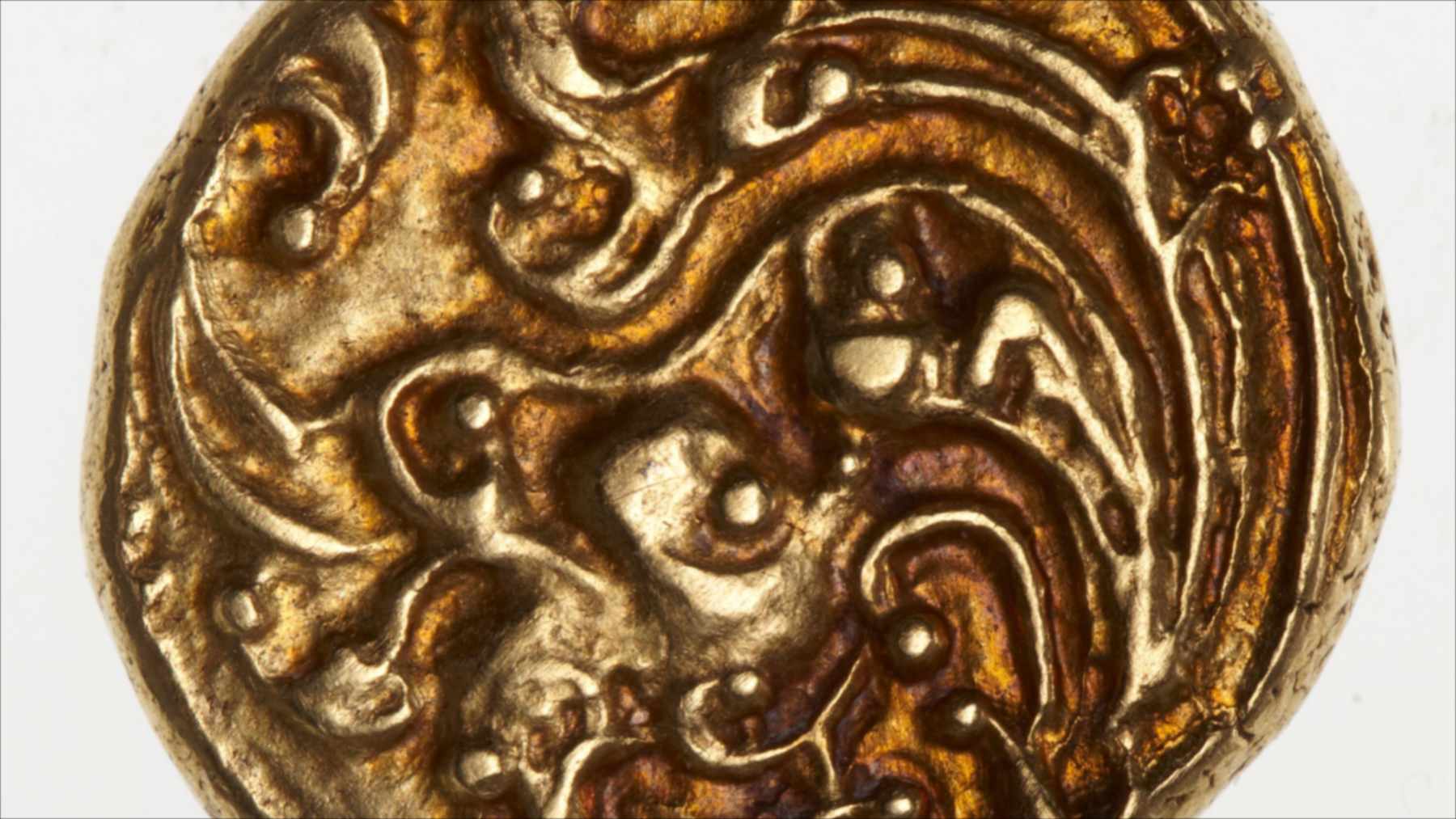
A routine construction job in southern India has uncovered a small collection of gold coins that could be centuries old. Workers found 14 coins inside an earthen pot near the BCM student hostel in Inchal, a village in Karnataka’s Belagavi district, according to The New Indian Express.
The coins weigh about 54.8 grams altogether, and their elephant designs have prompted suggestions of a connection to historic South Indian kingdoms. But the most interesting question goes beyond the price of gold, because their exact age, origin, and reason for being buried remain unresolved.
An ordinary workday takes an unexpected turn
Local broadcaster Public TV reported that the discovery happened on August 29, 2026, during work near the hostel. Its account describes a village construction project around grazing land, where workers encountered old pottery while digging.
The pot turned out to contain gold coins, transforming a familiar task into something requiring the attention of local officials. This was an accidental discovery during everyday construction, with the workers drawing officials’ attention to objects that might deserve closer investigation.
Public TV reported that the workers initially kept the finds before deciding what to do. Remembering coverage of another treasure discovery in nearby Gadag, they chose to hand the coins over through village officials, a decision that brought the collection into public custody.
How much are the gold coins worth?
Early reports give different estimates of the collection’s monetary value. The New Indian Express put the figure at about 827,000 rupees, while The Times of India reported an estimate of around 1 million rupees from local administrators.
Those figures should be treated as preliminary valuations, rather than a settled appraisal of the coins as historical objects. Neither report presents a detailed assessment explaining how rarity, condition, or a confirmed identification would affect their value.
For readers imagining a pot overflowing with riches, the scale is worth keeping in mind. Fourteen small coins can attract a striking price estimate, yet their importance to researchers will depend on what they reveal about the people who made, used, and deposited them.
The elephant offers a clue to their origin
The elephant motif has drawn attention because reports associate it with the Ganga dynasty of Talakad. The Times of India also reported suggestions of a Vijayanagara connection, while making clear that the historical attribution had not been confirmed.
The New Indian Express gave a broad preliminary date range between the 10th and 15th centuries. That spans hundreds of years, leaving considerable room for the identification to change once specialists examine the collection.
Could the design settle the mystery? A separate gold elephant coin in Museums Victoria’s collection carries an uncertain date of 1080 to 1400 and a tentative attribution to the Western Ganga or Kongu Chera. That record illustrates the identification challenge, but does not establish the origin of the Inchal coins.
Why the surrounding soil matters
There is another part of this discovery that a gold valuation cannot capture. Archaeologists learn from the relationship between objects and their surroundings, including where items were found and what lay beside them, as the Society for American Archaeology explains.
“Context is what allows archaeologists to understand the relationships between artifacts and between archaeological sites,” the society states in its educational guidance. Applied to Inchal, that principle suggests the pot and its recorded location could help researchers interpret the coins as a group.
The National Park Service likewise explains that archaeological context connects an object with its place, period, and cultural surroundings. A coin’s manufacture and its eventual burial are different events, so identifying the coins alone would not necessarily explain when or why someone placed them underground.
What happens to the discovery now?
The coins were handed to Saundatti Tahsildar Mallikarjun Heggannavar, a local revenue official, and subsequently deposited in the treasury, according to The New Indian Express. The Times of India reported that officials also inspected the discovery site and that villagers called for the workers to receive a reward.
The next meaningful development would be a documented expert assessment establishing what the collection actually contains. Until then, the available evidence leaves open who owned the coins, why they were stored together, and whether their burial can be linked to any particular historical event.
For now, Inchal’s find offers a glimpse of how an ordinary patch of working land can preserve traces of earlier lives.