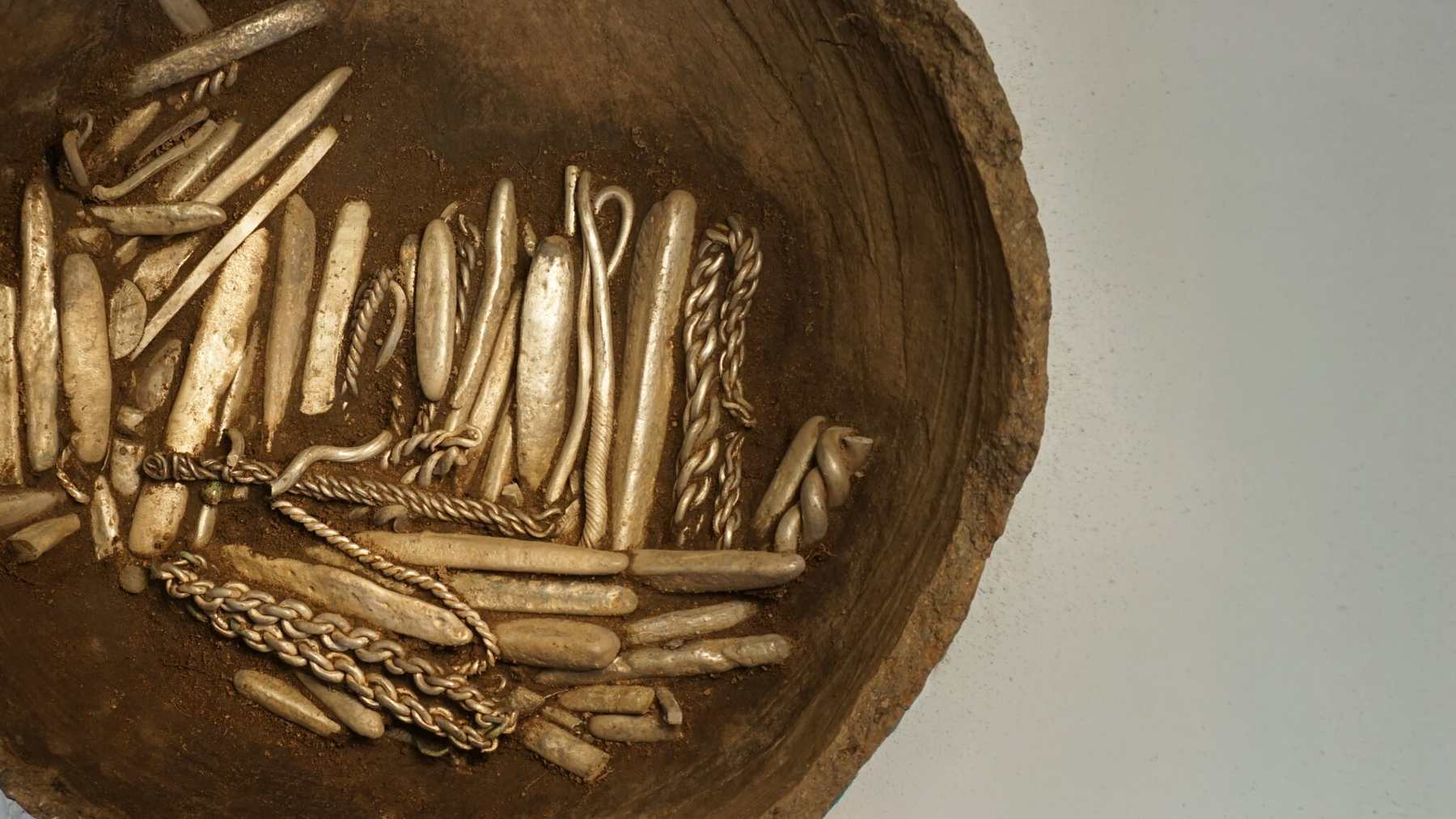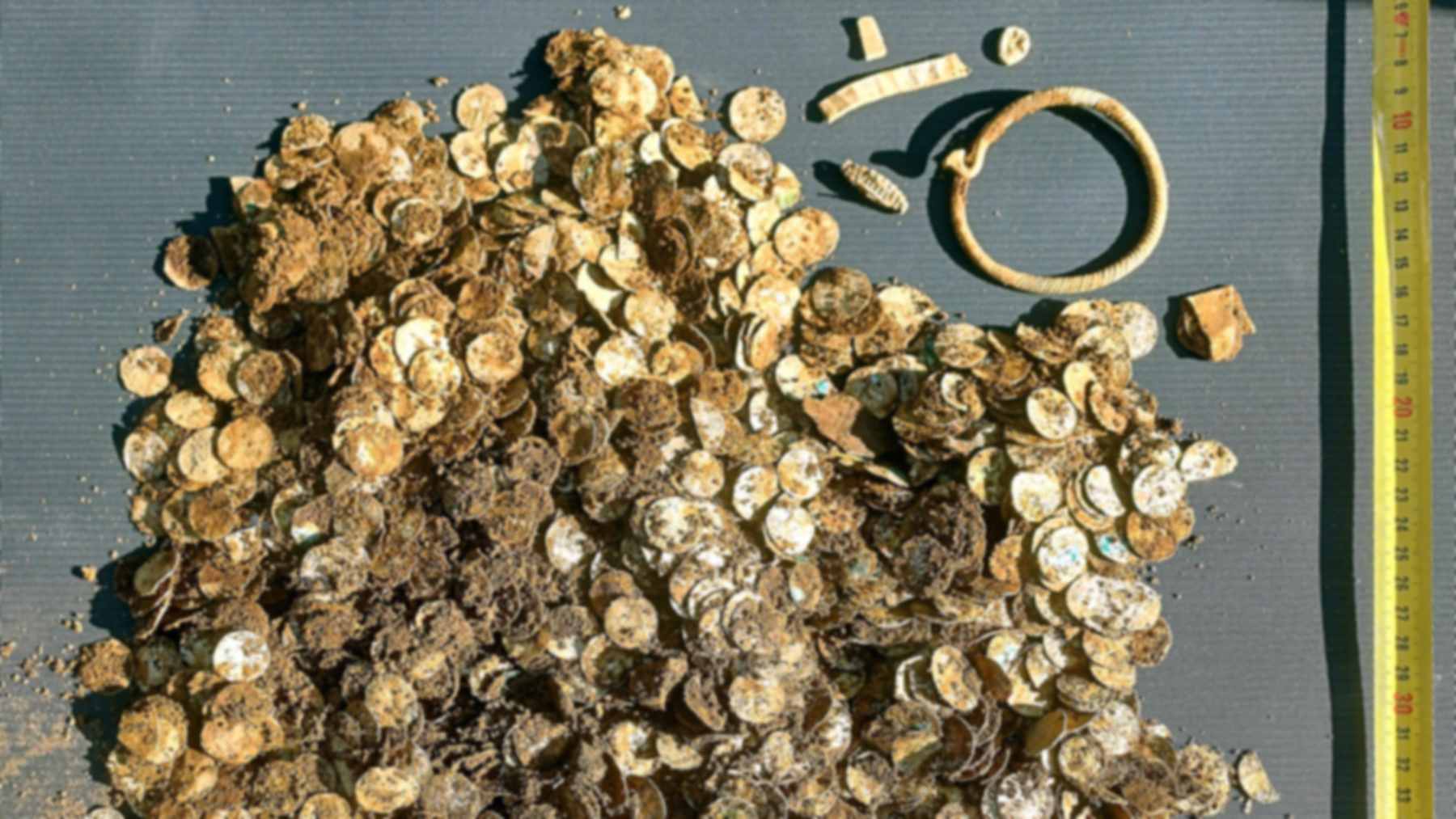
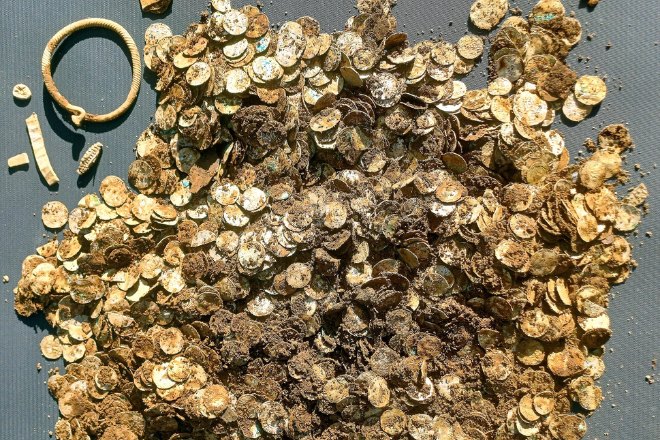
A metal detectorist found Finland’s largest known Viking Age silver hoard on Sept. 3, 2026, near the village center of Sysmä in the Päijät-Häme region. According to Lahti Museums, the coins alone weigh about 9.9 pounds (4.5 kilograms), and they number in the thousands.
Hobbyist Kalle Lappinen made the find, which consists of two separate deposits. Experts inspected the site the next day and lifted the silver under Esko Tikkala, an archaeologist at the regional museum service.
Two birch-bark caches
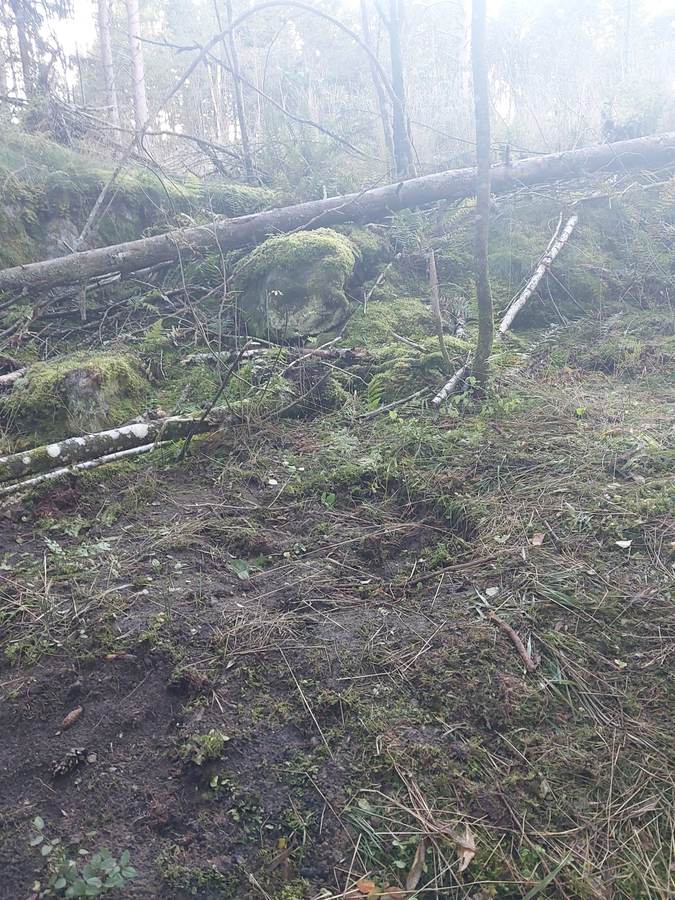
Whoever hid this wealth packed it into two birch-bark containers. They sat between stones about 18 inches (45 centimeters) underground. Roughly 39 feet (12 meters) of ground separated the two containers.
Besides the coins, the deposits held a fragment of hacksilver, a silver bracelet, a silver fitting and a silver bead. Museum staff have not cleaned, sorted or counted the coins yet. The 4.5-kilogram figure is preliminary.
Splitting a fortune between two spots makes little obvious sense. The museum’s Sept. 17 update names that puzzle and leaves it unsolved.
Nousiainen’s 1895 record falls
Finland’s previous record holder came from Nousiainen, where a hoard turned up in 1895. It contains about 1,700 coins plus other objects, about 4.9 pounds (2.2 kilograms) in all.
Sysmä’s coins therefore weigh roughly twice as much as the entire Nousiainen find. The exact margin still depends on the final weight and count, which will take more research.
Scandinavia has produced even larger finds, including Denmark’s 18.5-kilogram silver hoard from Rebild and Norway’s 5,550-coin hoard, so the Finnish record is a national one.
Dirhams from Turkey and Iran
Tikkala has worked in archaeology for nearly 30 years. He called this “one of the biggest finds of my career,” in remarks the museum published in Finnish. Early identifications date some of the coins to about the years 1000 to 1050.
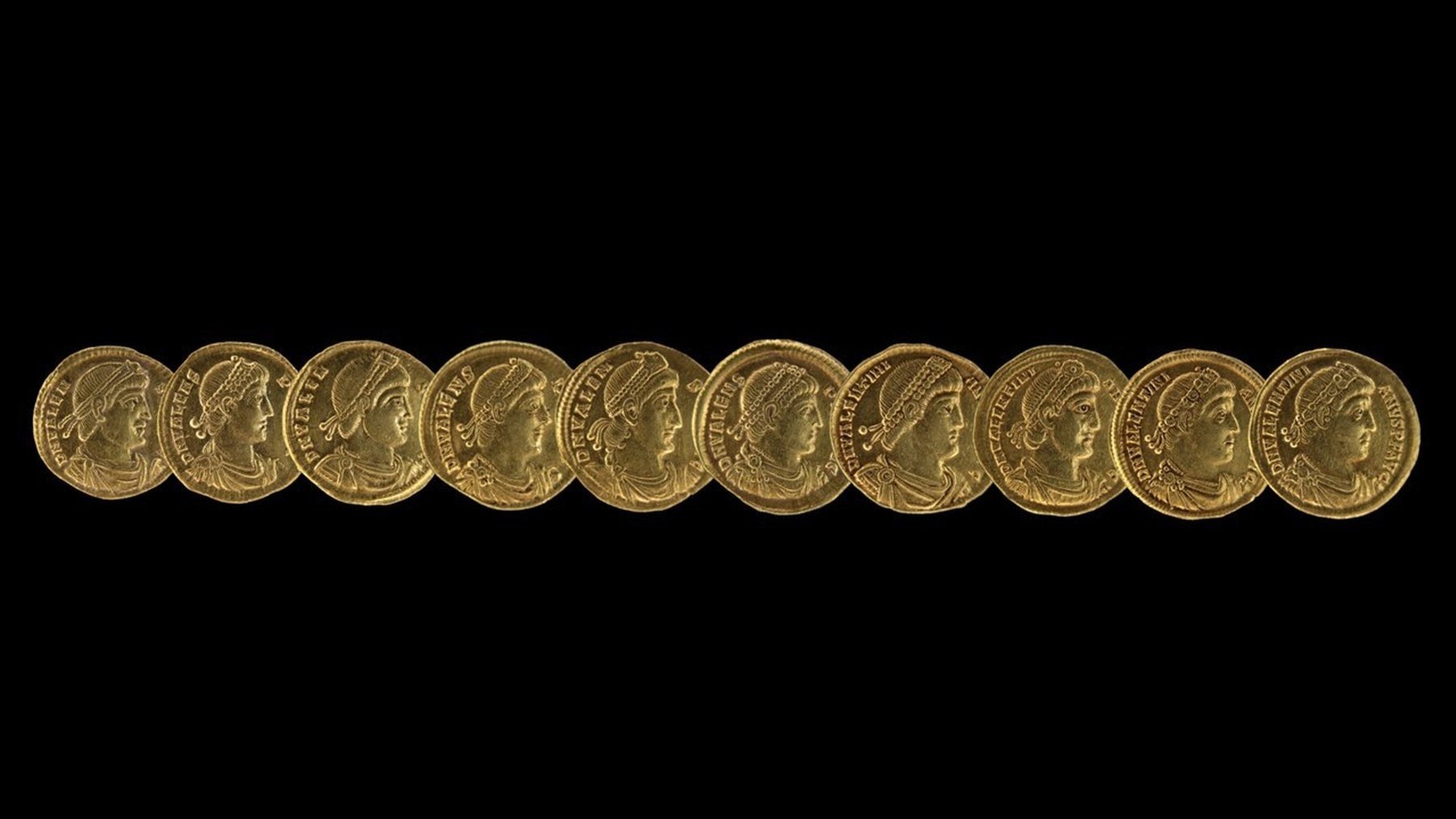
The silver came from far apart. Tikkala listed coins from Sweden and from what are now Britain and Germany. The most distant pieces are dirhams, silver coins of the Islamic world, from areas of present-day Turkey and Iran.
“It gives more information about how important a trading hub Sysmä was,” he said in the museum’s update. He added that the coins should show how far the commercial networks of the period reached.
Those networks do not tell us who carried each coin north. A dirham could change hands many times before reaching Finland, and the find on its own cannot trace any single journey.
Paying by weight in hacksilver
Hacksilver, the term for cut-up pieces of silver, explains part of the mix. The British Museum notes that Viking Age silver was often valued only by weight. Coins from different places therefore circulated with small bars and chopped jewelry.
On that system, the metal counted for more than the ruler stamped on a coin. A fragment could settle a debt as well as a whole piece of the same weight, and hoards often mix all of these forms.
Only a full inventory will show how far Sysmä fits that pattern, since just one hacksilver fragment has been reported so far. Earlier finds, such as a Norwegian coin remade as jewelry, show how readily silver moved between money and ornament.
Why finders cannot keep it
Finnish law treats a discovery like this one very differently from a lucky windfall. Under the Antiquities Act, objects over 100 years old found on land belong to the state. Finders must report them to the Finnish Heritage Agency.
The agency may redeem a find or pass that right to another museum. For precious metal, the price is at least the metal’s value plus 25 percent. Its website warns that redemptions currently take about three years, and coin finds face their own backlog.
Neither the museum nor the agency has published a valuation or a payment for the Sysmä silver. Finds from a known ancient monument go to the state free of charge. The official statements do not say whether that rule applies here.
Its guidance for finders explains why a quick report has value. People should note the exact location, avoid digging further and leave objects uncleaned. Cleaning can destroy evidence such as textile traces, and digging can wreck the context, as a German detectorist who stopped at 15 coins understood.
“Responsible conduct by hobbyists when a find is made allows valuable information to be preserved,” said Tuulia Tuomi, director of Lahti Museums, in the Finnish-language statement.
Owner and burial date unknown
The phrase Viking Age names a period here, and it says nothing about ownership. Lahti Museums states that such a find does not in itself mean the hoard belonged to Vikings. Nor does it make Finland Viking territory.
Researchers also have no burial date yet, because the coin dates only show when some of the silver was struck. The next stage will establish contents, chronology and origin. The museum expects new information on the place of Päijät-Häme in late Iron Age trade.
Visitors can already see the spot. On Sept. 24, the municipality of Sysmä announced a graveled path to the findspot at Ohrasaari, with an information sign still to come.
The discovery details and the research plans come from the Lahti Museums statements of Sept. 7 and Sept. 17, 2026.
Photo: Esko Tikkala / Lahti Museums