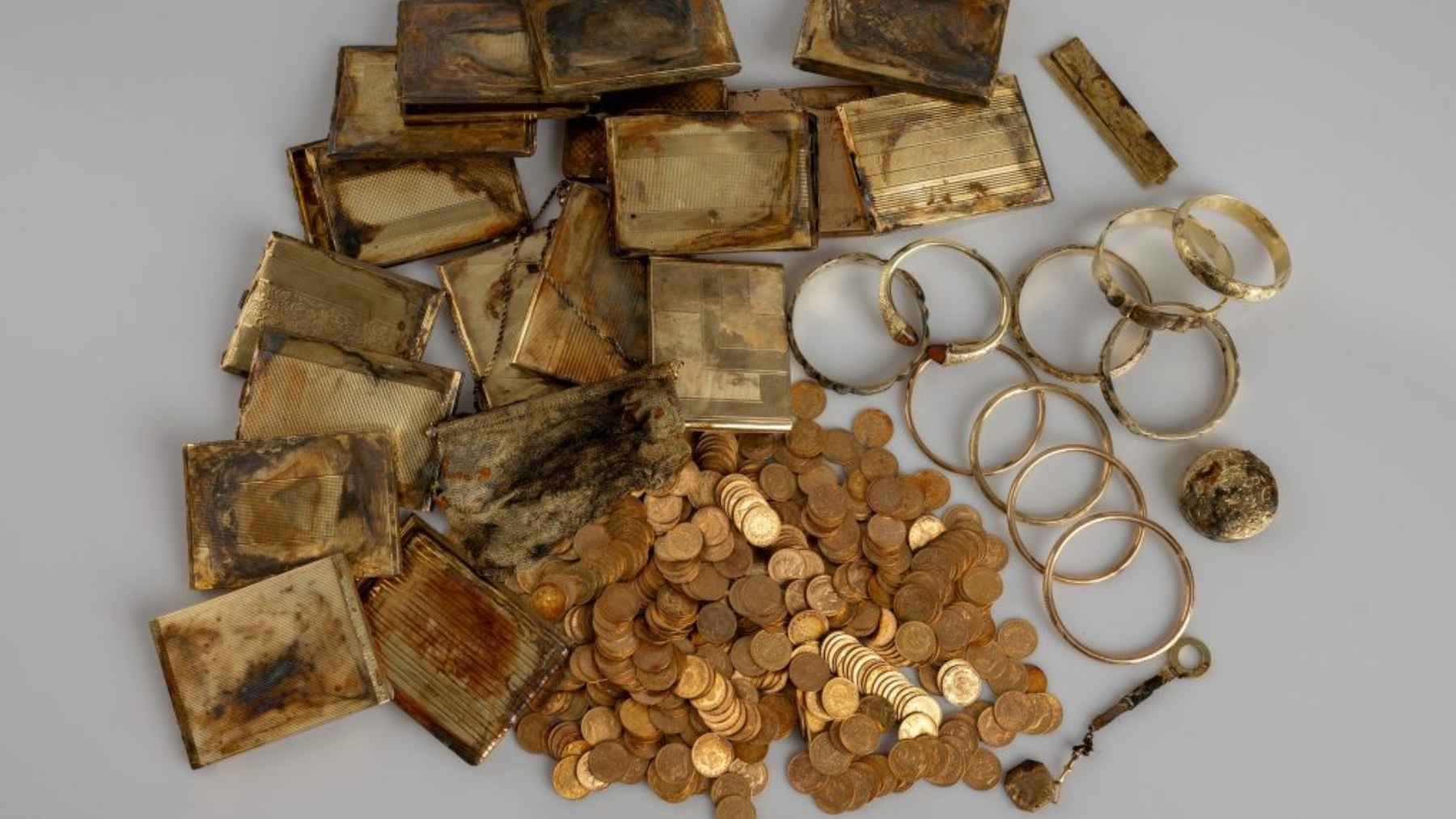
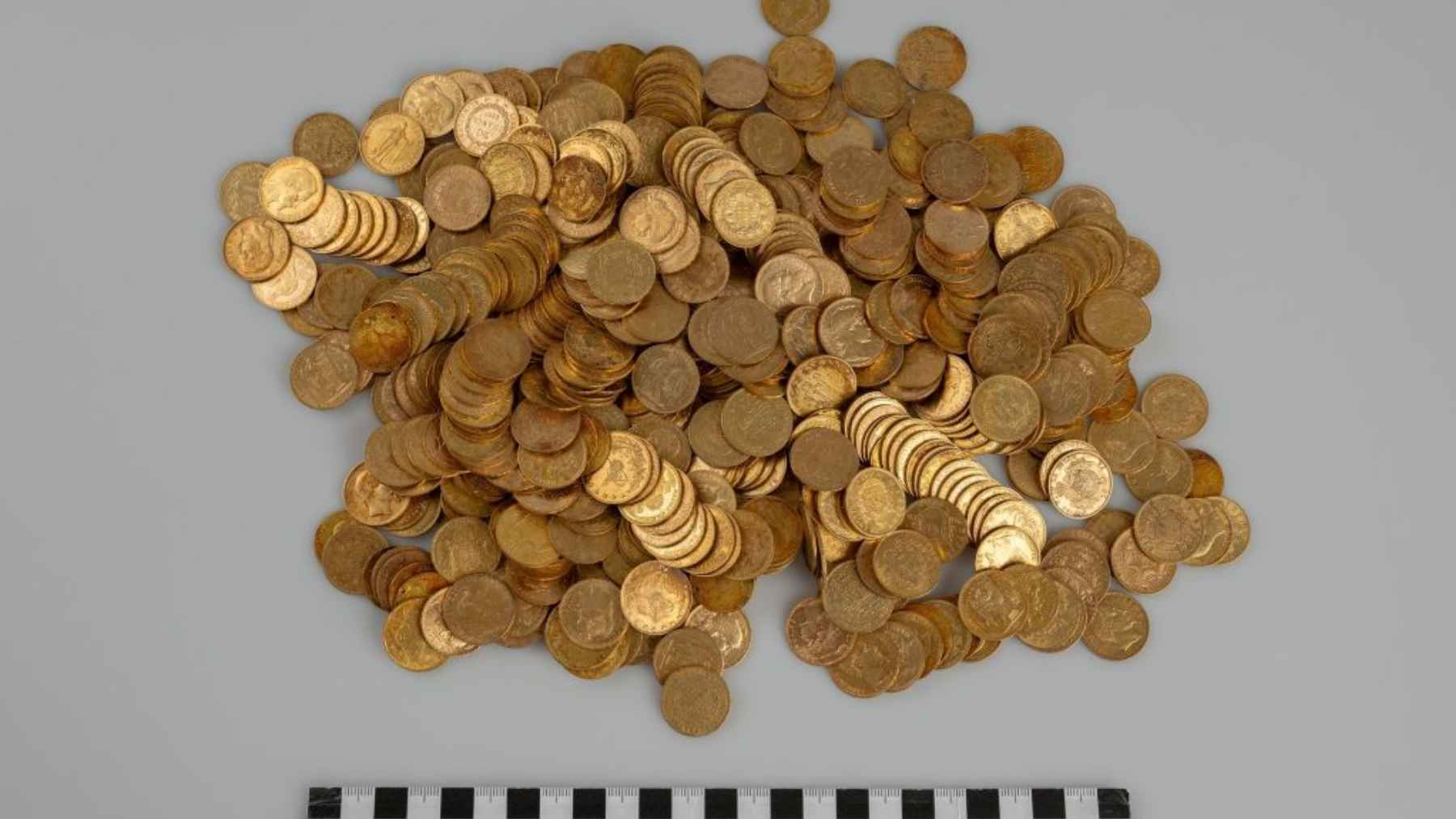
Two winter hikers in northeastern Czechia thought they had found something odd in a stone wall. It was not trash, and it was not an old field marker. Inside were 598 gold coins, part of a buried hoard that Czech officials now describe as an exceptional modern treasure.
Officials in the Hradec Králové Region say the finders will split 11.7 million Czech crowns, about $563,000 at current exchange rates, after the gold was verified. The reward is eye-catching, but the bigger story is quieter and more human. Someone hid wealth in the ground after 1921, and no one yet knows why.
A winter walk turns into history
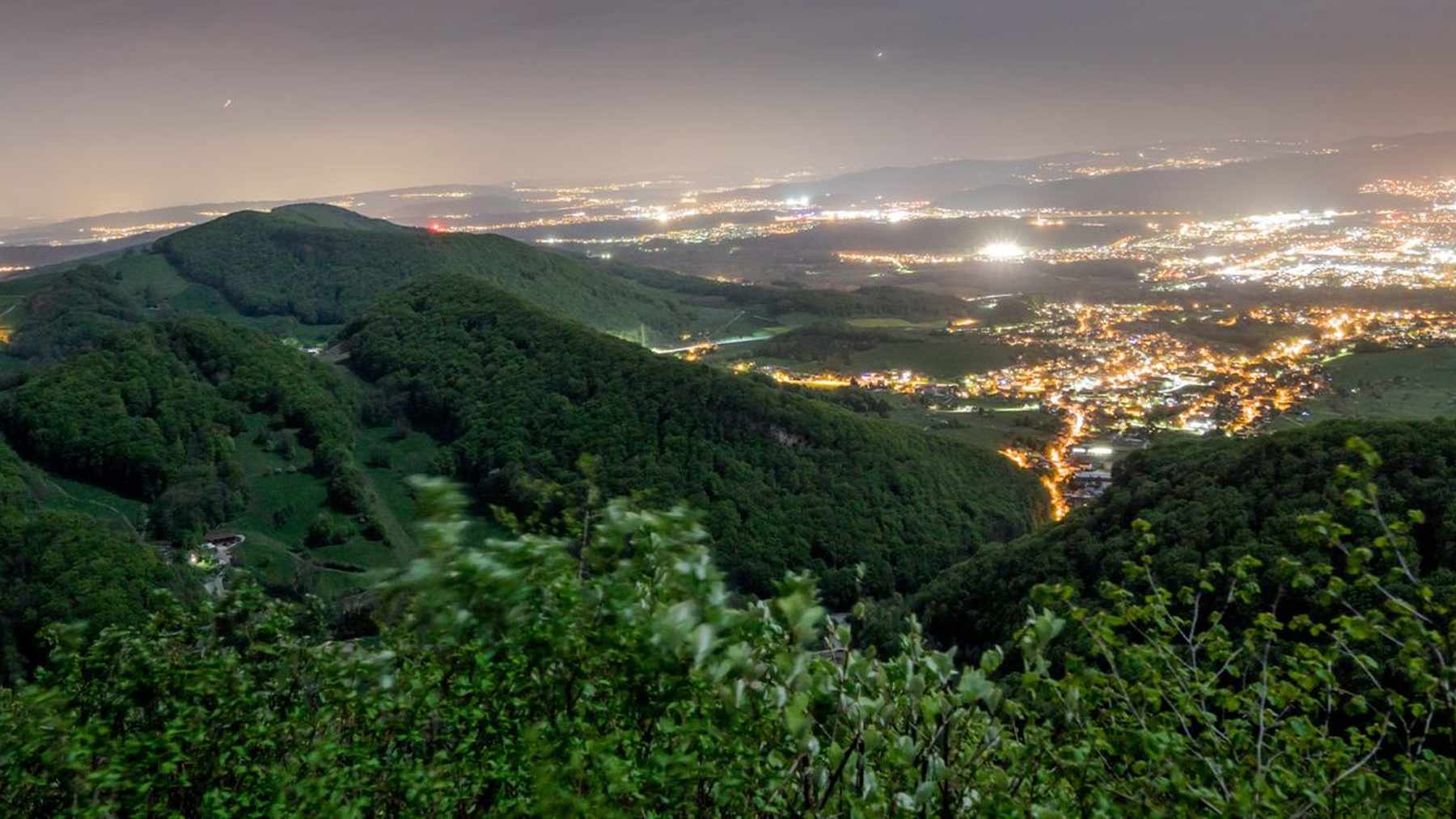
The discovery happened in February 2025 on the southwestern slope of Zvičina Hill, a wooded area where old fields, stone boundaries, and local memory overlap. The hikers found two containers hidden in an artificial stone wall, separated by roughly three feet.
One was an aluminum jar holding the coins, stacked and wrapped in black cloth. Nearby, a metal box held other valuables, the kind of personal objects someone would not leave behind casually.
What was inside the hoard
The full set weighed about 15 pounds. Along with the coins, there were 16 tobacco or cigarette cases, 10 bracelets, a fine metal mesh purse, a comb, a chain with a key, and a powder compact.
Later testing confirmed that the treasure contained about 11.5 pounds of pure gold in total. Czech officials said the objects were tested for fineness and value by the assay office before being returned to the Museum of Eastern Bohemia in Hradec Králové.
The clue hidden on the coins
The coins themselves date from 1808 to 1915, but the latest stamped year does not tell the whole story. Several pieces carry small countermarks, official stamps added after the original minting, which point researchers toward the former Yugoslav area in the 1920s and 1930s.
That detail matters. It suggests the hoard was not buried before those marks were added, and museum experts say the only firm conclusion so far is that the treasure was hidden after 1921.
Why would anyone bury it
Why would someone tuck away pounds of gold in a wall and never return? The possibilities are uncomfortable because Central Europe’s 20th century was full of fear, flight, border changes, war, expulsions, and sudden money reforms.
Vojtěch Brádle, curator of the numismatic collection at the Museum of Eastern Bohemia, has warned that none of the main theories has been proven. “There is no clear evidence” for the ideas discussed so far, he said, adding that the owner may have been threatened by the Nazi regime, may have been a German-speaking resident deported after the war, or may have had another story entirely.
A strange mix of money
The coin pattern is one of the strangest parts of the case. Most of the coins are French, while others are mainly Austro-Hungarian, Belgian, and Ottoman.
Just as interesting is what is missing. Specialists have noted the absence of German and Czechoslovak coins, which is unusual for a Czech find of this kind and makes the story harder to pin down.
Science before spectacle
A treasure like this can stir the imagination, but museums cannot work from imagination alone. They document, test, compare, and store the objects under controlled conditions before putting them in front of the public.
Non-destructive testing is especially important because each object may carry a clue. Tools such as X-ray fluorescence can identify elements in metals without removing a sample, and the Smithsonian’s Museum Conservation Institute describes portable XRF as useful for non-destructive elemental analysis of materials such as metals, ceramics, glass, and pigments.
Who owns a buried treasure
For the hikers, honesty paid off. Regional officials said Czech heritage rules require similar finds to be reported to a museum or archaeological institute, and such objects become the property of the region where they were found.
In this case, the reward was calculated under rules for precious metal finds, where the payout usually equals the value of the metal. That is why the two finders are set to receive the full 11.7 million Czech crowns, rather than a small symbolic fee.
What the gold may still reveal
Old coins are more than shiny objects. They can help trace trade routes, savings habits, exchange patterns, and the movement of wealth across borders, especially in periods when official currencies changed quickly.
The personal items may be just as useful. A clasp, a bracelet style, or the weave of the metal purse could eventually point toward a workshop, a city, or a social world that narrows the list of possible owners.
A modern treasure with a human shadow
At first glance, this sounds like the perfect adventure story. Two hikers, a hidden wall, a flash of gold, and a life-changing reward.
But the deeper question is not how much the treasure is worth. It is what kind of pressure made someone hide it in the first place, and why that person never came back.
For now, the hoard remains a rare bridge between archaeology and recent history. Its gold has been weighed, but its human story is still buried.
The official statement was published on Královéhradecký kraj’s website.