Can a new passport program help protect an applicant’s new home? Nauru, a tiny island over 1,000 miles northeast of Australia known locally as the Republic of Naoero, is betting that it can–by implementing a ‘citizenship-by-investment’ program to raise funds for climate resilience and planning a major shift from the island’s exposed coastal edge to the higher interior known as “Topside.”
Under a limited offer, a principal applicant can make a $90,000 contribution for citizenship through December 31, 2026. The resulting passport offers visa-free or visa-on-arrival access to more than 85 destinations, including Singapore, Hong Kong, and the United Arab Emirates, with no requirement to live in Nauru.
What the $90,000 offer includes
The $90,000 payment is a temporary reduction from the standard $115,000 contribution, but it is not the full price. Published charges for one applicant also include a $5,000 application fee, $6,000 for due diligence, a $1,200 bank due diligence and transaction charge, and a $500 passport fee, bringing the listed minimum to $102,700 before any additional applicable charges.
Applications must go through an authorized agent, and the program says a typical case takes three to four months. Every principal applicant faces an interview, applicants aged 16 and older undergo background checks, and Cabinet makes the final decision after reviews involving the Program Office, Nauru Police, and independent international firms.
Why higher ground matters
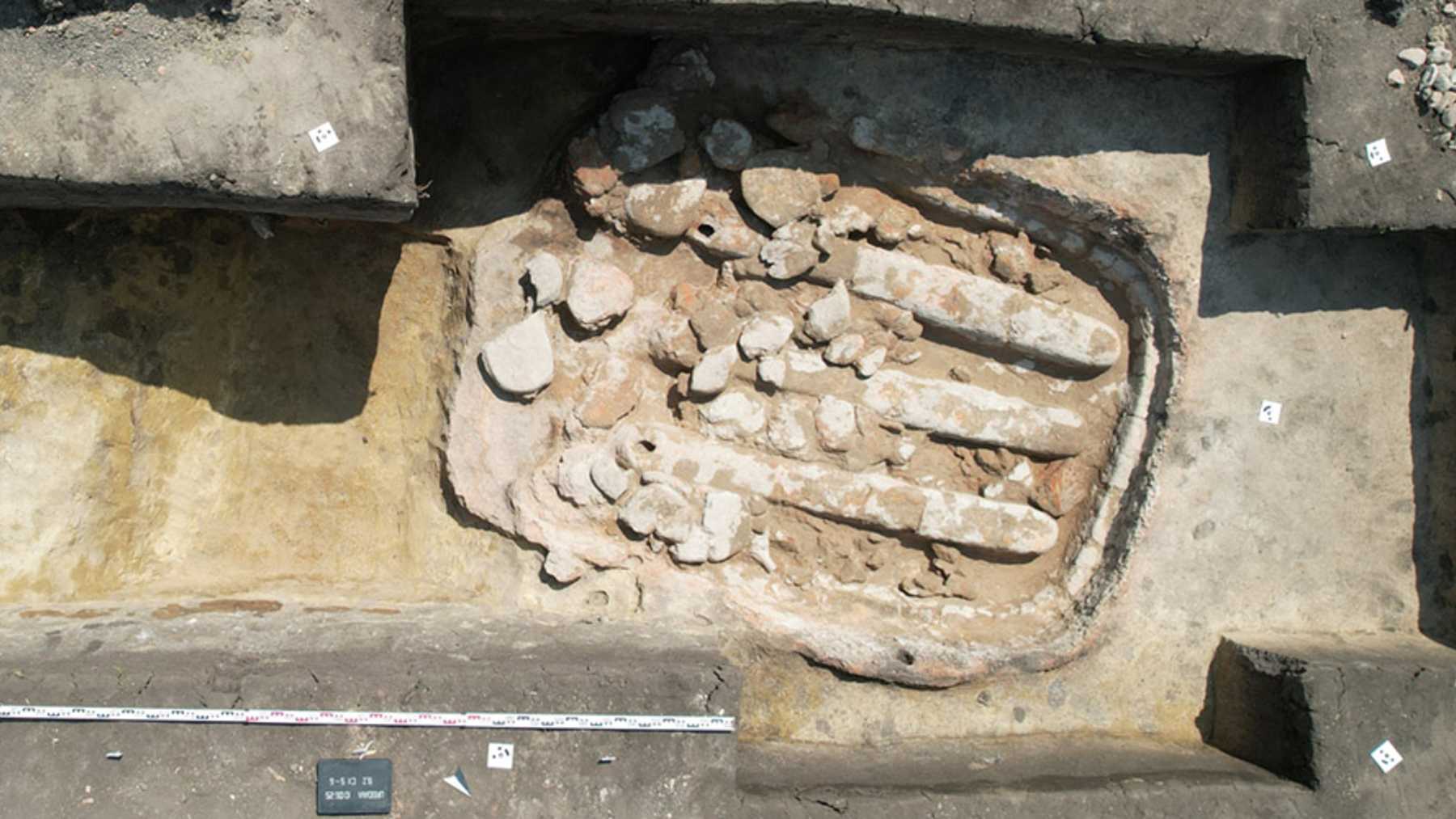
Nauru’s geography leaves little room for error. Its latest national climate plan says most homes and essential facilities, including the hospital, airport, government buildings, main roads, and desalination plant, sit around the low coastal perimeter only a few meters above sea level, while decades of phosphate mining left much of Topside difficult and costly to develop.
The same plan projects mean sea level around Nauru to rise about 0.18 to 0.22 meters by 2050 and as much as 0.7 meters by 2100. Nauru reports that sea-level rise affected more than one-third of households between 2005 and 2015, and says the number of people and buildings exposed to a 10-year coastal inundation event is likely to more than double by 2050.
Rebuilding the mined interior
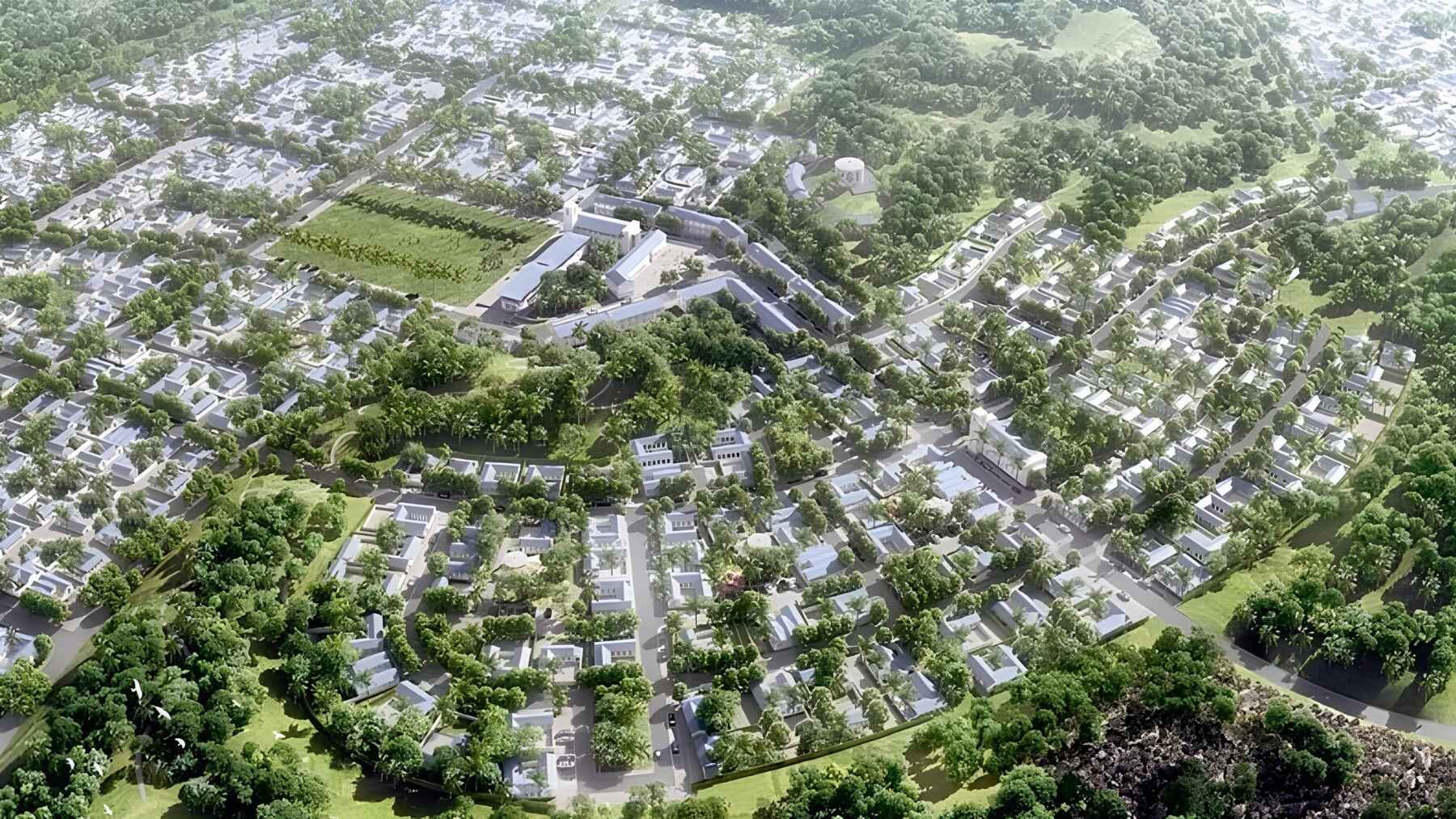
The Higher Ground Initiative aims to relocate 90% of families and infrastructure away from vulnerable coastal areas. This is not simply a matter of carrying houses uphill, since the government must first rehabilitate land scarred by jagged limestone pinnacles and then build a functioning community with water, power, roads, services, and public space.
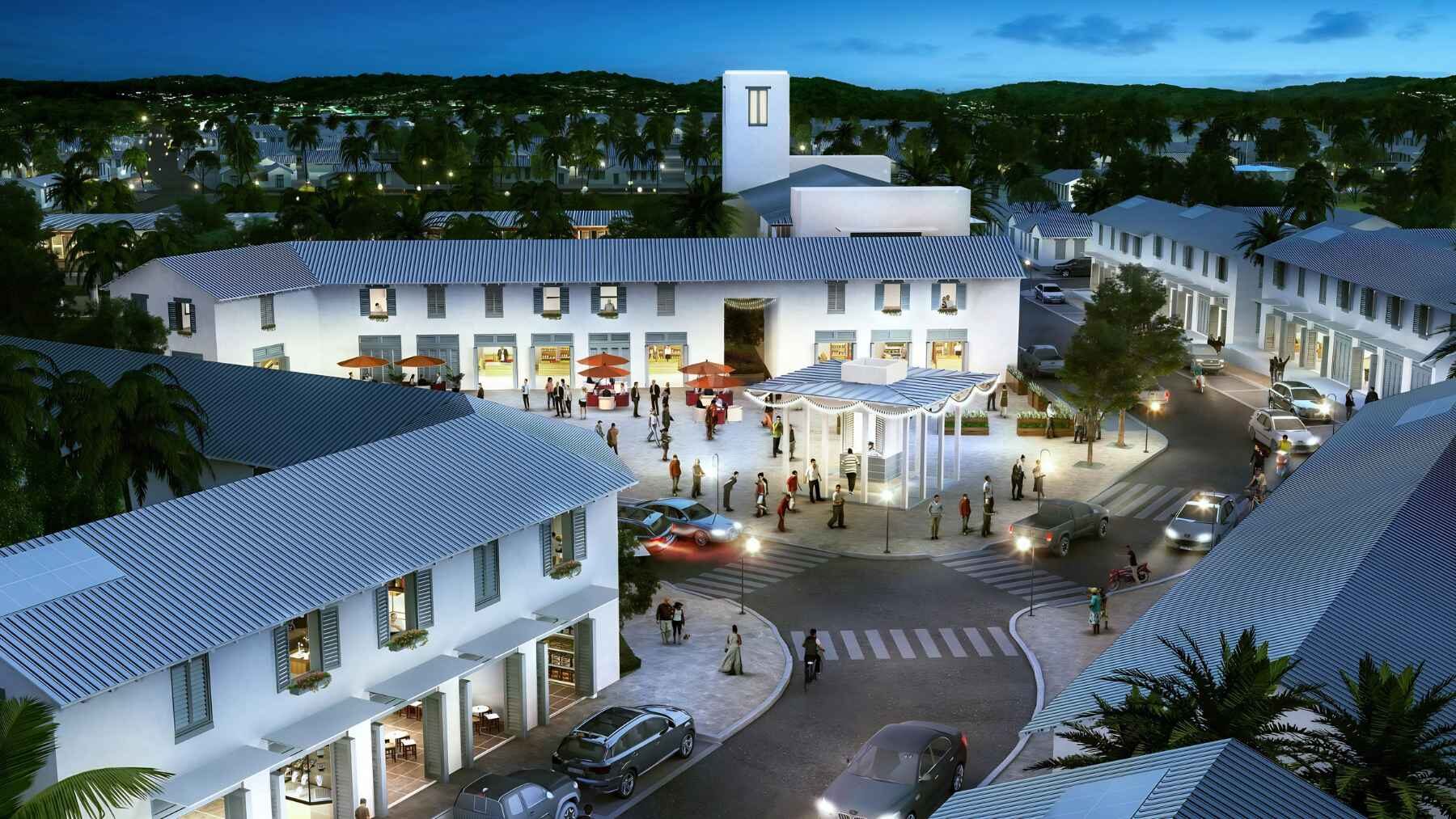
A whole-island land-use plan was completed in 2023, but Nauru’s 2026 climate submission says the pilot “Smart Village” is still seeking funding. The first build would include 21 houses, five apartments, a church, fire station, police kiosk, farmers market, parks, solar power, water harvesting, and walkable streets, amounting to roughly 20% of the planned village.
Turning citizenship into climate finance
Nauru’s law establishes the program for economic development and climate resilience, with the contribution paid into the Treasury Fund after the statutory agent deduction. The government has presented it as an avenue for financing its wider resilience agenda and says proceeds can support coastal protection, renewable energy, sustainable agriculture, water management, and biodiversity conservation.
The timing is no accident. The United Nations Environment Programme estimates developing countries will need $310 billion to $365 billion each year for adaptation by 2035, while international public adaptation finance was only $26 billion in 2023, which helps explain why a tiny island is reaching for such an unusual source of cash.
The security question
That climate purpose does not remove the risks associated with “golden passport” programs. A joint Financial Action Task Force and OECD assessment warns that poorly governed citizenship-by-investment schemes can help criminals gain mobility, hide identities or assets, launder money, and exploit intermediaries, although that warning concerns the sector generally and is not evidence that Nauru’s current program has been or will be misused.
Nauru’s safeguards include police certificates, applicant interviews, checks by its police force and international due diligence firms, and a final Cabinet review. The governing law also permits citizenship to be canceled for fraud, bribery, false information, terrorism, money-laundering convictions, and sanctions-related grounds, while requiring an annual independent audit conducted to international standards.
The real measure of success
The idea is easy to explain, with greater mobility for investors on one side and safer ground for Nauruan families on the other. The real scorecard should be harder and more practical, though, including how much revenue reaches climate projects, how many acres are rehabilitated, how many homes are built, and whether hospitals, utilities, and roads become less exposed.
Nauru’s latest climate plan says the master plan is complete while the first Smart Village still needs financing, so this experiment will be judged by transparent accounts and safer homes rather than passport sales alone.
The latest official program update was published on the Nauru Economic and Climate Resilience Citizenship Program website.