Why does Arctic sea ice spread more slowly than the wind seems to suggest? A study led by researchers at the University of California, Riverside finds that repeated collisions between neighboring pieces of floating ice can explain several puzzling patterns in its movement.
Bryan Shaddy and UCR researchers Alex Greaney and Bhargav Rallabandi published their findings September 10 in Physical Review Letters. Their work links individual collisions to the movement of larger ice fields and could help improve climate models, although it does not yet predict exactly where warming will carry the Arctic’s ice.
Why the wind is only part of the story
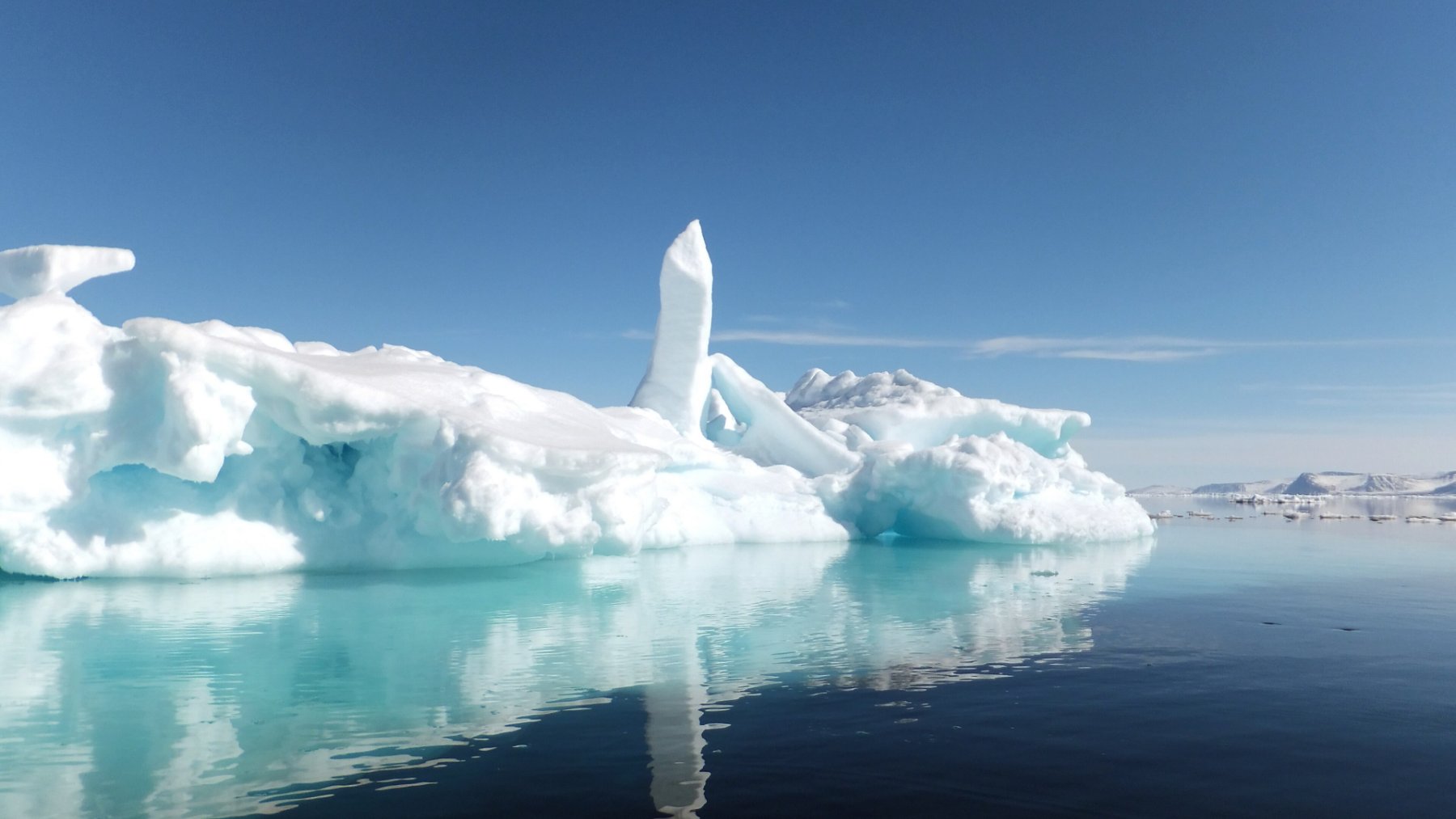
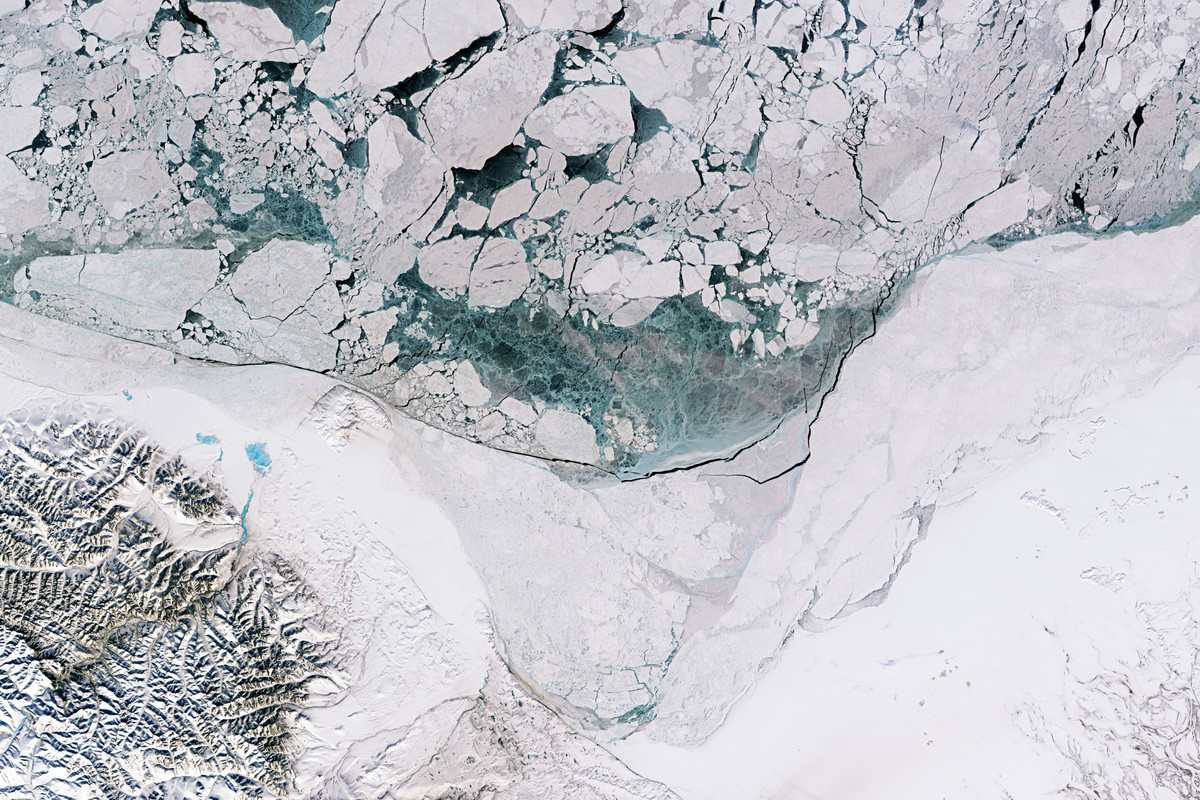
Arctic sea ice includes countless floating slabs called floes, ranging from several meters to a few kilometers across. Wind pushes them over the ocean, but each piece travels through a neighborhood of other moving ice, sometimes with very little room to maneuver.
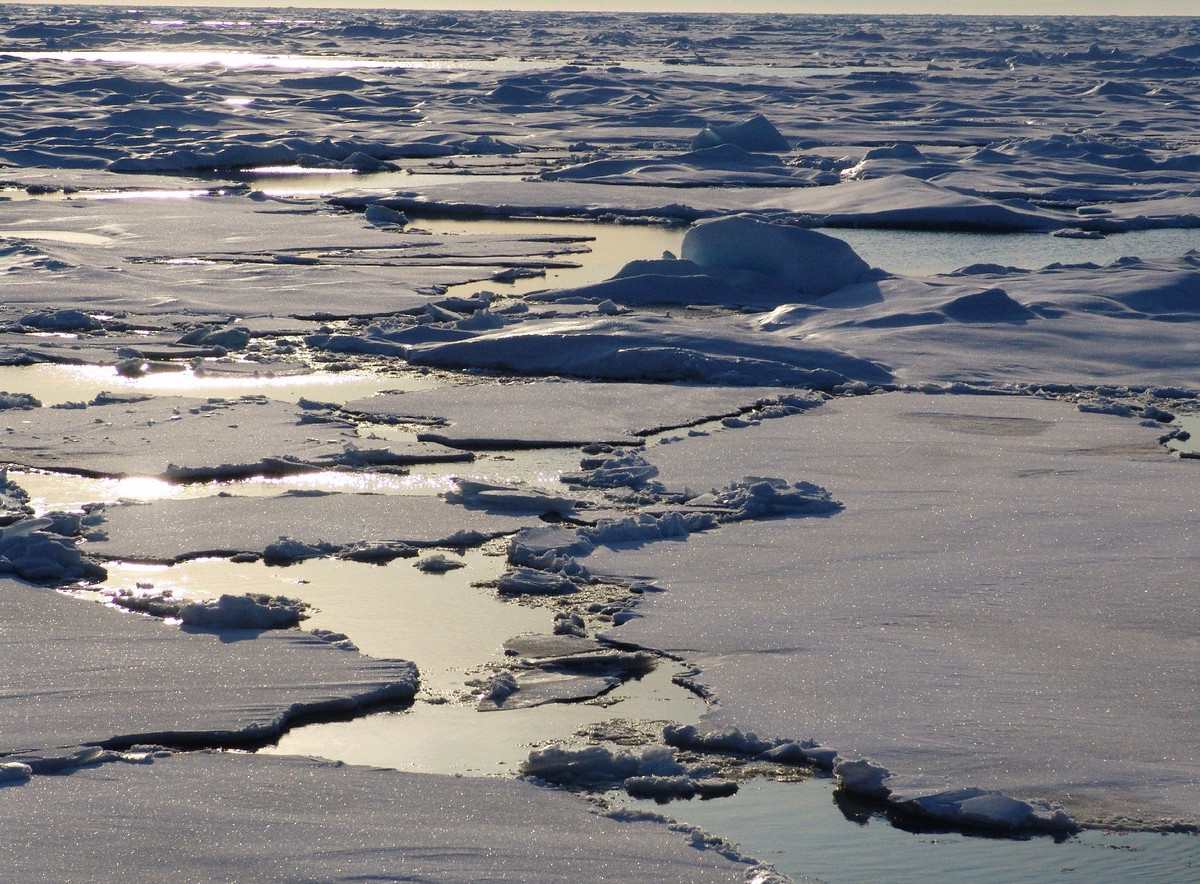
Scientists have struggled to explain why the observed spread of floes and the pattern of their changing speeds differ from simple models driven by wind. Proposed explanations have included ocean eddies, unusual wind behavior, and fractures in the ice.
The new research identifies collisions as a mechanism that can explain several observations together. “We showed that that’s the only ingredient you need to explain these observations,” said Bhargav Rallabandi, an associate professor of mechanical engineering at UCR, in the university’s announcement.
A floating version of grains in a silo
The team approached the problem using ideas from granular materials, collections of separate objects such as grains moving through a silo. Their computer simulation represented 2,000 floes as rigid disks pushed by fluctuating winds, slowed by ocean drag, and able to collide with one another.
In densely packed ice, neighboring floes can collide much more often than the wind changes. Those encounters transfer motion between pieces while dissipating some of the energy supplied by the wind, shortening the distance each floe travels without interruption.
Think of trying to cross a crowded room, where your progress depends partly on the people around you. That is an imperfect everyday comparison, but it helps explain why knowing the push behind an individual floe is not enough to describe how a whole ice field spreads.
Three tests in an Arctic gateway
The researchers compared their model with winter observations from the Fram Strait, the passage between Greenland and Norway’s Svalbard archipelago through which Arctic ice moves toward the Atlantic. They used local wind and ice data to test whether their simulated floes behaved like the real ones.
The model reproduced how floes spread, how their velocities were distributed, and how their motion fluctuated over time. In the published paper, the comparison of fluctuations extended from a few hours to 10 days, giving the researchers several timescales on which to check their explanation.
One additional setting controlled how much energy a collision dissipated. Changing that setting had relatively little effect across much of the range tested, so the same basic setup could reproduce all three patterns without separate adjustments for each one.
What changing ice conditions could mean
How tightly ice is packed and how large its pieces are influence the frequency of collisions. That gives scientists a physical connection between local ice conditions and the way floes disperse over wider areas, according to UCR’s engineering college.
The distinction between drifting and spreading is useful here. A field of ice can travel in a general direction while individual pieces wander away from that shared path, and understanding that dispersal is central to this study.
Could changing conditions let floes spread more readily into warmer waters, where they might melt faster? Rallabandi identifies that as a question the framework could eventually help investigate, but the present model leaves out melting and freezing and focuses on motion over days.
Small collisions with implications for climate models
Global climate models cannot practically follow every relatively small floe across the Arctic. A description of their collective behavior could help represent the effects of countless individual encounters, making the connection between local measurements and large areas of moving ice more useful.
The same general physics may also help researchers study other materials whose pieces collide under changing forces, including avalanches and landslides. “The model is not restricted to ice,” Rallabandi said, although those broader possibilities still require work in their own settings.
The authors say further tests should examine different regions, seasons, and ice conditions. The official press release was published September 16, 2026, on UC Riverside News.
Photo: Paul Gierszewski (Gierszep) / Wikimedia Commons (CC BY-SA 4.0)