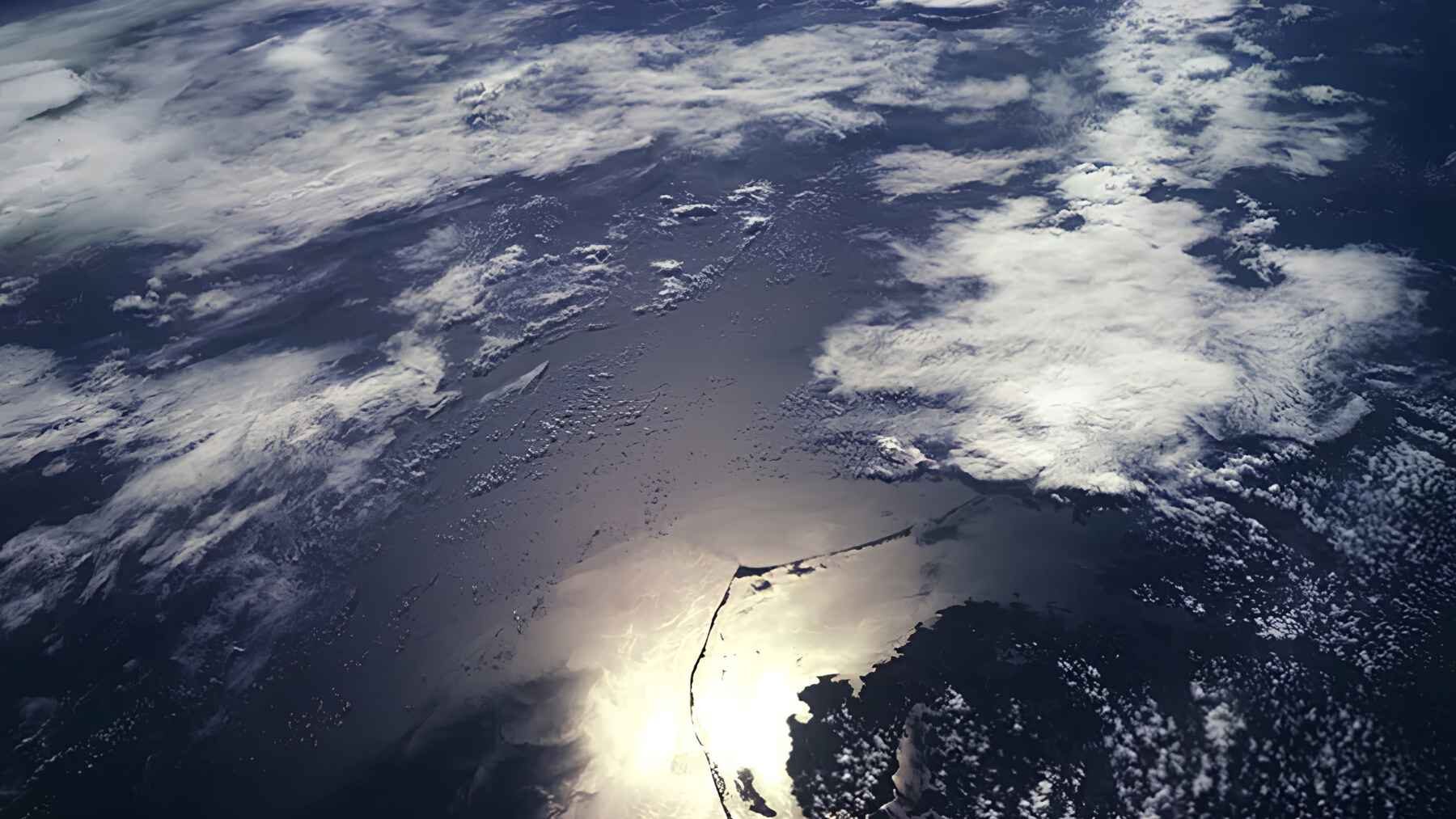
Far below the waves, turbulent motions smaller than a coin help decide where heat, carbon, oxygen, and nutrients travel. Tiny swirls. Big consequences.
A new international analysis finds that these hidden motions can affect climate-related processes in less than a year, not only over centuries or millennia. That brings the deep ocean much closer to everyday concerns such as seafood supplies, coastal flooding, heat waves, and sea level rise.
The work was co-led by Laura Cimoli and Ali Mashayek at the University of Cambridge, with major contributions from Alberto C. Naveira Garabato of the University of Southampton and Colm-cille P. Caulfield. The team combined measurements, chemical tracers, theory, and computer modeling from oceans worldwide.
Their main conclusion is pretty straightforward. Today’s Earth system models still simplify much of this mixing, leaving important climate effects poorly represented.
What ocean turbulence does
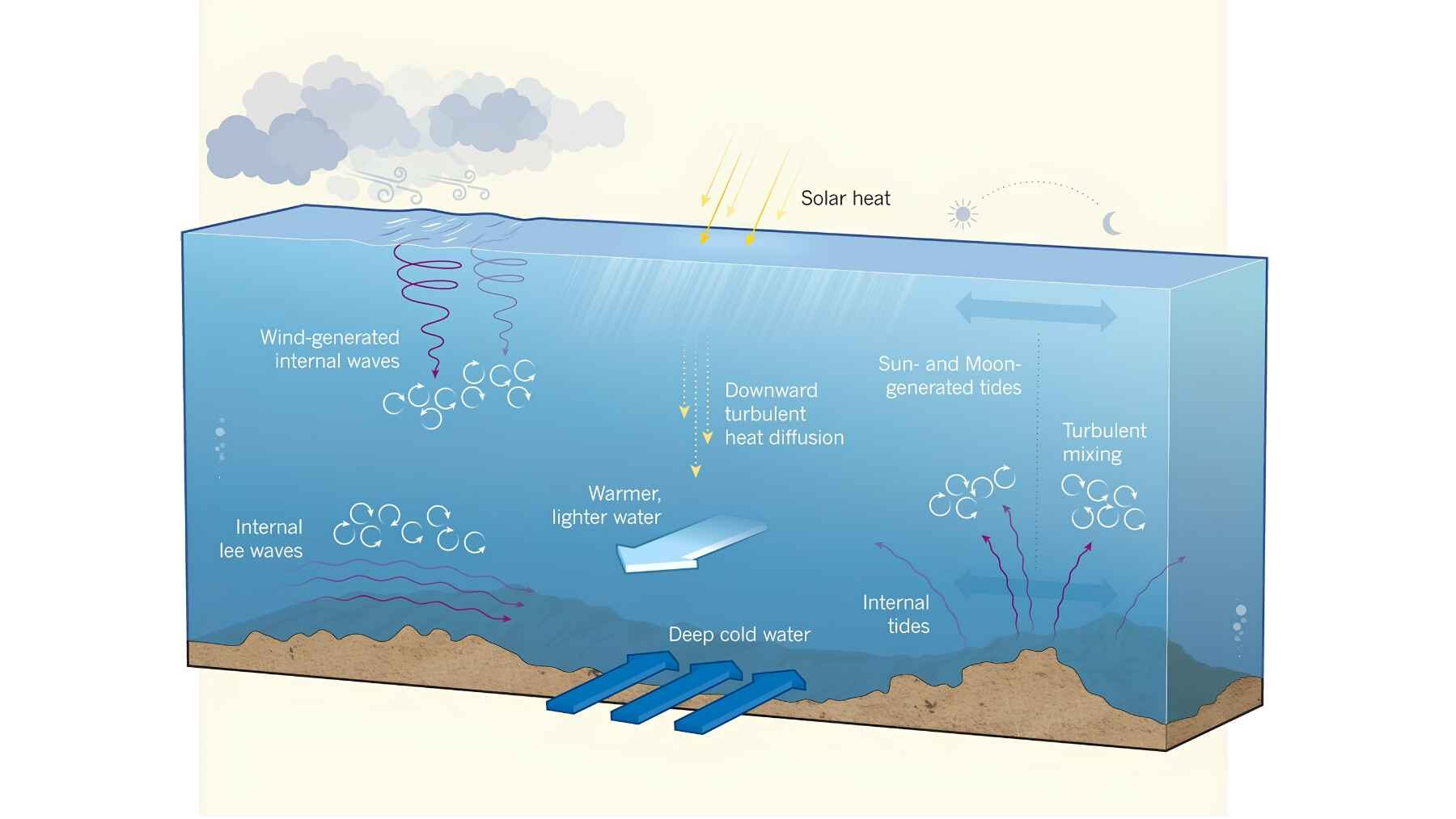
The deep ocean is arranged in layers, with denser water generally sitting below lighter water. Turbulence breaks and folds those layers, a little like stirring cream into coffee. That allows heat, salt, carbon, oxygen, and nutrients to spread.
it is not just about water moving up and down. The analysis stresses that vertical mixing across density layers and sideways stirring along them work together. Ignore one, and part of the picture disappears.
A hidden climate engine
One major effect involves the global overturning circulation, the slow system of currents carrying water between the surface and the abyss.
Turbulent mixing supplies energy that helps deep, cold water rise into lighter layers and rejoin the wider circulation. Without it? The deepest ocean would gradually become a cold, stagnant pool rather than an active part of Earth’s climate system.
Small assumptions can also produce surprisingly big differences. In calculations reviewed by the team, changing the estimated efficiency of mixing altered net deep-ocean upwelling by roughly 25 to 50%, which could produce a similar change in the abyssal overturning circulation.
Think of it as adjusting a small pump and changing the flow through an entire building.
Chemical fingerprints reveal speed
How do scientists track water they cannot actually follow with their eyes? Chemistry helps.
Researchers use chemicals as time stamps. Chlorofluorocarbons, once common in consumer products and later controlled under the Montreal Protocol, entered the ocean from the atmosphere and help scientists estimate when deep water last touched the surface.
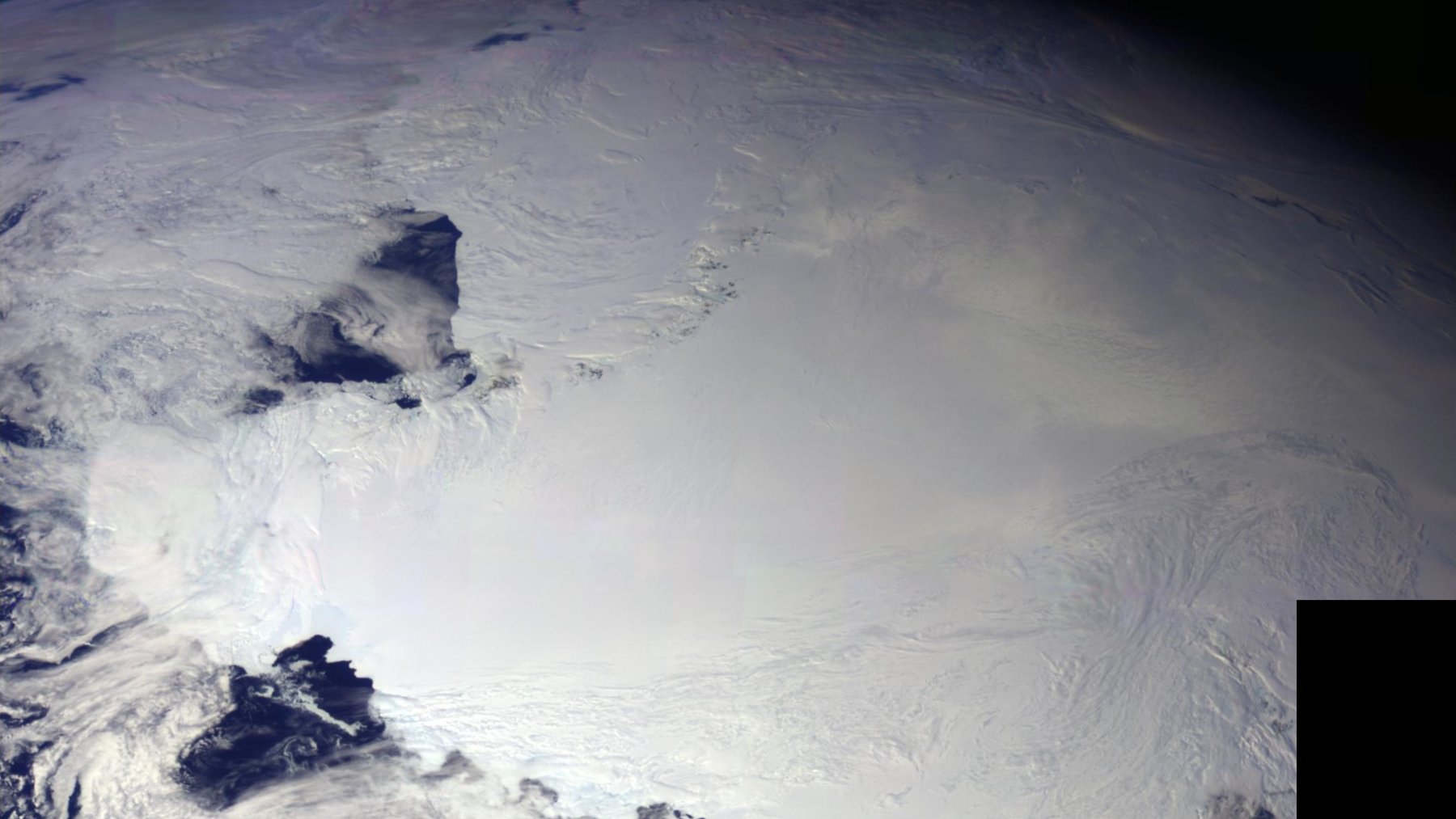
Some deep waters carried these chemical tracers from Antarctica to the mid-Pacific and northern Indian Ocean in about 40 years.
Forty years sounds like a long time. For the deep ocean, though, it is fast.
The same water transports heat, oxygen, and carbon, while turbulence determines how quickly those materials are diluted, stored, or returned toward the surface. As Mashayek explained, these exchanges occur on timescales “relevant to our own lives.”
Dye exposed a fast lane
A separate dye experiment offered a much more visible example.
In a sloping canyon in the Rockall Trough, fluorescent dye released near the seafloor rose about 328 feet per day. That is around 10,000 times faster than the global average upwelling rate needed to maintain deep-ocean circulation.
Does the whole ocean rise that quickly? No. Not even close.
But rough seafloor features can create intense local fast lanes, and those hotspots matter. Climate models cannot map every canyon, internal wave, and turbulent burst.
A model grid cell may cover a huge area while decisive mixing happens in a narrow boundary zone for a short time. It is a bit like estimating highway traffic while ignoring the on-ramps.
Food webs depend on a relay
Turbulence also helps feed marine life.
In nutrient-poor subtropical waters, eddies move nutrients sideways toward the center of vast ocean gyres. Then small-scale vertical mixing lifts them toward the sunlit zone, where plankton can actually use them.
Researchers call this a nutrient relay. It helps explain how apparently barren parts of the ocean can still support biological production.
And that matters beyond fisheries. Sinking organic matter carries carbon into the deep ocean, while the biological pump accounts for about one-third of the ocean’s total carbon sink.
Subtropical gyres cover enormous areas. So even modest changes can add up.
Carbon uptake can change quickly
The Southern Ocean offers another striking example.
It absorbs nearly 40% of the ocean’s human-produced carbon dioxide, yet its carbon balance is highly sensitive to how models handle background turbulence below the surface.
In an observation-constrained experiment, changing mixing within a commonly used range altered annual air-sea carbon fluxes by up to 66%.
That does not mean the real Southern Ocean will suddenly change its carbon uptake by exactly that amount. The result is more nuanced.
It shows that a relatively modest modeling choice can strongly change the answer because mixing affects temperature, dissolved carbon, and alkalinity together. one invisible “stirring” setting inside a model can matter a lot.
Why models struggle
Here is the problem. Earth system models divide the ocean into boxes far larger than the smallest turbulent motions.
They simply cannot resolve every swirl.
Instead, scientists use simplified formulas known as parameterizations, often including a fixed background level of vertical mixing. The new analysis argues that these rules do not yet capture how turbulence turns on and off, interacts with other motions, or feeds back on ocean energy.
Direct measurements are also scarce. Deep-ocean instruments are expensive and difficult to deploy.
Ship-based microstructure profilers provide some of the strongest local measurements, while floats, dye releases, low-power sensors, fiber-optic cables, and machine learning could expand coverage. More observations mean a better chance of seeing whether the formulas inside climate models behave like the real ocean.
Ocean monitoring stays essential
And this is where things get tricky.
On May 21, 2026, the U.S. National Science Foundation began scaling back the Ocean Observatories Initiative, which supplies real-time data from more than 900 instruments. On June 18, however, it halted further removals and continued planned maintenance.
By July 30, phased redeployment of the Endurance Array had begun. The episode highlighted just how dependent ocean science is on long-term observations.
The bigger lesson is becoming harder to ignore. The deep ocean is not as remote from our daily lives as it once seemed.
Its smallest motions can influence climate, ecosystems, and carbon storage within a human lifetime. Yet today’s forecasting tools still struggle to reproduce them.
The full scientific perspective was published in Nature Communications.