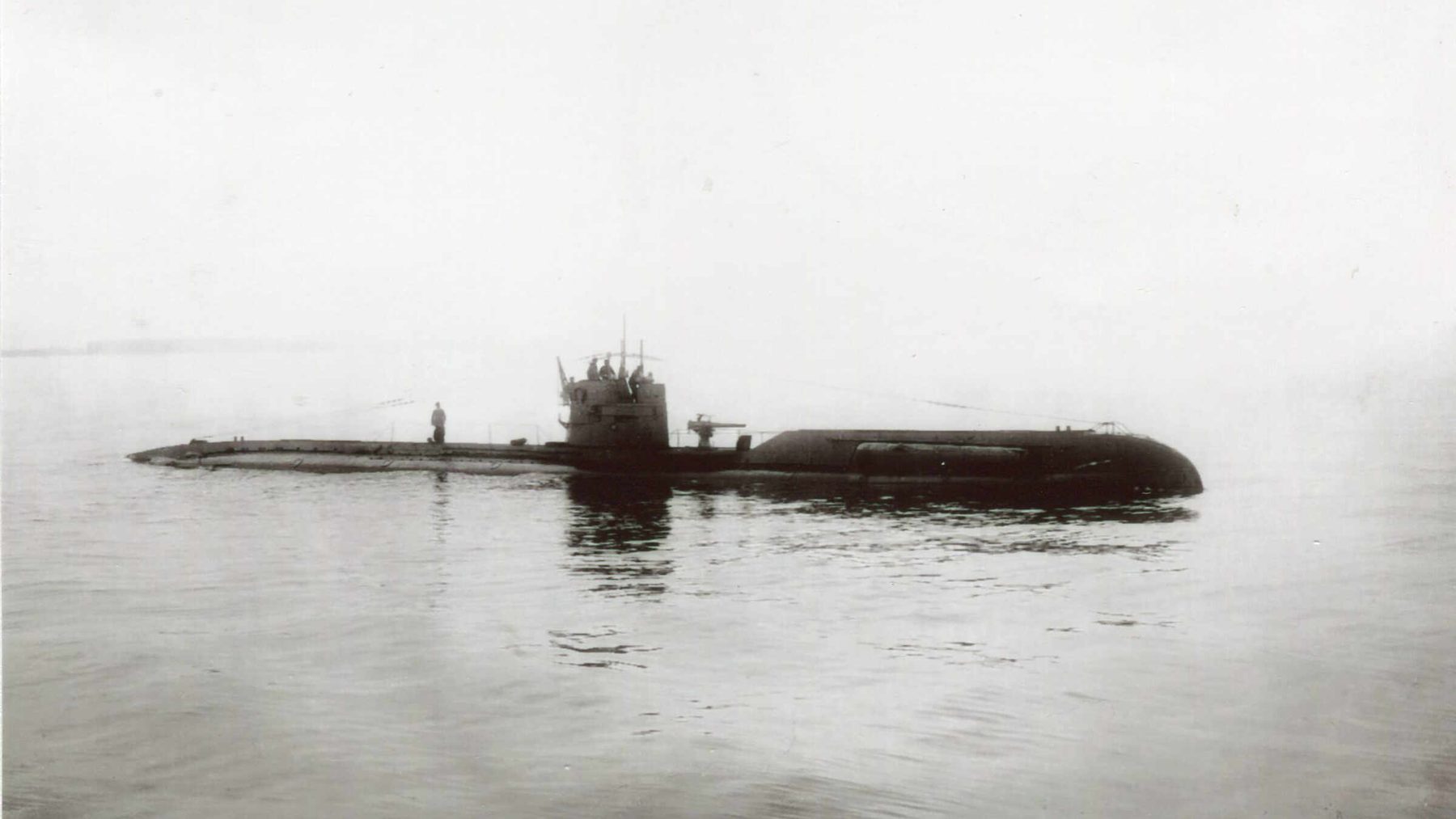
A German submarine that sank off Denmark’s Rømø island in 1917 is leaking TNT into the North Sea. Aarhus University announced the finding on August 27, 2026. A 2024 report for Denmark’s Environmental Protection Agency estimates the wreck of UC-30 still holds over 2,000 kilograms (about 4,400 pounds) of the explosive.
Researchers found the chemical in seawater, sediment and animals at the site. The hull lies about 79 feet (24 meters) down, roughly 6 miles (10 kilometers) off the Danish coast. Blue mussels left there for at least 11 weeks absorbed it too.
Navy divers on restricted ground
Katrine Juul Andresen, a geoscience professor at Aarhus University, examined UC-30 through the European NorthSeaWrecks project. Civilian diving is banned at the wreck, and naval charts mark a restricted zone 328 feet (100 meters) around it. Danish navy divers therefore collected the samples after she briefed them.
Along with water and sediment, the divers brought up starfish and mussels living on the submarine, and their video showed how exposed the mines had become. “We found traces of TNT in the wildlife, the seabed, and the water column,” Andresen said in the university’s Danish-language statement (translated here).
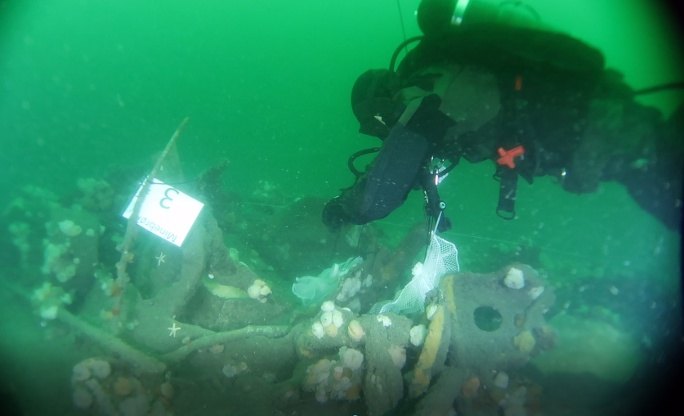
For now she expects the damage to stay fairly close to the hull. “It is likely a relatively localized source of pollution, but it will worsen as the wreck continues to deteriorate,” she said.
According to the mussel paper, the mines on UC-30 sit in direct contact with seawater and have corroded heavily. Andresen’s report for the Danish agency calls it a high-risk wreck where leakage is under way. Releases like this add to the man-made chemicals already measured in seawater worldwide.
Caged mussels came back contaminated
Romina Marietta Schuster of Germany’s Alfred Wegener Institute led the mussel study, with Andresen among the coauthors. Her team fixed cages of blue mussels to three wrecks. Besides UC-30, they used the KW58 Hendericus in Belgian waters and the cruiser SMS Mainz in German waters.
TNT or its breakdown products turned up in 56 of the 59 mussels from UC-30. The count was 51 of 60 at KW58, and the animals from SMS Mainz contained none.
UC-30 was also the only site with explosive compounds detectable in the water. TNT there reached 72.6 nanograms per liter, and a nanogram is one-billionth of a gram.
Inside the animals, the team measured more lipofuscin, a waste pigment that builds up in stressed cells. Stored glycogen fell and detoxification enzymes weakened. “The results also correspond with the amount of TNT pollution detected on the wrecks,” the authors write.
All the mussels survived the deployment. The paper therefore documents stress and contamination in living animals, with no die-off at any wreck.
Eighteen mines and a failed mission
In March 1917, Germany sent UC-30 toward Ireland to lay mines. The submarine measured 168 feet (51 meters), and engine trouble soon forced its crew to turn back. It had nearly reached home on April 19 when it struck a British mine, killing 27 men.
Aarhus University says the boat carried 18 mines and six torpedoes that day. The new paper estimates the explosives on board at 6,900 to 10,600 pounds (3,120 to 4,812 kilograms).
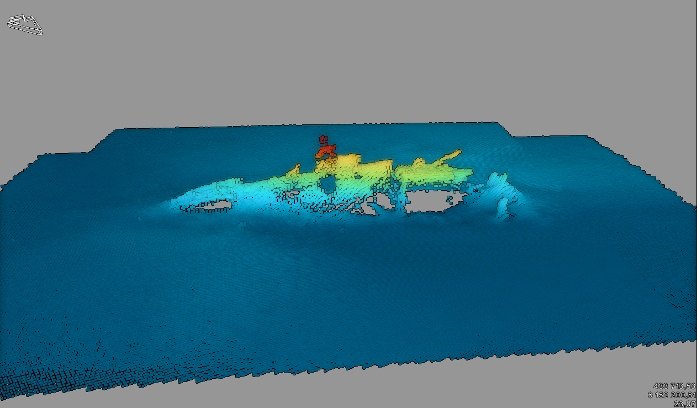
Danish diver Gert Normann Andersen located the wreck in 2016, almost a century later. Similar worries surround a sunken Soviet submarine reported to be releasing radiation. Britain has its own case in the SS Richard Montgomery off Sheerness, still loaded with explosives.
10,127 wrecks on Denmark’s books
The 2024 report counted 10,127 wrecks in Denmark’s national heritage database. Andresen says around 15 percent date from 1910 to 1920 or 1940 to 1945. That total covers every kind of recorded wreck, and a sinking date cannot show whether ammunition remains aboard.
Wrecks covered by sand pose a much lower pollution risk, according to Andresen. She wants the worst threats mapped first, and removal decided after that.
Blasting can spread the explosive
The most common way to clear old munitions is to detonate them in place. A study of two World War II mines in Denmark’s Sejerø Bay measured what that leaves behind. A full detonation raised explosive compounds to as much as 353 nanograms per liter of water, while a partial blast reached as much as 1,000,000.
“In some cases, detonating them can do more harm than good,” Andresen said, adding that currents and the shape of the seabed play a major role. Germany sometimes retrieves explosives from wrecks and neutralizes them, at what she calls a very high cost.
REMARCO, a European project that includes Andresen, has tested a remotely operated crawler at a munitions dump north of Germany’s Spiekeroog island. The machine carried magnetic sensors and took water samples near the bottom. Other teams also send an underwater robot to survey the North Sea seabed.
“We are trying to identify the most gentle solutions to the problem, as there is unfortunately no easy way to clean it up,” she said. Some robots can also pick up items for neutralizing ashore, she added.
A lost lander and silted munitions
The mussel experiment was meant to include a reference area at Borkum Riffgrund. The lander placed there was lost and yielded no samples, which removed that comparison.
Divers saw only part of the munitions on UC-30 because most of it lies under silt. The 4,400-pound figure therefore remains an estimate built on archives, dives and chemical analysis.
How far the contamination travels is still unknown, and Andresen calls that the open question. The mussel paper did not test seafood sold to consumers.
The full study was published in Marine Pollution Bulletin.
Photo: Deutsches U-Boot-Museum, Cuxhaven-Altenbruch