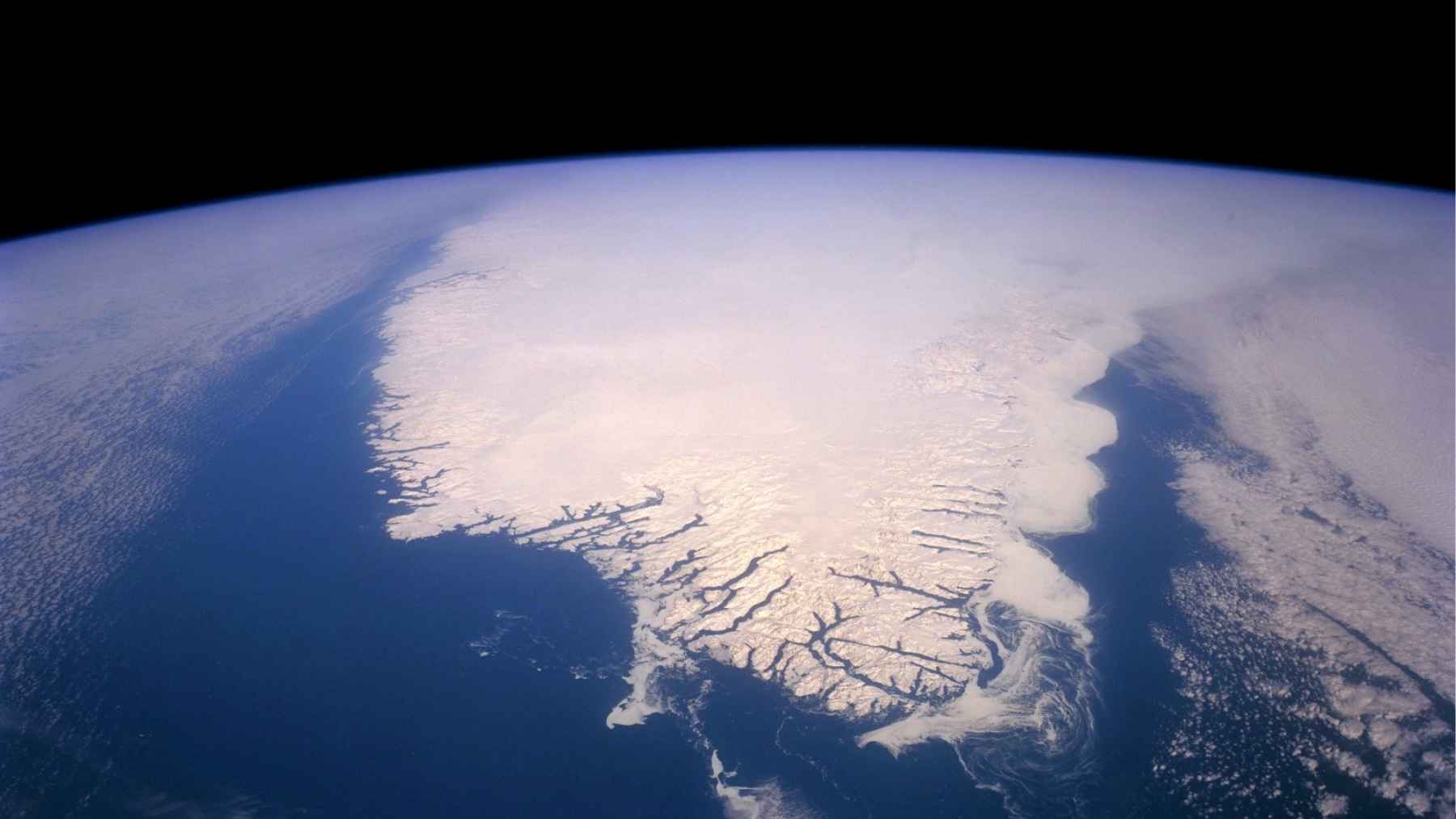
Scientists have a blunt warning about the top of the world. What happens in the Arctic does not always stay in the Arctic, especially when sea ice keeps shrinking and the atmosphere starts behaving in strange, wavy ways.
The latest winter data sharpen that concern. NASA and the National Snow and Ice Data Center (NSIDC) reported that Arctic sea ice reached only 5.52 million square miles on March 15, 2026, statistically tying the record-low winter maximum set in 2025 and continuing a long downward trend that began with satellite monitoring in 1979.
A record low with consequences
Sea ice grows through fall and winter, then melts back in spring and summer. That winter peak matters because it gives the Arctic its starting point before the warm season begins.
In 2025, the Arctic winter maximum reached 5.53 million square miles, the lowest in the 47-year satellite record at the time. One year later, the 2026 peak slipped to 5.52 million square miles, close enough that NSIDC considered the two years statistically tied.
Walt Meier, a senior research scientist at NSIDC, offered the right kind of caution. “One or two record low years don’t necessarily mean much by themselves,” he said, but he added that they matter when viewed against the broader decline since 1979.
Why Arctic ice matters
Sea ice is not just frozen water sitting at the top of the planet. It works like a bright lid, reflecting sunlight and helping keep the Arctic cooler than it would otherwise be.
NSIDC explains that the darker ocean reflects only about 6 percent of incoming solar energy, while sea ice reflects roughly 50 to 70 percent. When ice disappears, the ocean absorbs more heat, stores it, and later releases some of that warmth and moisture back into the air.
That matters far from polar bears and research ships. A warmer, wetter Arctic atmosphere can influence pressure systems, cloud cover, and the high-altitude winds that help steer winter storms toward North America and Europe.
The jet stream gets wavier
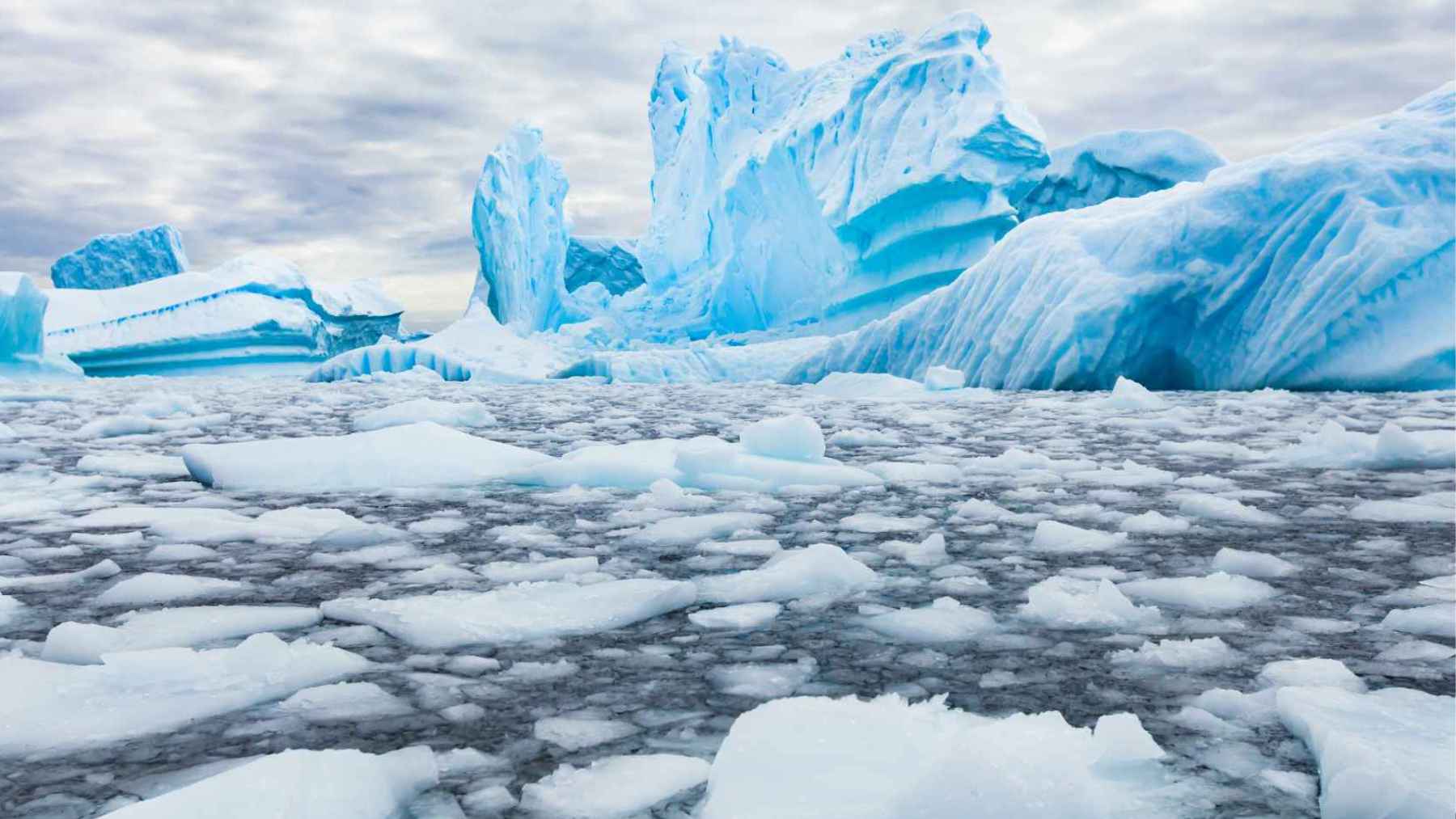
The jet stream is a fast-moving river of air that usually helps separate cold Arctic air from warmer air farther south. When that boundary weakens, the flow can start to wobble.
NSIDC notes that a wavier jet stream can move more slowly, locking weather patterns in place for longer. That can help cold polar air push deeper into the mid-latitudes, while warmer air can surge north into the Arctic.
Does that mean every snowstorm or cold snap is caused by sea ice loss? No. Weather is messier than that. But when the right pieces line up, a changing Arctic can become part of the story.
The polar vortex signal
Then there is the polar vortex, a phrase that tends to show up whenever temperatures crash and people start digging for extra blankets.
The National Weather Service describes the polar vortex as a large area of low pressure and cold air surrounding both poles. It always exists near the poles, but in winter it can expand and send cold air southward with the jet stream.
That is when the Arctic suddenly feels much closer to home. Think icy roads, school closures, flight delays, traffic jams, and heating systems working overtime while the electric bill quietly climbs.
Younger ice breaks faster
The quality of the ice matters just as much as the size of the ice pack. Older sea ice tends to be thicker and tougher because it has survived at least one summer melt season.
The National Oceanic and Atmospheric Administration’s (NOAA’s) 2025 Arctic Report Card found that the ice cover at the end of summer 2025 was younger, thinner, and 28 percent less extensive than in 2005. It also reported 47 percent less multi-year ice than in 2005, with almost no ice older than four years remaining.
That younger ice is more vulnerable to storms, wind, and short bursts of unusual warmth. It can still grow quickly in winter, but it also fractures more easily, a bit like a thin crust forming over a pond before the cold has really settled in.
A slowdown is not a recovery
There is one wrinkle in the story that deserves attention. A recent study found that Arctic sea ice loss has slowed over the past 20 years, even as human-driven global warming continues.
Researchers linked that slowdown largely to natural climate variability, not to a reversal of climate change. The University of Exeter reported that the 2005 to 2024 slowdown was the slowest rate of loss for any 20-year period since satellite records began, but scientists described it as temporary.
Dr. Mark England, who led the study while at the University of Exeter, called it a “temporary reprieve.” In practical terms, that means the Arctic ice problem has not gone away. It has just become harder to read at a glance.
What to watch next
Scientists will keep watching several winter signals closely, including the strength of the stratospheric polar vortex, the position of high and low pressure over the Arctic, and ocean heat near the edge of the ice.
If the vortex weakens for weeks at a time, the odds of sharp cold outbreaks can rise in parts of the United States, Canada, and Europe. But a brutal cold snap in one region does not cancel out global warming, just as one warm winter day does not prove spring has arrived.
For now, the Arctic remains a climate compass, and the needle is still pointing toward a less stable ice system.
The official statement was published on NASA Science.